Ambasha
Ethiopia, Eritrea
Understanding : Ambasha
🌾 INTRODUCTION AND ESSENCE OF AMBASHA 🌍
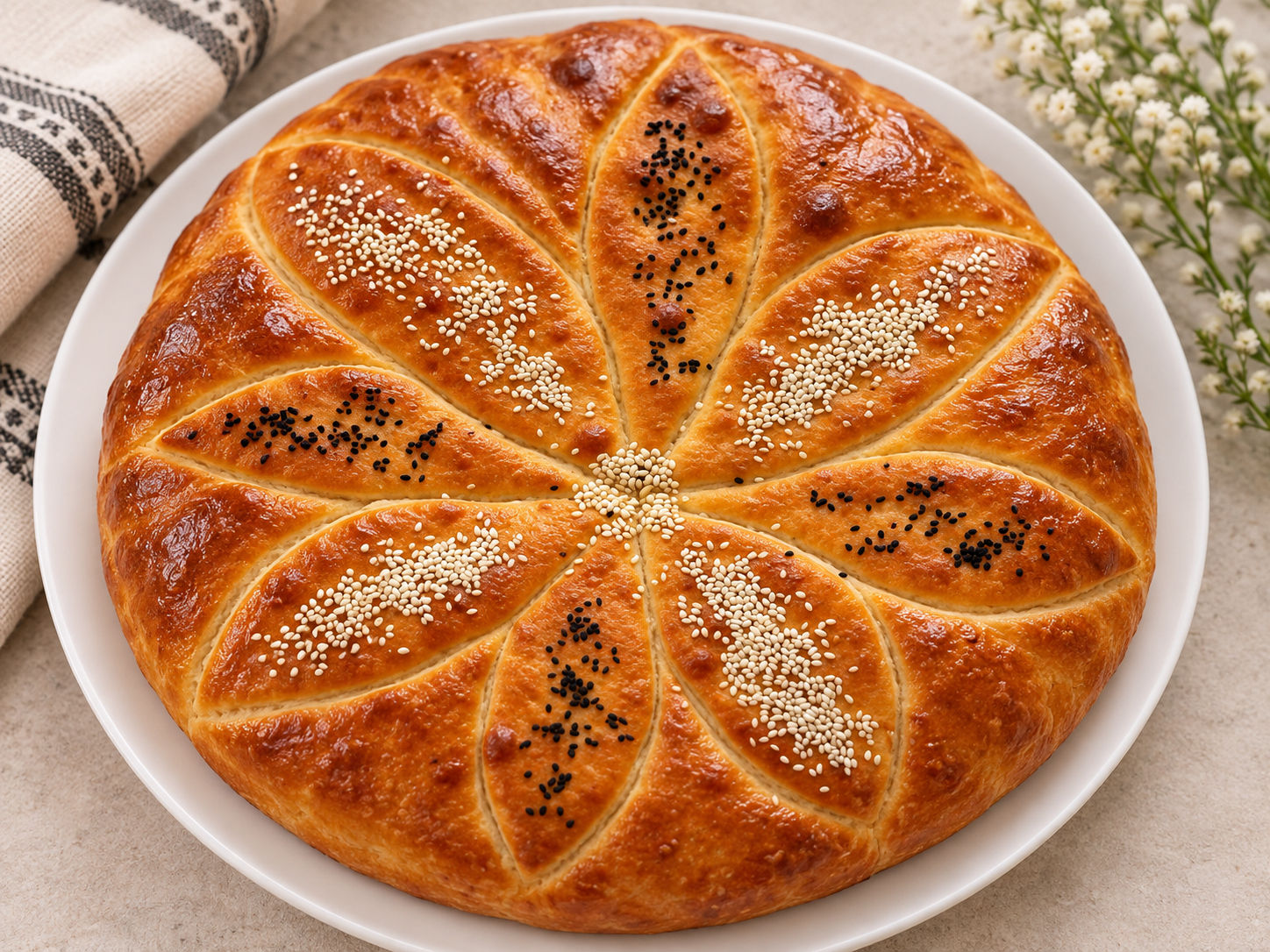
Ambasha, also known as himbasha or hambasha, is an exceptional festive brioche bread, originating from the Horn of Africa, specifically Ethiopia and Eritrea. While injera, the fermented and tangy teff flatbread, dominates the daily life of these two nations, ambasha stands as the undisputed king of special occasions, warm family gatherings, and major religious or social celebrations. This generous, round flatbread is distinguished by its soft texture, dense crumb, delicately sweet and spiced flavor with local spices, as well as the magnificent artistic patterns carved on its surface before baking.
Where to find it
Look for the exact food-grade form required by the recipe at markets and specialist shops. Check the product name, ingredients, condition and storage instructions.
Explore further: Cooking tips · Food hygiene and safety advice.
History and uses
In the cultural landscape of the Horn of Africa, ambasha is not merely considered physical sustenance, but a true vehicle for blessings, sharing, and conviviality. Its preparation, often communally made by women, is an act of love and devotion. Its presence on the table is an immediate sign that the shared moment is of great value, whether it's to welcome an important guest, celebrate a wedding, a baptism, or accompany the essential and sacred traditional coffee ceremony. It bridges spiritual tradition and culinary pleasure, establishing itself as a masterpiece of African baking.
🥣 THE ART OF PREPARATION AND RAPID FERMENTATION 👩🍳
Making ambasha is a meticulous baking process, requiring great dexterity for assembling ingredients and artistically shaping the dough. Unlike the daily breads of the region, ambasha uses high-quality white wheat flour, which gives it its supple texture and its ability to rise to form a generous brioche.
The basic ingredients for ambasha include wheat flour, warm water or sometimes warm milk for added softness, baker's yeast, sugar, and salt. However, what elevates ambasha to the rank of a culinary masterpiece is the systematic incorporation of warm spices and specific aromatics from the Horn of Africa. Traditionally, nigella seeds (sometimes called black cumin or tikur azmud), ground green cardamom seeds, crushed fennel or anise seeds, and sometimes small black raisins previously plumped in warm water are added. These spices give the crumb an enchanting aromatic complexity, delicately balancing the sweetness of the sugar with the peppery, woody, and aniseed notes of the seeds.
The process begins by mixing the flour with the dry spices, sugar, and yeast. Warm water and a generous amount of vegetable oil or niter kibbeh (traditional clarified butter infused with spices) are incorporated to bind everything together. The dough is vigorously kneaded by hand for about fifteen to twenty minutes until it becomes smooth, elastic, and satiny.
The dough is then gathered into a perfect ball, placed in a large bowl, covered with a clean cloth, and left to rest in a warm place for about one to two hours. This rapid fermentation period allows the yeast to activate, doubling the volume of the dough and making it incredibly light. Once risen, the dough is gently degassed, then rolled out by hand to form a large, even disk two to three centimeters thick, ready for the crucial step of decoration.
🎨 SACRED GEOMETRY AND TRADITIONAL PATTERNS 🖋️
What makes ambasha immediately recognizable among all breads in the world are the complex geometric patterns incised on its surface before it is baked. These decorations are not purely aesthetic; they are laden with historical, cultural, and religious symbols, reflecting the rich spiritual heritage of Ethiopia and Eritrea, particularly the legacy of Tewahedo Orthodox Christianity and ancient agrarian traditions.
The traditional method of decoration involves visually dividing the dough disk into regular sectors. Using a sharp knife, a pastry wheel, or even a clean straw, the cook begins by tracing a large cross in the center of the bread, connecting the four cardinal points. Then, a series of concentric circles is engraved around the central cross.
In my books

Continue exploring the continent’s cuisines with Africa at the Table — 54 countries, 54 iconic dishes, by Alioune FALL. This book is in English.
Explore further
Within the sectors thus formed, transverse and diagonal incisions are made to create patterns in the shape of sun rays, wheat ears, stars, or geometric diamonds. The final design often evokes a magnificent stylized cartwheel, a radiant sun, or a traditional warrior shield. In a religious context, the central cross recalls the Orthodox faith and serves to bless the bread before it is broken and shared.
After being decorated, the dough undergoes a second rapid rise of about fifteen minutes so that the patterns beautifully stand out in relief. Traditionally, ambasha was baked on a large circular clay griddle (the mitad) placed over an open fire, covered with a metal dome to create a field oven effect. Nowadays, it is more frequently baked in a modern oven or in a large, deep, round cast-iron skillet with a lid, over low heat, until the base is crispy and the top crust takes on a warm, golden hue.
☕ AMBASHA AND THE COFFEE CEREMONY RITUAL 🌿
Ambasha plays an indispensable and central role in one of the most sacred social rituals of the Horn of Africa: the coffee ceremony (known as bunna or buna). This ceremony, which takes place several times a day in homes, is the pivot of social life, a moment of gathering where village affairs and family news are discussed, and neighbors and visitors are warmly welcomed.
The coffee ceremony often lasts about two to three hours and follows a very strict protocol, from roasting green coffee beans over a brazier to tasting three successive servings of strong and fragrant coffee, brewed in a black clay coffee pot called a jebena. It is during this privileged moment of relaxation and exchange that ambasha makes its triumphant entrance.
The bread, freshly baked and still warm, is brought on a tray. The host or the family elder pronounces a prayer of blessing over the ambasha, thanking the Creator for the food and the health of the assembly. The bread is never cut with a metal knife during the ceremony; it is respectfully broken by hand, following the lines of decoration traced during its preparation.
Each guest receives a soft piece of ambasha, fragrant with nigella and cardamom, which they enjoy alternately with small sips of black, sweetened coffee. The combination of strong coffee and the brioche-like, spicy notes of the bread creates an incomparable gustatory harmony, making this ritual a moment of pure culinary and human magic.
🌍 THE PLACE OF AMBASHA IN AFRICAN CUISINE 🗺️
Within the rich baking traditions of the African continent, ambasha holds a place of honor and illustrates the great diversity of bread-making techniques in Sub-Saharan and East Africa. Contrary to Western clichés that often associate African cuisine with the absence of leavened bread, ambasha proves that the Horn of Africa possesses an extremely sophisticated baking tradition.
Ambasha shares kinship with other festive African breads, such as the fatir from neighboring Sudan or the enriched chapatis of East Africa, but its specificity lies in its brioche-like character, the use of nigella seeds, and its symbolic decorations. It also shows how wheat, historically cultivated in the temperate Ethiopian highlands, has been integrated into festive preparations quite distinct from the more common porridges or cereal pastes on the continent.
Ambasha is also a universal food for sharing: it is designed to be large, because in African tradition, one does not eat alone. A large round bread symbolizes unity, the absence of boundaries within the home, and abundance. Traveling with Ethiopian and Eritrean diasporas around the world, ambasha has become an ambassador of African gastronomy, captivating gourmets with its visual beauty, comforting texture, and subtle aromas of Eastern and African spices.
Synonyms for ambasha: himbasha, hambasha, Ethiopian brioche bread, Eritrean festive bread, decorated bread from the Horn of Africa.
Keywords: ambasha, Ethiopia, brioche bread, nigella, coffee ceremony.
In the kitchen : Ambasha
Recipes from the site to put your knowledge into practice:
Discover these cuisines at a restaurant
Explore our restaurant and caterer directories. Choose your destination and check the establishment’s menu to confirm which dishes are offered and available.
Continue exploring
Enjoy discovering ingredients and African cuisines? Join our newsletter. The illustrated PDF 10 sauces africaines incontournables is in French and is offered after confirming a subscription to the French or bilingual edition.