Matlouh
Algeria, Morocco
Understanding : Matlouh
🍞 HISTORY AND HERITAGE ROOTS OF MATLOUH
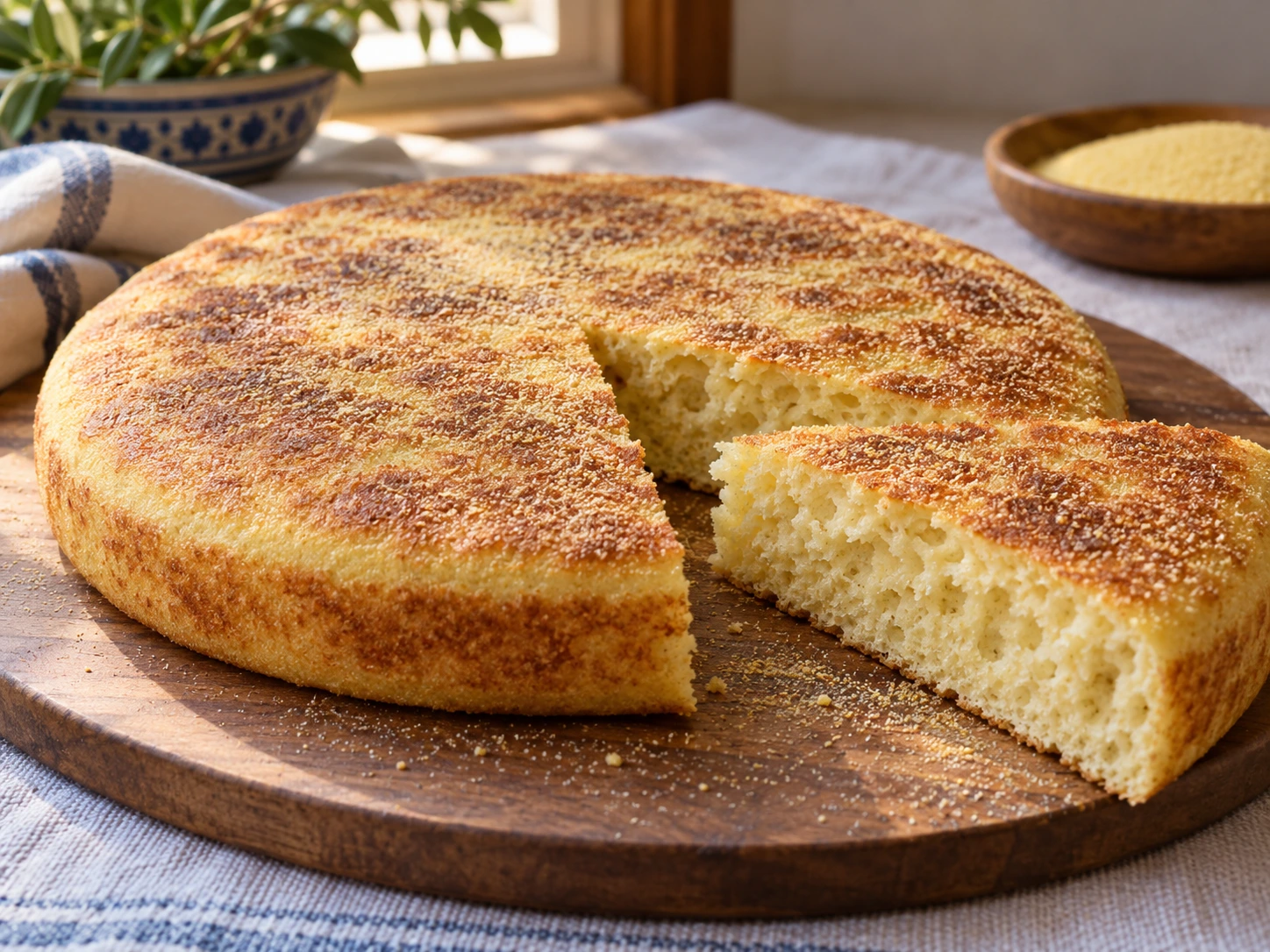
Matlouh is one of the most sacred pillars of North African baking, particularly in Algeria and Morocco. This leavened semolina bread, characterized by its incredibly soft texture and airy crumb, has roots in a millennial history dating back to the first Berber populations of the Maghreb. Since antiquity, the cultivation of cereals, especially durum wheat, has shaped the social and agrarian organization of this part of the African continent. In this rural and pastoral civilization, bread was not merely a complementary food, but the central pivot of survival and daily sustenance. Matlouh was born from the necessity to produce a highly nutritious bread, capable of accompanying saucy dishes and offering a tender, elastic crumb, perfect for absorbing spicy juices. Unlike unleavened semolina flatbreads like kesra, which are denser and more crumbly, matlouh requires a complete biological fermentation process, making it a symbol of abundance and life. Passed down from generation to generation through female lineages, the art of matlouh embodies domestic savoir-faire, patience, and the sacred respect for sourdough. Every morning, the ritual of kneading matlouh marked the beginning of the day in villages and cities, and the characteristic smell of its baking on terracotta remains etched in the olfactory memory of millions of Africans as the very scent of the family home.
🌾 AN ALCHEMY OF SEMOLINA AND SOURDOUGH
The creation of an exceptional matlouh relies on a subtle alchemy of elementary yet noble ingredients. The absolute base of this bread is durum wheat semolina, chosen extra-fine or fine to ensure the cohesion of the dough and the development of an optimal gluten network. Although modern versions incorporate a portion of soft wheat flour to facilitate work and lighten the dough, true traditional matlouh draws its strength, golden yellow color, and nutty flavor solely from durum wheat semolina. To this semolina are added warm water, salt, baker's yeast or a homemade natural sourdough, and often aromatic seeds such as anise, cumin, or nigella, which provide a typical aromatic signature of North African cuisine.
The preparation begins with hydrating the semolina. Water is incorporated gradually to allow the durum wheat grains to absorb moisture slowly. Kneading is the main stage of the process and requires considerable physical strength as well as great regularity of movement. The dough is worked by stretching, folding, and energetically beating it against the sides of the traditional terracotta or wooden vessel, called djefna or gassaâ. The aim is to trap as much air as possible in the dough to promote the creation of future air pockets. As the work progresses, the dough changes texture, moving from a granular mixture to a soft, extremely elastic, smooth, and slightly sticky dough to the touch. It is at this precise moment that the cook knows that the gluten network is perfectly developed, guaranteeing a stringy and light crumb after baking.
🔥 THE RITUAL OF FERMENTATION AND BAKING ON TERRACOTTA
After vigorous kneading, the dough is divided into equal-sized balls which are shaped into round discs about two centimeters thick. These discs are gently placed on clean cotton or wool cloths, previously dusted with a veil of fine semolina to prevent sticking. This is when the fermentation, or rising, phase begins, which usually lasts between one and two hours depending on the ambient room temperature. During this sacred rest, the yeasts transform the sugars in the semolina into carbon dioxide, causing the spectacular swelling of the flatbreads, which double in volume and become light as clouds.
The baking of matlouh is a highly technical step traditionally performed on a refractory terracotta tagine, pierced with small holes or grooved, placed over a high heat. Today, cast iron plates or heavy pans are also used, but purists agree that only terracotta gives matlouh its inimitable smoky flavor and its matte, semolina-dusted crust. When the risen flatbread is transferred to the hot tagine, a gesture of great delicacy is required so as not to degas the dough. Under the effect of intense heat, the bread instantly inflates, creating an extremely airy crumb. The flatbread is flipped halfway through baking to brown the other side. Once both sides are well browned, a step called browning the edges or turning on its side is performed: the bread is held vertically and turned around the perimeter of the tagine to cook and color the white edge, thus eliminating any trace of raw dough. The result is a puffed bread, surprisingly light for its size, displaying a uniformly golden-brown crust and a soft, spongy crumb.
🍽️ CENTRAL COMPANION OF HOSPITALITY AND MEALS
In the Maghreb, matlouh is the undisputed king of daily and festive tables. Its spongy structure and generous crumb make it the ideal partner to accompany the most emblematic stewed dishes of African gastronomy, foremost among which are meat, chicken, or vegetable tagines, as well as spicy stews like loubia or lentils. Unlike kesra, which is crispier, the soft crumb of matlouh acts like a true sponge, capable of absorbing large quantities of fragrant sauce without collapsing.
It is also inseparable from traditional festive and everyday soups. During the month of Ramadan, matlouh accompanies Algerian chorba or Moroccan harira every evening, bringing comfort and satiety after long hours of fasting. Matlouh is also the quintessential symbol of Maghrebi hospitality: presenting a warm matlouh, fresh from the tagine, accompanied by a small bowl of freshly pressed olive oil or a mixture of melted butter and honey, is the most beautiful way to honor a passing guest. It is a bread for sharing, broken by hand, never using a knife, thus respecting a traditional prohibition linked to the sacredness of food and the blessing represented by bread.
🌍 PLACE AND CONFLUENCES IN GREAT AFRICAN CUISINE
Matlouh, while remaining deeply rooted in its North African region of origin, is part of a rich and dynamic culinary dialogue with other baking traditions across the entire African continent. It testifies to the universality of leavened bread as a vector of sharing and cultural identity. In West Africa, for example, this same search for soft and spongy textures is found in preparations based on other local cereals such as millet, sorghum, or rice. Although the ingredients differ, the social function of bread that brings people together around a common dish remains identical.
In East Africa and the Horn of Africa, Somali sabaayad or Ethiopian injera share with matlouh this role of staple bread, even if their fermentation and baking methods differ. Furthermore, historical migratory movements and trade exchanges across the Sahara and along the coasts have favored the spread of these baking techniques. Matlouh beautifully illustrates how a semolina fermentation technique, adapted to the thermal constraints and resources of North Africa, has become a symbol of gastronomic excellence recognized and celebrated far beyond its original geographical borders. It embodies this gourmet, generous Africa, deeply attached to its traditions of sharing.
🔄 SYNONYMS AND COMPLEMENTARY DENOMINATIONS
Depending on the regions, cities, and areas of North Africa, matlouh is referred to by different names that emphasize its baking, texture, or manufacturing method:
Khobz El Tajine: A very common name in Algeria and Morocco, which literally means tagine bread, referring to the terracotta plate essential for its baking. Khobz Eddar: Although this term sometimes refers to a semolina bread baked in the oven and decorated with seeds, it is used in some regions to describe any homemade bread, including matlouh. Khobz El Khamir: Name used particularly in eastern Algeria and Tunisia to designate this leavened bread, emphasizing the use of sourdough or yeast as opposed to unleavened flatbreads. المطلوع: Original Arabic spelling of the word matlouh, derived from the root that evokes the action of rising or lifting, highlighting the crucial importance of the fermentation stage. Arabic semolina bread: A descriptive nickname frequently used in international gastronomic literature and by the African diaspora to present this soft bread to world cuisine enthusiasts.
Keywords:
Sourdough Tagine Soft Algeria Fermentation
Where to find it
Look for the exact food-grade form required by the recipe at markets and specialist shops. Check the product name, ingredients, condition and storage instructions.
Explore further: Cooking tips · Food hygiene and safety advice.
In my books

Continue exploring the continent’s cuisines with Africa at the Table — 54 countries, 54 iconic dishes, by Alioune FALL. This book is in English.
In the kitchen : Matlouh
Recipes from the site to put your knowledge into practice:
Discover these cuisines at a restaurant
Explore our restaurant and caterer directories. Choose your destination and check the establishment’s menu to confirm which dishes are offered and available.
Continue exploring
Enjoy discovering ingredients and African cuisines? Join our newsletter. The illustrated PDF 10 sauces africaines incontournables is in French and is offered after confirming a subscription to the French or bilingual edition.