Bradj
Algeria
Understanding : Bradj
🌸 📅 HISTORICAL ORIGINS AND SPRING CELEBRATION
Bradj is a traditional Algerian pastry of incomparable delicacy that symbolizes the renewal of nature and the transition to the sweetness of life. Its origins date back to ancient times, part of the heritage of an agricultural civilization deeply attached to the cycles of seasons and agrarian calendars. Historically, bradj is inseparable from the Tafsut festival, which marks the advent of spring in Amazigh culture. On this occasion, families celebrated the end of winter's harshness by preparing rich and invigorating dishes, symbols of abundance and fertility.
Prepare this speciality
Choose a detailed recipe, adjust the portions and prepare your ingredients before starting. Our cooking tips and food safety advice complement the steps described in the recipes.
Explore further: Cooking tips · Food hygiene and safety advice.
History and uses
The making of this sweet treat became particularly rooted in eastern Algeria, especially in Constantinois, Aurès, and Kabylia, before spreading throughout the national territory and beyond the Maghreb borders. The ingredients that make up bradj come from provisions stored to get through winter: durum wheat semolina and date paste from Saharan oases. By uniting these two local treasures, women created a culinary masterpiece capable of crossing centuries without losing its charm. Every year, at the spring equinox, the smell of grilled semolina and orange blossom water wafting from homes officially announces the return of warmer days, transforming a simple recipe into a true temporal and emotional landmark for millions of people.
🌾 🍯 EARTH'S INGREDIENTS AND UNIQUE TEXTURE
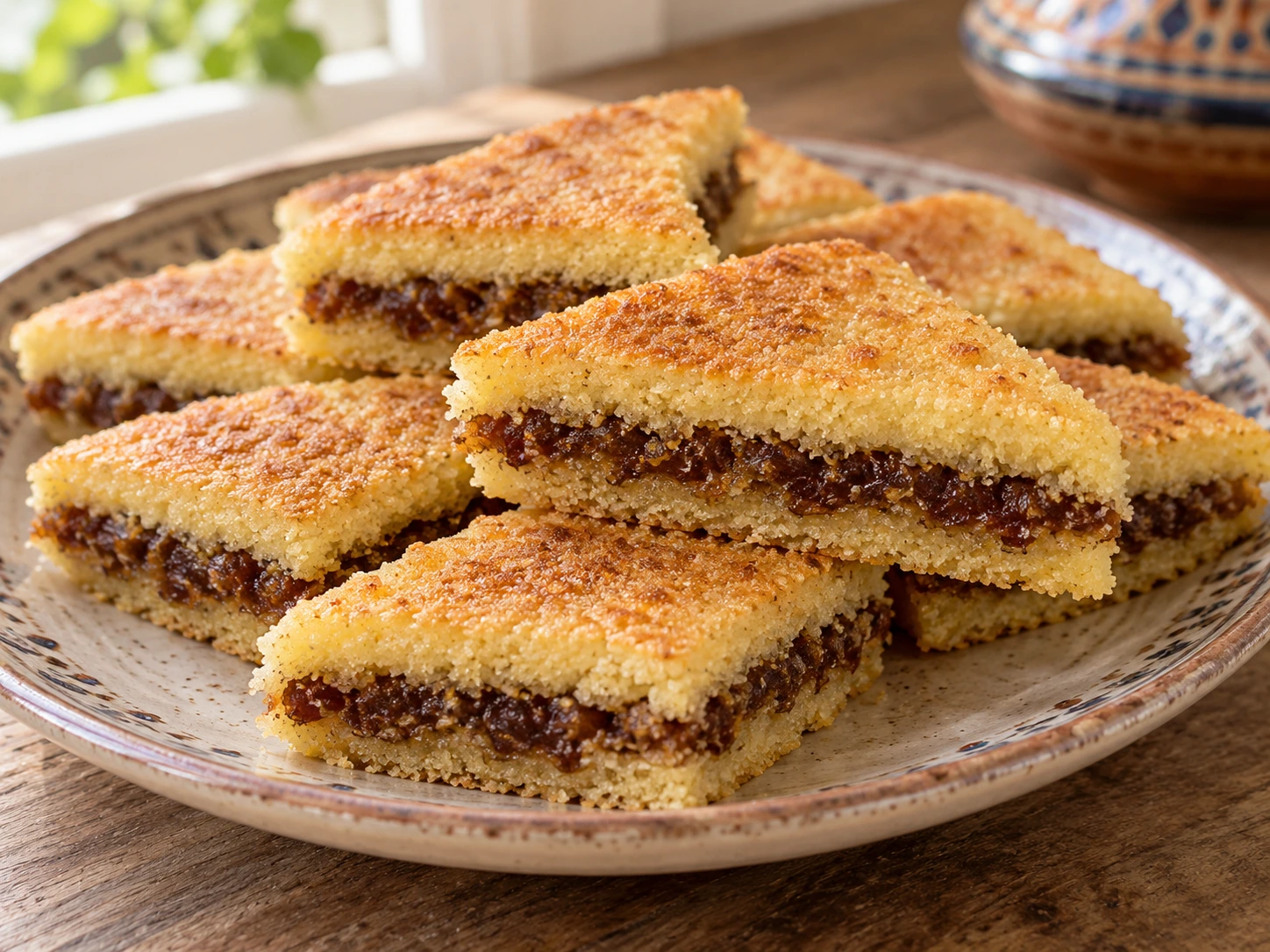
The secret of bradj lies in the striking contrast between two diametrically opposed textures: the crumbly and melt-in-your-mouth shortbread of the semolina dough, and the soft, moist sweetness of the date filling. To make the outer dough, called m'besses, medium durum wheat semolina is used. This semolina is mixed with a noble fat, traditionally smen (traditional clarified butter with an intense aroma) or high-quality farm butter, sometimes supplemented with vegetable oil to soften the structure. A pinch of salt is essential to enhance the flavors, and the mixture is rubbed between the hands for a long time so that the fat permeates each grain of semolina. The mixture is then delicately sprinkled with water flavored with orange blossom water, without kneading, to obtain a malleable dough that retains its legendary friability after baking.
As for the inner filling, it consists of ghars, a natural date paste made from Deglet Nour dates, carefully cleaned, pitted, and then crushed by hand. To give it perfect suppleness that will match that of the semolina dough during shaping, the date paste is kneaded with a small amount of butter or oil, then flavored with ground cinnamon and ground cloves. This fragrant filling not only provides a natural sweetness without added refined sugar but also exceptional nutritional richness, making bradj a choice food to regain strength after the long winter months.
🔪 🍳 THE SHAPING RITUAL AND TAJINE COOKING
The shaping of bradj is a true work of precision that requires patience and artisanal skill passed down from generation to generation. The process begins by dividing the semolina dough into two identical balls. The first ball is first rolled out on a clean surface to form a regular disk about one centimeter thick. In parallel, the flavored date paste is spread into a disk of similar diameter, but slightly thinner. This date disk is then carefully placed on the first semolina disk. Finally, the second semolina ball is rolled out and placed over the date layer, creating a perfect three-dimensional sandwich.
The cook then uses her hands or a rolling pin to gently flatten the entire assembly, ensuring that the semolina and date layers stretch uniformly without the filling escaping from the sides. The final thickness should be about one and a half centimeters. Using a large knife or a traditional wooden mold, the disk is cut into regular diamond shapes, a highly symbolic geometric form in Maghrebi art representing the protective eye and prosperity.
In my books

Continue exploring the continent’s cuisines with Africa at the Table — 54 countries, 54 iconic dishes, by Alioune FALL. This book is in English.
Explore further
Cooking is done dry on a refractory earthenware tajine or, failing that, on a heavy cast-iron griddle placed over medium heat. Each diamond is delicately placed on it. Under the effect of heat, the semolina slowly browns and acquires an extremely crispy texture, while the butter contained in the dough melts to give it that sought-after friable character. The dates inside heat gently without ever caramelizing or hardening, protected by the double semolina shield. The diamonds are turned halfway through cooking to obtain a uniform golden-brown color on both sides. Once cooked, they are left to cool on a clean cloth, as hot bradj is extremely fragile and would crumble instantly if handled.
🧺 ☕ THE ART OF THE TABLE AND SHARING TRADITIONS
The consumption of bradj is surrounded by social rituals that strengthen community and family ties. Traditionally, on the first day of spring, Algerian families prepare large baskets filled with fresh bradj to go picnicking in meadows and flowering orchards, a convivial outing called nzaha. Children run in the grass while elders share these semolina diamonds amidst laughter and popular songs celebrating the new season.
At home, bradj is the majestic companion to afternoon mint tea or coffee with milk. However, the most traditional and authentic way to enjoy it is with a large glass of lben (fresh fermented milk) or raib (curdled milk). The fresh acidity and velvety texture of fermented milk contrast wonderfully with the rich fat and sweet taste of date bradj, creating a perfect and extremely digestible flavor balance. Offering bradj to a visitor is a sign of deep respect and affection, as this sweet bread embodies the generosity of the hostess who dedicated her time and energy to manually shaping this delicacy.
🌍 🌴 CONFLUENCES AND PLACE IN AFRICAN GASTRONOMY
Beyond its Algerian cradle, bradj holds a major place in the history of African cuisine. It eloquently illustrates the valorization of agricultural resources in arid and semi-arid zones, particularly durum wheat from the northern plains and dates from the Saharan palm groves. Dates have been the brown gold of Saharan and sub-Saharan Africa for millennia, constituting a vital energy source for nomadic caravans crossing the desert. Bradj bears witness to these trans-Saharan exchanges, associating Mediterranean grain culture with desert date culture.
Technically, bradj shares close affinities with other North African cakes, such as makroud, which uses similar ingredients but is fried and dipped in honey. Bradj stands out for its healthy dry cooking on a griddle, which made it an ideal travel food for Saharan African pastoralists and travelers, capable of preserving its taste and nutritional qualities for several weeks. It thus fits into a global African tradition of making dry, durable, and energetic cereal cakes, designed to adapt to climatic rigors while offering unparalleled gustatory pleasure. Through its spring symbolism, it also joins the many harvest festivals and agrarian rituals that punctuate the lives of African peoples, recalling the unbreakable bond between man and his nourishing land.
🔄 🗣️ SYNONYMS AND VARIATIONS IN DENOMINATION
The term bradj is the most widespread, but this semolina sweet with dates has other names depending on the regions of North Africa and dialects:
M'besses aux dattes: Descriptive name used in Central and Western Algeria, highlighting the very crumbly and fatty nature of the semolina dough. Mtekba aux dattes: Name sometimes given in certain coastal localities to designate this cake pricked with a fork before cooking on the tajine. Aghroum n'tini: In Kabyle and Berber languages, this term literally translates to date bread, emphasizing the central ingredient of the filling. Bradj de Constantine: Prestigious name referring to the variant from the capital of Eastern Algeria, renowned for its geometric finesse and pronounced orange blossom water fragrance. Galette de semoule farcie aux dattes: Descriptive translation used in international culinary literature to present this specialty to gourmets worldwide.
Keywords:
Dates Semolina Spring Diamond Shortbread
In the kitchen : Bradj
Recipes from the site to put your knowledge into practice:
Discover these cuisines at a restaurant
Explore our restaurant and caterer directories. Choose your destination and check the establishment’s menu to confirm which dishes are offered and available.
Continue exploring
Enjoy discovering ingredients and African cuisines? Join our newsletter. The illustrated PDF 10 sauces africaines incontournables is in French and is offered after confirming a subscription to the French or bilingual edition.