Dambou
Niger
Understanding : Dambou
🌾 ORIGINS AND CULINARY HISTORY OF DAMBOU 🌾
Dambou, also spelled dambu, is a traditional dish of exceptional richness, originating from the Sahelian regions of West Africa, particularly Niger and northern Nigeria. This dish is deeply rooted in the culinary heritage of the Songhai-Zarma and Hausa communities, who have inhabited these semi-arid lands for centuries. Dambou is a savory and fragrant couscous, garnished with leafy greens, the most famous and prized of which is moringa. Historically, the creation of this dish met very specific climatic and geographical requirements. In the harsh Sahelian climate, marked by long periods of drought and sometimes limited agricultural resources, local populations had to show great ingenuity to maximize the nutritional intake of their food. Local cereals such as millet, sorghum, and later corn and rice, formed the energetic base of the diet, while wild or cultivated leaves provided essential vitamins and minerals. Dambou was born from this perfect symbiosis between grains and leaves. The introduction of moringa, a shrub with miraculous nutritional properties often called the tree of life, propelled this dish to the rank of a true traditional superfood. Originally prepared for farmers and travelers needing a complete and easy-to-transport meal in the fields or across the desert, dambou has stood the test of time to find its way onto urban tables and become a true ambassador of Nigerien culinary identity.
🥣 PREPARATION AND STEAM COOKING TECHNIQUE 🥣
The preparation of dambou is a beautiful example of mastering steam cooking, an ancestral method widely used in the Sahelian and sub-Saharan fringe to preserve nutrients and give lightness to cereals. The process begins with the choice of the base cereal. Traditionally, broken rice, millet semolina, corn, or wheat are used. This semolina is thoroughly washed, then carefully drained. In parallel, the main ingredient of the dish is prepared: fresh moringa leaves. These are carefully sorted to keep only the tenderest leaflets, then washed and coarsely chopped. To reduce their natural bitterness and speed up cooking, the leaves are often quickly blanched in salted boiling water before being squeezed dry. Then, the prepared semolina and moringa leaves are mixed in a large bowl with finely sliced onions. This colorful mixture, where the tender green of moringa contrasts beautifully with the white or yellow of the cereal, is placed in the upper part of a traditional steamer, often called a couscoussier. Cooking takes place in several stages. The steam is allowed to pass through the mixture for about thirty minutes, then the dambou is removed to be sprinkled with a little water and oil, to prevent the grains from clumping together. It is then put back on the heat for a second steaming. Once cooked, the hot dambou is transferred to a large dish. It is at this point that the final seasoning is added, which will give it its full personality. A generous amount of peanut oil or red palm oil is added according to regional preferences, salt, a bouillon cube to enhance the flavors, chili powder or freshly crushed chili, and especially roasted and ground peanut cake, known as koulikouli, or simply crushed peanuts. This last ingredient brings a crunchy texture and an irresistible nutty flavor that masterfully binds all the flavors together.
🥗 VARIATIONS AND EXPLOSION OF FLAVORS 🥗
Dambou comes in a multitude of variations that demonstrate the flexibility of this recipe and the diversity of local resources across the Sahel. The most famous variation is rice dambou, or dambu shinkafa in Hausa, made from broken rice or rice flour. This version offers an extremely soft and light texture in the mouth. In areas where millet remains the queen cereal, millet dambou is preferred for its rustic flavor and more pronounced earthy taste. Nowadays, with the globalization of ingredients, the use of classic durum wheat semolina for couscous has become very popular in urban areas, as it significantly reduces preparation time while offering a very satisfying result. The leafy greens used also vary according to seasons and regions. While moringa remains the absolute reference, it can be replaced or combined with amaranth leaves, sweet potato leaves, or even fresh spinach when moringa is scarce. Although traditional dambou is a predominantly vegetarian dish, festive or modern versions sometimes include shredded dried meat, crumbled dried fish, or even pieces of mutton liver cooked in sauce. Finally, in some contemporary presentations, dambou is accompanied by quartered hard-boiled eggs or fried plantains to create a bold and gourmet sweet-savory contrast.
🌍 THE SOCIAL PLACE AND NUTRITIONAL POWER OF DAMBOU IN AFRICA 🌍
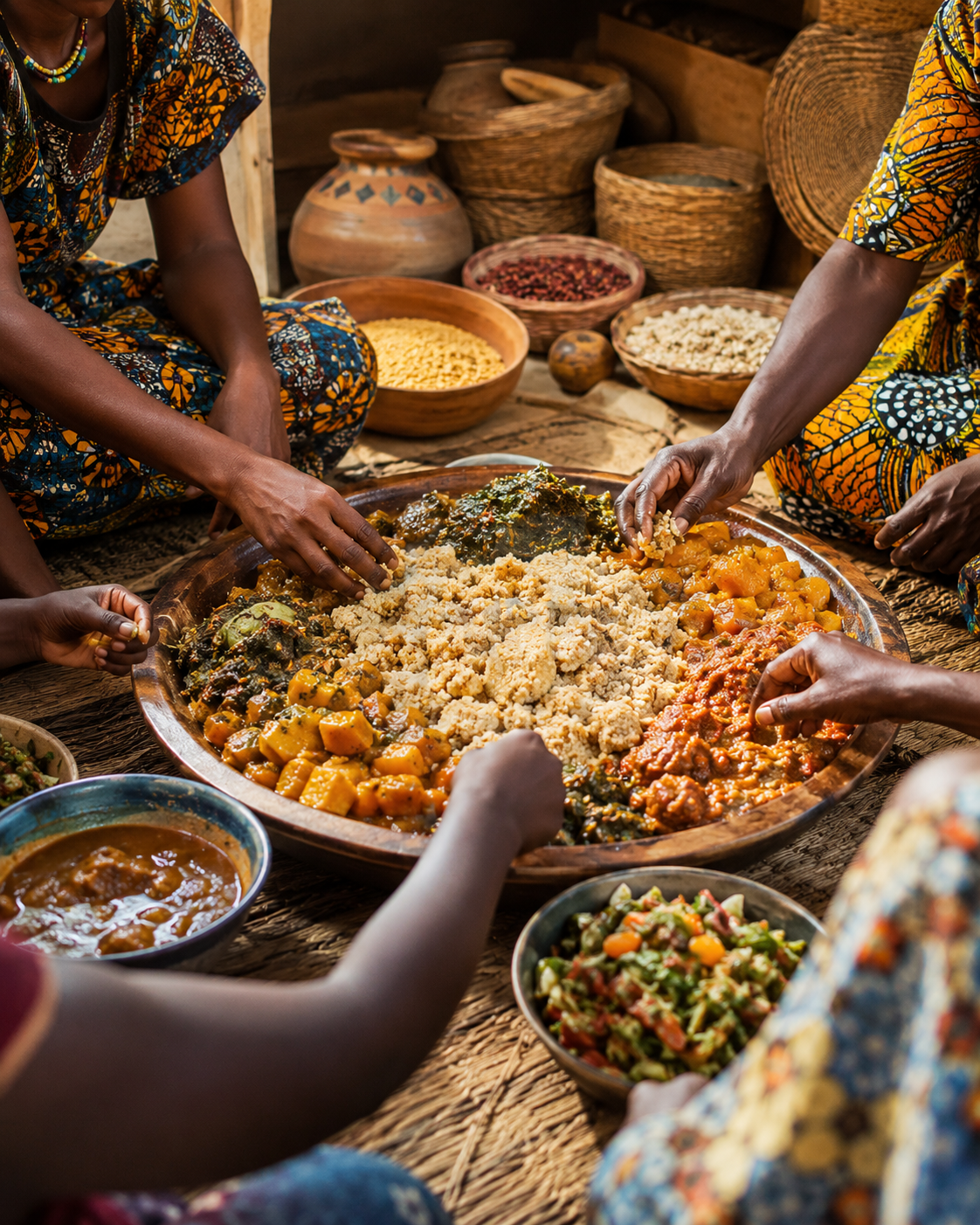
Dambou is much more than a simple daily meal; it is the very symbol of conviviality, solidarity, and community sharing in West Africa. Traditionally, this dish is served in a large calabash or a communal circular dish around which all family members and visiting guests gather. Everyone takes their portion with their fingers or a spoon, in an atmosphere of mutual respect and warm exchange. Dambou is also the quintessential dish for major social occasions in the Sahelian life. It is prepared in large quantities during weddings, baptisms, end-of-year celebrations, and religious ceremonies. During the holy month of Ramadan, dambou is particularly appreciated for the fast-breaking meal or the dawn meal, because its nutritional density and fiber richness help sustain the body during long hours of abstinence. Nutritionally, dambou is a model of balance and health. Cereals provide the carbohydrates necessary for daily energy, while peanuts provide quality vegetable proteins and essential fatty acids. Moringa, for its part, is a true nutritional goldmine, brimming with vitamin A, vitamin C, calcium, iron, and potassium. This magical synergy of ingredients makes dambou a major ally in the fight against malnutrition and a remarkable example of traditional African dietetics.
🔄 SYNONYMS AND COMPANION NAMES 🔄
Through its geographical and linguistic journeys, dambou has accumulated several names and synonyms that reflect its history and its integration into different cultures or dialects of the West African region:
Dambu, the most common spelling in Hausa-speaking countries and widely used in Nigeria. Dambou de moringa, the descriptive formula that highlights the essential presence of the leaves of the tree of life. Couscous au moringa, an evocative French translation that helps people outside the region understand the texture of the dish. Dambu shinkafa, which specifically refers to the highly appreciated variant prepared with rice. Couscous nigérien, a term sometimes used by the diaspora and in international culinary festivals to claim the nationality and cultural origin of this unique specialty. 🔑 REFERENCE KEYWORDS 🔑
Niger (the cultural and geographical heart of this ancestral dish) Moringa (the highly nutritious green leaf that is essential) Couscous (the texture and the steam cooking method par excellence) Sahel (the climatic environment from which this ingenious recipe originated) Peanut (the magical ingredient in powder or oil form for taste)
Prepare this speciality
Choose a detailed recipe, adjust the portions and prepare your ingredients before starting. Our cooking tips and food safety advice complement the steps described in the recipes.
Explore further: Cooking tips · Food hygiene and safety advice.
In my books

Continue exploring the continent’s cuisines with Africa at the Table — 54 countries, 54 iconic dishes, by Alioune FALL. This book is in English.
In the kitchen : Dambou
Recipes from the site to put your knowledge into practice:
Discover these cuisines at a restaurant
Explore our restaurant and caterer directories. Choose your destination and check the establishment’s menu to confirm which dishes are offered and available.
Continue exploring
Enjoy discovering ingredients and African cuisines? Join our newsletter. The illustrated PDF 10 sauces africaines incontournables is in French and is offered after confirming a subscription to the French or bilingual edition.