Frik
North Africa
Understanding : Frik
🌾 🔥 ROASTED GREEN WHEAT AND ITS ANCESTRAL ORIGINS
The word frik, also spelled freekeh, frikeh, frekeh, or farik, which derives from the Arabic verb meaning to rub, refers to a cereal product of inestimable rarity and value in the culinary heritage of North Africa and parts of the Middle East. To define it precisely, it is a tender durum wheat that is harvested before its full maturity, when the grains are still full of milk and a vibrant green color, then subjected to a roasting process by fire before being rubbed, dried, and crushed. This exceptional ingredient forms a historical and gustatory bridge between ancient preservation techniques and the demands of contemporary gastronomy.
Where to find it
Look for the exact food-grade form required by the recipe at markets and specialist shops. Check the product name, ingredients, condition and storage instructions.
Explore further: Cooking tips · Food hygiene and safety advice.
Search Amazon.fr — affiliate link →
Check availability and delivery on Amazon.fr. Compare ingredients, packaging and sellers.
As an Amazon Associate I earn from qualifying purchases.
History and uses
Among its many synonyms and appellations, one finds green wheat, roasted green wheat, crushed green wheat, or freekeh on international tables and in delicatessens. Locally, in Algeria and Tunisia, the word frik is almost exclusively used to refer to both the processed grain and the famous soup derived from it. In some agricultural regions of North Africa, it is sometimes called gerbouz, although this term can sometimes refer to other types of crushed cereals or rustic grinds. Whatever the chosen name, it always refers to this unique grain harvested at the dawn of its maturity, thus capturing all the sweetness and freshness of the growing plant.
The historical origin of frik is often associated with a fortuitous discovery born out of an emergency situation, a legend passed down from generation to generation. It is said that during an ancient conflict in the Eastern Mediterranean or North Africa, villagers saw their wheat fields threatened by an imminent invasion. Refusing to lose their future harvest, they cut the wheat while it was still green and hid it under piles of straw or in their barns. Unfortunately, the facilities were set on fire during the clashes. After the attackers left, the farmers searched the rubble and discovered that while the outer husks of the ears had been charred by the flames, the green wheat grains inside remained intact, cooked and perfumed by the smoke. By rubbing the ears to remove ash and burnt residue, they obtained a golden-green grain with an exquisite smoky flavor. This survival food proved so tasty and preserved so well that the process was deliberately reproduced and perfected, giving rise to a major culinary tradition.
🚜 🪵 THE UNIQUE AND ARTISANAL MANUFACTURING PROCESS
The transformation of wheat into frik is a delicate art that requires perfect synchronization with the cycles of nature and ancestral know-how transmitted with fervor. It all begins in early spring, during a very brief period called the milky stage of wheat. It is at this precise moment, when the grain is still tender and filled with a milky sap, that the harvest must take place. Too early a harvest would result in grains that are too wet and would crush, while a late harvest would yield wheat too rich in hardened starch, thus losing its characteristic sweetness and green color.
Once cut with a sickle, the wheat stalks are arranged in bundles and left to dry under the scorching sun for a day. The next day begins the most spectacular stage: roasting. Farmers spread the wheat on beds of dry branches or wild plants, then set them on fire. This controlled burning operation is carried out with extreme vigilance. The flames quickly consume the dry outer husks and lightly grill the surface of the grains without burning them to the core, thanks to the natural moisture they still contain. This unique thermal treatment cooks the green wheat, fixes its nutrients, and gives it its characteristic and sought-after smoky aroma.
Immediately after the fire, the rubbing process, traditionally called dars or farik, takes place. Artisans and families vigorously rub the roasted ears between their hands or with wooden flails to separate the grains from their charred husks. The liberated grains, displaying a beautiful greenish-bronze color, are then spread in the sun for several days to complete their drying and ensure optimal preservation for several years. Finally, the dried green wheat is cleaned of impurities and then coarsely crushed using traditional stone mills, which allows for different sizes of broken grains, adapted to specific culinary preparations.
In my books

Continue exploring the continent’s cuisines with Africa at the Table — 54 countries, 54 iconic dishes, by Alioune FALL. This book is in English.
Explore further
🍲 🇩🇿 THE CENTRAL PLACE OF FRIK IN AFRICAN CUISINE
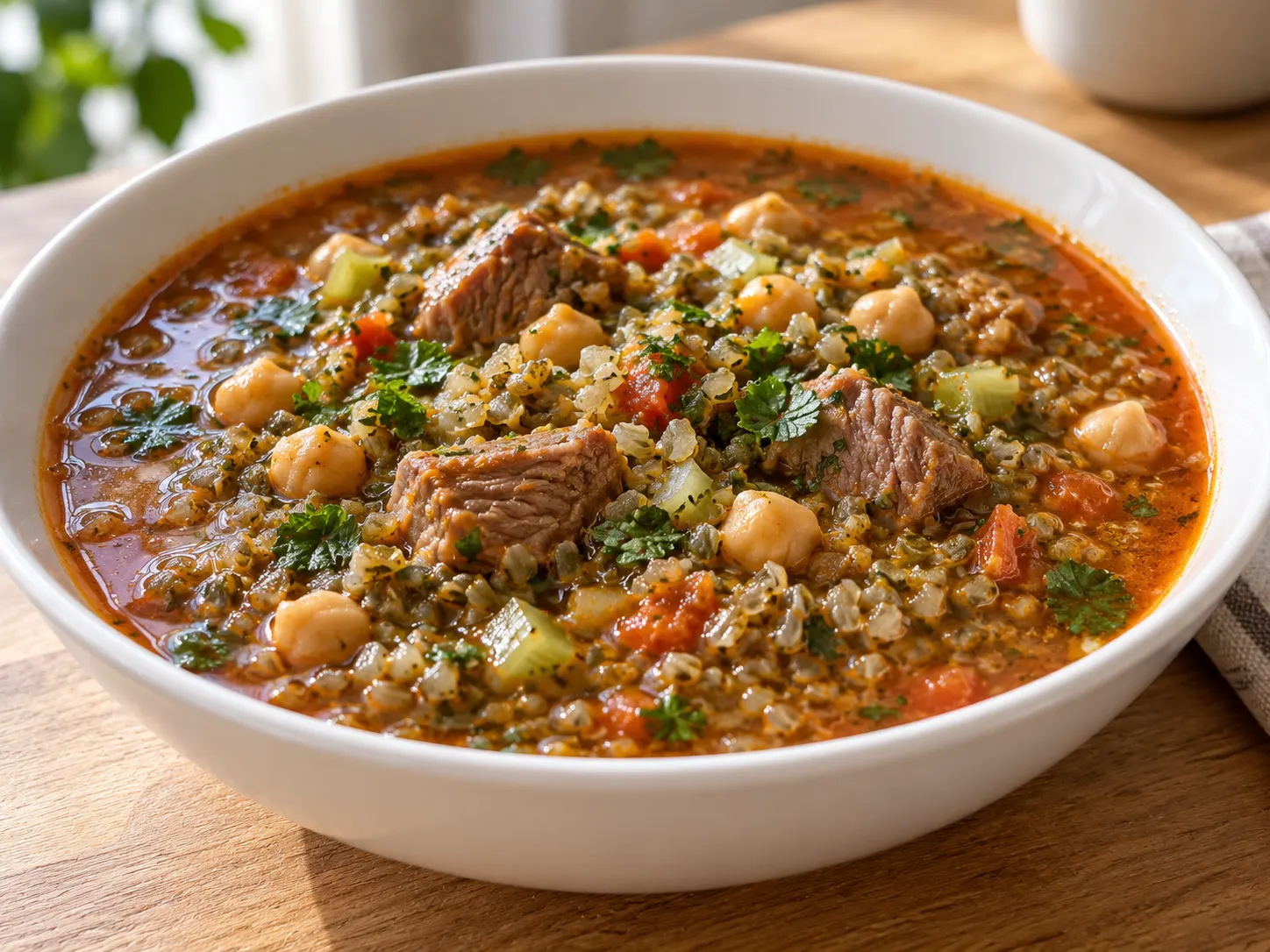
Within the vast panorama of African cuisine, and more particularly in the Maghreb region, frik occupies a prominent, almost sacred place. It is the star and indispensable ingredient of chorba frik, an emblematic traditional soup from Algeria and Tunisia. This soup goes beyond mere food to become a true cultural symbol of hospitality, comfort, and national identity.
In Algeria, chorba frik is prepared by simmering tender pieces of lamb or beef with onions, garlic, and fresh pureed tomatoes. This rich broth is generously flavored with a bouquet of fresh coriander, celery, and wild mint, and seasoned with a blend of subtle spices such as ras el hanout, caraway, black pepper, and sometimes a touch of cinnamon. In the middle of cooking, the previously rinsed crushed frik is incorporated. By cooking slowly in this fragrant broth, the green wheat grains absorb the flavors and swell, releasing their starch to bind the soup and give it a velvety and creamy consistency. Each spoonful offers a unique texture, where the tender crunch of the cereal meets the richness of the spicy broth.
In Tunisia, chorba with frik is also an essential classic, often garnished with fish or chicken, and generally spicier thanks to the generous addition of local harissa. But frik is not limited to soups. Throughout North Africa and in some sub-Saharan African regions, this roasted green wheat is used to stuff poultry such as farm chicken or pigeon, where its smoky taste wonderfully complements raisins, almonds, and sweet spices. It is also cooked in stews with seasonal vegetables, or served as a side dish like a pilaf, advantageously replacing rice or traditional couscous by greedily absorbing the cooking juices of meats and vegetables.
🥦 🧪 THE EXCEPTIONAL NUTRITIONAL QUALITIES OF GREEN WHEAT
Nutritionally, frik is a true treasure of benefits that surpasses many modern cereals. Due to its early harvest, green wheat retains a much higher concentration of nutrients than wheat harvested at full maturity. This makes it a food of choice for strengthening the body and maintaining excellent general health.
Frik is exceptionally rich in dietary fiber, containing up to four times more fiber than brown rice and nearly twice as much as quinoa. This high fiber content, largely composed of resistant starch, promotes healthy digestion, nourishes the intestinal microbiome, and provides a lasting feeling of satiety, which is ideal for regulating appetite. Furthermore, frik has a low glycemic index, which means that its complex carbohydrates are slowly assimilated by the body, thus avoiding insulin spikes and offering a stable source of energy throughout the day, a property particularly beneficial for diabetics.
In addition, this green wheat displays a remarkable protein profile, essential for maintaining muscle mass and cell regeneration. It is rich in essential minerals such as iron, which helps fight anemia and fatigue, zinc which supports the immune system, and magnesium, valuable for muscle and nerve function. It also contains high levels of lutein, a powerful antioxidant known to protect eye health. By incorporating frik into their diet, African populations have thus benefited from a first-rate natural nutritional shield.
🎉 🤝 A SOCIAL, CULTURAL, AND RITUAL DIMENSION
The scope of frik extends far beyond the strictly dietary or culinary framework to be deeply embedded in the social and spiritual dimension of African communities. Its consumption is surrounded by warm rituals, particularly during the holy month of Ramadan. In a multitude of homes, the characteristic aroma of chorba frik gently simmering in the late afternoon fills the streets and announces the imminent breaking of the fast. Sharing a bowl of this warm and comforting soup during iftar is an act of family and community communion of great beauty.
Frik is also a vector of solidarity and mutual aid. In the past, the period of harvesting and roasting green wheat was a collective event that mobilized the entire village, bringing together neighbors and relatives to share the arduous work around the fire and the rubbing of the grains. This spirit of sharing continues today through the offering of the first packets of frik of the season to more modest families or neighbors. Whether served at large family gatherings, weddings, or simply to warm up cool winter evenings, frik remains a symbol of generous cuisine, resilient and proud of its roots in the land.
Keywords: frik, freekeh, green wheat, chorba, African cuisine.
In the kitchen : Frik
Recipes from the site to put your knowledge into practice:
Discover these cuisines at a restaurant
Explore our restaurant and caterer directories. Choose your destination and check the establishment’s menu to confirm which dishes are offered and available.
Continue exploring
Enjoy discovering ingredients and African cuisines? Join our newsletter. The illustrated PDF 10 sauces africaines incontournables is in French and is offered after confirming a subscription to the French or bilingual edition.