Wassa-wassa
West Africa
Understanding : Wassa-wassa
🌾 🥣 BLACK COUSCOUS AND ITS MANY NAMES
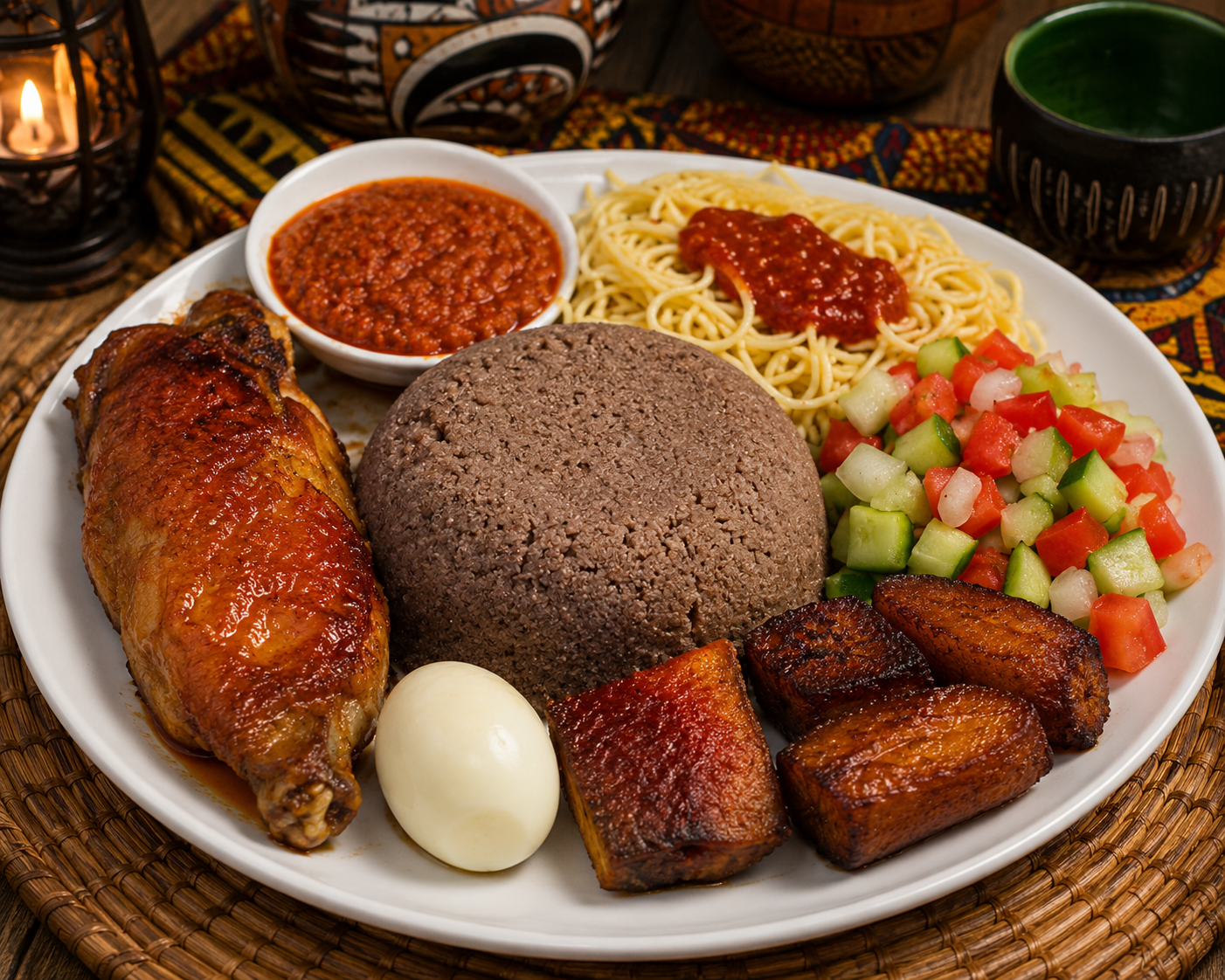
Wassa-wassa, also spelled wassawassa or ouassa-ouassa, is one of the most authentic and unique jewels of West African gastronomy. This traditional dish, which takes the form of a couscous with a very characteristic dark color, is made from dried and ground yam chips. Primarily rooted in northern Benin, Togo, and Ghana, as well as in some regions of Nigeria, wassa-wassa embodies the art of transforming and enhancing yam, a nourishing tuber elevated to the status of a sacred plant in many African cultures. To define it precisely, it is a tuber couscous, where the usual wheat semolina gives way to a fine grind of dehydrated yam, patiently steamed until tender, light, and deliciously fragrant grains are obtained.
Where to find it
Look for the exact food-grade form required by the recipe at markets and specialist shops. Check the product name, ingredients, condition and storage instructions.
Explore further: Cooking tips · Food hygiene and safety advice.
History and uses
Regarding its synonyms and regional names, wassa-wassa is commonly referred to as yam couscous, yam chip couscous, or black couscous, in reference to its natural dark hue, which varies from dark brown to charcoal black due to the oxidation and sun-drying of the yam pieces. In neighboring English-speaking areas like Ghana or Nigeria, it is often called black couscous, yam couscous, or dried yam grits. In some local languages of northern Benin and Togo, such as Dendi or Bariba, the term wassa-wassa directly echoes the lightness of the grain and the speed of its consumption. This semantic richness perfectly illustrates how the same savoir-faire, born from African soil, has spread across linguistic and cultural borders to become a shared heritage.
The culinary history of wassa-wassa is intimately linked to the life cycle of yam and the preservation techniques developed by the peoples of the West African savanna. Yam being a seasonal tuber that fears excess moisture after harvest, farmers developed an extremely efficient drying method to avoid waste and ensure food security throughout the year. Excess or second-choice tubers were thus peeled, cut into thin slices, blanched, and then exposed on rocks or terraces under the scorching Sahel sun to produce yam chips, called amala in Nigeria or amoula in other regions. These yam chips, hard as stone, could be stored for several years in traditional granaries. It was from these dried pieces that women had the idea of finely grinding the tuber to make semolina, and then steaming it in the manner of Berber couscous, which came from the North via caravan routes. Wassa-wassa was thus born from an ingenious fusion between the local West African resource, yam, and the North African steaming technique. It represents a perfect example of successful trans-Saharan culinary cross-breeding, a staple and festive dish that has nourished generations of Bariba, Dendi, Fulani, and Fon families.
🚜 🪵 THE EXPERTISE OF PREPARING AND ROLLING THE GRAINS
The traditional preparation of wassa-wassa is a demanding process that requires great precision, infinite patience, and remarkable tactile sensitivity, an art almost exclusively held by women. It all begins with grinding the dried yam chips into powder. This powder, with a fine but slightly granular texture, is then sieved to remove impurities and overly coarse pieces. The most delicate step is then wetting and rolling. The cook very delicately sprinkles the yam flour with lightly salted water, then, with rapid and regular circular movements of the palm of her hand, she agglomerates the powder into tiny balls, thus forming the couscous grains. If the gesture is too abrupt or the water too abundant, the flour turns into a paste, thus ruining the preparation.
Once the semolina is perfectly rolled, it is transferred to a traditional clay or metal couscoussier for steaming. This cooking is done in several stages. During the first steaming, which lasts about thirty minutes, the yam grains begin to cook and clump together slightly. The cook then removes the couscous, pours it into a large wooden dish, carefully separates the grains with a ladle or fingers moistened with cold water, and then puts it back to cook for a second steaming. This double cooking ensures perfectly tender grains that do not stick together and literally melt in the mouth.
In my books

Continue exploring the continent’s cuisines with Africa at the Table — 54 countries, 54 iconic dishes, by Alioune FALL. This book is in English.
Explore further
🍲 🇧🇯 ITS PLACE AND ACCOMPANIMENTS IN WEST AFRICAN CUISINE
In cuisine, wassa-wassa is distinguished by its savory neutrality, making it an ideal base for a multitude of spicy and gourmet accompaniments. Unlike classic wheat couscous, which is often served with a very liquid vegetable and meat broth, wassa-wassa is traditionally enjoyed in a drier manner, accompanied by a drizzle of red palm oil or fragrant peanut oil, and garnished with a spicy condiment called wagasi, a local cow's milk cheese typical of northern Benin.
It is very often served with a thick and concentrated tomato sauce, richly garnished with fried onions, fresh chilies, crumbled smoked fish, powdered dried shrimp, or pieces of fried mutton. To add freshness, it is customary to accompany it with steamed moringa leaves, slices of ripe avocado, or boiled black-eyed peas. This contrast between the earthy sweetness of dried yam, the spiciness of the sauce, and the creaminess of the oil makes each bite of wassa-wassa a true explosion of typically African flavors.
🥦 🔬 THE EXCEPTIONAL NUTRITIONAL VIRTUES OF THE TUBER
From a health perspective, wassa-wassa is a food of exceptional dietary quality, perfectly suited to the demands of a modern and balanced diet. As it is prepared exclusively from pure yam, it is naturally and completely gluten-free, making it a choice substitute for people suffering from celiac disease or digestive discomfort related to wheat.
Furthermore, dried yam has a significantly lower glycemic index than fresh yam or potato, thanks to the drying process and starch retrogradation during steaming. The complex carbohydrates in wassa-wassa are therefore digested very slowly by the body, ensuring a gradual and sustained release of energy and avoiding blood sugar spikes, a highly beneficial property for the prevention and management of type two diabetes. Wassa-wassa is also particularly rich in dietary fiber, promoting excellent transit and good intestinal health. It is rich in potassium, an essential mineral for blood pressure regulation, as well as vitamin B6, copper, and antioxidants, which help strengthen the immune system and fight cellular inflammation.
🎉 🤝 RITUAL AND SYMBOLIC IMPORTANCE OF WELCOME AND SHARING
Finally, the consumption of wassa-wassa in West Africa holds major social and ritual importance, deeply rooted in the collective identity of the northern populations. More than just an everyday food, wassa-wassa is a dish of sharing, mutual aid, and celebration, often prepared during large family gatherings, agricultural fairs, or traditional harvest ceremonies.
Its long and meticulous preparation is an opportunity for women from the same neighborhood or family to gather, tell village stories, and transmit this unique savoir-faire to young girls, thus ensuring the continuity of this cultural heritage. Serving a large dish of wassa-wassa decorated with slices of grilled wagasi cheese and red chilies to guests is the supreme sign of respect, generosity, and the joy of welcoming. By valuing this black yam couscous, West African countries are not only keeping an exquisite ancestral recipe alive, but they are also proudly asserting their food sovereignty by relying on the unique resources of their rich terroir and preserving the sacred bond that unites people to the nourishing earth.
Keywords: wassa-wassa, yam couscous, yam chips, Beninese cuisine, traditional dish.
In the kitchen : Wassa-wassa
Recipes from the site to put your knowledge into practice:
Discover these cuisines at a restaurant
Explore our restaurant and caterer directories. Choose your destination and check the establishment’s menu to confirm which dishes are offered and available.
Continue exploring
Enjoy discovering ingredients and African cuisines? Join our newsletter. The illustrated PDF 10 sauces africaines incontournables is in French and is offered after confirming a subscription to the French or bilingual edition.