Kom
Togo
Understanding : Kom
🌾 🌽 FERMENTED CORN BREAD AND ITS LINGUISTIC TRADITIONS
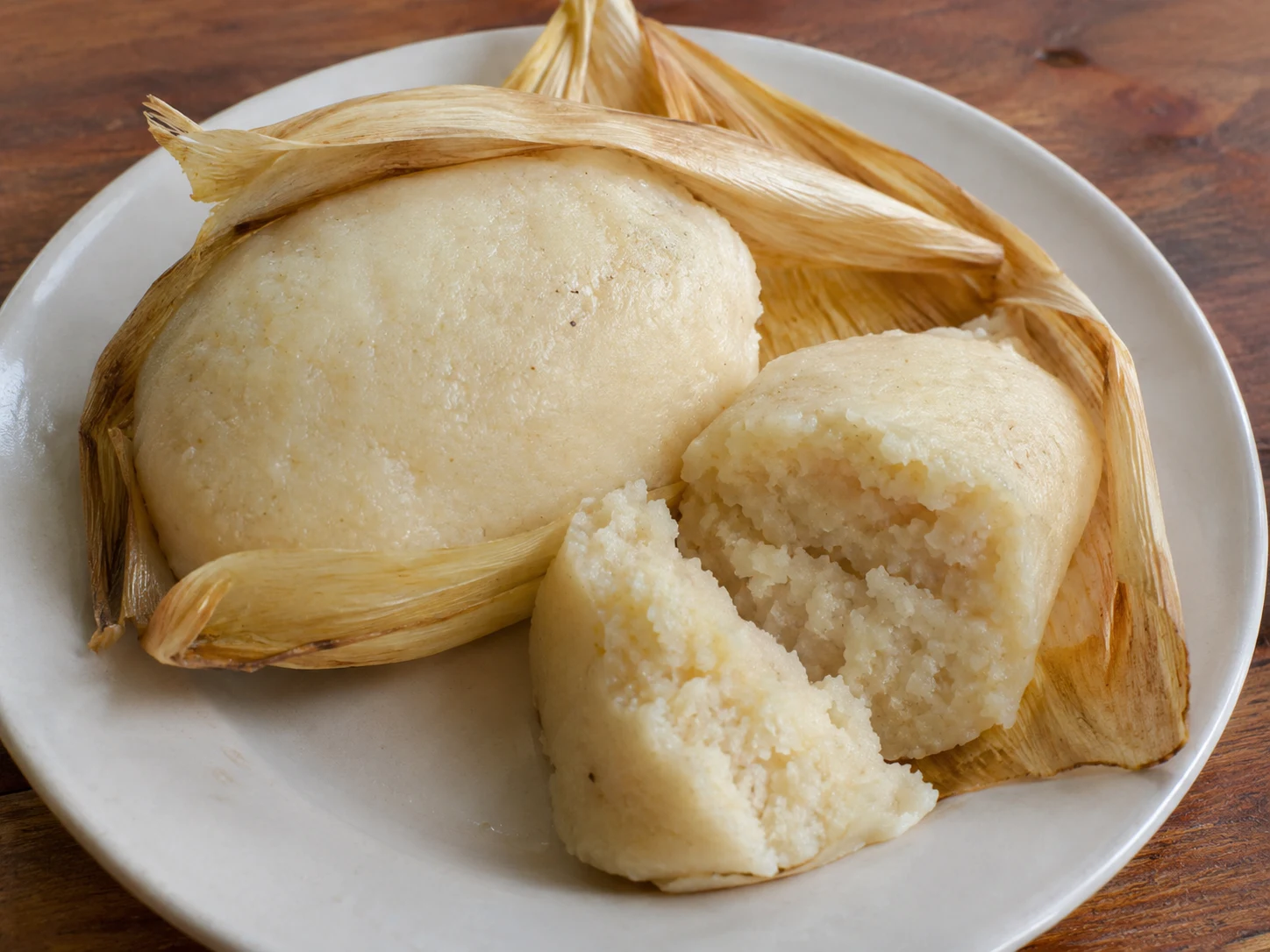
Kom, also known by the spellings komey, komi, or by its Ghanaian name kenkey, is one of the most remarkable and widely consumed staples of West African cuisine, particularly in Togo, Benin, and Ghana. This traditional dish, which comes in the form of a compact, slightly acidic, steamed ball of fermented corn dough, embodies the genius of sub-Saharan African fermentation techniques. Wrapped in corn husks or banana leaves, kom is much more than a simple staple food: it reflects a way of life, resilience in the face of climatic constraints, and a culinary heritage proudly passed down from generation to generation. To define it precisely, it is a moist and tangy corn bread, whose dense texture and unique flavor result from a long process of natural biological maturation controlled by women in markets and homes.
Where to find it
Look for the exact food-grade form required by the recipe at markets and specialist shops. Check the product name, ingredients, condition and storage instructions.
Explore further: Cooking tips · Food hygiene and safety advice.
History and uses
In terms of its synonyms and linguistic variants, kom bears names that vary according to ethnicity, region, and country. In Togo and Benin, mainly among the Ewe, Mina, and Fon populations, it is called kom, komey, komi, or dokonu. In Ghana, the same dish is universally known as kenkey, with two major variants: Ga kenkey, wrapped in dry corn leaves (husks), and Fanti kenkey, wrapped in banana leaves and with a slightly different texture. It is also similar to banku, although the latter often incorporates cassava dough and is not wrapped for final steaming. Whatever its name, this fermented corn preparation is a true common denominator of the Gulf of Guinea coastal strip, connecting peoples through the same emblematic sweet and sour flavor.
The culinary history of kom dates back to the origins of the introduction and domestication of corn on the African continent after the Columbian exchange. Corn quickly conquered the fertile lands of West Africa, adapting wonderfully to the tropical climate. To preserve this precious cereal from the ravages of heat and insects, and to make it more digestible, local populations applied their ancestral knowledge of fermentation, a technique already widely proven on millet and sorghum. The lactic fermentation process used for kom not only acidified the corn to prevent the proliferation of pathogenic bacteria, thus ensuring prolonged preservation, but also pre-digested the starch and released essential nutrients. Kom thus became the food par excellence for farm workers, coastal fishermen, and travelers, capable of resisting several days without refrigeration in a humid climate. Over the centuries, this rustic food has transformed into a cultural symbol of identity and resistance, particularly for the Ga people of Accra and the Mina people of Lomé, who celebrate kom during major traditional festivals such as Homowo.
🚜 🪵 THE RIGOROUS STEPS OF FERMENTATION AND PRE-COOKING
The traditional preparation of kom is a complex community undertaking that spans several days and requires highly technical know-how, a culinary art whose success relies on the sensory experience of the cooks. It all begins with the selection of premium dry white corn kernels. These kernels are carefully washed with plenty of water to remove dust, then soaked in large barrels of water for two to three days. This initial soaking initiates fermentation. The softened kernels are then transported to local mechanical mills or traditionally crushed to be reduced to a thick, homogeneous paste.
This fresh paste, called corn dough, is then placed in covered containers and left to rest for an additional two to three days to complete its lactic fermentation. It is during this essential phase that the dough develops its characteristic acidity under the action of natural ferments. The next step, called pre-cooking or aflata, is the most physically demanding. The cook separates the fermented dough into two equal portions. She cooks the first portion in a pot of boiling water while stirring vigorously with a large, sturdy wooden spatula. This vigorous cooking transforms the raw dough into a very dense, sticky, semi-cooked porridge. She then removes the pot from the heat and immediately incorporates the second portion of raw, cold dough into this hot mass, mixing intensely to obtain a uniform texture.
In my books

Continue exploring the continent’s cuisines with Africa at the Table — 54 countries, 54 iconic dishes, by Alioune FALL. This book is in English.
Explore further
Once this semi-cooked mixture has cooled, the women hand-shape fist-sized balls. These balls are then wrapped with incredible dexterity in corn husks previously softened in hot water or in banana leaves, forming a watertight and protective package. Finally, the wrapped balls are tightly arranged in a large pot, on a bed of corn stalks to avoid direct contact with the bottom of the pot, and steamed for two to three hours. This long final steaming seals the firm and melting consistency of the kom, while imparting the subtle, herbaceous scent of its vegetable wrappers.
🍲 🇹🇬 SPICY COMPANIONS AND KOM CONSUMPTION ON WEST AFRICAN TABLES
On West African plates, kom is unparalleled in its conviviality. Consumed hot, warm, or even cold, it is never eaten alone and is accompanied by a rich and fragrant garnish that balances its natural acidity. The most classic and popular combination in the markets of Lomé, Cotonou, or Accra consists of serving kom with a very spicy red chili sauce, made from crushed fresh red chilies, tomatoes, onions, and oil, as well as with a black condiment called shito, a fried chili paste with dried shrimp and fish.
To complete this highly energetic meal, crispy fried fish, often horse mackerel or sardine, or grilled shrimp are added. Kom also pairs wonderfully with more liquid, simmered sauces, such as fresh okra sauce, peanut sauce, or palm nut sauce. To eat it, one breaks off a piece of the ball with the fingers of the right hand, generously dips it in the chili or shito, then combines it with a bite of crispy fish. It is a street food par excellence, sold on every street corner by itinerant kom vendors, whose steaming stalls attract crowds from sunrise until late at night.
🥦 🔬 DIETARY INTAKE AND NUTRITIONAL BENEFITS OF LACTIC FERMENTATION
Nutritionally, kom is a formidable food, extremely rich and beneficial for the human body. Thanks to the prolonged lactic fermentation it undergoes during its production, the bioavailability of its nutrients is significantly increased compared to unfermented corn.
The fermentation process reduces the phytic acid content of corn, a natural compound that limits the absorption of minerals by the body. Thus, the iron, zinc, calcium, and magnesium present in kom are much better assimilated by the body. In addition, fermentation enriches kom with B vitamins, particularly thiamine, riboflavin, and niacin, essential for energy metabolism and nervous system health. Kom is an exceptional source of complex carbohydrates that provide sustained and diffused energy, preventing fatigue throughout the day. It is also a food rich in dietary fiber that promotes excellent digestive health, regulates intestinal transit, and improves the feeling of satiety, thus contributing to maintaining a healthy weight. Finally, lactic fermentation produces beneficial organic acids that act as powerful protectors of the intestinal flora, thereby strengthening the immune system.
🎉 🤝 CULTURAL, COMMERCIAL, AND SPIRITUAL DIMENSION OF FERMENTED CORN
Beyond its nutritional qualities, kom has a sacred social and spiritual dimension within African societies of the Gulf of Guinea. It is the quintessential symbol of female solidarity, the work of preparing and marketing kom constituting a major source of autonomous income and financial independence for thousands of West African women united in dynamic cooperatives.
Moreover, kom is intimately linked to ritual ceremonies and harvest festivals. During Homowo, the great annual festival of the Ga people in Ghana, kom prepared in a special way without wrapping and mixed with red palm oil, called kpokpoi, is sprinkled throughout the city to give thanks to the ancestors for the end of famine and to celebrate life. Sharing a bowl of kom with neighbors or relatives during this event is a sacred gesture of reconciliation, peace, and community unity. Thus, from the humble family table to the altars of ancestors, kom continues to unite communities, to sing the richness of the traditions of the land, and to assert itself as a living monument of African culinary culture.
Keywords: kom, kenkey, fermented corn, Togolese cuisine, shito. Send message
In the kitchen : Kom
Recipes from the site to put your knowledge into practice:
Discover these cuisines at a restaurant
Explore our restaurant and caterer directories. Choose your destination and check the establishment’s menu to confirm which dishes are offered and available.
Continue exploring
Enjoy discovering ingredients and African cuisines? Join our newsletter. The illustrated PDF 10 sauces africaines incontournables is in French and is offered after confirming a subscription to the French or bilingual edition.