Bota
Zimbabwe
Understanding : Bota
🥣 INTRODUCTION AND PRODUCT NATURE
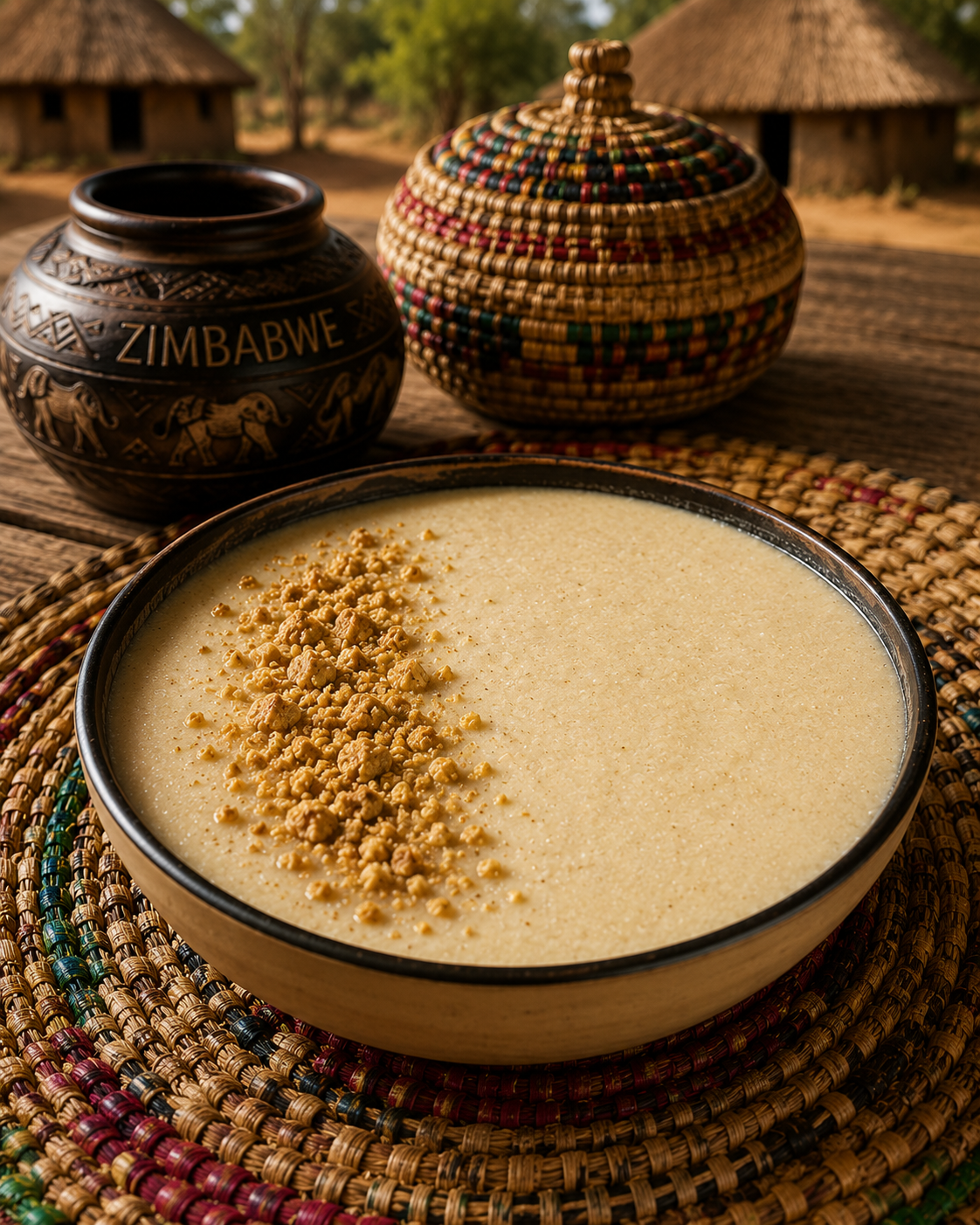
Bota is a highly emblematic culinary specialty from Southern Africa, representing one of the essential pillars of breakfast in Zimbabwe. It is a smooth, sweet, and rich porridge, traditionally prepared from very fine white cornmeal, locally called mealie-meal, and generously enriched with peanut paste. This unique combination gives it an incredibly velvety, creamy, and enveloping texture, as well as an aromatic profile dominated by notes of toasted nuts and a comforting natural sweetness. Unlike the fluid or acidic porridges found in other parts of the continent, Zimbabwean bota stands out for its dense creaminess and the absence of prior fermentation. It is a warm dish, universally appreciated by children and adults alike, embodying both the simplicity of local produce and the generosity of African family cooking. Beyond its sustenance function, bota is a true symbol of cultural identity, a soul food that immediately evokes a sense of nostalgia and well-being in all who grew up in the region.
Where to find it
Look for the exact food-grade form required by the recipe at markets and specialist shops. Check the product name, ingredients, condition and storage instructions.
Explore further: Cooking tips · Food hygiene and safety advice.
History and uses
🌽 HISTORY AND AGRICULTURAL ROOTS IN SOUTHERN AFRICA
The existence of bota is intimately linked to the history of corn and peanut cultivation in Southern Africa. White corn, introduced to the African continent in modern times, quickly became the dominant food crop in Zimbabwe due to its resilience and excellent nutritional yields. It forms the basis of the national diet in its solid form, sadza, but also in its liquid or semi-liquid form, bota. Peanuts, on the other hand, have been an integral part of the local agricultural heritage for centuries. The sandy soils and sunny climate of the region offer ideal conditions for cultivating this highly nutritious legume. Very early on, women in the Shona and Ndebele communities had the idea of combining corn flour cooked in water with spoonfuls of traditionally ground peanut paste. This simple gesture transformed an initially very neutral corn porridge into a complete dish, enriched with vegetable proteins and healthy fats. Bota thus became a formidable weapon against childhood malnutrition in rural areas, while establishing itself as the most democratic morning meal in all of Zimbabwean society.
⚙️ TRADITIONAL PREPARATION AND COOKING TECHNIQUE
The success of a good bota relies on a rigorous cooking technique aimed at achieving a smooth, lump-free consistency. First, the fine white corn flour or semolina is mixed in a bowl with an equal volume of cold water to create a fluid and perfectly homogeneous paste. This preliminary step is crucial, as pouring dry flour directly into hot water would instantly cause lumps to form that are impossible to dissolve. In parallel, a pot of lightly salted water is brought to a boil. When the water boils, the fluid corn paste is slowly poured in while stirring vigorously and continuously with a whisk or a long wooden spoon. Under the effect of heat, the preparation begins to thicken dramatically. The heat is then reduced to a minimum, the pot is covered, and it is left to simmer gently for about ten to fifteen minutes to thoroughly cook the cornstarch. It is at this point that the magic ingredient is incorporated: several generous spoonfuls of natural and creamy peanut paste. It is actively mixed so that the peanut paste melts and perfectly amalgamates with the hot porridge, which then takes on a beautiful amber-beige color. The consistency can be adjusted with a little hot water or hot milk if the bota becomes too thick. Finally, cane sugar, honey, or mashed banana can be added to taste to perfect this morning dessert.
In my books

Continue exploring the continent’s cuisines with Africa at the Table — 54 countries, 54 iconic dishes, by Alioune FALL. This book is in English.
Explore further
💡 BOTA'S PLACE IN SOCIETY AND NUTRITION
Bota holds a central place in the daily lives of families in Zimbabwe and neighboring countries like Zambia and Malawi. At dawn, kitchens come alive with the sound of pots simmering bota, prepared to give children strength before they leave for school. Due to its high energy density provided by the combination of complex carbohydrates from corn and unsaturated fats from peanuts, bota ensures lasting satiety, preventing mid-morning energy slumps. In primary schools and rural orphanages, enriched bota is frequently distributed as part of food programs to support children's growth and combat developmental delays. Beyond childhood, bota is also the preferred food for convalescing or ailing individuals, as its smooth consistency makes it easy to swallow and its digestion requires little effort from the body. During communal agricultural work, bota is served mid-morning to restore the strength of farmers, thus strengthening bonds of solidarity and mutual aid among village members.
🥞 CONTEMPORARY VARIANTS AND EVOLUTIONS
Although the classic peanut paste version remains the most popular and respected, bota has evolved to adapt to modern tastes and the availability of ingredients in urban areas. In city families, it is common to replace cooking water with cow's milk or to add a touch of table butter at the end of cooking to give it an even more royal creaminess. Some gourmets also add powdered cinnamon or vanilla to modernize the dish's aromatic profile. In the Zimbabwean diaspora around the world, preparing bota has become a Sunday morning ritual, a way to reconnect with cultural roots. Substitute corn semolina and commercial peanut butter are then used, but the magic still works the same way. This ability of bota to transcend eras and adapt to new lifestyles demonstrates the strength and longevity of this Southern African culinary heritage.
📚 SYNONYMS AND RELATED TERMS ACROSS THE REGION
Bota exists in a very rich multilingual environment, which gives it different names depending on the countries and local dialects:
Porridge (or Peanut butter porridge): this is the most widely used English expression in Zimbabwe, especially in formal contexts, schools, and restaurants to refer to bota. Isitshwala (in its porridge form): among the Ndebele people of Zimbabwe, although this term more often refers to the firm corn paste, it is sometimes used for the fluid morning version. Mealie-meal porridge: a common descriptive name in Southern Africa directly referring to the use of white corn flour as a base ingredient. Sadza wa mwana (or Soft Sadza): an expression sometimes used metaphorically to refer to fine corn porridge intended for young children. Pala (or Pap): in neighboring countries like South Africa or Botswana, similar corn porridge preparations bear these names, although they do not systematically contain peanut paste. 🔑 LIST OF 5 ESSENTIAL KEYWORDS
Corn Peanut Zimbabwe Porridge Nutrition
In the kitchen : Bota
Recipes from the site to put your knowledge into practice:
Discover these cuisines at a restaurant
Explore our restaurant and caterer directories. Choose your destination and check the establishment’s menu to confirm which dishes are offered and available.
Continue exploring
Enjoy discovering ingredients and African cuisines? Join our newsletter. The illustrated PDF 10 sauces africaines incontournables is in French and is offered after confirming a subscription to the French or bilingual edition.