Afang soup
Nigeria
Understanding : Afang soup
🍲 ORIGINS AND CULTURAL ROOTS OF AFANG SOUP
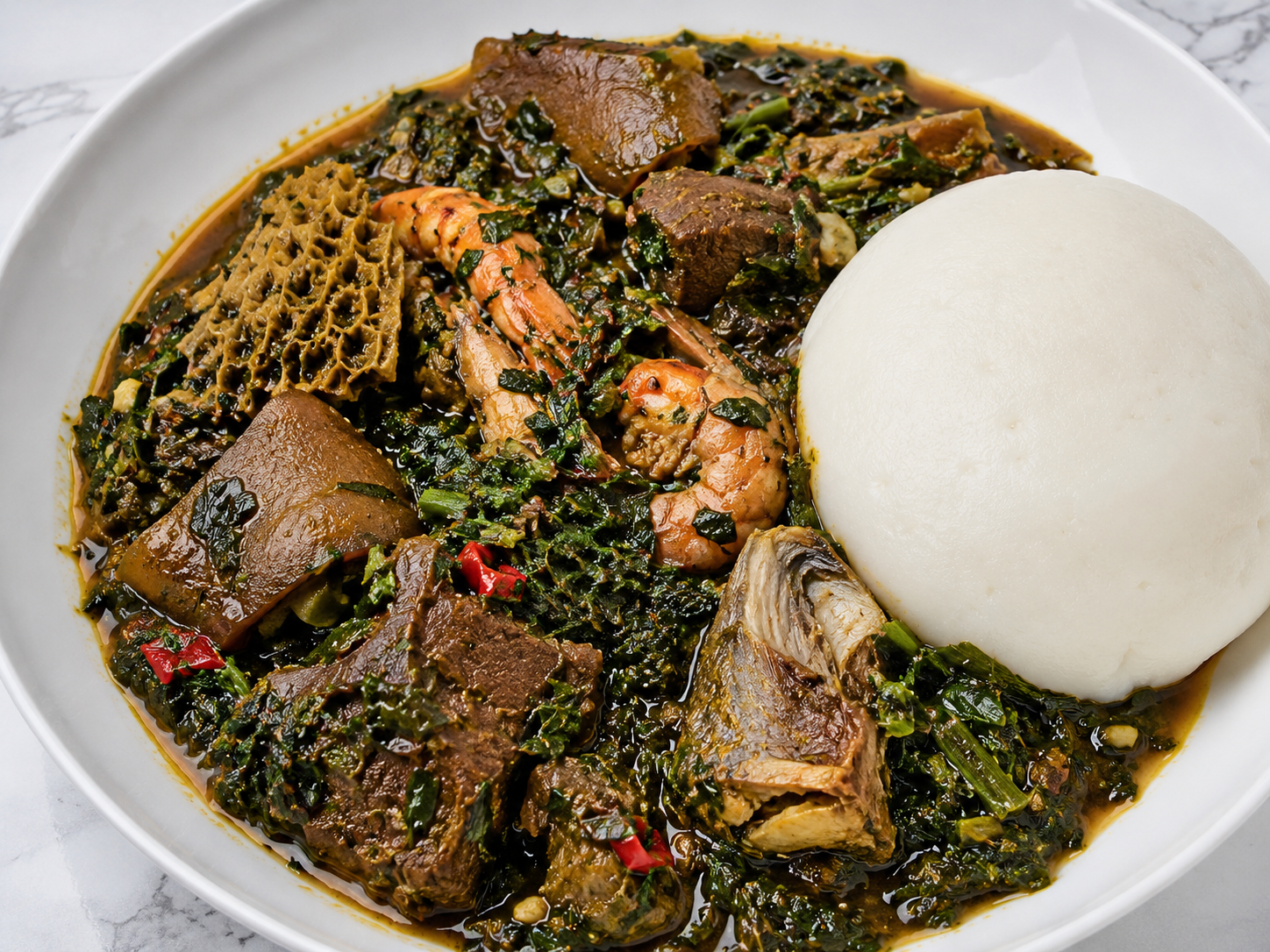
Afang soup, originating from the Efik and Ibibio people of Cross River and Akwa Ibom States in southeastern Nigeria, is much more than just food. It embodies the very essence of the cultural identity, history, and gastronomic richness of this coastal and forested region of West Africa. Historically, this preparation was reserved for special occasions, symbolizing abundance, deep respect, and legendary hospitality towards honored guests. Today, although it has become widely democratized and is regularly consumed in many Nigerian and Central African households, it carefully retains its status as a prestigious dish during important ceremonies such as traditional weddings, harvest festivals, official events, and baptisms. In Efik-Ibibio culture, a person's ability to prepare a perfect Afang soup is seen as a sign of culinary maturity, wisdom, and scrupulous respect for ancestral customs. This soup demonstrates a perfect alliance with the generous surrounding nature, taking advantage of the invaluable resources of the tropical forest and the many rivers that cross this region of the African continent. It wonderfully illustrates how local communities have learned to tame and magnify wild flora to create nutritious and gourmet masterpieces.
🌿 KEY INGREDIENTS AND THEIR NUTRITIONAL SECRETS
The secret of this exceptional soup lies in the subtle and complementary alliance of two types of leafy greens with radically different properties: Afang and waterleaf.
Afang leaf, scientifically known as Gnetum africanum, is a wild vine leaf that grows endemically in the humid tropical forests of Central and West Africa. It has a rigid, almost leathery texture, and a deep, shiny dark green color. Taste-wise, it brings a slightly bitter, earthy, and wild note that gives the dish its full personality. From a nutritional point of view, Afang is a real treasure. It is packed with dietary fiber that promotes digestion, high-quality plant proteins, essential amino acids, and essential minerals such as iron, calcium, and magnesium. To incorporate it into the soup, cooks must perform meticulous preparatory work: the leaves are washed, cut extremely finely with a sharp knife, then vigorously pounded in a wooden mortar to break down the toughness of the fibers without altering their structure or losing their precious juices.
The second leafy green is waterleaf, or Talinum triangulare. Unlike Afang, waterleaf is a very tender, fleshy herbaceous plant extremely rich in vegetative water, which grows spontaneously and abundantly in the loose, moist soils of home gardens. It serves as a binder and moisture regulator in the culinary preparation. By melting during cooking, it softens the bitterness and firm texture of Afang, thus creating a unique velvety texture. It also provides a significant dose of vitamins A, C, pectin, natural antioxidants, and omega-3 type lipids, contributing to making this soup an elixir of well-being.
Beyond vegetables, Afang soup requires a generous amount of raw, unrefined red palm oil. This oil, rich in carotenoids and vitamin E, does not only serve as a cooking fat. It colors the broth with a magnificent orange hue, coats the green leaves, and fuses the complex flavors of the soup. The added protein sources reflect the coastal richness of the region. There is a generous assortment of meats (such as beef, beef tripe called shaki, cow foot, and sometimes smoked bushmeat) as well as dried or smoked fish products. Smoked fish and stockfish (imported or locally produced dried fish) diffuse deeply aromatic flavors. Periwinkles, commonly called periwinkles in the Gulf of Guinea, are another signature ingredient of the authentic Efik version. They are added either shelled or in their shell, the pointed end of which has been previously cut to allow diners to enjoy the dish by sucking the flesh directly at the table. Dried and finely ground crayfish, fresh ground chili (often aromatic yellow chili or Cameroon pepper), and salt complete this array of powerful flavors.
🍳 THE RITUAL OF TRADITIONAL PREPARATION
The making of Afang soup is an art that follows a strict protocol of successive steps. The success of the dish depends on mastering the moisture and cooking time of each element.
It all begins with the preparation and cooking of animal proteins. Meats, pre-soaked stockfish, and dried fish are cut into medium-sized pieces and cooked in a pot with very little water, finely sliced onions, chili, and seasoning. This slow cooking tenderizes the firmest meats, such as cow foot, while creating an extremely concentrated broth, rich in gelatin and umami flavors. It is crucial to limit the initial amount of water, as the final Afang soup must be dense and not liquid.
Once the meats are tender and the broth is almost entirely absorbed, cleaned periwinkles and a significant amount of red palm oil are added. This mixture is allowed to simmer for a few minutes so that the oil absorbs the meat juices. It is at this precise moment that the washed and finely sliced waterleaf is added. Under the effect of heat, the waterleaf quickly reduces and releases its natural juice. It is left to simmer uncovered to allow excess water to evaporate while stirring regularly to prevent the bottom of the pot from burning.
The last phase is the most crucial and requires the cook's full attention. Ground crayfish and the remaining chili are incorporated, then the pounded Afang leaves are added. Afang is always introduced last because its leaves should not undergo prolonged cooking, which would destroy their beautiful green color and degrade their water-soluble vitamins. Stir vigorously so that the Afang leaves absorb the palm oil sauce and the sweetness of the waterleaf. Simmer over very low heat for only three to five minutes, then remove the pot from the heat. The residual heat is enough to perfect the cooking of the Afang while preserving its delicate crunch and vegetal freshness.
🍽️ THE PLACE OF AFANG SOUP IN AFRICAN CUISINE
Within the gastronomic landscape of sub-Saharan Africa, Afang soup shines with its originality and refinement. It perfectly illustrates the concept of West African leafy green soups, which are nothing like the fluid soups of other continents, but rather appear as dense vegetable stews extremely rich in garnishes.
Afang soup enjoys a prestigious reputation that extends far beyond the borders of its region of origin. In Nigeria, it is often compared to Edikang Ikong soup, another culinary marvel of the Efik and Ibibio people that uses ugwu pumpkin leaves instead of Afang. However, Afang stands out for its inimitable chewiness and slight bitterness, which appeals to the most demanding gourmets. It offers a balanced texture, avoiding both the overly liquid character and the slimy appearance of some okra or ogbono seed-based soups.
This green and golden stew is traditionally served hot with a solid starchy accompaniment, called swallow. Afang soup pairs perfectly with eba (made from roasted cassava semolina), cassava fufu, pounded yam (yam pounded to obtain an elastic paste), or wheat semolina. The diner takes a small portion of starch with their fingers, forms a slight hollow in it, then uses it to scoop up a generous mouthful of Afang soup, blending the neutral sweetness of the starch with the spicy, salty, and herbaceous taste explosion of the soup.
The popularity of Afang soup also extends beyond Nigeria. In neighboring Central African countries, such as Cameroon, the Republic of Congo, or Gabon, the consumption of Gnetum africanum leaf is extremely common under other culinary names like Eru or Okok. Although these countries have their own specific recipes, Nigerian Afang soup remains an international benchmark for West African culinary art. In the era of globalization, the African diaspora has carried this recipe with them. Today, dried or frozen Afang leaves can be found in exotic grocery stores in London, Paris, New York, or Houston. Preparing and sharing Afang soup outside the continent has become an act of cultural celebration, a powerful way to maintain a connection with roots and transmit ancestral knowledge to younger generations.
✨ SYNONYMS FOR AFANG SOUP
The leaf that makes up this soup and the dish itself have several synonymous names depending on geographical regions, local languages, and preparation contexts:
Afang Soup: This is the most common French name, mainly used in French-speaking African countries like Cameroon and by the international French-speaking community to refer to this culinary specialty.
Ukazi Soup or Okazi Soup: In the eastern regions of Nigeria, mainly inhabited by the Igbo people, the Gnetum africanum leaf is called Okazi or Ukazi. Although the Igbo recipe for Okazi soup differs from the Efik-Ibibio recipe by the possible addition of ground melon seeds (egusi) or other thickeners like achi, these terms are often used as synonyms to refer to the soup prepared from this forest leaf.
Ero Afang: This is the traditional full name in the Efik language. This term highlights the leaf itself and the historical cultural importance of its harvesting in the dense forests of the southeastern part of the country.
Gnetum Africanum Soup: This is the name of the soup based on the scientific taxonomy of the plant. This name is increasingly common in contemporary cookbooks, academic publications on food, and by New African Cuisine chefs keen to use precise botanical terminologies to promote African ingredients on the global gastronomic scene.
🔑 KEYWORDS FOR AFANG SOUP
Afang Nigeria Gnetum africanum Waterleaf Traditional cuisine
Prepare this speciality
Choose a detailed recipe, adjust the portions and prepare your ingredients before starting. Our cooking tips and food safety advice complement the steps described in the recipes.
Explore further: Cooking tips · Food hygiene and safety advice.
In my books

Continue exploring the continent’s cuisines with Africa at the Table — 54 countries, 54 iconic dishes, by Alioune FALL. This book is in English.
In the kitchen : Afang soup
Recipes from the site to put your knowledge into practice:
Discover these cuisines at a restaurant
Explore our restaurant and caterer directories. Choose your destination and check the establishment’s menu to confirm which dishes are offered and available.
Continue exploring
Enjoy discovering ingredients and African cuisines? Join our newsletter. The illustrated PDF 10 sauces africaines incontournables is in French and is offered after confirming a subscription to the French or bilingual edition.