Efo riro
Nigeria
Understanding : Efo riro
🍲 THE ORIGINS AND SYMBOLISM OF EFO RIRO
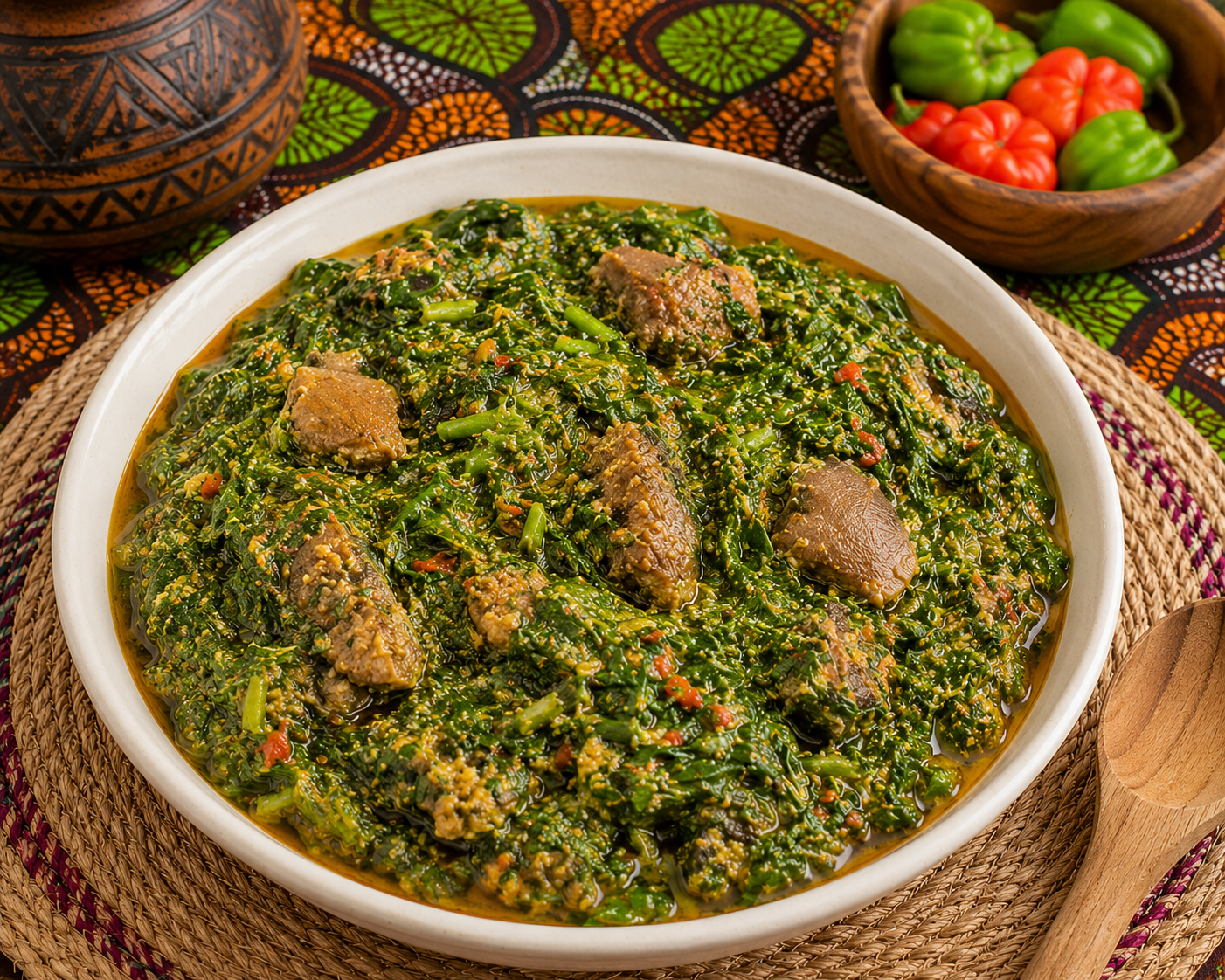
Efo Riro is a flagship of the culinary culture of the Yoruba, one of the largest and most influential ethnic groups in West Africa, mainly established in southwestern Nigeria, Benin, and Togo. The name itself, from the Yoruba language, literally translates to a fundamental action of its preparation, meaning “stirred vegetables” or “tossed vegetables.” This simple but evocative name perfectly describes how the main leafy vegetable is intimately mixed with a rich sauce of peppers, palm oil, and various proteins. Historically, Efo Riro was not merely an everyday meal, but a festive and symbolic preparation, cooked during community gatherings, rites of passage, harvest celebrations, and coronation ceremonies of traditional rulers. In Yoruba tradition, serving a richly garnished Efo Riro to a visitor is an act of sacred welcome, a brilliant demonstration of hospitality and generosity. The dish symbolizes the abundance of the land and a household's ability to feed its guests with premium ingredients. Over the centuries, this recipe has been passed down orally from generation to generation, with each family adding its personal touch while ensuring the preservation of the soul and fundamental structure that make this unique preparation famous and prestigious.
🥬 ESSENTIAL COMPONENTS AND THEIR BENEFITS
The magic of Efo Riro lies in a meticulous selection of fresh and dried ingredients whose synergy creates a remarkable gustatory and nutritional balance.
The green heart of the dish is Efo Shoko (Celosia argentea) or Efo Tete (Amaranthus hybridus), commonly known as amaranth. These vibrant green leaves are soft, tender, and have a delicate texture. They are particularly prized for their exceptional content of vitamins A, C, and K, calcium, iron, and fiber. Amaranth promotes proper digestive system function and strengthens the immune system. To prepare these leaves, cooks meticulously wash them, coarsely chop them, then briefly blanch them in boiling salted water before vigorously pressing them to extract excess water, a crucial step to prevent the final Efo Riro from becoming too liquid or watery.
The aromatic base of the sauce consists of peppers and red bell peppers, mainly tatashe (sweet red bell peppers), atarodo (very spicy habanero peppers), and onions. This mixture is coarsely blended to retain a grainy texture essential for the aesthetic and gustatory success of the sauce.
The main binder and flavor carrier is crude red palm oil. Used generously, it provides a flamboyant orange-red color, a characteristic nutty flavor, and valuable nutrients like beta-carotenes and vitamin E.
Another irreplaceable ingredient is iru, also known as fermented locust beans or néré. This traditional flavor enhancer, with a pungent and very pronounced earthy smell, brings a deep umami flavor that gives Efo Riro its inimitable aromatic signature.
Finally, the soup is enriched with a profusion of animal proteins that reflect the richness of Yoruba cuisine. It includes an assortment of beef, shaki tripe, gelatinous cow's foot, smoked fish (such as catfish or dried catfish), dried stockfish, and ground crayfish. The smoked fish provides an exceptional woody and smoky aroma that permeates every amaranth leaf.
🍳 THE ART OF PREPARATION TECHNIQUE
The preparation of Efo Riro follows a very precise culinary methodology aimed at obtaining a rich, concentrated sauce without excess liquid, where each ingredient retains its texture and integrity.
The first step is to cook the chosen meats. Pieces of beef, shaki, and cow's foot are boiled in a pot with a little water, sliced onions, chili, and salt. The goal is to perfectly tenderize the meats while obtaining an extremely concentrated broth that will serve as an aromatic base.
Meanwhile, the amaranth leaves are washed, cut, blanched for two minutes in boiling water, plunged into ice water to set the chlorophyll, then firmly pressed between the hands to eliminate any trace of residual moisture.
In another deep pot, a good amount of red palm oil is heated. Finely chopped onions and fresh or dried iru are added. Under the action of heat, the iru releases its powerful fermented aromas that instantly perfume the palm oil. The coarsely blended mixture of tatashe peppers and atarodo chilies is then added. This mixture is fried over medium heat until the water from the peppers completely evaporates and the oil begins to rise to the surface, a sign of perfect frying.
This is the moment to incorporate the cooked meats, boneless smoked fish, stockfish, and ground crayfish. Mix well so that all the proteins are infused with the chili sauce, palm oil, and iru. Let it simmer uncovered for a few minutes.
The final touch is to add the blanched and pressed amaranth leaves. Stir gently but firmly to homogeneously integrate the vegetables into the sauce. Let it simmer over very low heat for only three to five minutes, just enough for the leaves to absorb the flavors of the sauce without losing their beautiful bright green color. Remove from heat and let it rest for a few moments before serving.
🍽️ THE PLACE OF EFO RIRO IN AFRICAN CUISINE
Efo Riro holds a prominent position not only in Nigerian cuisine but also throughout West Africa. It is the quintessential symbol of a rich and versatile vegetable stew that can adapt equally well to modest family tables and the grandest banquets of high society.
In Nigeria, although Efo Riro originated in the Yoruba southwest, it has won the hearts and palates of the entire population, regardless of ethnic or regional barriers. It is appreciated for its spicy intensity and comforting texture. It differs from other vegetable soups like Afang or Edikang Ikong by the use of amaranth and a fried pepper base, giving it a character closer to a stew than a leaf soup proper.
Efo Riro is traditionally served hot with a solid starchy accompaniment, known as swallow. It pairs wonderfully with amala, a dark-colored paste made from dried yam flour, which is the quintessential Yoruba accompaniment. The combination of the slightly earthy flavor of amala and the woody spiciness of Efo Riro is considered a gastronomic pinnacle. It is also very often served with fufu, pounded yam, or eba. Remarkably, Efo Riro is also one of the few traditional vegetable stews that beautifully accompanies steamed white rice or fried plantain (alloco or dodo), offering a versatility that largely explains its exceptional popularity.
Internationally, Efo Riro is one of the most requested dishes in African diaspora restaurants around the world. Whether in London, Paris, New York, or Houston, tasting authentic Efo Riro is for many expatriates an instant sensory journey back to their homeland, a way to celebrate their cultural identity and share the richness of their culinary heritage with other cultures.
✨ SYNONYMS OF EFO RIRO
This traditional vegetable stew has several synonyms and equivalent names depending on geographical areas, local languages, and culinary practices:
Nigerian Spinach Stew: This is the most commonly used descriptive name in French by chefs and in cookbooks to simply explain the nature of the dish to an international audience, as amaranth is often replaced by fresh spinach in countries where amaranth or shoko are not easily accessible.
Yoruba Vegetable Soup: This English name emphasizes the original cultural affiliation of the dish, directly linking it to the Yoruba people and their refined culinary traditions.
Efo Riro Soup: This is the Anglo-Yoruba hybrid name commonly found on the menus of contemporary African restaurants in English-speaking countries to refer to this specialty.
Vegetable Stew with Iru and Palm Oil: A technical and descriptive name that highlights the two fundamental ingredients of the sauce that give the dish its unique aromatic personality and distinctive color.
🔑 KEYWORDS FOR EFO RIRO
Efo Riro Yoruba Amaranth Iru West African cuisine Send message
Prepare this speciality
Choose a detailed recipe, adjust the portions and prepare your ingredients before starting. Our cooking tips and food safety advice complement the steps described in the recipes.
Explore further: Cooking tips · Food hygiene and safety advice.
In my books

Continue exploring the continent’s cuisines with Africa at the Table — 54 countries, 54 iconic dishes, by Alioune FALL. This book is in English.
In the kitchen : Efo riro
Recipes from the site to put your knowledge into practice:
Discover these cuisines at a restaurant
Explore our restaurant and caterer directories. Choose your destination and check the establishment’s menu to confirm which dishes are offered and available.
Continue exploring
Enjoy discovering ingredients and African cuisines? Join our newsletter. The illustrated PDF 10 sauces africaines incontournables is in French and is offered after confirming a subscription to the French or bilingual edition.