Gbegiri
Nigeria
Understanding : Gbegiri
🍲 THE ORIGINS AND HOMELAND OF GBEGIRI
Gbegiri is a traditional, velvety soup deeply rooted in the history, culture, and culinary identity of the Yoruba people, who primarily inhabit southwestern Nigeria, Benin, and Togo. Unlike most West African soups that feature wild or cultivated green leaves, gbegiri radically distinguishes itself by having legumes, specifically black-eyed peas, as its base ingredient. Historically, this comforting soup gained its prestige in the ancient kitchens of the Oyo and Ibadan kingdoms. In these savanna and open forest territories, beans were a highly available, economical, and easily preserved staple crop after harvest. Preparing gbegiri was originally an ingenious way to transform a rustic commodity into a delicate, silky, and extremely nourishing dish for farm laborers and warriors of the Yoruba city-states. In popular tradition, gbegiri is inseparable from buka, the street food stalls and popular restaurants typical of southwestern Nigeria where people of all social classes gather to enjoy authentic wood-fired dishes. This dish symbolizes peasant simplicity combined with exceptional technical refinement, proving that African culinary art can magnify the humblest ingredients into lasting gastronomic masterpieces.
🌾 THE MAIN INGREDIENT AND NUTRITIONAL BENEFITS
The secret of gbegiri lies in the selection and processing of its unique component: the black-eyed pea, scientifically known as Vigna unguiculata.
Nutritionally, the black-eyed pea is a powerhouse of energy and well-being. It is an exceptional source of high-quality plant protein, making it an excellent substitute or ideal complement to animal proteins in sub-Saharan diets. Furthermore, it is packed with soluble and insoluble dietary fiber, which not only promotes excellent bowel transit and regulates blood sugar but also provides a lasting feeling of satiety. Gbegiri is particularly rich in essential minerals like iron (crucial for preventing anemia), magnesium, zinc, and potassium, as well as B vitamins, especially folic acid (vitamin B9), which is particularly recommended for pregnant women and growing children.
To transform these rough beans into a fine, creamy texture, a rigorous preparation process is essential. The dried beans are first soaked in warm water to soften their outer cuticle. Then, cooks vigorously rub the beans between their hands or use a light mortar to completely detach the thin outer skin. The beans, stripped of their white skin and black eye, are rinsed several times until pure, immaculate white beans are obtained. This meticulous dehulling step ensures the golden yellow color and smoothness of the final soup, eliminating any bitterness or grainy texture on the tongue.
In addition to the beans, the soup incorporates crude red palm oil, which provides its warm color, characteristic flavor, and richness in antioxidants and vitamin A. Iru (fermented locust beans), freshly ground chili (atarodo), salt, and dried crayfish powder are also added for umami depth.
🍳 THE RITUAL STEPS FOR PREPARING GBEGIRI
Making gbegiri is a labor of patience that relies on slow cooking and mechanical processing of ingredients to achieve a perfect velvety cream texture.
The ritual begins by boiling the pre-peeled beans in a pot containing a large amount of water. The beans must cook slowly over medium heat until they become extremely soft and can be crushed with a simple squeeze of the fingers. This step can take several tens of minutes, during which the water thickens and becomes laden with natural starch.
Once the beans are perfectly softened, the traditional method involves the cook using a local sieve called sefo to filter and mash the preparation. By vigorously rubbing the hot bean pulp against the fine mesh of the sieve with a wooden ladle, an absolutely fine liquid puree is obtained, free of any lumps or solid residue. In modern homes, this physical step is often facilitated by the use of an immersion blender, although purists claim that the traditional sieving process imparts an unparalleled lightness and creaminess to the soup.
The filtered, silky liquid is then returned to the pot for a second cooking phase. This is when crude red palm oil, pounded iru, crayfish powder, and ground red chili are added. Under the effect of heat, the bean starch and palm oil emulsify to give a creamy texture and a vibrant yellow-orange color. It is simmered over very low heat for about ten minutes, stirring constantly to prevent the cream from sticking to the bottom of the pot. The soup is ready when the palm oil has perfectly integrated into the texture and a sweet, spicy aroma emanates from the pot. It should have the consistency of a thick tomato soup or a refined vegetable velouté.
🍽️ ABULA AND GBEGIRI'S PLACE IN AFRICAN CUISINE
In the constellation of West African flavors, gbegiri holds a special place due to its textural originality. While most soups in the region are green, leaf-based, or slimy like okra, gbegiri offers a sweet, comforting, and creamy alternative.
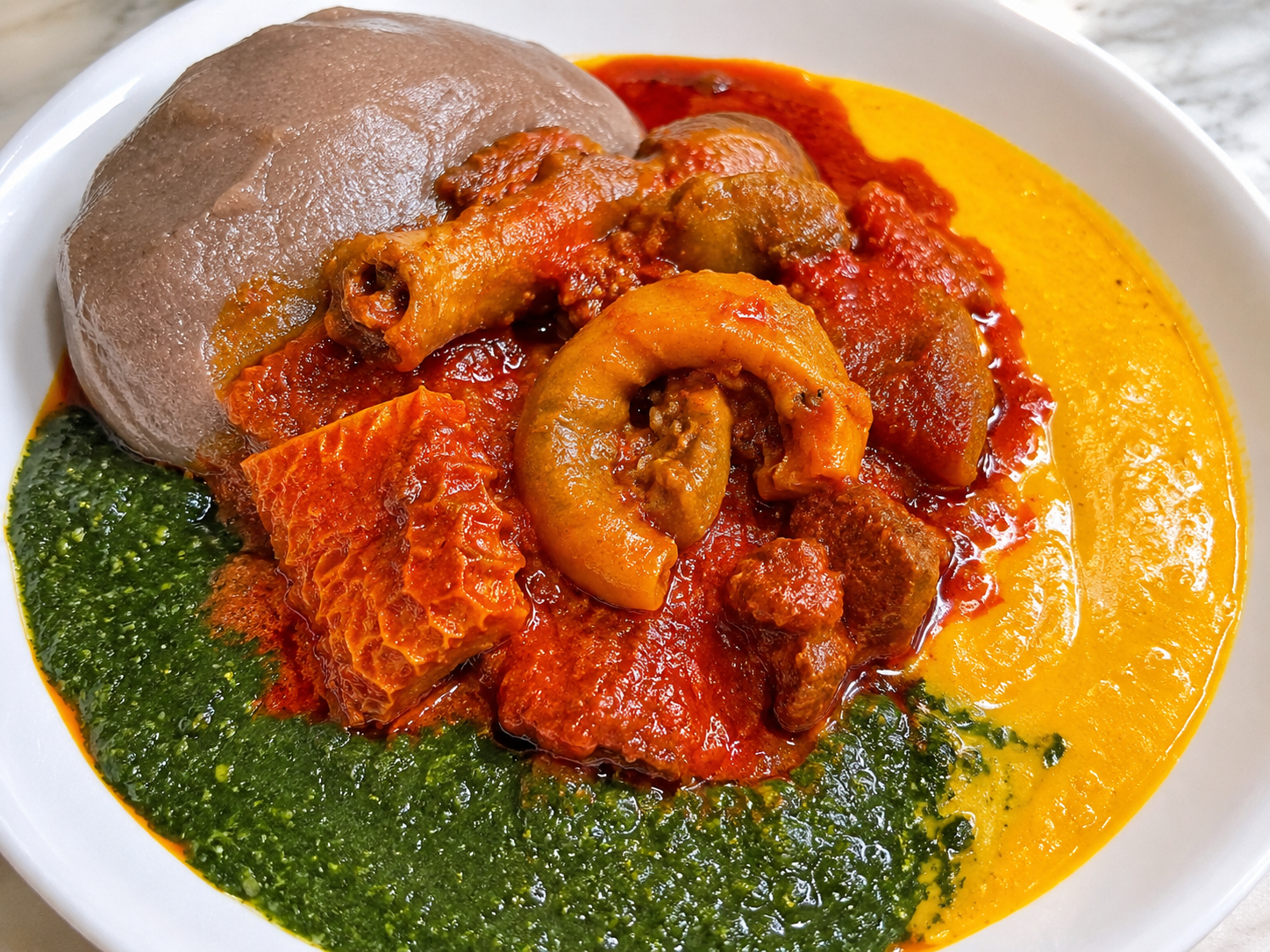
The immense popularity of gbegiri is masterfully expressed through its participation in abula, an absolute and sacred classic of Yoruba street food in Nigeria. Abula is a unique culinary presentation where three different soups are served in the same traditional clay bowl:
Gbegiri (the yellow-orange bean soup) Ewedu (the green, slippery jute leaf soup) Obe ata (a very spicy red meat stew made from fried chilies) This trio of colorful sauces surrounds a portion of hot amala, a dark, elastic paste made from dried yam flour. Tasting abula is a sensory spectacle and a total gastronomic experience. Gbegiri brings creamy sweetness and the rich taste of legumes, ewedu acts as a slippery binder to facilitate ingestion, while the meat sauce provides the essential spiciness and character to the dish.
Apart from this famous combination, gbegiri is also consumed alone in some regions, sometimes simply accompanied by white rice or fried plantains, serving as a creamy bean sauce. It embodies the spirit of communal meals in West Africa. Thanks to waves of emigration, gbegiri has become a nostalgic symbol for the Yoruba diaspora worldwide. Today, it can be found on tables in Western capitals like London, Houston, or Paris, where it is celebrated as a shining proof of the diversity and unsuspected refinement of African culinary traditions.
✨ SYNONYMS FOR GBEGIRI
This traditional bean soup has several names and synonyms depending on the language used, culinary interpretation, and geographical boundaries:
Yoruba Bean Soup: This is the most common descriptive translation in French, allowing immediate understanding of the culinary preparation's nature and ethnic origin.
Creamy Beans Soup: An English term often used in modern African gourmet restaurants to describe the characteristic velvety texture of this dish.
Yellow Abula Soup: By metonymy, many buka customers simply call the soup by its color and its participation in the famous triad of abula sauces.
Dehulled Black-Eyed Pea Sauce: A technical and culinary designation that precisely describes the main ingredient and the specific processing method essential for its preparation.
🔑 GBEGIRI KEYWORDS
Gbegiri Yoruba Black-eyed peas Abula Amala
Prepare this speciality
Choose a detailed recipe, adjust the portions and prepare your ingredients before starting. Our cooking tips and food safety advice complement the steps described in the recipes.
Explore further: Cooking tips · Food hygiene and safety advice.
In my books

Continue exploring the continent’s cuisines with Africa at the Table — 54 countries, 54 iconic dishes, by Alioune FALL. This book is in English.
In the kitchen : Gbegiri
Recipes from the site to put your knowledge into practice:
Discover these cuisines at a restaurant
Explore our restaurant and caterer directories. Choose your destination and check the establishment’s menu to confirm which dishes are offered and available.
Continue exploring
Enjoy discovering ingredients and African cuisines? Join our newsletter. The illustrated PDF 10 sauces africaines incontournables is in French and is offered after confirming a subscription to the French or bilingual edition.