Ila alasepo
Nigeria
Understanding : Ila alasepo
🍲 THE ORIGINS AND TRADITION OF ILA ALASEPO
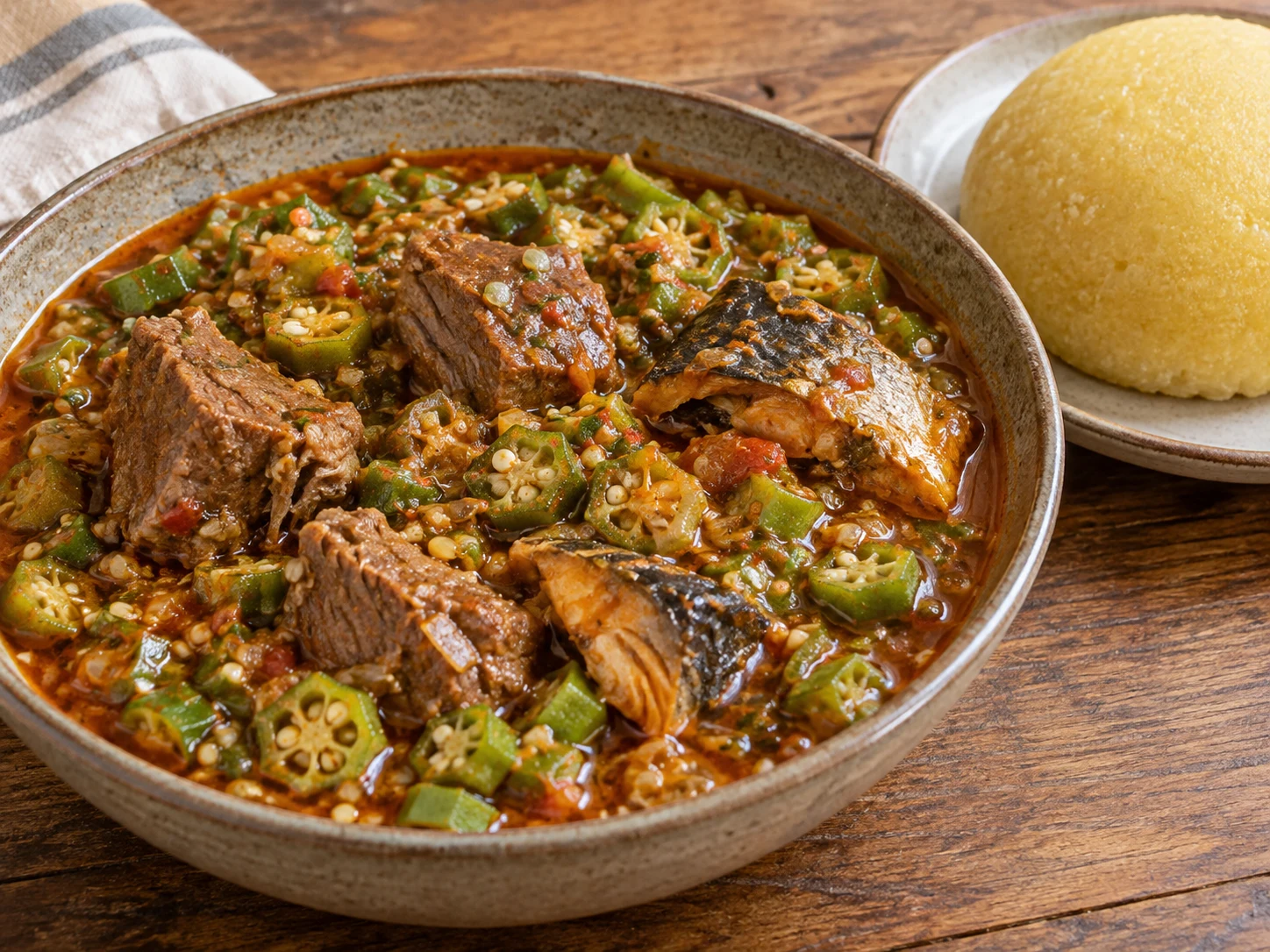
Ila Alasepo is a prominent culinary institution within the Yoruba community, which predominantly inhabits southwestern Nigeria, as well as significant portions of Benin and Togo. In the Yoruba language, the terms that make up its name carry a very clear meaning, revealing its unique preparation method: "ila" refers to okra, while "alasepo" refers to cooking everything together in a single pot. Unlike the traditional Yoruba serving method, which often separates plain okra soup on one side and spicy tomato sauce with meat on the other, Ila Alasepo is a revolutionary and ultra-practical all-in-one stew. Historically, this dish was prepared in family compounds during days of hard agricultural labor or during rainy seasons, as its quick, combined cooking saved precious firewood while providing an extremely hearty, comforting, and invigorating meal. Ila Alasepo embodies a wonderful philosophy of African culinary simplicity and efficiency, while maintaining a special place at convivial weekend meals and informal community gatherings, where its creamy texture and explosive taste bring diners together around the communal dish.
🌿 THE STAR INGREDIENT AND ITS EXCEPTIONAL PROPERTIES
The absolute pillar of Ila Alasepo is okra, scientifically named Abelmoschus esculentus. This tropical vegetable comes in the form of green, oblong, slightly fuzzy pods, grooved along their length and filled with small, tender white seeds.
From a nutritional perspective, okra is a true goldmine for health. It is extremely low in calories but packed with essential nutrients. It is an excellent source of vitamins A, C, K, and B6, as well as crucial minerals like calcium, magnesium, iron, and potassium. Okra is also renowned for its high antioxidant content, particularly polyphenols, which protect the body against oxidative stress and support heart health. However, the most striking and scientifically interesting characteristic of okra is its extremely viscous and stringy texture, due to its richness in mucilage, a highly beneficial soluble fiber for the digestive system. This mucilage acts as a natural dressing for the stomach, regulates glucose absorption in the blood, and helps reduce cholesterol levels.
To maximize this essential viscosity during the preparation of Ila Alasepo, cooks cut fresh okra in two different ways within the same recipe: one part is very finely chopped or grated to release maximum slippery mucilage, while the other part is cut into thicker rounds to provide texture and crunch when eaten.
In addition to okra, the recipe includes crude red palm oil, iru (fermented locust beans) for its deep umami note, fresh chili (atarodo), salt, and dried crayfish powder. The soup is generously enriched with proteins, including smoked fish, stockfish, fresh or dried shrimp, beef tripe (shaki), and sometimes crab or giant African snails, making this dish an exceptional stew of the sea and land.
🍳 THE UNIQUE ONE-POT PREPARATION RITUAL
Cooking Ila Alasepo is a model of technical simplicity that nevertheless requires excellent management of the ingredient integration timeline so that the okra does not lose its beautiful green color or its legendary slippery power.
It all begins with protein preparation. In a deep pot, meats (beef, tripe, cow foot) cut into medium-sized pieces are placed with very little water, ground fresh chili, onions, and salt. It is simmered over medium heat until the meats are perfectly tender and the broth is very reduced and concentrated.
Then, to this meat base, the deboned smoked fish, softened stockfish, and ground crayfish are added, followed by a measured amount of crude red palm oil and pounded iru. Everything is simmered for about five minutes so that all the flavors fuse and harmonize.
The crucial step is to incorporate the prepared okra. Both the grated okra and the sliced okra are poured simultaneously directly into the simmering broth pot. At this stage, it is important to note a golden rule of traditional Yoruba cooking: the pot is never covered after adding the okra. Covering the pot would trap steam, which would cause the okra to yellow and instantly destroy the mucilage structure, making the soup liquid and causing it to lose its characteristic viscosity.
Then, a tiny amount of baking soda or traditional potash (kaun) is added to stimulate mucilage release and preserve the vibrant green color of the vegetables, although this remains optional. It is vigorously stirred with a wooden spoon in circular motions to aerate the preparation and encourage the formation of long, viscous strands. It is simmered over low heat for only three to five minutes, then the pot is removed from the heat. The final stew should be shiny, an intense green contrasting with the orange reflections of the palm oil, densely garnished with proteins, and extremely stringy.
🍽️ THE HISTORICAL AND CONTINENTAL PLACE OF ILA ALASEPO
Ila Alasepo holds an absolutely monumental place in African cuisine and ranks among the most famous okra sauces on the African continent. Its specificity lies in its unified preparation, which offers a striking contrast to other versions of okra sauces from East or Central Africa.
In Nigeria, Ila Alasepo is synonymous with comfort and conviviality. It is particularly appreciated for its versatility and speed of execution. It is the dish of choice for households on weeknights, but it also appears on the tables of trendy Lagos restaurants that seek to revisit Yoruba regional classics with elegance.
This soup is traditionally eaten hot, accompanied by a "swallow," a dense starchy paste used to scoop up the sauce. Ila Alasepo pairs perfectly with eba (cassava semolina), pounded yam, or fufu. Thanks to its extremely slippery texture, the sauce envelops the portion of starch and allows it to be swallowed smoothly, while releasing an explosion of iodized, spicy, and herbaceous flavors.
On the African continent, Ila Alasepo shares a spiritual and technical kinship with other legendary okra sauces like kopé in Ivory Coast, smoked fish okra sauce from Cameroon or Senegal, or calou in Gabon. All these recipes celebrate okra as an extraordinary natural binder and a vector of conviviality. Thanks to the diaspora, Ila Alasepo has become globalized and is now found on tables in Europe and the Americas. Preparing an authentic Ila Alasepo with fresh okra and red palm oil is an act of cultural pride for expatriate communities, allowing them to introduce the richness, complexity, and creaminess of high Yoruba gastronomy to palates worldwide.
✨ SYNONYMS OF ILA ALASEPO
This traditional okra soup and its variations have several names and synonyms depending on geographical regions, local languages, and culinary practices:
All-in-one okra soup: This is the most natural and common descriptive translation in French, allowing immediate understanding that all ingredients are cooked together in the same pot.
Okra Alasepo Soup: A hybrid Anglo-Yoruba appellation widely used in contemporary Nigerian cookbooks and on social media to refer to this culinary specialty.
One-Pot Okra Soup: The descriptive English name that highlights the unified cooking method, as opposed to plain okra sauce served separately from tomato sauce.
Okra stew with palm oil and iru: A technical and gastronomic name highlighting the key ingredients that structure the unique aromatic and visual profile of this preparation.
🔑 KEYWORDS OF ILA ALASEPO
Ila Alasepo Yoruba Okra One-pot Nigerian cuisine
Prepare this speciality
Choose a detailed recipe, adjust the portions and prepare your ingredients before starting. Our cooking tips and food safety advice complement the steps described in the recipes.
Explore further: Cooking tips · Food hygiene and safety advice.
In my books

Continue exploring the continent’s cuisines with Africa at the Table — 54 countries, 54 iconic dishes, by Alioune FALL. This book is in English.
In the kitchen : Ila alasepo
Recipes from the site to put your knowledge into practice:
Discover these cuisines at a restaurant
Explore our restaurant and caterer directories. Choose your destination and check the establishment’s menu to confirm which dishes are offered and available.
Continue exploring
Enjoy discovering ingredients and African cuisines? Join our newsletter. The illustrated PDF 10 sauces africaines incontournables is in French and is offered after confirming a subscription to the French or bilingual edition.