Ofe nsala
Nigeria
Understanding : Ofe nsala
🍲 HISTORY AND SYMBOLISM OF OFE NSALA
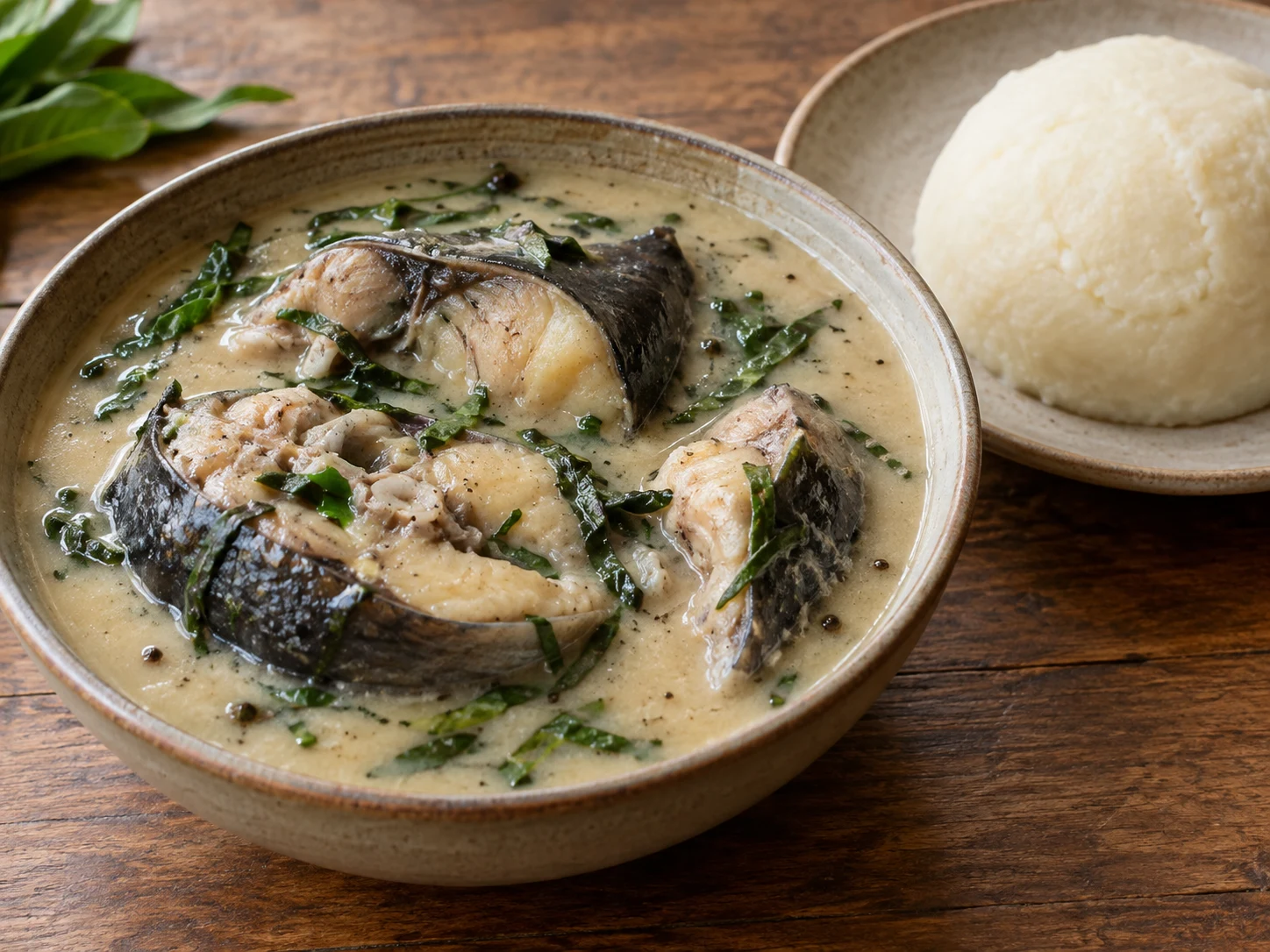
Ofe Nsala is a traditional soup of paramount importance originating from the Igbo people, who primarily reside in southeastern Nigeria. Commonly referred to as white soup due to its striking visual characteristic, it stands out from the vast majority of Nigerian soups by a unique feature: it is prepared without a single drop of red palm oil. In Igbo culture, Ofe Nsala is more than just a restorative food; it embodies a symbol of purity, renewal, and deep family care. Historically, this soup was lovingly and devotedly prepared for women who had just given birth, a period culturally known as Omugwo. The elders of the family would prepare this intensely spiced soup to help the new mother regain her strength, stimulate lactation, and purify her body after childbirth. It was also the preferred dish offered to the sick or weakened to accelerate their recovery, thanks to the therapeutic virtues attributed to its wild spices. Over time, although Ofe Nsala retains this privileged place in health and maternity, it has established itself as a prestigious dish of rare elegance, served at receptions for distinguished guests, important family celebrations, and yam new year festivities. It testifies to the ability of traditional cuisine to combine the pleasure of eating with physical well-being through a subtle harmony of ingredients from the forest land.
🌾 THE BINDING INGREDIENT AND NUTRITIONAL SECRETS
The secret to Ofe Nsala's unique texture lies in the use of white yam as a natural and exclusive thickening agent, a culinary technique that gives the dish its velvety consistency and characteristic opalescent color.
From a nutritional perspective, Ofe Nsala is an exceptionally rich broth, particularly digestible and revitalizing. White yam, scientifically named Dioscorea rotundata, provides high-quality complex carbohydrates, which supply sustained energy to the body without causing blood sugar spikes. It is also rich in dietary fiber beneficial for digestion, vitamin C, B vitamins, and essential minerals like potassium and manganese. The absence of red palm oil makes this soup a particularly light preparation, ideal for people monitoring their fat intake or with sensitive digestive systems.
The therapeutic profile of Ofe Nsala is crowned by a bouquet of traditional wild spices with recognized medicinal virtues. The signature ingredient is uda, or Guinea pepper (Xylopia aethiopica), which possesses anti-inflammatory, antimicrobial, and blood circulation stimulating properties. It is combined with uziza (Piper guineense), a wild seed and leaf that provide a very pleasant peppery and pungent note, while aiding digestion and relieving bloating. Fresh chili and utazi (Gongronema latifolium), a very slightly bitter leaf added at the end of cooking, complete this array of benefits by providing valuable antioxidants and stimulating liver functions.
The choice of protein is also first-rate: the authentic version requires fresh catfish (silure), renowned for its tender, fatty flesh rich in omega-3 fatty acids, although farm-raised chicken, goat meat, or smoked fish can be added for more substance.
🍳 STEPS FOR PREPARING THE WHITE SOUP
Making Ofe Nsala is a model of technical simplicity that nevertheless requires particular attention to cooking the fish and dissolving the yam to obtain a perfectly homogeneous and lump-free soup.
The preparation begins with cooking the yam. A few pieces of fresh white yam are peeled, washed, and boiled in a pot of unsalted water until they are extremely tender. They are then transferred hot to a wooden mortar to be vigorously pounded until a white, smooth, elastic, and sticky paste is obtained. This paste will serve as the binding agent for the soup.
In a deep pot, place the pieces of fresh catfish, previously cleaned with hot water or salt to remove superficial slime. Boneless smoked fish or cooked chicken meat can be added. Pour in a measured amount of hot water, then season with dried crayfish powder, finely ground uda and uziza spices, crushed fresh chili, and salt. Bring to a simmer over medium heat. It is crucial to handle the catfish delicately to prevent its tender flesh from tearing during cooking.
Once the broth is well flavored, take the pounded yam paste and shape it into small balls, which are gently dropped into the simmering pot. Under the action of heat and the movement of the broth, the yam balls will slowly melt and dissolve into the liquid. As this dissolution progresses, the fluid broth transforms into a velvety, creamy, and opaque soup of a beautiful off-white color.
The final touch is to add finely chopped uziza or utazi leaves. Simmer everything over very low heat for an additional two to three minutes so that the leaves release their peppery and bitter aromas without losing their freshness. The Ofe Nsala soup is then ready to be served, exuding an absolutely irresistible spicy, woody, and marine aroma.
🍽️ THE PLACE OF OFE NSALA IN AFRICAN CULINARY CELEBRATION
In the constellation of West African flavors, Ofe Nsala holds a unique and prestigious position. It is clear proof that high African gastronomy does not systematically depend on the use of red palm oil or dense tomato sauces to express its full richness and aromatic complexity.
In Nigeria, Ofe Nsala is celebrated as a symbol of absolute comfort and maternal love. Its light and fluid texture, combined with the strength of its spices, makes it a particularly appreciated meal on cool or rainy evenings. Although it originated in the Igbo southeast, it has conquered the palates of many other communities in the country, who have adopted it in various regional variations, particularly among the people of the Niger Delta who add fresh seafood.
This soup is traditionally eaten piping hot, accompanied by a premium swallow. The ideal pairing is with pounded yam, creating a perfect resonance with the yam used as a binder in the soup. The eating gesture consists of taking a portion of pounded yam, dipping it generously into the velvety white soup so that it soaks up the spices and catfish juice, then savoring the whole. It also pairs very well with cassava fufu or eba.
On a continental scale, Ofe Nsala shares a spiritual kinship with the clear and spicy soups of West Africa, such as pepper soup from Nigeria, Ghana, and Cameroon, or fresh fish and yam soup from the Gulf of Guinea. However, the use of pounded yam as a thickener gives it a creaminess and sweetness that fluid pepper soups do not possess. Thanks to the diaspora, Ofe Nsala has become globalized. Today, dried uda and uziza spices can be found in African grocery stores in Europe and America, allowing expatriate families to recreate this therapeutic broth and transmit the rituals of Omugwo and Igbo hospitality to younger generations born far from their ancestral land.
✨ SYNONYMS OF OFE NSALA
Ofe Nsala and its variations have several names and synonyms depending on linguistic regions, countries, and culinary practices:
Nigerian White Soup or White Soup: This is the most common descriptive translation in French and English, directly referring to the absence of red palm oil which preserves the light color of the preparation.
Nsala Soup: This is the simplified version of the name in English, frequently used on contemporary restaurant menus and in international recipe books.
Catfish and Yam Soup: A descriptive and gastronomic designation that highlights the two major physical components that structure the identity and consistency of the dish.
Yam-thickened Pepper Soup: A comparative name commonly used by West African cuisine enthusiasts to explain the aromatic kinship between Ofe Nsala and traditional spicy broths from the Gulf of Guinea.
🔑 KEYWORDS FOR OFE NSALA
Ofe Nsala Igbo White soup Yam Catfish
Prepare this speciality
Choose a detailed recipe, adjust the portions and prepare your ingredients before starting. Our cooking tips and food safety advice complement the steps described in the recipes.
Explore further: Cooking tips · Food hygiene and safety advice.
In my books

Continue exploring the continent’s cuisines with Africa at the Table — 54 countries, 54 iconic dishes, by Alioune FALL. This book is in English.
In the kitchen : Ofe nsala
Recipes from the site to put your knowledge into practice:
Discover these cuisines at a restaurant
Explore our restaurant and caterer directories. Choose your destination and check the establishment’s menu to confirm which dishes are offered and available.
Continue exploring
Enjoy discovering ingredients and African cuisines? Join our newsletter. The illustrated PDF 10 sauces africaines incontournables is in French and is offered after confirming a subscription to the French or bilingual edition.