Ofe onugbu
Nigeria
Understanding : Ofe onugbu
🍲 HISTORY AND TRADITIONAL VALUE OF OFE ONUGBU
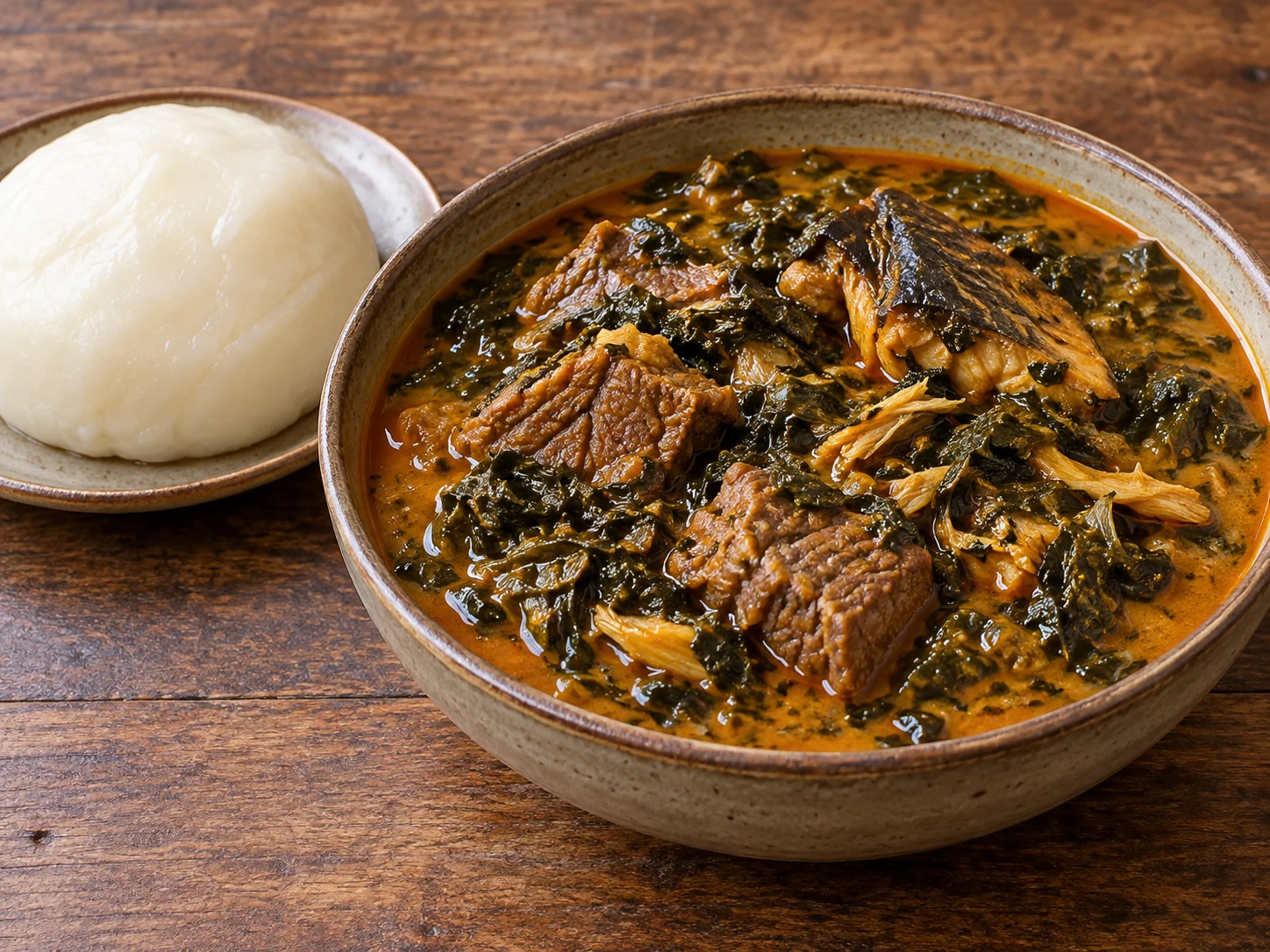
Ofe Onugbu, globally known as bitterleaf soup, is a culinary preparation of fundamental nobility and cultural importance to the Igbo people, originating from southeastern Nigeria. In the Igbo language, ofe means soup and onugbu refers to the bitter leaf, immediately revealing the star ingredient of this emblematic dish. Historically, Ofe Onugbu was not an ordinary everyday stew; it was a highly ceremonial and revered dish, closely linked to major events in the social, spiritual, and political life of the Igbo community. It was prepared during the coronations of traditional chiefs, new yam festivals, royal funerals, and traditional weddings (Igba Nkwu). Serving an exceptionally high-quality Ofe Onugbu to guests was a mark of supreme honor, signifying that the family had invested precious time, energy, and resources to welcome their hosts in the warmest and most respectful way possible. In Igbo culture, the preparation of Ofe Onugbu is perceived as a form of spiritual and physical art: it requires taming the natural bitterness of the leaf without destroying its essence or nutritional benefits, a complex skill proudly passed down by elders to younger generations to preserve the living heritage of the homeland.
🌿 KEY INGREDIENTS AND NUTRITIONAL COMPOSITION
The absolute pillar of this soup is the bitter leaf, scientifically named Vernonia amygdalina and locally known as onugbu. This hardy shrub, which grows vigorously throughout tropical Africa, has dark green leaves with an extremely bitter taste when freshly picked.
From a nutritional and phytotherapeutic perspective, onugbu is a true treasure of benefits, frequently called a miracle plant by traditional herbalists and contemporary scientists. The leaves are rich in powerful antioxidants, including flavonoids and sesquiterpene lactones, which possess recognized anti-inflammatory, antimicrobial, antimalarial, and anticancer properties. Ofe Onugbu is also an exceptional source of vitamins A, C, E, B1, and B2, as well as essential minerals like iron, potassium, calcium, and zinc. Regular consumption of this soup is particularly recommended in traditional medicine to regulate blood sugar in diabetic individuals, support liver and kidney functions by purifying the blood, and facilitate digestion by stimulating bile production.
For these tough and bitter leaves to become the base of a delicious soup, they must undergo an extremely meticulous physical preparatory process: the leaves are picked, washed, then vigorously rubbed between the hands and rinsed repeatedly with cold water to extract the bitter sap. This washing ritual, which can be repeated many times until the rinse water becomes clear, reduces the bitterness to a very mild and subtle level.
In addition to onugbu, Ofe Onugbu requires a unique traditional thickening agent: cocoyam or taro (Colocasia esculenta), locally called ede. Taro provides high-quality complex carbohydrates, an incomparable velvety texture, and a sweetness that balances beautifully with the bitter touch of the leaves. Raw red palm oil, iru or ogiri (fermented castor beans) with a powerful and wild taste, dried crayfish powder, fresh chili (atarodo), and a generous variety of meats (beef, shaki tripe, cow foot) and smoked or dried stockfish are also added.
🍳 THE RITUAL STEPS OF STEW PREPARATION
The making of Ofe Onugbu is a work of culinary patience centered around the parallel cooking of the thickening taro and the fusion of meats and spices.
The preparation begins with cooking the cocoyam. The taro tubers are peeled, washed, and boiled in a pot of unsalted water until they are extremely soft. They are then transferred hot to a wooden mortar to be vigorously pounded until a smooth, sticky taro paste with a beautiful elastic texture and free of lumps is obtained.
In another deep pot, the meat and fish base is prepared. Pieces of beef, beef tripe, and cow foot are placed in it with very little water, chili, onions, and salt. It is left to simmer slowly over medium heat. Once the meats are tender, boneless smoked fish, pre-softened stockfish, dried crayfish powder, powerful ogiri, and a generous amount of raw red palm oil are added. Mix well and let it simmer so that all the proteins absorb the spices and oil.
The pounded taro paste is then incorporated by dropping small balls directly into the simmering broth. Under the action of heat, the taro will slowly melt and dissolve, transforming the broth into a creamy, dense, velvety, and flamboyant orange-yellow sauce.
It is at this point that the washed and squeezed onugbu leaves are added. Mix gently but firmly to fully integrate the vegetables into the taro sauce. Simmer over low heat for about ten minutes. This prolonged cooking time is essential for the bitter leaves to soften further, absorb the richness of the taro and palm oil sauce, and release their unique forest aromas. The final soup should be dense, rich, creamy, displaying a golden color dotted with green leaves, exuding a wild, smoky fragrance and an exceptional depth of flavor.
🍽️ THE PLACE OF OFE ONUGBU IN AFRICAN CUISINE
In the constellation of West African flavors, Ofe Onugbu occupies a prominent position of unparalleled prestige. It represents the pinnacle of the art of combining vegetable bitterness with the richness of proteins and starches, creating a complex and highly sophisticated taste profile.
In Nigeria, Ofe Onugbu is celebrated as a symbol of Igbo gastronomy and cultural identity. It is the preferred dish served at wedding receptions or traditional funerals in the eastern states of the country. Although it originated in the southeast, it is appreciated and sought after by many other communities across Nigeria for its exceptional taste and medicinal virtues.
This soup is traditionally eaten hot, accompanied by a high-quality swallow. The ideal pairing is with eba made from cassava semolina, pounded yam, or cassava fufu. The slightly acidic and neutral taste of the starch balances perfectly with the spicy creaminess and bitter touch of the soup, offering comforting gustatory pleasure with every bite.
On a continental scale, Ofe Onugbu shares a close kinship with other bitter leaf-based dishes, such as Cameroon's bitterleaf sauce (often called ndolé) or the bitter leaf sauce from Benin and Togo. However, while Cameroonian ndolé uses fresh ground peanuts as a binder and is often accompanied by fried plantains, classic Nigerian Ofe Onugbu remains faithful to the exclusive use of pounded taro and red palm oil, thus asserting its technical specificity and unique cultural roots. Thanks to the energy of the diaspora, Ofe Onugbu has gone global. Dried or frozen bitterleaf and ogiri are now sold in African grocery stores in London, Toronto, Paris, and New York, allowing expatriate families to recreate this masterpiece of Igbo cuisine and maintain an indestructible link with the traditions of their ancestral land.
✨ SYNONYMS OF OFE ONUGBU
Ofe Onugbu soup and its main plant ingredient have several names and synonyms depending on geographical regions, local languages, and culinary practices:
Soupe de feuilles amères or Bitterleaf Soup: This is the most famous and commonly used descriptive translation in French and English by international gourmets to refer to this unique culinary preparation.
Ofe Onugbo: This is a frequent spelling variant in the Igbo language, rigorously retaining the same pronunciation and traditional meaning.
Onugbu stew with taro: A gastronomic and descriptive name that emphasizes the inseparable plant duo (bitter leaf and pounded taro) that forms the technical base and silky consistency of the dish.
Onugbu soup with palm oil and ogiri: A technical name that highlights the key ingredients that structure the powerful, wild, and smoky aromatic profile of this prestigious sauce.
🔑 KEYWORDS OF OFE ONUGBU
Ofe Onugbu Igbo Bitter leaf Cocoyam Traditional cuisine
Prepare this speciality
Choose a detailed recipe, adjust the portions and prepare your ingredients before starting. Our cooking tips and food safety advice complement the steps described in the recipes.
Explore further: Cooking tips · Food hygiene and safety advice.
In my books

Continue exploring the continent’s cuisines with Africa at the Table — 54 countries, 54 iconic dishes, by Alioune FALL. This book is in English.
In the kitchen : Ofe onugbu
Recipes from the site to put your knowledge into practice:
Discover these cuisines at a restaurant
Explore our restaurant and caterer directories. Choose your destination and check the establishment’s menu to confirm which dishes are offered and available.
Continue exploring
Enjoy discovering ingredients and African cuisines? Join our newsletter. The illustrated PDF 10 sauces africaines incontournables is in French and is offered after confirming a subscription to the French or bilingual edition.