Ofe Owerri
Nigeria
Understanding : Ofe Owerri
🍲 THE ROOTS AND PRESTIGE OF OFE OWERRI
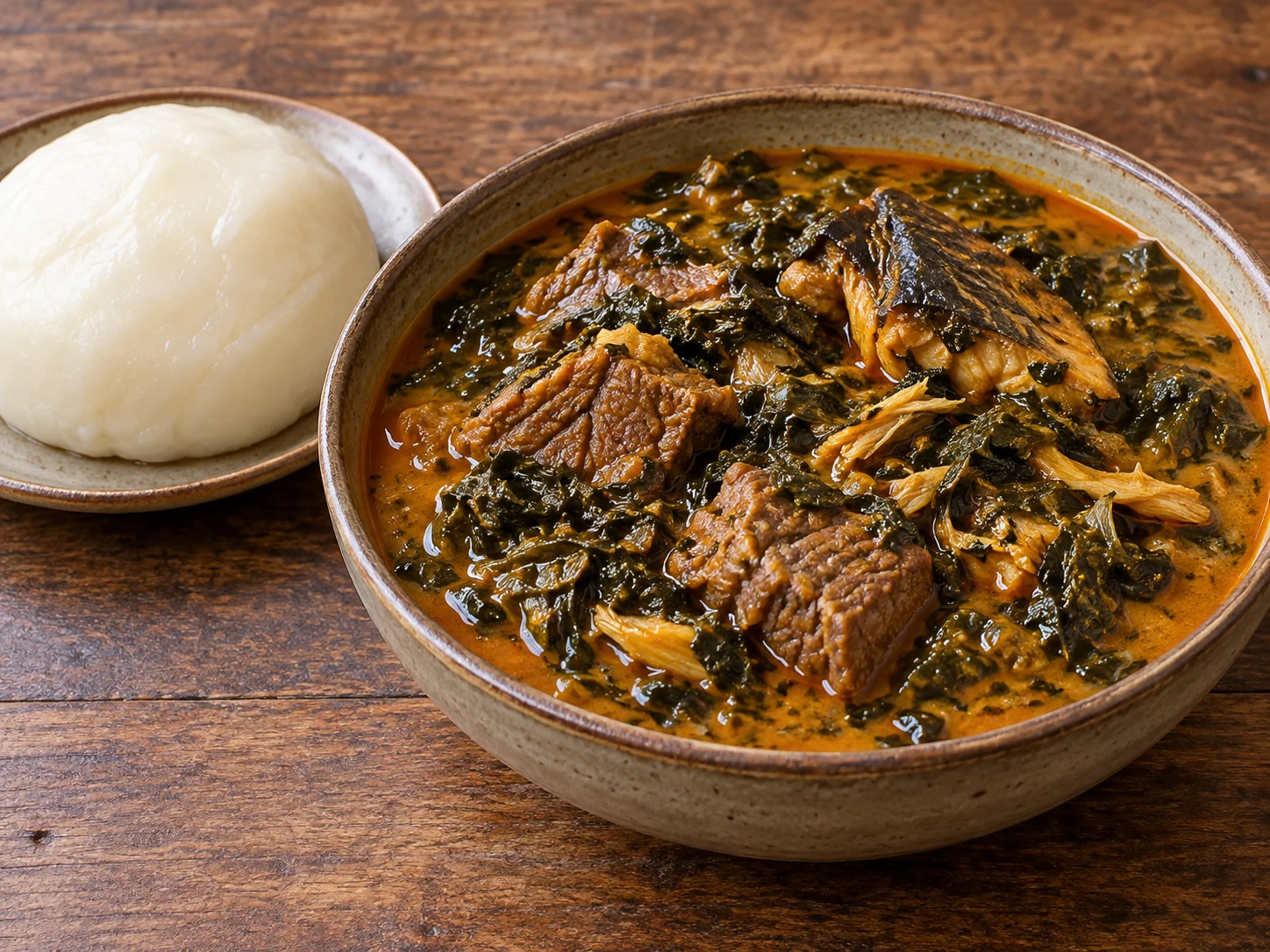
Ofe Owerri, originating from the city of Owerri, the capital of Imo State in southeastern Nigeria, is a culinary preparation of unparalleled nobility and prestige within the Igbo culture. Often described as the queen of Igbo soups, Ofe Owerri is a celebration of the opulence, refinement, and generosity of this historic region. Its reputation is so great that it inspired a popular traditional Igbo song whose lyrics state that a poor man cannot afford to court an Owerri woman, as its preparation requires a considerable financial investment in premium ingredients. Historically, this soup was not prepared daily in modest households; it was reserved for major sacred occasions, prestigious traditional weddings, receptions for royal dignitaries, and gatherings of high-ranking notables. Knowing how to make a perfect Ofe Owerri, with a silky creaminess and an enchanting aroma, was perceived as the ultimate proof of a hostess's culinary maturity. Today, although it has become more widespread and can be found on the best tables in the country, it jealously guards its status as a cultural icon of high-end gastronomy, symbolizing the innate sense of sharing, hospitality, and grandeur that characterizes the Igbo community of Owerri.
🌿 THE STAR INGREDIENTS AND THEIR NUTRITIONAL SECRETS
The secret of Ofe Owerri lies in the combination of two exceptional leafy vegetables with complementary properties: okazi and ugwu.
Okazi leaves, scientifically known as Gnetum africanum, are tough, deep-green wild vine leaves harvested from the heart of the tropical forests of Central and West Africa. They provide chewiness, a crunchy texture, and a slightly bitter and wild note that structures the dish's flavor. Nutritionally, okazi is a true superfood. It is rich in dietary fiber beneficial for digestion, high-quality plant proteins, essential minerals like iron, calcium, and magnesium, as well as essential amino acids.
The second vegetable is ugwu, or pumpkin leaves (Telfairia occidentalis). These very soft and tender, vibrant green leaves balance the bitterness of the okazi. Ugwu is extremely renowned for its exceptional richness in highly bioavailable iron, vitamin C, natural antioxidants, and carotenoids, helping to make this soup an excellent traditional remedy for combating anemia and strengthening the immune system.
To bind these leaves, the classic recipe uses cocoyam or taro (Colocasia esculenta), locally called ede, previously boiled and pounded to serve as a natural thickening agent. Taro provides digestible complex carbohydrates and a unique velvety creaminess. It is also combined with raw red palm oil rich in carotenoids, dried crayfish powder, fresh chili (atarodo), and an opulent variety of meats (beef, shaki tripe, gelatinous cow's foot) and dried, smoked, or fresh seafood, including smoked fish, premium stockfish, and sometimes periwinkles or giant African snails.
🍳 THE RITUAL OF TRADITIONAL PREPARATION
The preparation of Ofe Owerri is a meticulous culinary protocol that requires patience and rigorous timing for each ingredient to deliver the best of its aromas and textures.
The preparation begins with cooking the cocoyam. The taro tubers are peeled, washed, and boiled in a pot of unsalted water. Once perfectly soft, they are transferred hot to a wooden mortar and vigorously pounded until a smooth, shiny, and elastic paste with no lumps is obtained.
In parallel, in a large, deep pot, the meat and fish broth is prepared. Pieces of beef, tripe, and cow's foot are placed in it with very little water, sliced onions, chili, and salt. It is simmered for a long time over medium heat. Once the meats are very tender, the delicately deboned smoked fish, previously softened stockfish, dried crayfish powder, a little ogiri (fermented castor seeds) for its wild note, and raw red palm oil are added. Mix well and let it simmer.
Then, the pounded taro paste is incorporated in small balls directly into the simmering broth. Under the action of heat, the taro will slowly melt, emulsify with the red palm oil, and transform the liquid broth into a creamy, silky, and flamboyant orange-yellow sauce.
The final phase involves adding the leafy vegetables. Okazi is introduced first, as its rigid leaves require a few extra minutes of cooking to soften slightly while retaining their crunch. Mix well and simmer for about five minutes. Finally, finely chopped ugwu leaves are added. Stir gently, adjust the seasoning, and simmer over very low heat for only two to three minutes. The Ofe Owerri soup is then ready, displaying a golden color dotted with green leaves, an irresistible velvety texture, and emitting an exceptionally rich smoky aroma.
🍽️ THE PLACE OF OFE OWERRI IN AFRICAN CUISINE
In the vast gastronomic heritage of West Africa, Ofe Owerri holds a unique place of prestige. It is considered the pinnacle of taro-thickened soups and beautifully illustrates how local communities have learned to combine wild and cultivated leaves to create an incomparable harmony of textures and flavors.
In Nigeria, Ofe Owerri is synonymous with celebration, opulence, and warm hospitality. It is the preferred dish served at wedding receptions or large family gatherings in the eastern states of the country. Its popularity extends far beyond regional and ethnic barriers, being highly appreciated by all Nigerian gourmets for its spicy intensity and comforting texture.
This soup is traditionally eaten hot, accompanied by a premium swallow, especially pounded yam for its soft and elastic texture that perfectly matches the soup's creaminess. It also pairs beautifully with eba made from cassava semolina or cassava fufu. The neutral taste of the starch allows one to fully savor the complexity of the peppery, earthy, marine, and woody notes of the soup with each bite.
On a continental scale, Ofe Owerri testifies to the dynamism and creativity of African culinary art. It shares a close kinship with other prestigious soups from West and Central Africa but retains its specificity thanks to its okazi and ugwu duo thickened with taro. Driven by the dynamic diaspora, it has become globalized. Today, dried okazi leaves and frozen ugwu can be found in African grocery stores in London, Brussels, Houston, and Paris, allowing expatriate families to recreate this masterpiece of Igbo cuisine and maintain an indestructible link with the rituals and pride of their ancestral land.
✨ SYNONYMS OF OFE OWERRI
This prestigious soup and its components have several names and synonyms depending on geographical regions, local languages, and culinary practices:
Owerri Soup: This is the simplified version of the name most commonly used in French and English by international gourmets and on contemporary restaurant menus.
Okazi and Ugwu Stew with Taro: A gastronomic and descriptive appellation that emphasizes the inseparable plant duo thickened with pounded taro, which forms the technical base and silky texture of the dish.
Owerri Festive Soup: A cultural name that directly refers to its historical status as a prestige dish reserved exclusively for important celebrations and official banquets.
Ede Stew with Okazi and Palm Oil: A technical denomination that highlights the key ingredients that structure the aromatic, visual profile, and unique velvety consistency of this specialty.
🔑 KEYWORDS FOR OFE OWERRI
Ofe Owerri Igbo Okazi Ugwu Festive cuisine
Prepare this speciality
Choose a detailed recipe, adjust the portions and prepare your ingredients before starting. Our cooking tips and food safety advice complement the steps described in the recipes.
Explore further: Cooking tips · Food hygiene and safety advice.
In my books

Continue exploring the continent’s cuisines with Africa at the Table — 54 countries, 54 iconic dishes, by Alioune FALL. This book is in English.
In the kitchen : Ofe Owerri
Recipes from the site to put your knowledge into practice:
Discover these cuisines at a restaurant
Explore our restaurant and caterer directories. Choose your destination and check the establishment’s menu to confirm which dishes are offered and available.
Continue exploring
Enjoy discovering ingredients and African cuisines? Join our newsletter. The illustrated PDF 10 sauces africaines incontournables is in French and is offered after confirming a subscription to the French or bilingual edition.