Oha soup
Nigeria
Understanding : Oha soup
🍲 HISTORY AND CULTURAL SIGNIFICANCE OF OHA
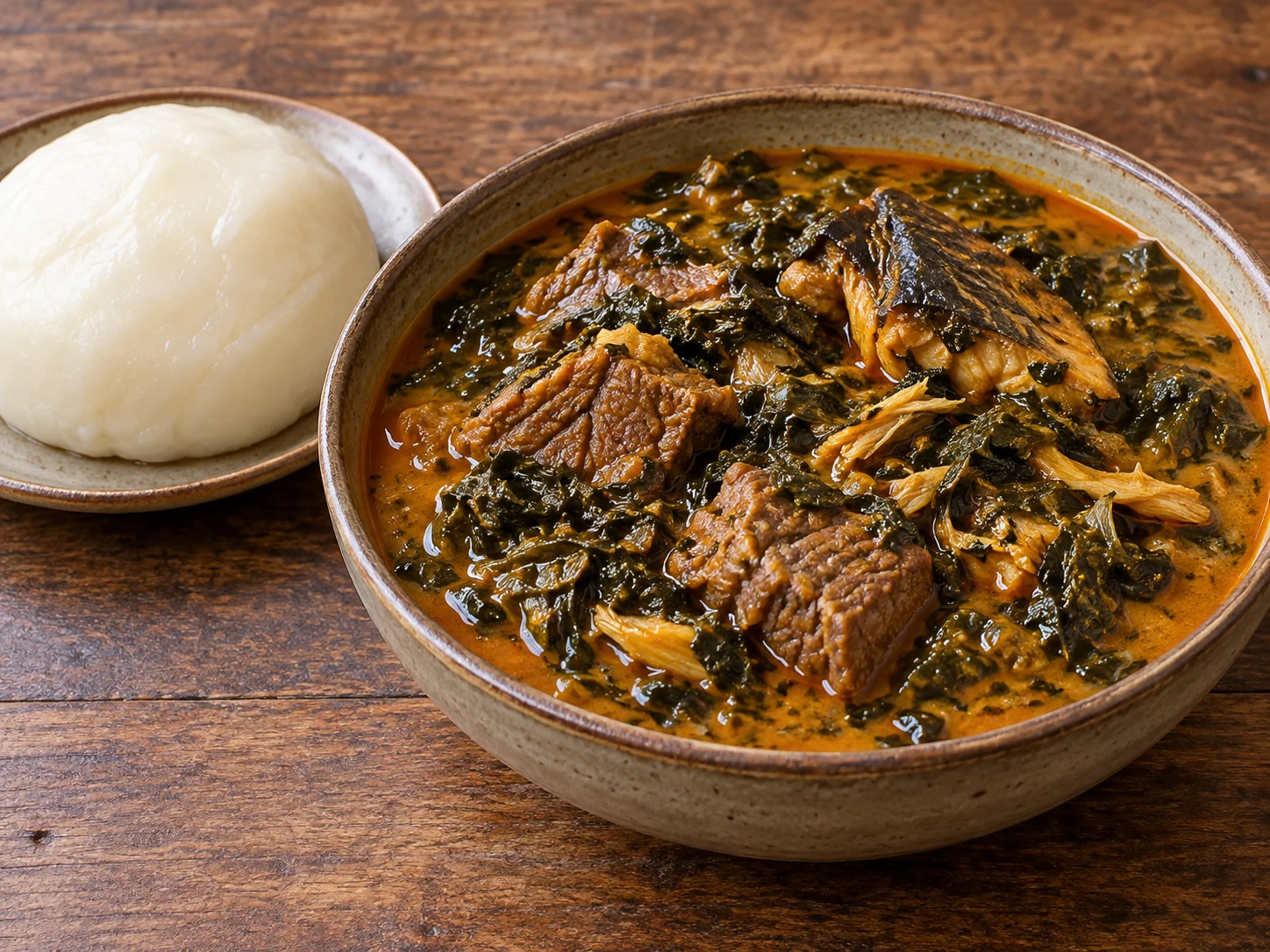
Oha soup, also spelled Ora in some regions, is a monument of the gastronomy of the Igbo people, who reside predominantly in southeastern Nigeria. It takes its name from the leaves of the Oha tree, which is the identifying and irreplaceable element of this prestigious culinary preparation. Unlike other tropical leafy greens that are widely cultivated in home gardens, Oha leaves come from a majestic forest tree that grows wild and spontaneously in the rainforest ecosystem of eastern Nigeria. This wild origin gives the dish a sacred status and an unbreakable link to the land of the ancestors. Historically, Oha soup was a highly ceremonial dish, prepared with respect and devotion to celebrate family alliances, new yam festivals, initiation rites, and gatherings of Igbo traditional royalty. In local culture, the Oha leaf is a symbol of peace, community unity, and divine blessing. Sharing a warm bowl of Oha soup with guests is considered a sacred gesture of warm welcome, brotherhood, and deep respect. The expertise required for Oha preparation, particularly the ritual of manually tearing the leaves without a metal knife, is a precious teaching jealously passed down from mothers to their daughters to preserve the aromatic and spiritual authenticity of this masterpiece inherited from Igbo history.
🌿 KEY INGREDIENTS AND THEIR NUTRITIONAL BENEFITS
The secret of Oha soup lies in a unique combination of natural ingredients, foremost among which are Oha leaves and cocoyam thickener.
Oha leaf, from the Pterocarpus mildbraedii tree, is characterized by an extremely tender, soft texture and a beautiful bright light green color. Gustatorily, it brings a very delicate vegetal note, devoid of the bitterness or acidity found in other tropical leaves. Nutritionally, Oha is a true biological miracle. It is exceptionally rich in essential amino acids, high-quality vegetable proteins, soluble fibers beneficial for digestion, and powerful antioxidants that protect the body's cells. Moreover, it provides a massive dose of calcium, iron, potassium, vitamin A, and vitamin C, making this soup an excellent physical restorative traditionally recommended to strengthen convalescents, growing children, and mothers after childbirth.
The second fundamental component is cocoyam or taro (Colocasia esculenta), locally named ede. Taro tubers are boiled and then vigorously pounded to form a smooth and elastic paste that serves as the exclusive natural thickener for the soup. Taro provides slow-digesting complex carbohydrates, supplying stable energy to the body while giving the soup a velvety, creamy, and enveloping texture.
The recipe also includes unrefined red palm oil (for golden color and fat-soluble vitamins), ogiri or ogiri-ibo (a powerful, earthy, and wild-smelling fermented castor bean paste that gives the dish its signature umami), dried crayfish powder, fresh chili (atarodo), and an opulent assortment of meats (beef, shaki tripe, gelatinous cow's foot) and dried or smoked seafood (smoked fish, premium stockfish) that structure the rich aromatic broth.
🍳 THE TRADITIONAL PREPARATION RITUAL
The preparation of Oha soup follows a strict culinary ritual where the handling of the leaves and the cooking time of the thickener play a decisive role.
The process begins with cooking the cocoyam. Taro tubers are peeled, washed, and boiled in a pot of unsalted water. Once they are perfectly tender, they are transferred hot to a wooden mortar to be vigorously pounded until a white, smooth, elastic, and sticky taro paste is obtained, free of any lumps.
In parallel, in a large deep pot, the protein broth is prepared. Beef pieces, beef tripe, and cow's foot are placed in it with very little water, sliced onions, fresh chili, and salt. It is left to simmer for a long time over medium heat. Once the meats are very tender, the delicately deboned smoked fish, the stockfish previously softened by soaking, the dried crayfish powder, the powerful ogiri, and a generous amount of unrefined red palm oil are added. It is mixed and left to simmer uncovered.
The pounded taro paste is then incorporated in the form of small balls placed directly into the simmering broth. Under the action of heat, the taro will slowly melt, emulsify with the unrefined red palm oil, and transform the liquid broth into a creamy, silky, and vibrant orange-yellow sauce.
The ultimate step is the treatment and incorporation of the Oha leaves. According to an ancestral and inviolable golden rule of Igbo cuisine, Oha leaves must never be cut with a metal knife. It is traditionally believed that contact of metal with the delicate sap of Oha causes rapid oxidation of the leaves, which blacken upon cooking and acquire an unpleasant metallic aftertaste. Cooks therefore meticulously tear the leaves by hand into medium-sized pieces. These delicate leaves are introduced into the creamy taro sauce at the very end of cooking. Sometimes a few peppery uziza leaves are also added to enhance the taste. It is gently mixed and left to simmer over very low heat for only two to three minutes. The residual heat of the pot is enough to tenderize the Oha leaves while preserving their vibrant green color, their original sweetness, and their exceptional nutritional value.
🍽️ OHA'S PLACE IN AFRICAN CUISINE
In the culinary landscape of West Africa, Oha soup shines with its refinement, creamy texture, and vegetal delicacy. It represents the flagship of taro-thickened soups and stands as one of the most appreciated and respected specialties of Nigerian haute cuisine.
In Nigeria, Oha soup enjoys immense prestige that far exceeds the cultural boundaries of the Igbo southeast. It is celebrated for its comforting flavor and is regularly requested at large traditional weddings, baptisms, and official banquets across the country. Unlike Ofe Onugbu (bitter leaf soup), which has a more robust and wild flavor profile, Oha seduces with its silky sweetness and vegetal lightness, making it the ideal dish to introduce the richness of Igbo sauces to novices and international gourmets.
This soup is traditionally eaten piping hot, accompanied by a premium swallow. The quintessential pairing is with pounded yam, whose soft and elastic texture harmoniously resonates with the creamy taro of the soup. It also pairs perfectly with eba (cassava semolina), cassava fufu, or wheat semolina. The diner takes a small portion of swallow, gently dips it into the Oha soup so that it soaks up the golden sauce and tender green leaves, offering a complex harmony of marine, smoky, peppery, and delicately sweet flavors with each bite.
On a continental scale, Oha soup testifies to the richness and ingenuity of African terroirs, which know how to magnify wild rainforest plants to create highly nutritious ceremonial dishes. Carried by the dynamic diaspora, Oha has become globalized. Today, dried or frozen Oha leaves can be found in exotic grocery stores in London, Toronto, Paris, New York, and Houston. Preparing an authentic Oha abroad has become a symbol of cultural celebration, a powerful way to maintain a connection with the homeland and proudly transmit the Igbo way of life and ancestral gastronomy to younger generations.
✨ SYNONYMS FOR OHA SOUP
This prestigious soup and its identifying plant have several names and synonyms depending on geographical regions, local languages, and culinary practices:
Ora Soup: This is the most common spelling and pronunciation variant in French and English for this emblematic dish, widely used in parts of Anambra and Enugu States.
Oha stew with taro and ogiri: A gastronomic and descriptive name that emphasizes the inseparable plant duo (oha leaf and thickening taro paste) enhanced by fermented ogiri, which structures the dish's unique flavor profile.
Pterocarpus Mildbraedii Soup: This is the soup's name based on the scientific taxonomy of the plant, increasingly used by nutritionists, dietitians, and contemporary chefs to scientifically promote African herbs on the international stage.
Igbo Feast Soup: A cultural name that directly refers to its traditional status as an indispensable prestige dish at weddings, new yam festivals, and large gatherings of dignitaries in eastern Nigeria.
🔑 OHA SOUP KEYWORDS
Oha Igbo Cocoyam Ogiri Pounded yam
Prepare this speciality
Choose a detailed recipe, adjust the portions and prepare your ingredients before starting. Our cooking tips and food safety advice complement the steps described in the recipes.
Explore further: Cooking tips · Food hygiene and safety advice.
In my books

Continue exploring the continent’s cuisines with Africa at the Table — 54 countries, 54 iconic dishes, by Alioune FALL. This book is in English.
In the kitchen : Oha soup
Recipes from the site to put your knowledge into practice:
Discover these cuisines at a restaurant
Explore our restaurant and caterer directories. Choose your destination and check the establishment’s menu to confirm which dishes are offered and available.
Continue exploring
Enjoy discovering ingredients and African cuisines? Join our newsletter. The illustrated PDF 10 sauces africaines incontournables is in French and is offered after confirming a subscription to the French or bilingual edition.