Ofe Akwu
Nigeria
Understanding : Ofe Akwu
🍲 HISTORY AND ROOTS OF OFE AKWU
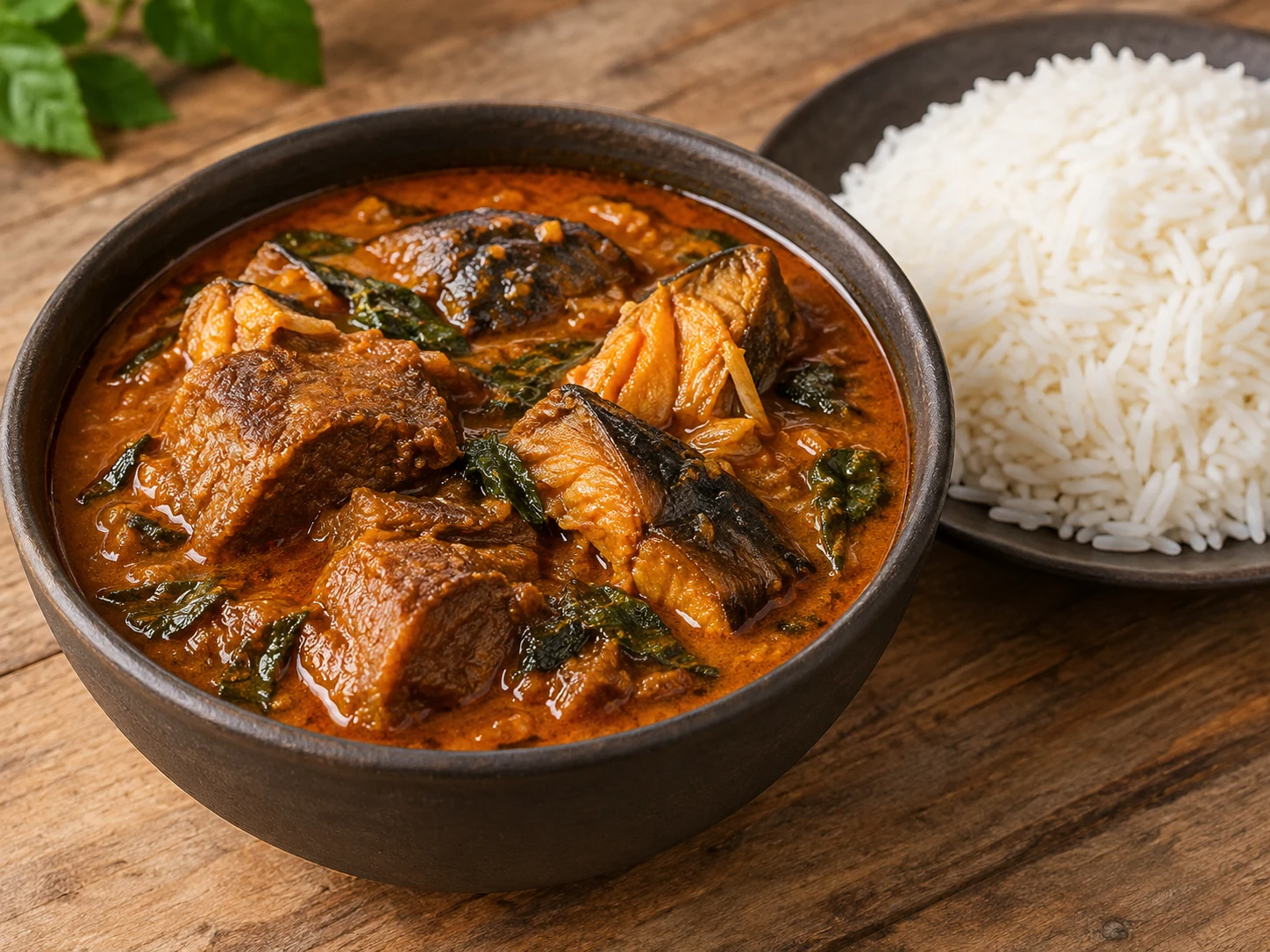
Ofe Akwu is a culinary preparation of paramount cultural and historical importance originating from the Igbo people, who predominantly reside in southeastern Nigeria. In the Igbo language, "ofe" means soup or stew, while "akwu" refers to the oil palm fruit, immediately revealing the identity and technical foundation of this emblematic dish. Historically, Ofe Akwu is inseparable from the agrarian and forest economy of the southeastern part of the country, a region blessed with exceptionally dense wild palm groves. In ancient Igbo traditions, the extraction of palm cream was a meticulous and ritualistic task performed by the women and children of the compound after the men harvested the fruit bunches. This rich and creamy dish was not only a delight for the palate but a symbol of abundance, land fertility, and sharing. Traditionally, Ofe Akwu is the sacred Sunday meal par excellence in eastern Nigeria, a day when extended families gather after religious services to share a moment of communion and joy. Knowing how to prepare a perfectly creamy Ofe Akwu, with a complex balance of local spices and forest aromatic herbs, is perceived as a mark of domestic wisdom and sacred respect for traditions passed down by ancestors through the ages.
🌿 A NUTRITIONAL TREASURE AND ESSENTIAL COMPOSITION
The absolute pillar of Ofe Akwu is the thick, creamy juice extracted from the pulp of the oil palm fruit (Elaeis guineensis). Unlike clarified red palm oil, the juice used here contains the entire pulp, offering a dense and velvety texture.
From a nutritional perspective, raw palm juice is an extraordinary superfood. It is one of the world's richest natural sources of beta-carotenes (a precursor to vitamin A), which gives the sauce its magnificent flamboyant reddish-orange color. It is also packed with tocotrienols and tocopherols (vitamin E), powerful antioxidants that protect body cells, improve cardiovascular health, and strengthen the immune system. Ofe Akwu provides a significant amount of potassium, magnesium, iron, and high-quality lipids, essential for the absorption of fat-soluble vitamins.
The aromatic and medicinal profile of Ofe Akwu is crowned by a bouquet of traditional wild herbs and spices from eastern Nigeria. The indispensable signature ingredient is ogiri leaf, a fermented castor bean paste with an earthy and powerful smell that provides a deep umami flavor. Uziza leaves (Piper guineense) are obligatorily added for their peppery and pungent note that stimulates digestion and relieves bloating, as well as uda (Guinea pepper). The major aromatic herb is nchanwu or efirin, commonly known as African basil or scent leaf in English. This fresh leaf, rich in essential oils and antiseptic compounds, brings a minty, fresh, and balsamic note that delicately cuts through the richness of the palm juice.
The choice of proteins includes beef, shaki tripe, gelatinous cow's foot, smoked fish (catfish), stockfish, and a generous amount of ground crayfish for the umami effect.
🍳 PREPARATION TECHNIQUE ACCORDING TO THE RULES OF ART
The preparation of Ofe Akwu is a ritual of patience that requires rigor to extract the palm cream and bind the spices to the protein broth.
The process begins with the extraction of palm juice. Fresh palm fruits are washed and then boiled in a large pot of water until their outer skin begins to crack and the pulp becomes extremely tender. They are transferred hot to a wooden mortar where they are gently pounded to detach the fibrous pulp from the hard kernels without breaking them. Hot water is added to the mortar to dissolve the fatty pulp, then the fibrous mixture is pressed between the hands to extract a creamy, thick, and orange liquid. This liquid is filtered several times using a fine sieve to remove all fibers and kernel fragments.
This purified palm juice is poured into a deep pot and brought to a boil over high heat. As it boils, the juice begins to reduce, and the palm oil begins to rise slightly to the surface. Sliced onions, ground fresh chili (atarodo), and ground uda and uziza spices are added. It is left to simmer for about ten minutes.
Then, the previously cooked proteins are introduced: pieces of beef, shaki, and cow's foot, delicately deboned smoked fish, softened stockfish, and ground crayfish. The powerful ogiri is added, and everything is mixed well so that all the flavors harmoniously merge.
The final phase consists of adding fresh herbs. Finely chopped uziza leaves are incorporated, followed by fresh scent leaf (nchanwu). It is stirred gently and left to simmer over very low heat for only three to five minutes. The soup is ready when the red oil has perfectly emulsified with the palm cream and a minty, smoky, woody, and spicy aroma emanates from the pot. It should have a first-rate creamy and velvety consistency.
🍽️ THE PLACE OF OFE AKWU IN AFRICAN CUISINE
In the constellation of West African flavors, Ofe Akwu holds a unique place of immense prestige. It represents the Igbo variant of the famous West African palm nut soup, but it differs radically in its primary mode of consumption.
Indeed, while Urhobo Banga soup or Ivorian palm nut sauce are accompanied by starch, usi, or eba (swallows), Ofe Akwu is traditionally and predominantly enjoyed with steamed white rice. This rice-Ofe Akwu combination is the absolute symbol of festive Sundays throughout eastern Nigeria, a family meal par excellence. White rice acts as an extraordinary neutral base that absorbs the creaminess and aromatic power of the palm sauce, each spoonful offering a perfect balance of minty, spicy, salty, and smoky flavors. It can also be enjoyed with boiled yam or boiled plantain.
On a continental scale, Ofe Akwu shares a close kinship with Ghana's Abenkwan or the palm nut sauce of Benin, Togo, and Cameroon. It testifies to the cultural and botanical unity of the forest peoples who have learned to magnify the oil palm fruit. Thanks to waves of emigration, Ofe Akwu has become globalized. Today, quality canned palm pulp and dried scent leaves can be found in African grocery stores in London, Brussels, Paris, New York, and Houston, allowing expatriate families to recreate this traditional Sunday meal, maintaining an indestructible link with the rituals of their homeland and ancestral Igbo conviviality.
✨ SYNONYMS OF OFE AKWU
This traditional palm nut soup and its components have several names and synonyms depending on geographical regions, local languages, and culinary practices:
Igbo Palm Nut Stew or Igbo Palm Nut Soup: This is the most commonly used descriptive term in French and English by international gourmets to refer to this unique culinary preparation, compared to the West African Francophone version.
Ofe Akwu Soup: The hybrid Anglo-Igbo denomination commonly used on contemporary African restaurant menus and in recipe books.
Palm Nut Stew with Scent Leaf: A gastronomic and descriptive name that emphasizes the major duo (palm juice and African basil) that structures the fresh aromatic identity of the dish.
Palm Nut Sauce with Rice: A popular cultural name directly referring to its traditional and obligatory accompaniment during Sunday festive meals.
🔑 KEYWORDS OF OFE AKWU
Ofe Akwu Igbo Palm nut Scent leaf White rice
Prepare this speciality
Choose a detailed recipe, adjust the portions and prepare your ingredients before starting. Our cooking tips and food safety advice complement the steps described in the recipes.
Explore further: Cooking tips · Food hygiene and safety advice.
In my books

Continue exploring the continent’s cuisines with Africa at the Table — 54 countries, 54 iconic dishes, by Alioune FALL. This book is in English.
In the kitchen : Ofe Akwu
Recipes from the site to put your knowledge into practice:
Discover these cuisines at a restaurant
Explore our restaurant and caterer directories. Choose your destination and check the establishment’s menu to confirm which dishes are offered and available.
Continue exploring
Enjoy discovering ingredients and African cuisines? Join our newsletter. The illustrated PDF 10 sauces africaines incontournables is in French and is offered after confirming a subscription to the French or bilingual edition.