Ewa riro
Nigeria
Understanding : Ewa riro
🍲 ORIGINS AND EMBRACE OF YORUBA CUISINE
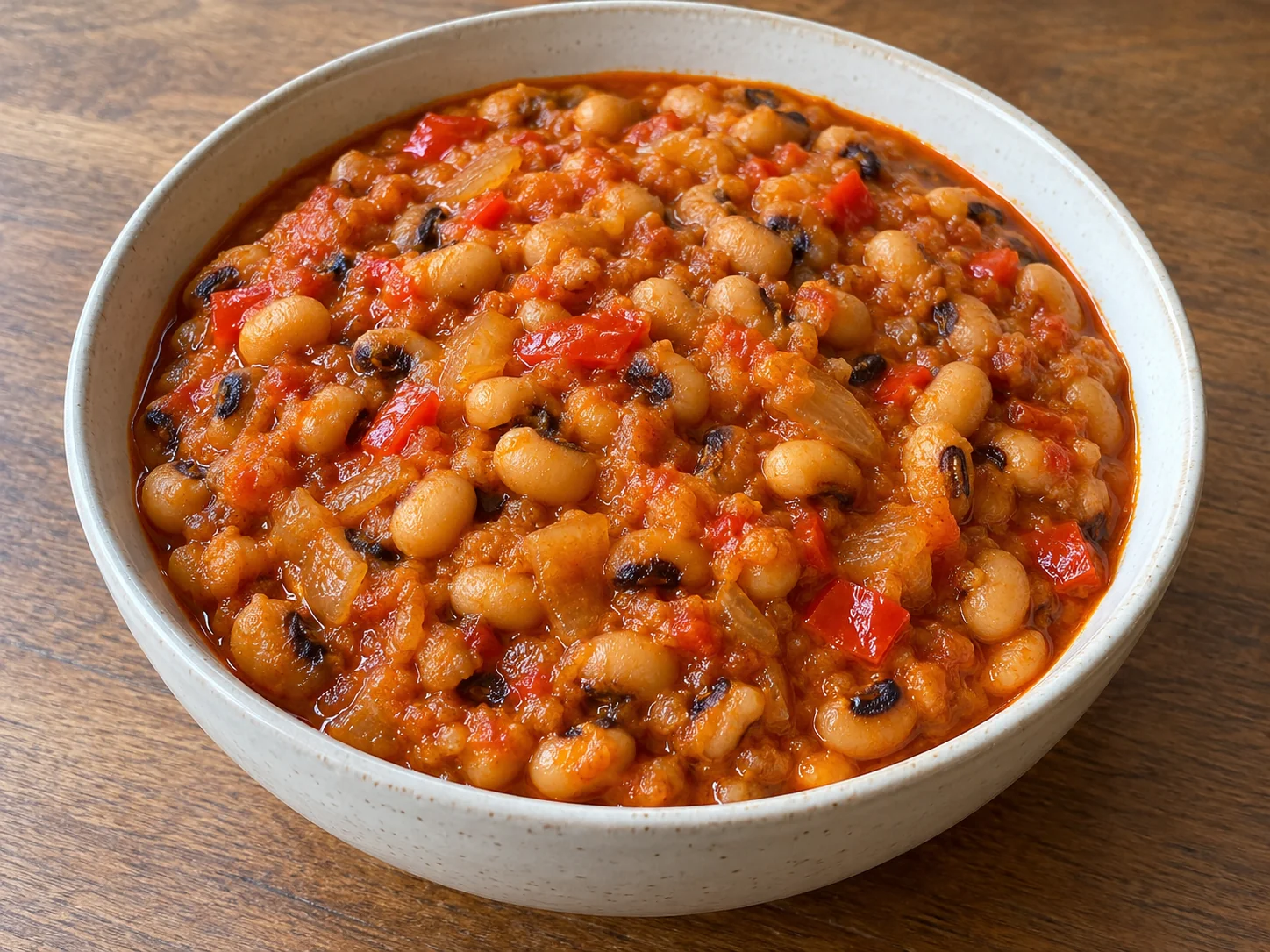
Ewa Riro, originating from the rich culinary culture of the Yoruba people, who primarily reside in southwestern Nigeria, Benin, and Togo, is a monument of West African gastronomy. In the Yoruba language, ewa means beans, while riro refers to stirring or gently mixing during preparation, literally translating the dish as stewed beans or bean stew. Historically, this comforting dish finds its origins in the agrarian traditions of the Yoruba region, where legumes were a staple crop highly valued for their hardiness, low cost, and ease of storage after harvest. Unlike many ceremonial soups, Ewa Riro emerged in popular households as a highly nutritious daily meal, capable of economically feeding large family tables while offering unparalleled culinary pleasure. Over time, this recipe was passed down orally from generation to generation, gradually making its way onto the tables of popular restaurants (buka) in Lagos and Ibadan, and is now an absolute classic of Nigerian street food and comfort food. It embodies a culinary philosophy where peasant simplicity meets the art of combining traditional spices and palm oil to transform a modest ingredient into a dish of incomparable creaminess and silky richness.
🌾 THE STAR INGREDIENT AND ITS NUTRITIONAL SECRETS
The absolute pillar of Ewa Riro is the brown bean, locally called oloyin or honey beans, an indigenous West African variety of cowpea (Vigna unguiculata) renowned for its sweet and deliciously sugary flavor.
From a nutritional perspective, honey beans are a true superfood, particularly well-suited to provide sustained energy to the body. They are exceptionally rich in high-quality plant proteins, making them a primary alternative or complementary protein source in West African diets. They are also packed with soluble and insoluble dietary fibers, which promote excellent digestive health, regulate bowel transit, help stabilize blood sugar, and prolong the feeling of satiety after a meal. Ewa Riro provides a significant amount of vital minerals such as iron (essential for fighting anemia), potassium, magnesium, and zinc, as well as B vitamins, including folic acid (vitamin B9), essential for cellular health.
For these hard seeds to transform into a creamy stew, they must be meticulously sorted and then patiently boiled in a pot of water until they become extremely soft and their skins crack. It is this natural starch released by the overcooked beans that will serve as a binder to thicken the sauce.
In addition to the beans, the classic recipe calls for unrefined crude red palm oil. Red palm oil brings its warm orange color, characteristic nutty flavor, and a massive dose of beta-carotenes (vitamin A) and tocopherols (vitamin E). It is also combined with fresh ground chili (atarodo), a large quantity of sliced onions that caramelize during cooking, dried crayfish powder for the umami effect, and sea salt.
🍳 THE STEPS OF THE STEW PREPARATION RITUAL
Making Ewa Riro is a process of culinary patience that requires particular attention to the texture of the beans and the gradual integration of the sauce elements to obtain a perfectly homogeneous and creamy stew.
The first phase consists of cooking the beans. After sorting them to remove small impurities, they are rinsed and placed in a large pot filled with cold water. They are boiled over medium heat. The traditional golden rule is not to salt the beans at the beginning of cooking, as salt hardens the skin of the seeds and unnecessarily prolongs cooking time. They are patiently boiled until the beans are extremely tender, easily crushing under the pressure of a fork.
While the beans are cooking, the sauce base is prepared in another pot. A generous amount of crude red palm oil is heated. When the oil is hot, an abundance of finely sliced onions is added. They are fried over medium heat until the onions caramelize slightly, releasing sweet and savory aromas. Then, coarsely mixed fresh chili (atarodo) and dried crayfish powder are added. This sauce is fried for about ten minutes, until the red oil begins to rise to the surface.
It is at this point that the cooked beans, along with their cooking water (which contains all the precious starch), are transferred directly into the palm oil sauce pot. They are vigorously mixed with a large wooden spoon. Some of the beans are gently mashed against the sides of the pot to release additional starch and promote the thickening of the sauce.
The heat is reduced to a minimum, salt is added, and it is left to simmer uncovered for about fifteen to twenty minutes, stirring regularly to prevent the preparation from sticking to the bottom. During this slow cooking, the bean water, starch, and red palm oil emulsify to create a dense, smooth, and creamy stew. The final preparation should display a deep orange color, a velvety texture, and emit an absolutely irresistible sweet, spicy, and smoky aroma.
🍽️ THE PLACE OF EWA RIRO IN AFRICAN CULINARY SOVEREIGNTY
In the constellation of West African flavors, Ewa Riro occupies a monumental place of choice. It is the quintessential symbol of comforting and flavorful family cuisine, capable of transcending all social classes.
In Nigeria, Ewa Riro is an essential classic of daily life. It is found in all popular buka in Lagos and Ibadan, where it is prepared in large quantities in clay pots that retain heat. This dish is traditionally enjoyed hot, accompanied by a soft and crispy element that creates a perfect textural contrast: fried ripe plantain, known as dodo. The combination of Ewa Riro and dodo is considered a comforting gastronomic pinnacle. It is also very often accompanied by local soft bread or Agege Bread, the bread serving as a vehicle to wipe up the velvety and sweet sauce of Ewa Riro. Remarkably, it is also served as a side dish with steamed white rice or eba.
Across the continent, Ewa Riro shares a close kinship with other African bean stews, such as Senegalese cassoulet or Ivorian red bean stew. However, the exclusive use of West African honey beans and the perfect emulsion with crude red palm oil give it an incomparable sweetness and silky creaminess.
Thanks to the migratory movements of the dynamic diaspora, Ewa Riro has become spectacularly globalized. Dried honey beans are now sold in all exotic grocery stores in London, Toronto, Paris, New York, and Houston, allowing expatriate families to recreate this comforting meal and maintain an indestructible link with the traditions of their homeland. Enjoying a warm bowl of Ewa Riro with dodo abroad has become a powerful nostalgic ritual, a celebration of the richness, creaminess, and legendary conviviality of West African cuisine.
✨ SYNONYMS OF EWA RIRO
This traditional bean stew and its components have several names and synonyms depending on geographical regions, local languages, and culinary practices:
Nigerian Bean Stew: This is the most common descriptive translation in French and English used by international gourmets to refer to this comforting culinary preparation.
Ewa oloyin or Honey Beans Stew: A name that highlights the naturally sweet and sugary oloyin brown bean variety that serves as the exclusive raw material for the authentic recipe.
Palm Oil Bean Sauce: A technical and descriptive name highlighting the magical binding ingredient (crude red palm oil) that gives the dish its creamy consistency and signature golden color.
Ewa Alata: In some Yoruba communities, this familiar term is used to refer to the particularly spicy and pungent version of the bean stew prepared with an abundance of fresh chili.
🔑 KEYWORDS FOR EWA RIRO
Ewa Riro Yoruba Honey beans Dodo Comfort food
Prepare this speciality
Choose a detailed recipe, adjust the portions and prepare your ingredients before starting. Our cooking tips and food safety advice complement the steps described in the recipes.
Explore further: Cooking tips · Food hygiene and safety advice.
In my books

Continue exploring the continent’s cuisines with Africa at the Table — 54 countries, 54 iconic dishes, by Alioune FALL. This book is in English.
In the kitchen : Ewa riro
Recipes from the site to put your knowledge into practice:
Discover these cuisines at a restaurant
Explore our restaurant and caterer directories. Choose your destination and check the establishment’s menu to confirm which dishes are offered and available.
Continue exploring
Enjoy discovering ingredients and African cuisines? Join our newsletter. The illustrated PDF 10 sauces africaines incontournables is in French and is offered after confirming a subscription to the French or bilingual edition.