Groundnut sauce
Ghana, Nigeria, Sierra Leone
Understanding : Groundnut sauce
🍲 ORIGINS AND ESSENCE OF GROUNDNUT SAUCE
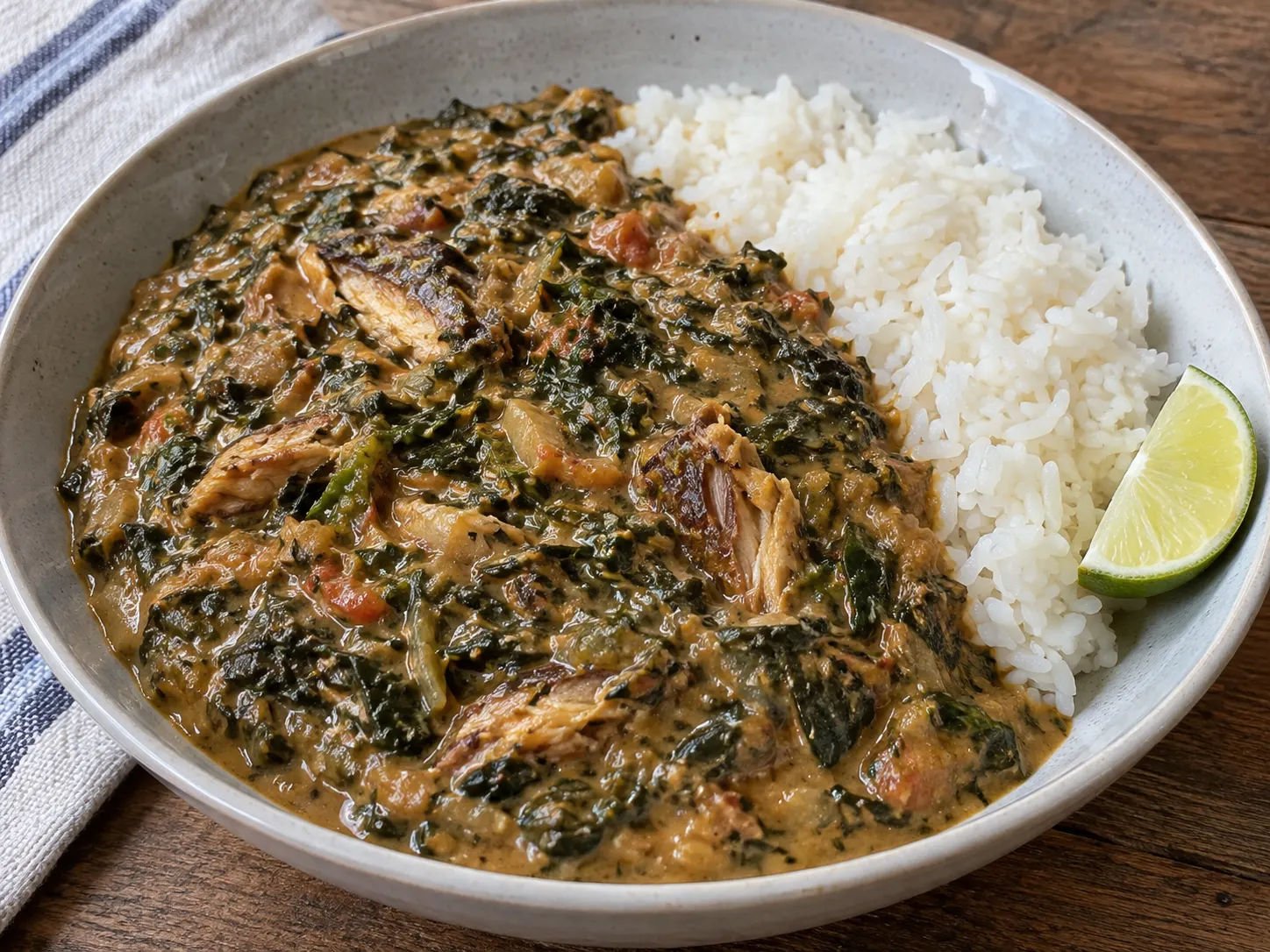
Groundnut sauce, an undisputed treasure of West and Central African culinary heritage, is much more than a simple daily side dish. It embodies the warmth, history, and generosity of an entire continent. Although originating from South America and introduced to Africa via Portuguese trade routes in the sixteenth century, the groundnut found a second spiritual and agricultural home on African soil. Local populations immediately adopted this oilseed for its hardiness, nutritional richness, and ease of preservation. Over the centuries, groundnut sauce has become the backbone of the diet for millions of people, appearing in endless regional variations while retaining a common essence: a creamy texture, a roasted seed aroma, and a comforting depth of flavor. This dish tells the story of a successful fusion between an imported ingredient and ancestral African cooking techniques, which prioritize slow simmering, the harmonization of local spices, and the art of shared hospitality.
Where to find it
Look for the exact food-grade form required by the recipe at markets and specialist shops. Check the product name, ingredients, condition and storage instructions.
Explore further: Cooking tips · Food hygiene and safety advice.
History and uses
🥜 THE SECRETS OF ITS PREPARATION AND REGIONAL VARIATIONS
The magic of groundnut sauce lies primarily in the quality of its main ingredient: groundnut paste, often called raw peanut butter, which must contain no added sugar. The groundnuts are first meticulously sorted, then dry-roasted to release their essential oils and develop that characteristic roasted nutty smell. They are then finely ground, traditionally with a mortar and pestle or on a stone mill, until a dense, smooth, and oily paste is obtained.
The cooking process usually begins with the creation of a dense aromatic base. Sliced onions, crushed garlic, and sometimes fresh ginger are sautéed in a little vegetable oil. Depending on the region, concentrated tomato paste or crushed fresh tomatoes are added to provide acidity and a beautiful reddish-orange color. The groundnut paste is then diluted with warm water or meat broth before being incorporated into the aromatic mixture. It is at this stage that the long, slow simmering begins, essential for the groundnut oil to naturally rise to the surface, an undeniable sign of successful cooking and a perfectly bound sauce.
Variations across the continent demonstrate the extraordinary adaptability of this recipe:
In Senegal, Mali, and Guinea, the dish is elevated to the status of an institution under the respective names of Mafé and Tigadèguèna. This West African version is particularly rich and thick. It harmoniously combines tender pieces of beef, mutton, or free-range chicken with winter or tropical vegetables such as white cabbage, carrots, sweet potatoes, cassava, or eggplants. A whole Scotch bonnet pepper is delicately placed on the sauce during cooking, diffusing its fruity aromas without burning the palate.
In Ghana, Nkatenkwan is distinguished by its slightly more fluid consistency, resembling a rich soup. It features ginger, onions, and crushed chilies, and frequently incorporates smoked fish or smoked chicken, giving it an absolutely irresistible smoky dimension.
In Côte d'Ivoire, a clear or denser groundnut sauce is often prepared, garnished with fresh okra to add a binder and a highly appreciated velvety texture.
In Central Africa, particularly in Cameroon and the two Congos, groundnut sauce sometimes includes pounded cassava leaves or wild local herbs. It perfectly accompanies game or dried fish, offering an explosion of earthy and woody flavors.
🌍 CULTURAL AND SYMBOLIC PLACE IN AFRICAN CUISINE
In African societies, cooking is a space for transmission, social cohesion, and the celebration of life. Groundnut sauce occupies a central place in this cultural dynamic. It is par excellence the dish of sharing, communion, and large family gatherings. Preparing a groundnut sauce is not improvised; it is a ritual that requires time, patience, and expertise often passed down from mother to daughter. The crackling of the sauce simmering in the courtyard, the enveloping smell of roasted groundnut paste spreading through the neighborhood are synonymous with celebration, religious festivals, baptisms, or Sunday reunions.
This dish also embodies the values of hospitality, so dear to the continent's cultures. In Senegal, Teranga, this tradition of warm welcome, often materializes around a large bowl of steaming Mafé. Serving a rich groundnut sauce, generous with meat and vegetables, is a mark of deep respect for one's guest. Traditionally, people eat around a large single dish placed on a mat, with each guest delimiting their portion in front of them while sharing the best pieces of meat and vegetables placed in the center. It is a moment of verbal exchange, education for the youngest, and strengthening of community ties.
In my books

Continue exploring the continent’s cuisines with Africa at the Table — 54 countries, 54 iconic dishes, by Alioune FALL. This book is in English.
Explore further
🥣 ACCOMPANIMENTS AND THE ART OF TASTING
An exceptional groundnut sauce requires an equally exceptional accompaniment to reveal its full gustatory potential. The choice of starch varies greatly depending on geography and local preferences, but the goal remains the same: to absorb the richness of the sauce and balance its density.
White rice remains the most universal companion to groundnut sauce. In West Africa, fragrant broken white rice, steamed, is preferred, as it perfectly soaks up the creamy sauce without becoming sticky. Each grain of rice is coated with the creaminess of the groundnut to create a perfect bite.
Fufu, this dense and elastic paste obtained by pounding cassava, yam banana, or boiled plantain, is the quintessential accompaniment in Central Africa and English-speaking countries like Ghana and Nigeria. Tasting then becomes a gestural art: a small ball of fufu is taken with the right hand, a slight well is made in it with the thumb, then it is gently dipped into the hot groundnut sauce before being swallowed without chewing, allowing the flavors to glide harmoniously.
Other traditional alternatives deserve recognition:
Toh or tuo zaafi, a firm porridge made from millet, corn, or sorghum flour, very popular in Sahelian areas like Burkina Faso, Mali, or northern Benin. Its slightly tangy taste contrasts beautifully with the sweetness of the groundnut.
Chikwangue, this fermented cassava bread cooked in banana leaves, typical of the Congo Basin, whose characteristic acidity cuts through the natural fat of the groundnut sauce.
Plantains, whether boiled or fried in thin golden slices, bring a sweet and savory note that enhances the aromatic complexity of the dish.
✨ NUTRITIONAL VIRTUES AND BENEFITS OF THIS EMBLEMATIC DISH
Beyond its exceptional aromatic profile, groundnut sauce is a model of nutritional balance and a vital source of energy for populations. The groundnut itself is an exceptionally rich food. It is packed with high-quality vegetable proteins, essential for maintaining muscle mass and tissue repair. It also contains a high proportion of healthy fats, mainly monounsaturated fatty acids similar to those found in olive oil, beneficial for the cardiovascular system.
Groundnut sauce is also a treasure trove of essential micronutrients:
It provides a significant amount of vitamin E, a powerful antioxidant that protects cells against premature aging.
It contains B vitamins, including niacin and folate, crucial for energy metabolism and nervous system function.
It is rich in essential minerals such as magnesium, phosphorus, potassium, zinc, and iron.
When prepared according to culinary traditions, with a wide variety of fresh vegetables and lean animal proteins or fish, groundnut sauce constitutes a complete, highly satisfying, and protective meal. In areas of intensive agriculture, it provides the necessary energy for farmers to perform strenuous work in the fields, thus proving its biological and historical value.
🔄 SYNONYMS AND DENOMINATIONS ACROSS THE CONTINENT
Due to its immense popularity and centuries-old presence in a multitude of African countries, groundnut sauce has a rich linguistic nomenclature. Each name evokes a regional nuance, a dialect, and a unique identity:
Mafé (or maffé): This is undoubtedly the most famous term internationally. Of Wolof origin, it is mainly used in Senegal, Mauritania, Gambia, and throughout the African diaspora in Europe and North America.
Tigadèguèna (or tiga degué na): A Bambara term that literally means groundnut paste sauce (tiga meaning groundnut, dèguè meaning paste, and na meaning sauce). This name is used in Mali, Guinea, and bordering regions of Côte d'Ivoire.
Nkatenkwan: Used in Ghana, this word derives from the Twi language (nkatie for groundnut and kwan for soup or sauce).
Azindessi: In the Ewe language in Togo, this term specifically refers to the local version of groundnut sauce, often prepared with mutton and fresh or smoked fish.
Sauce d'arachide or sauce cacahuète: These generic French appellations are widely used in all French-speaking African countries, from Côte d'Ivoire to Gabon, including Cameroon, the Central African Republic, the Democratic Republic of Congo, and Congo-Brazzaville.
Groundnut soup: This is the dominant English appellation in Nigeria, Sierra Leone, and Liberia, echoing the more liquid, soup-like texture appreciated in these countries.
Mwamba d'arachide: In some regions of the Democratic Republic of Congo, although mwamba historically refers to palm nut sauce, the expression is sometimes extended to refer to rich groundnut-based preparations.
📋 LIST OF KEYWORDS
Mafé Groundnut paste African cuisine Nkatenkwan Traditional simmering
In the kitchen : Groundnut sauce
Recipes from the site to put your knowledge into practice:
Discover these cuisines at a restaurant
Explore our restaurant and caterer directories. Choose your destination and check the establishment’s menu to confirm which dishes are offered and available.
Continue exploring
Enjoy discovering ingredients and African cuisines? Join our newsletter. The illustrated PDF 10 sauces africaines incontournables is in French and is offered after confirming a subscription to the French or bilingual edition.