Palm nut soup
Ghana, Nigeria
Understanding : Palm nut soup
🌴 ORIGINS AND ESSENCE OF PALM NUT SOUP
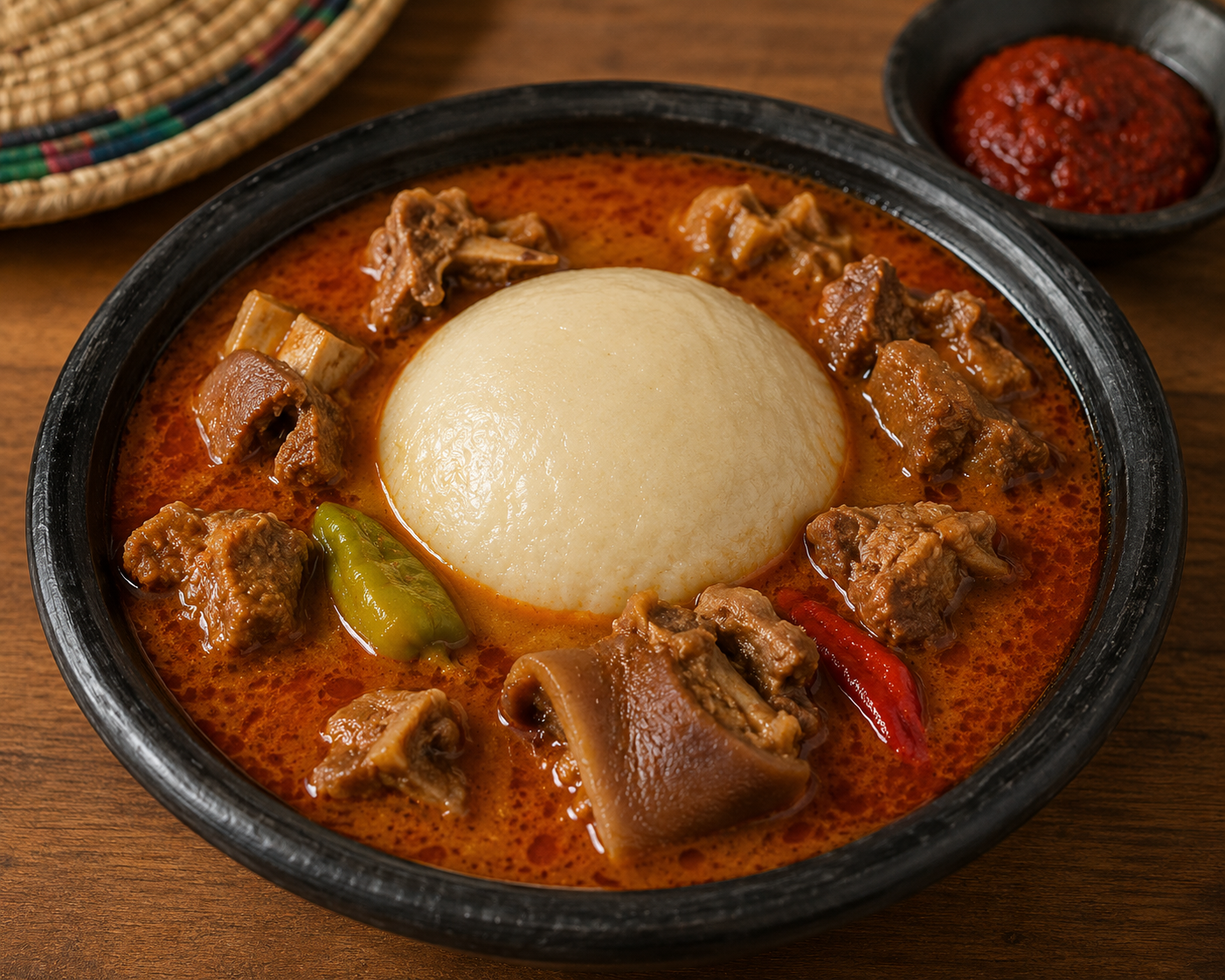
Palm nut soup is one of the most majestic, sacred, and flavorful pillars of West and Central African gastronomy. This ancestral dish, with its incomparable sensory richness, draws its essence from the oil palm, a providential tree often called the tree of life in many forest cultures of the continent. Unlike other ingredients imported throughout history, the oil palm is indigenous to the humid tropical regions of Africa, which gives this soup a unique historical authenticity and spiritual depth. It is not merely a substantial meal intended to nourish bodies; it is a living bridge between generations, a symbol of the earth's fertility, and a celebration of human patience. The traditional preparation of this dish requires meticulous labor and scrupulous respect for the transformation steps, making each bowl of soup a vibrant tribute to the culinary savoir-faire inherited from ancestors. From the edges of Ivorian forests to Nigerian hills, passing through the banks of the Congo River, palm nut soup resonates as a symphony of earthy, sweet, smoky, and spicy flavors that instantly captivate the soul of anyone who tastes it.
🥥 THE SECRETS OF ITS PREPARATION AND REGIONAL VARIATIONS
The quintessence of this dish relies entirely on the delicate extraction of juice or pulp from fresh palm nuts. Palm nut bunches are harvested at maturity, when the fruits display a fiery orange-red color, brimming with nutrients and natural oils. Individual fruits are detached from the bunch, carefully washed, then boiled in large pots of water until their outer shell becomes tender and begins to crack.
Then begins the most physical and symbolic stage of the process: pounding. The boiled nuts are transferred to a large wooden mortar where they are pounded with a heavy pestle. This rhythmic gesture, heard echoing in villages at dawn, aims to separate the fleshy, oily pulp from the hard central kernel without breaking the latter. The pounded mass is then mixed with warm water, then pressed and filtered through traditional sieves to extract a thick, velvety, intense brick-red liquid. This precious palm nectar forms the liquid base of the soup, free of any chemical additives or preservatives.
Once this broth is obtained, it is simmered over a wood fire, which gives it a subtle and inimitable smoky aroma. Depending on the regional variation, a profusion of ingredients is incorporated to enrich its texture and aromatic complexity:
In Ghana, the soup called Abeenkwan is flavored with onions, garlic, fresh ginger, and crushed local chili. Local aromatic herbs and sometimes wild mushrooms are added. Preferred proteins include smoked chicken, giant African snails, land crab, and dried or smoked fish, creating a harmony of maritime and terrestrial flavors of incredible opulence.
In Nigeria, palm nut soup is called Banga Soup in the Niger Delta. This version is distinguished by the use of a unique and highly fragrant blend of wild spices, such as atama, beletete, aidan, or obrunbebe. These spices give the soup a medicinal, slightly bitter, and woody note that balances the natural fat of the palm nut. It is traditionally garnished with fresh seafood, including giant prawns, crabs, periwinkles, and fresh fish like tilapia or catfish.
In Ivory Coast, sauce graine is a national monument. It is often prepared more simply but extremely flavorful, combining palm pulp with beef, mutton, or tripe, as well as smoked fish. Fresh chili is added whole to delicately flavor the sauce without releasing excessive heat.
In Cameroon and the two Congos, it takes on a very dense texture and pairs beautifully with bushmeat, rehydrated dried fish, or okra leaves to create a highly sought-after silky binder.
🌍 CULTURAL AND SYMBOLIC PLACE IN AFRICAN CUISINE
In African cultures, the preparation of palm nut soup extends far beyond the strictly culinary realm to encompass a spiritual and communal dimension. Because its extraction requires time, energy, and collective coordination, it is by nature the dish for special occasions, rites of passage, and important family gatherings. Formerly, and still today in many rural areas, women would gather in small groups to pound the nuts, singing traditional tunes that rhythmicized the movement of the pestles. It was a space for dialogue, learning for young girls, and strengthening sisterly bonds.
Serving palm nut soup to a visitor is an act of high social consideration. It is offering the fruit of hard work, a noble food that symbolizes the wealth and generosity of the household. During traditional weddings, funerals, or end-of-year celebrations, large aluminum pots blackened by wood fire soot boil for hours in the central courtyard, diffusing a heavy, comforting, and festive aroma that alerts the entire community that a major event is being celebrated.
🥣 ACCOMPANIMENTS AND THE ART OF TASTING
To fully appreciate the velvety richness of palm nut soup, it is essential to pair it with accompaniments capable of absorbing its consistency and balancing its oily texture. The choice of these starches varies by country, but all share a neutrality of taste that enhances the soup:
Fufu (or foofoo) is the essential ally in Ghana and Nigeria. Whether made from cassava, yam, or plantain, its elastic texture allows the soup to be scooped directly with the fingers, each bite carrying with it the red pulp and small pieces of meat or fish.
Fragrant white rice, steamed, is also very popular, particularly in Ivory Coast and Liberia. The rice absorbs the brick-red broth, taking on its warm nuances and deep aromas.
Starch, an elastic and translucent yellow paste made from cassava starch mixed with a drizzle of palm oil, is the exclusive traditional accompaniment to Banga Soup among the Urhobo and Itsekiri people of the Niger Delta in Nigeria.
Placali, a fermented cassava paste typically Ivorian, brings a refreshing hint of acidity that offers a striking and welcome contrast to the rich, sweet roundness of sauce graine.
Toh or millet or corn balls can also accompany this dish in more northern regions where these cereals are grown in abundance.
✨ NUTRITIONAL VIRTUES AND BENEFITS OF THIS EMBLEMATIC DISH
From a health perspective, palm nut soup is a concentrate of energy and essential nutrients, often underestimated in the West due to confusion with refined industrial palm oil. Extracted traditionally, without extreme heat treatment or chemical solvents, palm nut pulp retains all its beneficial properties. It is one of the richest natural sources of beta-carotene (a precursor to vitamin A), which gives it its magnificent red color. Vitamin A is essential for eye health, strengthening the immune system, and skin regeneration.
Furthermore, this soup is rich in vitamin E in the form of tocotrienols, powerful antioxidants that actively fight oxidative stress, thereby protecting body cells and supporting the cardiovascular system. The fatty acids present in the soup, although energy-dense, are rapidly metabolized by the body to provide sustained working strength, essential for daily agricultural or physical labor. Combined with fish, crab, or meat proteins, as well as the digestive spices used in its preparation, it constitutes a complete, healthy, and deeply revitalizing meal.
🔄 SYNONYMS AND DENOMINATIONS ACROSS THE CONTINENT
The geographical reach of this dish across Africa is accompanied by a rich palette of denominations that highlight the continent's linguistic diversity:
Abeenkwan (or aben kwan): Twi-origin name primarily used in Ghana to refer to this aromatic and festive soup.
Banga soup (or banga): Dominant name in Nigeria, particularly in the Southern and Delta regions, referring to palm nuts in local languages.
Sauce graine: The most widespread French-language expression in Ivory Coast, Benin, Togo, and Burkina Faso, referring to oil palm seeds.
Mwamba (or mouamba): Term used in the Democratic Republic of Congo, Congo-Brazzaville, Gabon, and Angola to refer to stews made from palm nut pulp.
Nyembwe (or poulet nyembwe): National name given in Gabon to this preparation when it features local chicken simmered in palm sauce.
Amfich: Vernacular name in some communities in Togo and Southern Cameroon.
📋 KEYWORD LIST
Abeenkwan Sauce graine Palm nut Banga soup West African cuisine
Prepare this speciality
Choose a detailed recipe, adjust the portions and prepare your ingredients before starting. Our cooking tips and food safety advice complement the steps described in the recipes.
Explore further: Cooking tips · Food hygiene and safety advice.
In my books

Continue exploring the continent’s cuisines with Africa at the Table — 54 countries, 54 iconic dishes, by Alioune FALL. This book is in English.
In the kitchen : Palm nut soup
Recipes from the site to put your knowledge into practice:
Discover these cuisines at a restaurant
Explore our restaurant and caterer directories. Choose your destination and check the establishment’s menu to confirm which dishes are offered and available.
Continue exploring
Enjoy discovering ingredients and African cuisines? Join our newsletter. The illustrated PDF 10 sauces africaines incontournables is in French and is offered after confirming a subscription to the French or bilingual edition.