Kontomire stew
Ghana
Understanding : Kontomire stew
🌿 ORIGINS AND ESSENCE OF KONTOMIRE STEW
Kontomire stew, better known by its original Ghanaian name Kontomire Stew, is an essential culinary delight from West Africa. This iconic green stew, with its extraordinary creaminess and aromatic richness, takes its name from fresh taro leaves (cocoyam leaves in English), affectionately called kontomire in the Twi language. For the people of the West African forest region, this plant is not just a simple vegetable herb; it is a symbol of a diet nourished by the forces of tropical nature, growing in the benevolent shade of large trees and brimming with vital benefits. Historically rooted in the culinary traditions of Ghana, Togo, Benin, and Nigeria, kontomire stew tells the story of intelligent peasant cuisine, capable of transforming local green leaves into a festive dish of remarkable elegance and gustatory complexity. This dish is an invitation to slow down, to inhale the aromas of raw palm oil and smoked fish simmering peacefully, and to rediscover the power of authentic flavors from the African land.
🥬 THE SECRETS OF ITS PREPARATION AND REGIONAL VARIATIONS
The true signature of Kontomire Stew lies in the meticulous selection of its ingredients and the adherence to a traditional cooking method that preserves the vibrancy of the green leaves while developing a creamy and flavorful sauce. Young taro leaves are preferred for their tenderness; they are carefully washed to remove any impurities, stripped of their fibrous stems, then blanched in boiling water before being finely chopped or pounded in a wooden mortar.
Cooking begins with the preparation of the stew base, traditionally made with unrefined red palm oil. The palm oil is gently heated with a handful of sliced onions until it releases a characteristic sweet and earthy fragrance. Then, momoni is added, a West African salted and fermented fish with an extremely powerful aroma, essential for bringing the umami depth of flavor characteristic of the coastal and forest cuisine of the Gulf of Guinea.
After sautéing the onions and momoni, a fresh purée composed of fleshy tomatoes, kpakpo shito peppers (small, very fragrant and spicy local green peppers), and ginger is incorporated. This mixture is left to simmer slowly until the water from the tomatoes is completely reduced, allowing the red oil to rise to the surface. It is at this point that dried and ground pumpkin seeds, called agushie (or egusi), previously mixed with a little water to form a paste, are added. These pumpkin seeds will gently coagulate in the hot sauce, creating small tender lumps whose texture resembles scrambled eggs or cottage cheese.
Finally, the chopped taro leaves are delicately incorporated, accompanied by a profusion of local proteins: crumbled smoked fish, fried mackerel, giant land snails, or dried and tenderized beef skin (wewa or wele). The whole simmers over very low heat so that the flavors intertwine without destroying the beautiful green color of the leaves.
🌍 CULTURAL AND SYMBOLIC PLACE IN AFRICAN CUISINE
In the West African cultural space, Kontomire Stew is much more than a subsistence dish; it is synonymous with comfort, family hospitality, and cultural pride. It is often prepared for Sunday lunch, a special time when the extended family gathers around the table to share a hearty meal and discuss the week's news. The vibrant green color of the dish is perceived as a sign of abundance, health, and connection with the surrounding nature.
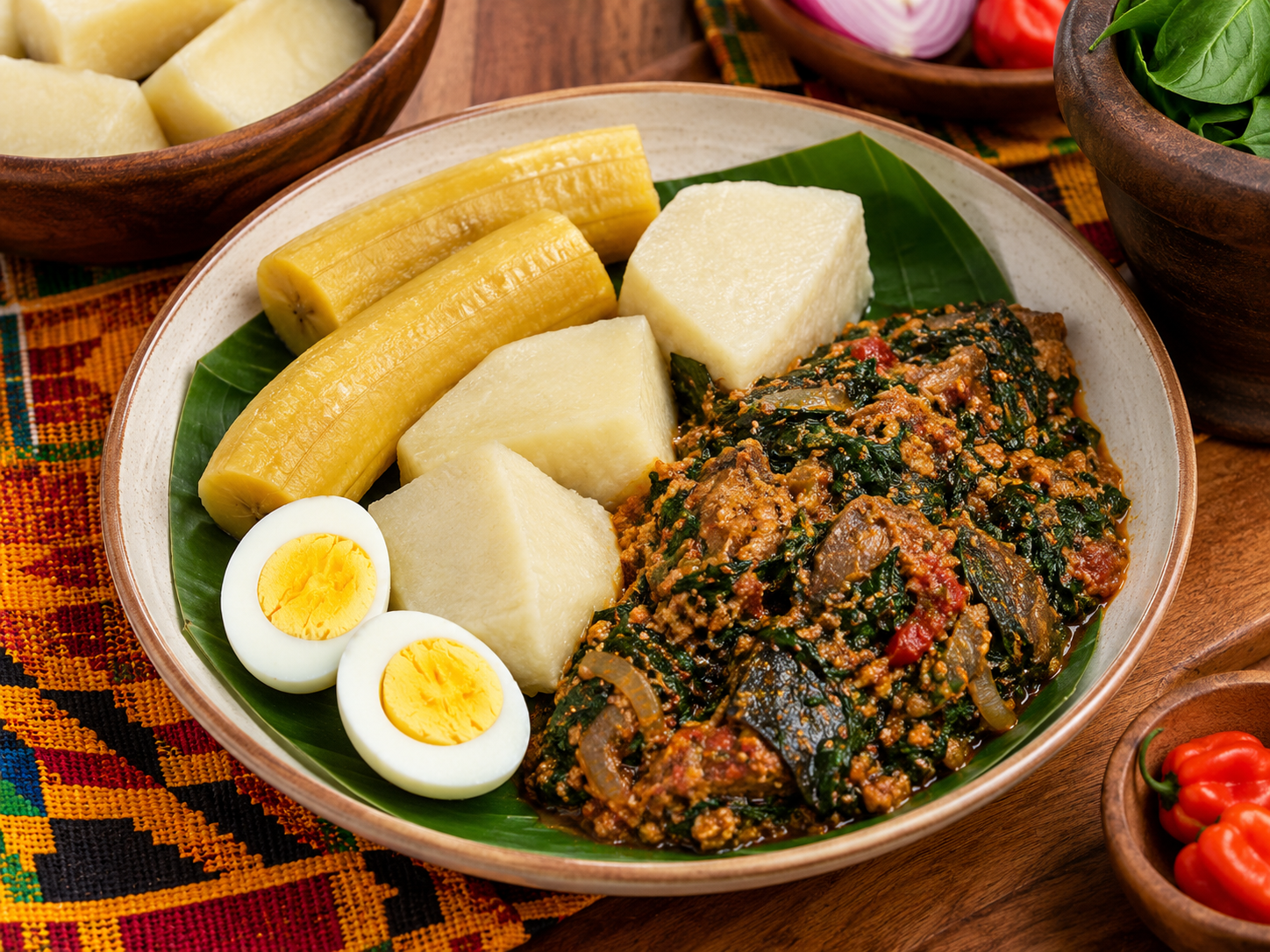
In Ghanaian households, this dish is also associated with special celebrations such as baptisms, puberty rites of passage, or end-of-year festivities. Offering a large bowl of kontomire stew garnished with selected pieces of meat, whole boiled eggs, and ripe avocados is a mark of sincere affection and deep respect for one's guests. Eating this dish by hand, sharing a single bowl, promotes conviviality, the breaking down of individual barriers, and the strengthening of family or friendly ties.
🥣 ACCOMPANIMENTS AND THE ART OF TASTING
To enhance the richness and slightly granular texture of kontomire stew, the accompaniment must be selected with discernment. African cuisine excels in the art of creating perfect duos between complex green sauces and comforting starches:
Ampesi is undoubtedly the historical and most popular companion to Kontomire Stew in Ghana. Ampesi refers to an assortment of boiled tubers, mainly green or ripe plantain, white yam, or sweet cassava. The firm and soft texture of the yam or the slightly sweet note of ripe plantain pairs wonderfully with the subtle bitterness and spiciness of the stew.
Fufu, this soft paste obtained by pounding yam or cassava with plantain, is another highly appreciated alternative. The stew coats the fufu, allowing each bite to be savored with incomparable creaminess.
Steamed white rice is a universal choice. The rice grains soak up the fragrant palm oil and retain the small pieces of agushie seeds and green leaves for a perfect balance in the mouth.
Abolo or kenkey, fermented and steamed corn breads, bring a refreshing tangy note that contrasts pleasantly with the density and natural fat of red palm oil.
Slices of ripe avocado and whole hard-boiled eggs are almost always served as a garnish on top of the stew, adding a creamy sweetness and a melting texture that beautifully complement the tasting experience.
✨ NUTRITIONAL VIRTUES AND BENEFITS OF THIS EMBLEMATIC DISH
From a nutritional point of view, kontomire stew is a true treasure trove of health benefits. The taro leaves that form its base are extraordinarily rich in dietary fiber, promoting excellent digestion and a lasting feeling of satiety. They are also packed with essential vitamins for the proper functioning of the body, including vitamin A (essential for vision and skin radiance), vitamin C (a powerful antioxidant that stimulates the immune system), and several B complex vitamins.
Furthermore, these green leaves are an excellent plant source of iron and calcium, essential for preventing anemia and maintaining bone strength. The addition of agushie pumpkin seeds provides an exceptional concentration of high-quality plant proteins, essential fatty acids, and minerals such as magnesium and zinc. Finally, raw red palm oil provides a massive amount of beta-carotenes and vitamin E in the form of active tocotrienols, making this traditional stew a true nutritional shield capable of revitalizing the body and supporting the overall vitality of consumers.
🔄 SYNONYMS AND DENOMINATIONS ACROSS THE CONTINENT
Due to the widespread cultural distribution of taro leaves and their culinary use throughout sub-Saharan Africa, this dish has many synonyms and regional names that reflect the linguistic richness of the continent:
Kontomire stew (or taro leaf palaver sauce): The flagship name in Ghana, from the Twi language.
Palaver sauce: A widespread historical term in Liberia, Sierra Leone, and English-speaking West African countries, referring to the colonial origin or family discussions around the preparation of this complex dish.
Taro leaf sauce (or coco sauce): A common French-speaking denomination in Côte d'Ivoire, Togo, and Benin, highlighting the base plant.
Egusi with vegetable (or egusi stew with green leaves): A popular name in neighboring Nigeria, where kontomire leaves are sometimes replaced by ugwu leaves (fluted pumpkin leaves) or shoko, while maintaining the palm oil and pumpkin seed-based structure.
Ndole sauce or green leaf sauce: Although Cameroonian ndole uses bitter vernonia leaves and peanuts, the principle of stewed green leaves with smoked fish and flavored oil shares an obvious gastronomic kinship with kontomire.
Ebunebunu: A related Ghanaian version in the form of a fluid green soup, where kontomire leaves are very finely ground to give an intense emerald color to the broth.
📋 KEYWORDS LIST
Kontomire stew Palaver sauce Taro leaves Ampesi Agushie
Prepare this speciality
Choose a detailed recipe, adjust the portions and prepare your ingredients before starting. Our cooking tips and food safety advice complement the steps described in the recipes.
Explore further: Cooking tips · Food hygiene and safety advice.
In my books

Continue exploring the continent’s cuisines with Africa at the Table — 54 countries, 54 iconic dishes, by Alioune FALL. This book is in English.
In the kitchen : Kontomire stew
Recipes from the site to put your knowledge into practice:
Discover these cuisines at a restaurant
Explore our restaurant and caterer directories. Choose your destination and check the establishment’s menu to confirm which dishes are offered and available.
Continue exploring
Enjoy discovering ingredients and African cuisines? Join our newsletter. The illustrated PDF 10 sauces africaines incontournables is in French and is offered after confirming a subscription to the French or bilingual edition.