Potato greens
Liberia, Sierra Leone
Understanding : Potato greens
🌿 ORIGINS AND ESSENCE OF SWEET POTATO LEAVES
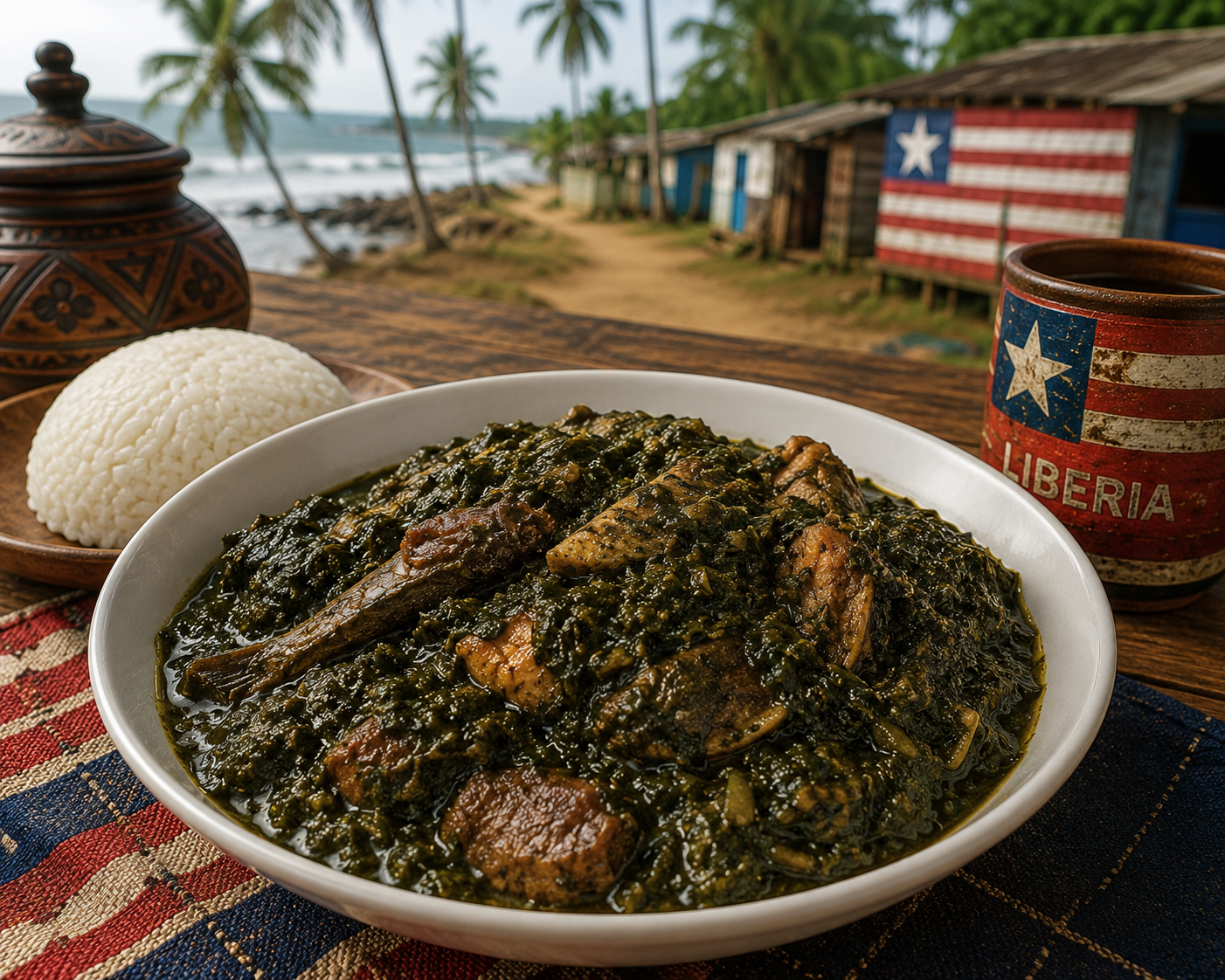
Sweet potato leaf sauce, universally known as Potato Greens in English-speaking Africa and Sauce feuilles de patate in French-speaking Africa, is a work of art in West African gastronomy. This exceptional dish, both comforting and highly nutritious, finds its origin and most sublime expression in Liberia, Sierra Leone, and Guinea, countries where sweet potato cultivation dates back several centuries. Unlike Western societies, which generally consume only the sweet tuber underground, West African peoples have long understood that the aerial leaves of the plant constitute a food of absolute delicacy and superior biological richness. The dish embodies the quintessence of African home cooking: common-sense, anti-waste cuisine, deeply connected to the cycle of seasons and the rhythm of the earth. Simmered to lose their natural bitterness while retaining a tender and silky texture, sweet potato leaves transform under the gentle heat of kitchens into an enveloping sauce, flavored with red palm oil and enriched with meats and dried fish.
🥬 THE SECRETS OF ITS PREPARATION AND REGIONAL VARIATIONS
Preparing Potato Greens requires delicate know-how that begins with harvesting or purchasing the leaves from local market stalls. Experienced cooks select only the young leaves and terminal shoots of the plant, which are the tenderest and least fibrous. The leaves are thoroughly washed in several changes of water to remove sand, then gathered into compact bunches and cut extremely finely with a sharp knife, a task requiring precision to obtain regular filaments.
The cooking process begins with establishing a robust aromatic base, usually sautéed in virgin red palm oil or neutral vegetable oil, depending on local tastes and traditions. Finely chopped onions, crushed garlic, and sometimes a hint of ginger are first sautéed. Various proteins are then added to give the broth its complex flavor. In the traditional Liberian version, tender beef, dried and softened beef skin (wele), tripe, smoked chicken, and especially smoked fish or crumbled dried fish are combined. This combination provides an earthy and salty umami taste that characterizes the gastronomy of this coastal region.
Once the meats are well browned and the broth well concentrated, the chopped sweet potato leaves are incorporated into the pot. Unlike other leaf sauces from Central Africa that undergo intensive pounding, sweet potato leaves in Liberian or Sierra Leonean recipes are sautéed directly so that they retain some firmness when bitten. Crushed habanero pepper is frequently added for a lively heat, as well as a little dried and ground crayfish to deepen the marine flavor. Cooking continues over medium-low heat without completely covering the pot, allowing excess water to evaporate until the sauce becomes dense and the red palm oil delicately floats to the surface, a sign of successful cooking.
🌍 CULTURAL AND SYMBOLIC PLACE IN AFRICAN CUISINE
In the sociocultural space of Liberia, Sierra Leone, and Forested Guinea, preparing a dish of Potato Greens is a highly social event and synonymous with warm gatherings. This dish is often considered the ultimate comforting home dish, one prepared on weekends to bring the whole family together around the table or to welcome a relative from afar. The aroma of heating red palm oil and sweet potato leaves simmering with smoked fish instantly evokes the atmosphere of West African homes, bringing everyone back to their childhood memories and their mother's or grandmother's cooking.
It is also a dish frequently found at major community celebrations, national holidays, or traditional weddings. Offering a generous plate of Potato Greens topped with magnificent pieces of chicken and smoked fish is irrefutable proof of the hospitality and generosity of the hostess.
🥣 ACCOMPANIMENTS AND THE ART OF TASTING
An exceptional Potato Greens dish calls for a starch capable of highlighting its silky texture and absorbing its fragrant sauce:
Steamed fragrant white rice is the most universal and popular accompaniment in West Africa. In Liberia and Sierra Leone, a Potato Greens meal is almost inconceivable without a mountain of hot white rice. The green, oily sauce coats the rice grains, creating a perfect contrast between the neutrality of the starch and the aromatic power of the simmered leaves.
Fufu, whether made from cassava or plantain, offers a much-appreciated traditional alternative in inland regions. The elastic softness of fufu wonderfully balances the spiciness and richness of the leaf sauce.
Boiled or fried plantains add a delicious sweet-savory touch that enhances the earthy aromas of the dish.
✨ NUTRITIONAL VIRTUES AND BENEFITS OF THIS EMBLEMATIC DISH
Nutritionally, sweet potato leaves are true superfoods, often surpassing many more popular Western vegetables in benefits. They are particularly rich in vitamin A, in the form of beta-carotene, essential for night vision, cell growth, and skin protection. They also contain an impressive amount of vitamin C, a major antioxidant that strengthens the immune system and facilitates the absorption of iron contained in the dish.
Furthermore, Potato Greens are a remarkable source of dietary fiber that contributes to proper intestinal function. They also provide highly bioavailable minerals such as iron, calcium, potassium, and magnesium. Prepared with quality red palm oil, this dish also provides healthy fats and tocotrienols (vitamin E), making it a meal of exceptional biological value, capable of supporting physical strength and preventing many nutritional deficiencies.
🔄 SYNONYMS AND DENOMINATIONS ACROSS THE CONTINENT
The great popularity of this dish across sub-Saharan Africa is reflected in a rich linguistic diversity of synonyms and local names:
Potato greens: This is the reference name used in Liberia, where this dish is elevated to the rank of a major national culinary specialty.
Potato leaves (or potato leaf stew): The most common name in Sierra Leone, referring to exactly the same preparation flavored with palm oil and smoked fish.
Sauce feuilles de patate douce (or sauce feuilles de patate): Universal French-language denomination used in Guinea, Ivory Coast, Mali, Senegal, Cameroon, and Congo.
Mbahal de feuilles: In some regions of Senegal and Gambia, a variant of this dish can be integrated into fried rice preparations.
Matembele: In the Democratic Republic of Congo and Congo-Brazzaville, sweet potato leaves simmered with dried fish or meat take on this very popular traditional Lingala name.
Usubu: Vernacular name in some East African provinces where sweet potato leaves are eaten boiled or sautéed with tomatoes and onions.
📋 KEYWORDS LIST
Potato greens Sauce feuilles de patate Matembele Liberia Red palm oil
Prepare this speciality
Choose a detailed recipe, adjust the portions and prepare your ingredients before starting. Our cooking tips and food safety advice complement the steps described in the recipes.
Explore further: Cooking tips · Food hygiene and safety advice.
In my books

Continue exploring the continent’s cuisines with Africa at the Table — 54 countries, 54 iconic dishes, by Alioune FALL. This book is in English.
In the kitchen : Potato greens
Recipes from the site to put your knowledge into practice:
Discover these cuisines at a restaurant
Explore our restaurant and caterer directories. Choose your destination and check the establishment’s menu to confirm which dishes are offered and available.
Continue exploring
Enjoy discovering ingredients and African cuisines? Join our newsletter. The illustrated PDF 10 sauces africaines incontournables is in French and is offered after confirming a subscription to the French or bilingual edition.