Palm Nut Soup
Côte d'Ivoire, West Africa
Understanding : Palm Nut Soup
🌴 ORIGINS AND ESSENCE OF PALM NUT SOUP
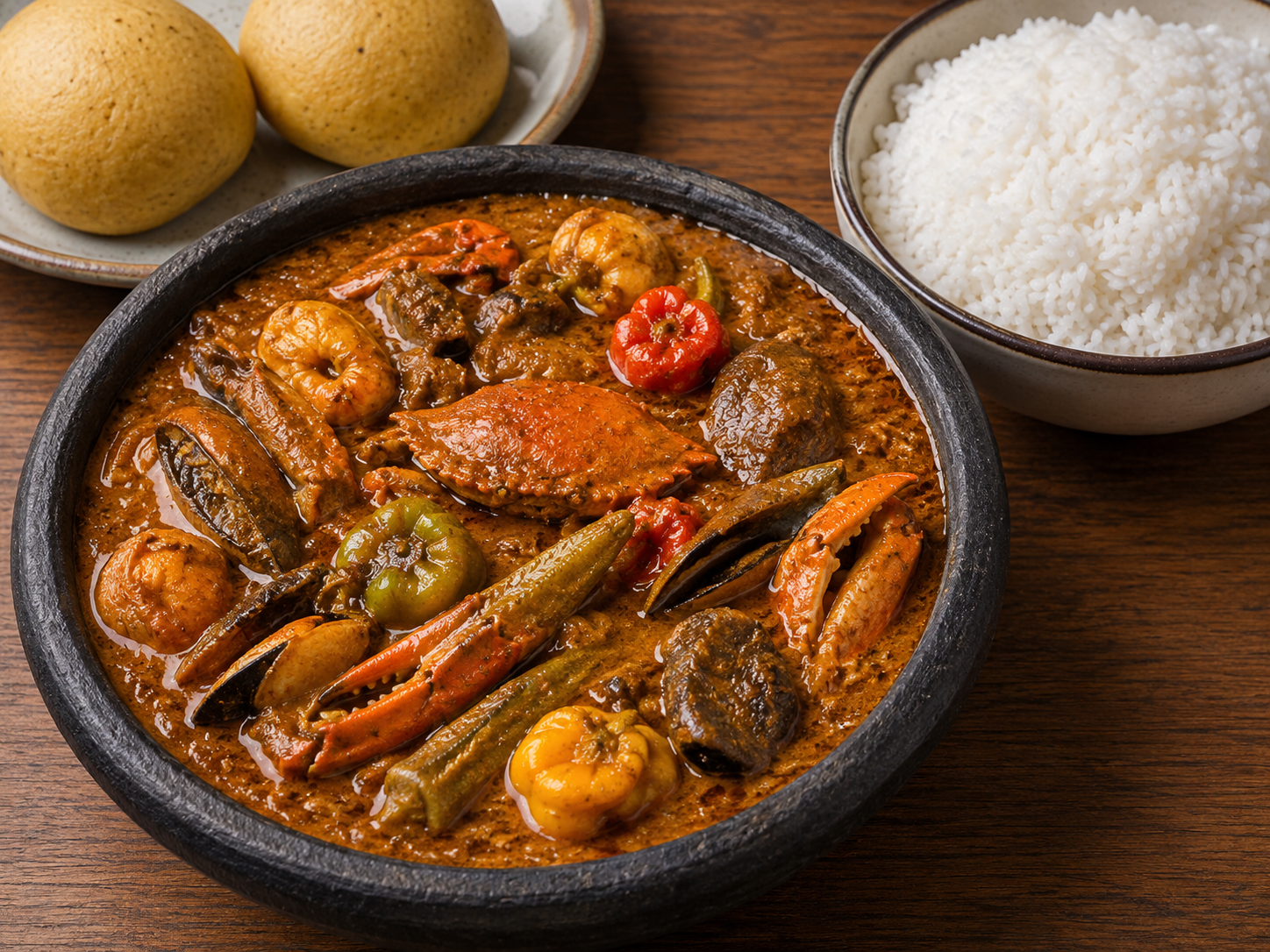
Palm nut soup, an absolute jewel of West and Central African gastronomy, is a culinary preparation of incomparable nobility and aromatic power. This monument of African culinary art derives its poetic name from the seeds of the oil palm, a tree indigenous to the continent's humid tropical forests, often revered as a symbol of fertility, resilience, and divine generosity. Unlike the refined and bleached industrial palm oils found in international trade, palm nut soup preserves the raw, whole, and vibrant state of the palm fruit pulp, ensuring an incandescent orange-red color and a taste of absolute complexity. This dish is not consumed lightly; it is the fruit of a sacred alchemy between man, nature, and cooking fire, demanding intense physical labor and scrupulous respect for ancestral techniques passed down orally through the ages. From Côte d'Ivoire to Gabon, through Nigeria and the Democratic Republic of Congo, palm nut soup is the culinary cement of millions of households, a sensory bridge connecting Africa's forest past to its vibrant urban modernity.
🥥 THE SECRETS OF ITS PREPARATION AND REGIONAL VARIATIONS
The magic of palm nut soup lies entirely in the rigorous ritual of extracting its raw material. The fruits of the oil palm, small ovoid drupes grouped in dense bunches, are harvested when they reach perfect maturity, characterized by a shiny red-black hue and pulp engorged with oily juice. These seeds are first carefully detached from the bunch so as not to damage the pulp, then boiled in immense pots of hot water until the outer skin cracks under the effect of heat, revealing the tender, oily flesh underneath.
The next step is undoubtedly the most emblematic of the African culinary process: pounding. The boiled seeds, still steaming, are poured into a large wooden mortar. Using a heavy pestle, the cook performs regular and rhythmic pounding, a demanding task that requires great physical strength but also infinite technical delicacy. The goal is to separate the fleshy pulp from the hard inner kernel (the nut) without breaking it, which would release bitter impurities into the soup. Once the pulp is reduced to a fibrous and oily mass, warm water is added to dissolve the juices. This mixture is then vigorously pressed by hand and filtered using fine sieves or woven baskets to separate insoluble fibers and kernels. The resulting thick, creamy, and intensely fragrant liquid constitutes the palm nut juice, the immutable foundation of the soup.
Simmering then begins in a large pot, traditionally over a three-stone hearth fueled by dry wood, whose smoke subtly penetrates the preparation to give it a unique woody touch. A profusion of aromatic ingredients and proteins are added according to regional traditions:
In Côte d'Ivoire, palm nut soup is often garnished with fresh beef, well-cleaned tripe, free-range chicken, or fresh fish such as catfish. Whole fresh chili is delicately placed on the surface, diffusing its fruity aroma without burning the preparation.
In Nigeria, Banga Soup is flavored with wild bush spices such as atama or beletete, which bring a vegetal and slightly camphorated note. It features fresh shellfish, sea crabs, giant prawns, and freshwater fish.
In Gabon, under the name Nyembwe, the soup is often simmered with local smoked chicken, creating an absolutely exquisite harmony of smoky and fatty flavors.
In the Democratic Republic of Congo, palm Mwamba sometimes includes pieces of rehydrated dried fish and local aromatic herbs.
🌍 CULTURAL AND SYMBOLIC PLACE IN AFRICAN CUISINE
In African societies, palm nut soup transcends the simple status of food to become a vector of social cohesion, cultural identity, and family devotion. Due to the labor time required for its artisanal extraction, its preparation is almost always synonymous with a holiday, a Sunday gathering, or the welcoming of a distinguished visitor. Preparing palm nut soup is a declaration of culinary love: it is offering one's family and guests the fruit of several hours of continuous effort under the heat of the hearth.
During major ceremonies such as traditional weddings, ancestral funerals, or baptisms, the preparation of palm nut soup transforms into a true community performance where several generations of women actively collaborate. The youngest wash the seeds and prepare the firewood, mature women pound with strength and precision, while the elders taste the broth to bring their expertise in spices and cooking. The bubbling of the brick-red palm nut soup in the family courtyard is a universal olfactory and auditory landmark, synonymous with abundance, hospitality, and mutual respect.
🥣 ACCOMPANIMENTS AND THE ART OF TASTING
The power and natural creaminess of palm nut soup require neutral but structured accompaniments, capable of soaking up its richness without saturating the palate:
Foutou banane or foutou igname: This is the perfect and undisputed pairing in Côte d'Ivoire. Foutou, a dense, smooth, and elastic paste obtained by pounding cooked plantains or yams, serves as a receptacle for the soup. A bite of foutou is taken with the right hand, shaped into a small cup, then dipped into the creamy palm nut soup before being savored.
Steamed fragrant white rice: A timeless classic. The white rice soaks up the red soup, each grain gliding pleasantly under the tooth thanks to the creaminess of the natural palm fats.
Cassava fufu: Particularly popular in Central Africa, this starchy food with an elastic texture and slightly tangy taste provides a refreshing contrast that ideally balances the natural richness of the palm nut.
Placali: This Ivorian fermented cassava paste, renowned for its tangy flavor and gooey texture, pairs divinely with palm nut soup, creating a contrasting taste experience of great depth.
✨ NUTRITIONAL VIRTUES AND BENEFITS OF THIS EMBLEMATIC DISH
From a health perspective, traditionally prepared palm nut soup is a concentrate of energy and protective nutrients of invaluable value. Raw palm nut juice is one of the densest natural sources in the world of beta-carotene (provitamin A), a major antioxidant essential for retinal health, proper immune system function, and skin beauty. This richness is visually manifested through the fiery orange-red color of the soup.
Furthermore, palm nut soup is exceptionally rich in vitamin E, particularly in the form of tocotrienols, highly active antioxidant compounds that protect the cardiovascular system by limiting lipid oxidation in the blood. It also provides a significant amount of iron, magnesium, and essential fatty acids. Combined with lean fish or poultry proteins and local green vegetables, it constitutes a complete, highly satiating, and revitalizing meal for the body.
🔄 SYNONYMS AND DENOMINATIONS ACROSS THE CONTINENT
Due to its immense historical popularity, palm nut soup has a great diversity of local denominations depending on the countries and ethnic groups, illustrating the linguistic richness of sub-Saharan Africa:
Sauce graine: The most common French appellation in Côte d'Ivoire, Benin, Togo, Cameroon, and Guinea.
Banga soup (or banga): Official national name in Nigeria, describing the variant of palm nut soup flavored with Niger Delta spices.
Abeenkwan (or aben kwan): Twi language term used in Ghana to refer to this very fragrant palm nut soup.
Mwamba (or mouamba): Emblematic name used in the Democratic Republic of Congo, Congo-Brazzaville, Gabon, and Angola to characterize stews cooked in palm juice.
Nyembwe: Gabonese appellation specifically designating this national dish when it features poultry or smoked fish.
Amfich (or mfich): Vernacular appellation used in certain localities of South Togo and South Benin.
📋 KEYWORDS LIST
Palm nut soup Palm nut Foutou banane Mwamba Banga soup
Prepare this speciality
Choose a detailed recipe, adjust the portions and prepare your ingredients before starting. Our cooking tips and food safety advice complement the steps described in the recipes.
Explore further: Cooking tips · Food hygiene and safety advice.
In my books

Continue exploring the continent’s cuisines with Africa at the Table — 54 countries, 54 iconic dishes, by Alioune FALL. This book is in English.
In the kitchen : Palm Nut Soup
Recipes from the site to put your knowledge into practice:
Discover these cuisines at a restaurant
Explore our restaurant and caterer directories. Choose your destination and check the establishment’s menu to confirm which dishes are offered and available.
Continue exploring
Enjoy discovering ingredients and African cuisines? Join our newsletter. The illustrated PDF 10 sauces africaines incontournables is in French and is offered after confirming a subscription to the French or bilingual edition.