Peanut Sauce
West and Central Africa
Understanding : Peanut Sauce
🥜 THE ORIGIN AND ESTABLISHMENT OF PEANUTS ON THE AFRICAN CONTINENT
The history of peanut sauce is a fascinating journey that crosses oceans and eras to become deeply rooted in African culinary heritage. Although peanuts are now inseparable from the agricultural landscapes and cuisines of West, Central, and East Africa, this plant originated in South America. It was introduced to the African continent in the sixteenth century by Portuguese navigators during colonial trade. Upon its arrival, this underground seed found ideal climatic conditions to thrive, particularly in the vast savannas and semi-arid regions of the Sahel.
Prepare this speciality
Choose a detailed recipe, adjust the portions and prepare your ingredients before starting. Our cooking tips and food safety advice complement the steps described in the recipes.
Explore further: Cooking tips · Food hygiene and safety advice.
History and uses
African farmers quickly adopted this crop due to its high drought resistance, its remarkable ability to enrich soils with nitrogen thanks to its root nodules, and its excellent agronomic yield. Very quickly, peanuts replaced or joined other local oilseeds, such as melon seeds called egusi or palm nuts, which were traditionally crushed to bind and thicken daily stews. This is how peanut sauce was born, merging a distant imported plant with ancestral African culinary knowledge and techniques. Nowadays, this sauce transcends national borders and stands as an essential monument of African gastronomy, a symbol of resilience, adaptation, and creative ingenuity of African peoples.
🍲 NUTRITIONAL IMPORTANCE AND THE ROLE OF PEANUTS IN THE DIET
From a dietary and nutritional perspective, peanut sauce plays a leading role in the daily diet of millions of people on the continent. Peanuts are an exceptional source of high-quality plant proteins, making them an indispensable substitute or complement in regions where meat and fish are expensive, scarce, or difficult to preserve due to the climate. By judiciously combining peanut paste with local cereals like rice, millet, sorghum, or corn, or with starchy tubers like cassava, yam, and sweet potato, a complete amino acid profile is obtained, thus ensuring a balanced and invigorating diet for families.
In addition to its incomparable richness in protein, peanut sauce is packed with healthy fats, mainly monounsaturated and polyunsaturated fatty acids beneficial for the cardiovascular system. It also provides a substantial amount of first-rate vitamins, notably vitamin E, a powerful antioxidant, as well as B vitamins that actively participate in energy metabolism and the proper functioning of the nervous system. Minerals are not left out: magnesium, phosphorus, zinc, potassium, and iron are present in abundance. For growing children, pregnant women, and manual laborers, a bowl of rice or fufu drizzled with creamy peanut sauce is a source of sustained energy and an effective bulwark against various forms of nutritional deficiencies and malnutrition. It is the perfect illustration of popular cuisine that combines gourmet delight, immediate comfort, and health benefits.
👩🍳 THE SECRETS OF PREPARATION AND THE SYMPHONY OF INGREDIENTS
Preparing a peanut sauce worthy of its name is an art of patience and dosage passed down from generation to generation under the benevolent eye of elders. It all begins with the rigorous selection of raw peanuts. These are delicately dry-roasted in a large cast-iron pot or over a bed of glowing embers to enhance their woody aromas and facilitate the removal of the thin red skin that envelops them. The shelled and slightly cooled peanuts are then crushed. Traditionally, this laborious work is done on a flat stone mill with a roller or in a large wooden mortar, until a dense, smooth, oily, and intensely fragrant peanut paste is obtained, free of any chemical additives or sugar.
The aromatic base of the sauce relies on a simmer of fresh or concentrated tomatoes, finely sliced onions, crushed garlic, and a touch of grated fresh ginger. Pieces of beef, mutton, chicken, or fresh, smoked, or dried fish are then added, depending on preferences and available resources. When the meats are well seared and browned, the peanut paste is thinned with a little warm water or hot broth to prevent lumps from forming, then gently incorporated into the main preparation. It is at this precise moment that the magic of cooking begins. The stew must simmer for a long time over very low heat. Constant monitoring and regular stirring are required because peanut paste has a natural tendency to stick to the bottom of the pot. Cooking is considered complete when the peanut oil begins to bead and gently rise to the surface, forming a thin, shiny, golden film that indicates the sauce's homogeneity and maturity. Seasonal vegetables such as carrots, cassava, white cabbage, sweet potatoes, local eggplants, or okra are often added along the way to enrich the dish with complementary textures and flavors.
In my books

Continue exploring the continent’s cuisines with Africa at the Table — 54 countries, 54 iconic dishes, by Alioune FALL. This book is in English.
Explore further
🌍 A SOCIAL PILLAR AND A CELEBRATION OF AFRICAN HOSPITALITY
Beyond its strictly nourishing function, peanut sauce is a social and cultural vector of incredible power, binding families and communities. In many African cultures, the preparation of this emblematic dish is an act of family sharing and conviviality. Its creation often begins with the collective work of the women of the household who peel, roast, and crush the seeds together in the common courtyard of the compound. These convivial moments around the fire or mortar foster intergenerational dialogue, intimate confidences, singing, and the transmission of historical narratives, ancestral proverbs, and moral lessons to younger girls.
Peanut sauce is also the quintessential dish for celebrating the legendary hospitality of the African continent. Inviting a neighbor, a distant friend, or a passing stranger to share a peanut sauce is a supreme mark of consideration, honor, and deep respect. The meal is usually served in a single large dish placed in the center of a mat or low table, around which all guests gather. People eat together, most often with their right hand, respecting a code of etiquette and tacit sharing where everyone takes their food from the area immediately in front of them, while reserving the best pieces of meat or the tenderest vegetables for honored guests and elders. It is a sacred collective experience that strengthens social cohesion, cultivates empathy, and daily reminds us of the importance of solidarity. For the African diaspora established across the globe, preparing and sharing a peanut sauce is a ritual of memory, a way to revive the scents of childhood and transmit this unique sensory heritage to new generations born far from their homeland.
💫 SYNONYMS AND NOMINAL VARIATIONS OF THE DISH
Peanut sauce is a linguistic jewel that changes its name and subtlety according to the countries, regions, languages, and ethnic groups of the vast African continent. Although the fundamental recipe always revolves around the creaminess of crushed peanuts, each regional appellation brings its own specificities, favorite condiments, and preferred accompaniment:
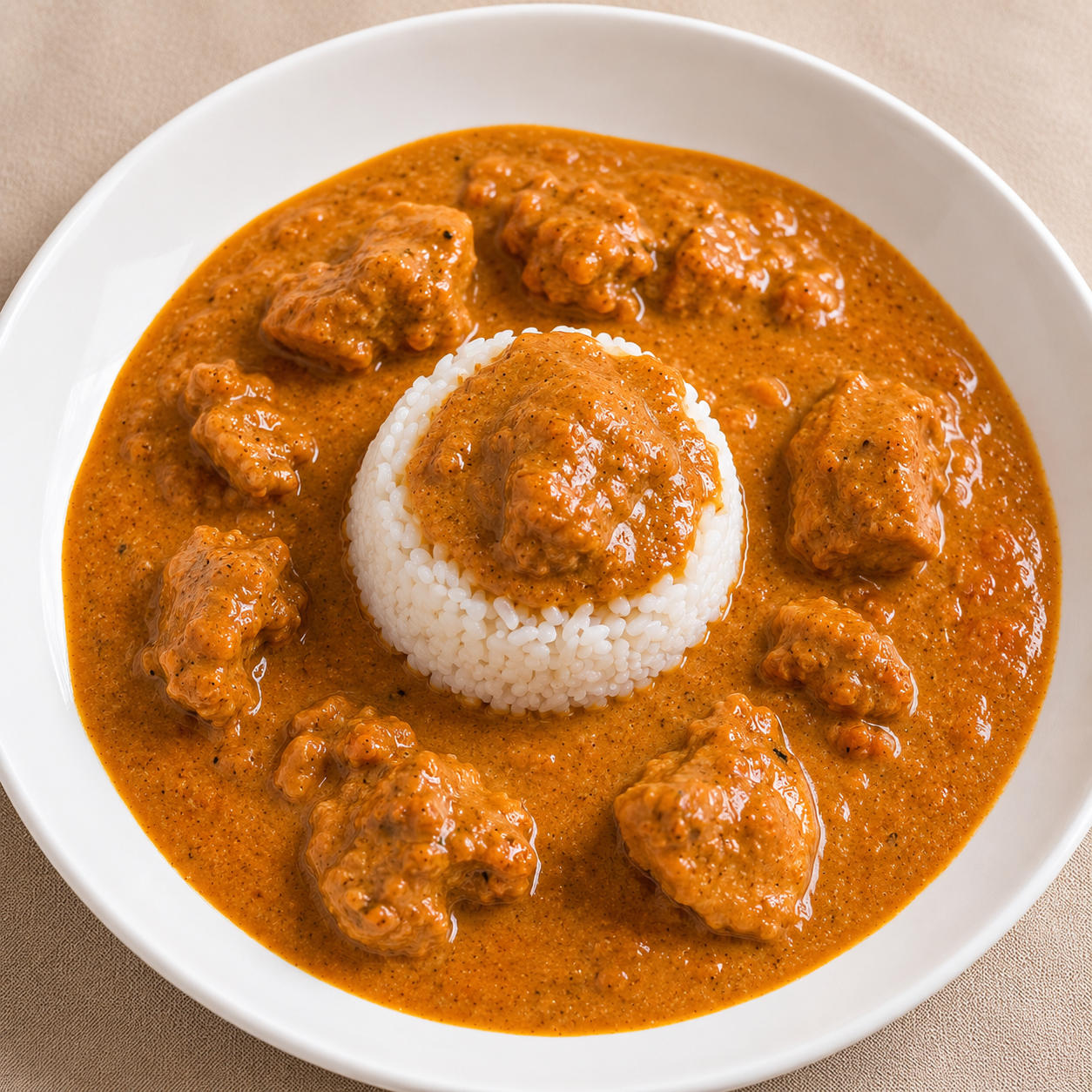
Mafé: The most internationally famous name, derived from the Wolof language and primarily used in Senegal, Mali, Mauritania, Burkina Faso, and Gambia. It is a creamy and dense stew, usually served with fragrant white rice or broken rice. Tigadégué: A term used in Guinea, Mali, and Côte d'Ivoire in Manding-speaking communities, literally meaning sauce made from cooked peanut paste. Azindési: Traditional name given to this preparation in Togo and Benin, where it is often prepared with a base of fresh fish or lagoon crab, enhanced with local chilies. Sauce d'arachide: The generic French term commonly used throughout Central and Equatorial Africa, particularly in Gabon, the Republic of Congo, and the Central African Republic. Groundnut Soup: The essential English term in Nigeria, Ghana, Sierra Leone, and Liberia, referring to a peanut soup that is sometimes thinner, very spicy, and flavored with habanero pepper. Nkate Nkwan: Traditional Ghanaian name from the Akan language, characterized by a fragrant peanut soup, often served with yam or plantain fufu. Mwamba: In the Democratic Republic of Congo, this term refers to a creamy culinary preparation based on peanut paste or palm nuts, famous for accompanying chicken or fish. Matapa: Traditional Mozambican dish combining pounded cassava leaves, fresh coconut milk, and a generous amount of crushed peanuts to delicately bind the whole. Epassi ya nguba: Poetic term in the Lingala language used in Congo to specifically designate the traditional peanut stew.
🔑 KEYWORDS
African gastronomy Peanut paste Traditional stew Cultural identity Community sharing
In the kitchen : Peanut Sauce
Recipes from the site to put your knowledge into practice:
Discover these cuisines at a restaurant
Explore our restaurant and caterer directories. Choose your destination and check the establishment’s menu to confirm which dishes are offered and available.
Continue exploring
Enjoy discovering ingredients and African cuisines? Join our newsletter. The illustrated PDF 10 sauces africaines incontournables is in French and is offered after confirming a subscription to the French or bilingual edition.