Malsouka
Arabic (Tunisia)
Understanding : Malsouka
INTRODUCTION
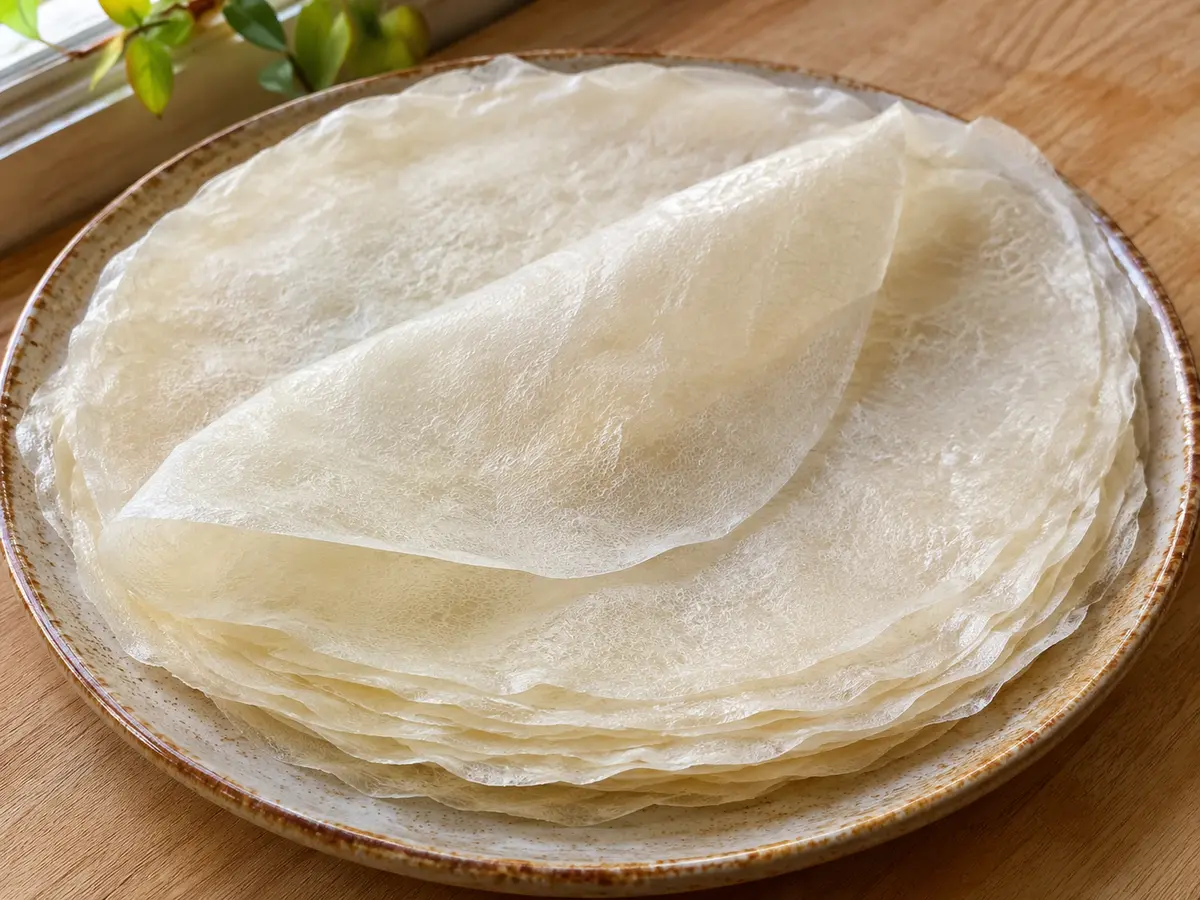
Malsouka is one of the flaky treasures of North African gastronomy: also called warka (or warqa), msouka, malsouqa, or malsuka depending on the region, it refers to both the thin sheet of dough (similar to brick or filo pastry) and the dishes (stuffed pies, bricks, pastillas) prepared from these delicate pancakes. Malsouka embodies the art of handcraft, cooking over fire, and transforming simple wheat into gourmet lace, a hinge between rural and urban, popular and festive cuisines of the Maghreb. Primarily associated with Tunisia, where the famous malsouka pie is made, malsouka – with its flexible and ultra-thin sheet – links Andalusian, Berber, and Ottoman traditions, and extends throughout North Africa: Algeria, Morocco, Libya… It plays a fundamental role during Ramadan, weddings, and large receptions, but also graces the everyday table, where each crunchy, melting bite makes the family's heart sing. This detailed portrait tells the story, technique, emblematic recipes, transmission, and modernity of malsouka, to reflect its importance as an African culinary heritage.
1. ORIGIN, HISTORY AND SPREAD
1.1. Ancient and Medieval Roots Malsouka, like warka or brik, has its roots in the Mediterranean genius of puff pastry, inherited from the cuisines of Byzantium, the Middle East, the Ottoman Empire, and the Arab-Andalusian dynasties. The art of making very thin sheets of wheat-based dough, briefly cooked on a metal or clay plate, spread throughout the Maghreb region and remains an artisanal technique. This know-how, long passed down from mother to daughter in rural or urban settings, became the elegance of markets, dignitaries' homes, and major religious occasions. While bruis or brick sheets are found in Morocco, Algeria, or Tunisia, Tunisian malsouka holds a particular identity thanks to its plasticity, its inimitable texture, and the spectacular culinary creations that emerge from it. 1.2. Transmission and Evolution With rural exodus, urbanization, then globalization and the Maghrebi diaspora, malsouka also became a semi-industrial product – sold in ready-to-use packages – but remains a mark of prestige for families who still make it “by hand.” It travels easily: Tunisian, Algerian, and Moroccan migrants carry it in their luggage, share their knowledge in cooking workshops, and introduce the magic of Maghrebi puff pastry to major cities in France, Italy, Canada, and beyond.
2. THE MALSOUKA TECHNIQUE
2.1. Ingredients Traditionally: • Wheat flour (often T55-T65) • Water (room temperature or lukewarm) • Salt • Sometimes a little neutral oil for flexibility 2.2. Dough Preparation • A very hydrated (almost liquid) dough is kneaded to ensure the softness and thinness of the result. • It is left to rest (30 minutes to 1 hour) to activate the gluten network and provide extensibility. 2.3. Cooking the Sheet Cooking malsouka is the essence of its art. • On a flat clay or cast-iron tagine (or a crêpe pan for urban adaptations), well heated. • The dough is picked up with fingertips or using a brush or cloth, then a thin film of dough is quickly spread over the hot surface: it cooks instantly, forming a translucent sheet. • The sheet is gently peeled off and placed on a damp, covered cloth. • The gesture is repeated: each sheet awaits the next, stacked, protected from the air to maintain flexibility. NB: This step requires virtuosity, patience, and speed – hence the reputation, in traditional society, of “a true homemaker who knows how to make malsouka.” 2.4. Storage Fresh sheets can be stored for 2–3 days in the refrigerator, carefully wrapped, or steamed to restore their softness before use.
3. EMBLEMATIC RECIPES: PIE, BRICK, AND PASTILLA
3.1. Malsouka Pie or Tajine (Tunisia) A flagship dish for Ramadan and celebrations. An oiled mold or dish is lined with several layers of malsouka sheets, brushed with melted butter or olive oil. The heart consists of a soft filling, typically: • Minced meat (lamb, beef, chicken, sometimes fish) • Sautéed onions, garlic, caraway, cinnamon, paprika • Fresh herbs (parsley, cilantro) • Grated cheese or local mozzarella balls • Beaten eggs • Peas, potatoes, green olives, mild harissa depending on the family The sheets are folded over to close the pie, it is browned, then baked in a hot oven until a crispy golden crust with a tender, soft interior is achieved. The pie is served cut into generous portions, as a main dish or starter. 3.2. Bricks and Cigars Another huge success of the sheet: • Egg brick: a disk stuffed with a raw egg, tuna, capers, sometimes shrimp, parsley, chili, fried into a triangle or rolled “like a cigar.” • Meat, vegetarian bricks: fillings of potatoes, chicken, spinach-cheese, dried fruits and honey (for sweet and savory). The brick, with its double crispy-melting sensation, delights Maghrebi tables, especially during Ramadan, where it “breaks” the fast with a soup (chorba, harira) and a salad. 3.3. Pastilla and other variations In Morocco, pastilla uses very similar sheets (warka): a pigeon or chicken and almond pie, flavored with cinnamon, orange blossom, and powdered sugar. In modern cuisine, malsouka also becomes Maghrebi lasagna, savory millefeuille, ravioli, tart, or an envelope for appetizers.
4. SOCIAL, CULTURAL AND IDENTITY ROLE
4.1. Dish of Celebration, Sharing, Ramadan The malsouka pie symbolizes gathering, generosity, and giving. It is prepared during Ramadan, for Eid, births, family picnics; it is often the flagship dish of “ftour” (breaking the fast), equivalent to a wedding cake in other cultures. In modern urban society, families order from the best cook in the neighborhood or prepare the pie together, across generations. 4.2. Female Pride and Transmission The mastery of handmade sheet production was (and remains, in rural areas) a criterion of respect, family pride, and a “good wife.” It is often the grandmother, mother, or aunt who transmits – through gesture and word – the art of malsouka to the young girl: turning the dough, gauging the heat of the plate, recognizing “the right cooking,” never breaking the sheet… 4.3. Social Connection, Conviviality and Modernity Sharing the malsouka pie or bricks brings together neighbors, friends, invites travelers to the table, and demonstrates hospitality. In banquets, it “opens” the appetite, accompanies discussions, and the tasting of main dishes. Today, malsouka adapts to “fusion food”: “Mediterranean” ravioli, Maghrebi spring rolls, mini bricks for urban aperitifs, sweet pastillas for dessert, malsouka sheet pizza.
5. NUTRITIONAL VALUE AND BALANCE
• Wheat flour: complex carbohydrates, proteins, quick energy. • Variable filling: protein intake (meat, egg, fish), vegetables (spinach, peas…), good fats (olive oil, butter). • Oil cooking: beware of excesses (for fried bricks), favor oven baking or pan-frying with little fat for a “light” version. • Complete, satisfying, varied dishes depending on the composition: suitable for breaking the fast, festive meals, balanced Mediterranean diet.
6. TRANSMISSION CHALLENGES, INNOVATIONS AND FUTURE
• Threat of disappearance of artisanal know-how (decline of “handmade,” industrial omnipresence) • Risk of recipe standardization; need for transmission through workshops, videos, cooking schools • Creative modernization: revisited dishes, vegan versions, gluten-free, adaptation to international taste. • Attractiveness for culinary tourism, valorization as a product of Maghreb's intangible heritage. • Support for local artisans (small manufacturers of “natural” sheets)
CONCLUSION Malsouka, both fragile and robust, simple and refined, as old as North Africa and as young as all future creations, is a symbol of a culture of giving, handcraft, and sharing. Golden pie, melting brick, delicate sheet: it spans the ages as a memory of celebration, family ties, and culinary refinement. By transmitting it, cooking it, or sharing it, African women – and men, today – perpetuate, while reinventing, a richness that brings together the desert, the city, the oasis, and the great global table. An emblem of North Africa, malsouka remains living proof of the infinite power of gesture, taste, and the love of “good nourishment” in African kitchens.
صَحَّة وَعَافِيَة Transliteration: ṣaḥḥa wa ʿāfiya Meaning: “bon appétit” / “to your health”
© Photo credit: recettesafricaines.com. All rights reserved.
Where to find it
Look for the exact food-grade form required by the recipe at markets and specialist shops. Check the product name, ingredients, condition and storage instructions.
Explore further: Cooking tips · Food hygiene and safety advice.
In my books

Continue exploring the continent’s cuisines with Africa at the Table — 54 countries, 54 iconic dishes, by Alioune FALL. This book is in English.
In the kitchen : Malsouka
Recipes from the site to put your knowledge into practice:
Discover these cuisines at a restaurant
Explore our restaurant and caterer directories. Choose your destination and check the establishment’s menu to confirm which dishes are offered and available.
Continue exploring
Enjoy discovering ingredients and African cuisines? Join our newsletter. The illustrated PDF 10 sauces africaines incontournables is in French and is offered after confirming a subscription to the French or bilingual edition.