Klaklos
Côte d'Ivoire
Understanding : Klaklos
🍌 THE ART OF CULINARY RECYCLING AND THE ORIGINS OF KLAKLOS
In the rich tapestry of West African gastronomy, and particularly in Côte d'Ivoire, klaklos, accompanied by their emblematic spicy sauce, perfectly embody the ingenuity of African cooks and the art of elevating everyday ingredients. This popular dish, mainly enjoyed in the late afternoon as a comforting snack or a quick meal, was born from a simple yet fundamental philosophy: nothing should be wasted, everything must be transformed.
Prepare this speciality
Choose a detailed recipe, adjust the portions and prepare your ingredients before starting. Our cooking tips and food safety advice complement the steps described in the recipes.
Explore further: Cooking tips · Food hygiene and safety advice.
History and uses
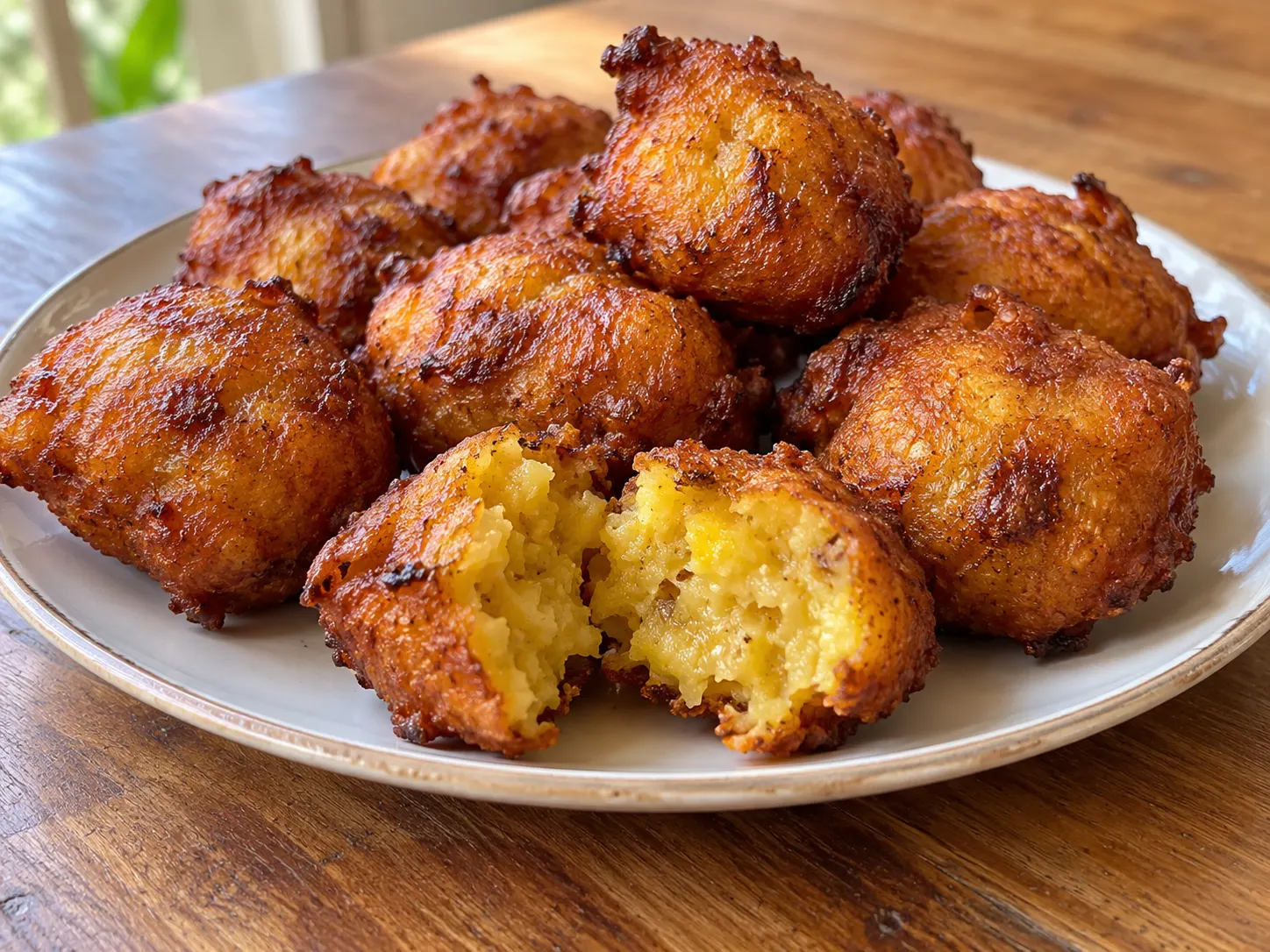
Plantain is one of the most cultivated and consumed staple starches in Côte d'Ivoire. Over the days, the plantains ripen, their yellow skin marbling with dark spots until it becomes almost entirely black. At this ultimate stage of ripeness, the plantain's flesh becomes extremely tender, soft, full of natural sugars, and almost liquid. For many, these overripe fruits might seem unusable for classic preparations like alloco or foutou. This is precisely where Ivorian culinary genius comes in. By mashing these sugar-laden plantains and combining them with flour, spices, and condiments, cooks created klaklos, golden fritters, crispy on the outside and incredibly soft on the inside, with an unparalleled sweet and savory taste.
Historically, klaklos began as a family anti-waste recipe prepared in the courtyards of homes in Abidjan and Ivorian villages. Over time, faced with the enthusiasm for these little culinary wonders, they crossed the boundaries of family compounds to become a permanent fixture in public spaces. Klaklos have become one of the undisputed queens of Ivorian street food. This success is due not only to their very affordable cost but also to the perfect balance of their flavors that appeal to all social classes, from schoolchildren to corporate executives.
🌶️ THE ACCOMPANYING SAUCE: THE PERFECT DUO IN THE MOUTH
While klaklos are self-sufficient with their fruity sweetness, it is their systematic association with a spicy and fragrant sauce that gives them their full character and gastronomic dimension. In Côte d'Ivoire, eating klaklos without their chili sauce or spicy tomato sauce is unthinkable. This sacred marriage between the smooth sweetness of caramelized plantain and the fiery heat of chili creates a unique sensory explosion in the mouth.
The traditional chili sauce that accompanies klaklos is a vibrant, fresh, and vigorous preparation. It is generally made from fresh red chilies, often Scotch bonnet or bird's eye chili, known for their strength and incomparable fruity aroma. To balance this thermal power, ripe fresh tomatoes, juicy onions, garlic, and sometimes a squeeze of lime juice or vinegar are added to provide a refreshing acidity.
Depending on the cooks' preferences and local recipes, this sauce can be prepared in two distinct ways. On one hand, there is the fresh pounded sauce, where raw ingredients are crushed together in a mortar with a pinch of salt, offering a very herbaceous, pungent, and impactful taste. On the other hand, there is the simmered sauce, where the chili, tomato, and onion puree is gently cooked in a drizzle of vegetable oil with spices, seasonal herbs, and sometimes an aromatic bouillon cube, resulting in a more velvety, syrupy, and warm sauce that perfectly coats the plantain fritters. In both cases, this sauce serves to cut through the richness of the frying and beautifully contrast with the sweetness of the plantain, offering a complete and addictive taste experience.
👩🍳 THE PREPARATION RITUAL OF THIS STREET TREASURE
The making of klaklos and their sauce is a meticulous culinary ritual that relies on the cook's senses rather than strict scientific measurements. The process begins with the selection of extremely ripe plantains. The skin must be very black and soft to the touch. After peeling the fruits, the cook places them in a large bowl or wooden mortar to patiently mash them with a pestle or fork until a homogeneous puree is obtained, but one that retains small pieces for texture.
In my books

Continue exploring the continent’s cuisines with Africa at the Table — 54 countries, 54 iconic dishes, by Alioune FALL. This book is in English.
Explore further
Wheat flour is then gradually incorporated into this plantain puree. The role of the flour is crucial: it acts as a binder to give consistency to the dough and prevent it from absorbing too much oil during frying. To flavor the dough and break the excessive sweetness of the plantain, the cook adds a mixture of finely grated onions, crushed fresh ginger, garlic, and a touch of chili powder or crushed fresh chili, not forgetting a pinch of salt to enhance the whole. The final dough should be thick, semi-liquid, and sticky.
The frying stage requires excellent control of the oil temperature. In a large cast-iron basin placed over a charcoal or gas stove, vegetable oil is heated until very hot. The cook takes small portions of dough, often delicately shaped with a spoon or directly by hand with a quick and precise technical gesture, then plunges them into the boiling oil. The fritters instantly puff up and take on a beautiful golden-brown color on the outside. They must be turned regularly to ensure even cooking throughout. While the klaklos drain, the sauce is served alongside, sometimes accompanied by a handful of roasted and salted peanuts, a very popular traditional addition that brings a crunchy texture and an irresistible earthy flavor to the meal.
🌍 THE SOCIAL AND COMMUNITY DIMENSION OF THE IVORIAN SNACK
The consumption of klaklos and their sauce is deeply embedded in the social life and daily rhythm of towns and villages in Côte d'Ivoire. Around four in the afternoon, as the stifling heat of the day slowly begins to subside, an enchanting aroma of caramelized plantain, ginger, and hot oil begins to spread through the streets and crossroads of Abidjan. This is the signal that klaklo vendors, often set up under large colorful umbrellas or near minibus stations called gbaka, have lit their stoves.
Around these improvised street stalls, a true social communion takes place. Customers crowd around, eager, waiting for the hot fritters to come out of the fryer. You'll find children returning from school, tired workers looking for energy to finish their day, market traders from nearby, and passersby. The vendor, often affectionately called maman or tantie, orchestrates this crowd with joyful benevolence, wrapping the steaming klaklos in parchment paper or makeshift packaging, and generously pouring a ladle of spicy sauce over them.
Eating klaklos is an experience that invites conviviality and discussion. Customers enjoy their still-hot fritters while exchanging the latest neighborhood news, discussing politics or football. This dish embodies the human warmth, simplicity, and joy of life that characterize Ivorian culture. It is the symbol of a democratic gastronomy, accessible to all, which does not require grand restaurants but provides immediate and shared pleasure. Moreover, for the Ivorian diaspora around the world, klaklo sauce is synonymous with nostalgia, instantly recalling the sweetness of late Abidjan afternoons under the tropical breeze.
💫 SYNONYMS AND VARIATIONS ACROSS THE CONTINENT
The culinary concept of transforming very ripe plantains into spicy fritters is not exclusive to Côte d'Ivoire. This ingenious preparation can be found under different names and with subtle spice variations throughout West and Central Africa:
Claclo: The most common spelling variation in Côte d'Ivoire for traditional klaklos. Tatale: The direct equivalent of klaklos in Ghana, these overripe plantain fritters are often seasoned with onions, ginger, and cayenne pepper, then fried in palm oil to give them a characteristic golden color and served with black-eyed peas. Kaklo: Traditional name used in Togo and Benin for very ripe plantain fritters, prepared similarly and highly appreciated as a street snack. Masa de banane: Name sometimes used in Central Africa, particularly in Cameroon, to refer to patties or fritters made from mashed and fried ripe plantains. Dodo beignet: An evocative expression used in some places to link dodo, which refers to fried plantain in Central Africa, to the soft texture of the klaklo fritter. Plantain fritters: Generic English term used in Nigeria and Liberia to refer to this family of soft and sweet plantain fritters. Beignets de plantain écrasé: A descriptive French term generally used in Central African countries to refer to this delicious family anti-waste treat. 🔑 KEYWORDS
Ivorian gastronomy Plantain fritters Street food Food waste reduction Sweet and savory flavor
In the kitchen : Klaklos
Recipes from the site to put your knowledge into practice:
Discover these cuisines at a restaurant
Explore our restaurant and caterer directories. Choose your destination and check the establishment’s menu to confirm which dishes are offered and available.
Continue exploring
Enjoy discovering ingredients and African cuisines? Join our newsletter. The illustrated PDF 10 sauces africaines incontournables is in French and is offered after confirming a subscription to the French or bilingual edition.