Pondu
West and Central Africa
Understanding : Pondu
🌿 THE BOTANICAL ORIGIN AND HISTORY OF PONDU
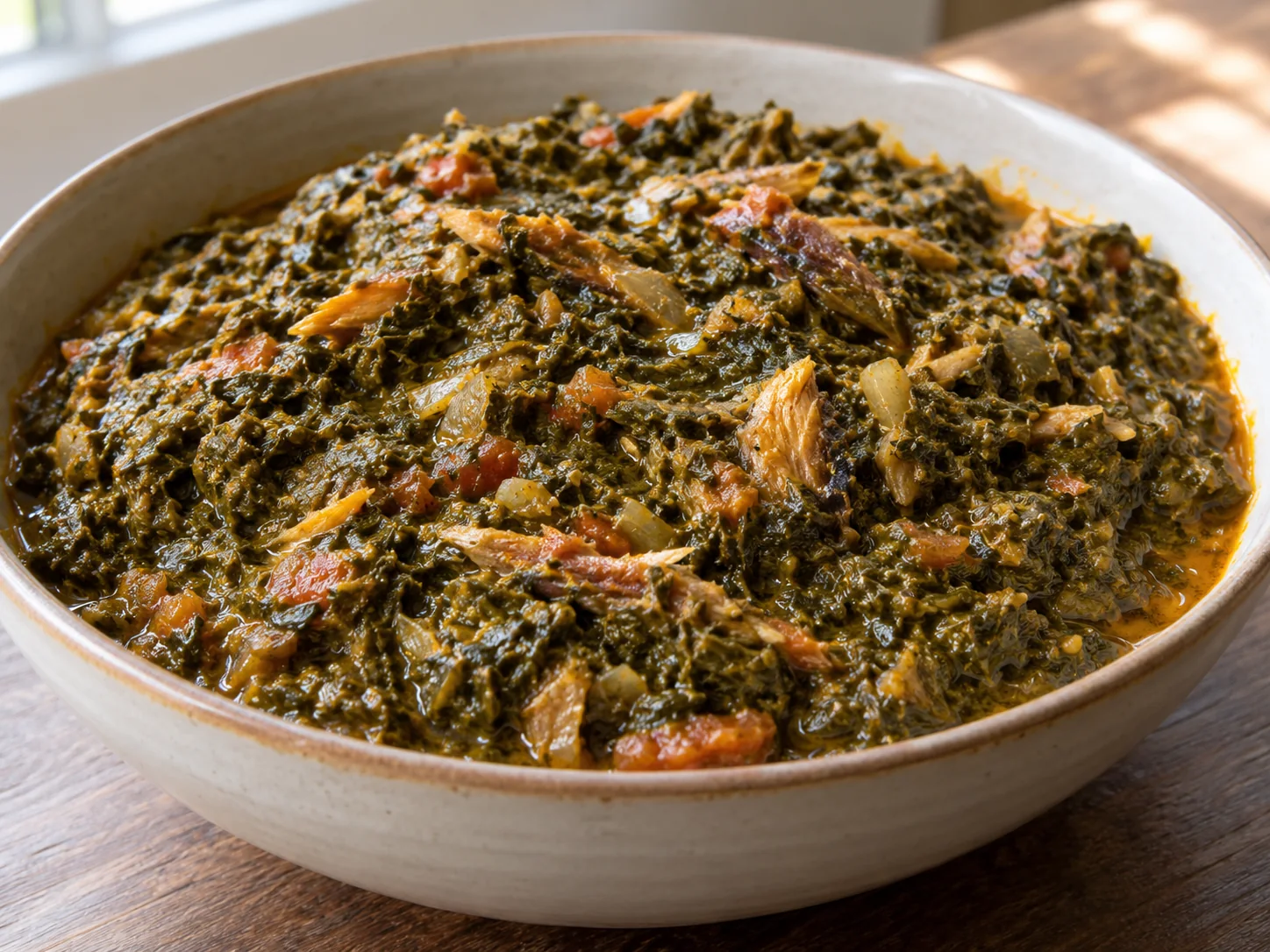
Pondu, also spelled mpondu, is one of the most sacred and emblematic pillars of Central African gastronomy, particularly in the Democratic Republic of Congo, the Republic of Congo, and the Central African Republic. At the origin of this dish is cassava, scientifically called Manihot esculenta, a perennial shrub native to South America that was introduced to the African continent by Portuguese navigators during the sixteenth century. While the cassava tuber quickly became a major source of starch for local populations, its green leaves were soon adopted as a prime leafy vegetable, giving rise to this unique culinary preparation.
Prepare this speciality
Choose a detailed recipe, adjust the portions and prepare your ingredients before starting. Our cooking tips and food safety advice complement the steps described in the recipes.
Explore further: Cooking tips · Food hygiene and safety advice.
History and uses
The adoption of cassava leaves profoundly revolutionized food security in tropical African regions. Unlike other crops that are heavily dependent on seasons, cassava is an incredibly resilient plant that can grow in poor soils and withstand prolonged periods of drought. Its leaves can be harvested throughout the year without compromising the growth of the plant or the underground tubers. This has made it an invaluable subsistence food, continuously available to feed families, even during times of scarcity. The creation of pondu thus represents a wonderful fusion between an imported agricultural resource and traditional techniques for gathering and processing plants from the equatorial forest. Once considered a rustic country or forest dish, pondu gradually conquered urban centers to establish itself as the quintessential Congolese national dish, a symbol of unity and cultural pride that transcends all social classes and ethnicities.
🍲 NUTRITIONAL VALUES AND HEALTH BENEFITS
From a dietary perspective, pondu is a true nutritional blessing for sub-Saharan African populations. Cassava leaves are extremely rich in high-quality plant proteins, containing essential amino acids that are indispensable for the proper functioning of the body. For many families with limited access to animal proteins, a dish of pondu is an excellent substitute. Furthermore, this leafy vegetable is packed with dietary fiber that promotes excellent digestion, regulates intestinal transit, and contributes to a lasting feeling of satiety.
The richness of micronutrients in pondu is equally impressive. It is an exceptional source of plant-based iron, calcium, zinc, and magnesium, essential minerals for fighting anemia, strengthening bone structure, and supporting the immune system. Pondu is also a goldmine of vitamins, including vitamin A, crucial for eye health and skin protection, vitamin C, a powerful antioxidant that promotes iron absorption, and B vitamins that actively participate in energy metabolism.
It should be noted, however, that raw cassava leaves naturally contain cyanogenic compounds that can be toxic if ingested without adequate preparation. This is why the traditional process of preparing pondu, which combines vigorous pounding with prolonged cooking for several hours, is of paramount importance. This thermal and mechanical treatment completely destroys the toxins, making the dish perfectly healthy and highly digestible. Enhanced with palm oil and fish rich in good fatty acids, pondu transforms into a complete, balanced, and particularly energizing meal for growing children and adults.
👩🍳 THE ART OF TRADITIONAL PREPARATION AND KEY INGREDIENTS
The preparation of authentic pondu is a true art that requires patience, experience, and respect for ritual gestures passed down from generation to generation. It all begins with harvesting or buying young, tender, and vibrant green cassava leaves. The hard, fibrous stems are carefully removed one by one, then the leaves are thoroughly washed with clear water to eliminate any traces of sand or forest soil.
Next comes the physical and rhythmic step of pounding. The washed leaves are placed in a large traditional wooden mortar. Using a heavy pestle, the cook energetically crushes the leaves until their cells are completely broken down and they are reduced to a very fine green paste. This rhythmic sound of the pestle hitting the wood is one of the most characteristic sound signatures of late mornings in Central African neighborhoods and villages. The paste thus obtained is boiled in a large pot of hot water for at least two to three hours. This long initial cooking allows toxic compounds to evaporate and softens the vegetable fibers.
In my books

Continue exploring the continent’s cuisines with Africa at the Table — 54 countries, 54 iconic dishes, by Alioune FALL. This book is in English.
Explore further
To give flavor and thickness to the pondu, the cook adds a variety of fresh vegetables finely chopped or pounded together: red onions, leeks, celery, garlic, green peppers, and local eggplants previously boiled and then crushed into the sauce. Once the leaves are well cooked and the water has significantly reduced, the magical ingredient that will bind everything together is incorporated: crude, unrefined palm oil. This red oil not only brings a royal creaminess to the dish but also gives it a fruity aroma and a sublime slightly orange color. For protein, traditionally hot-smoked fish, dried fish, or shrimp are added, which will disintegrate into the sauce to give it an irresistible umami flavor. The mixture is left to simmer gently until almost all the water has evaporated and the palm oil begins to delicately bead on the surface, a sign that the pondu is ready to be enjoyed.
🌍 SOCIAL SYMBOLISM AND THE ROLE IN AFRICAN COMMUNION
Beyond its undeniable culinary and nutritional qualities, pondu is a powerful social connector, a symbol of communion and sharing within African communities. Its laborious preparation makes it inherently a collective activity. Around the wooden mortar, women from the family or neighborhood gather to sort, pound, and monitor the cooking fire. It is a space for free speech, laughter, mutual aid, and oral transmission where elders tell family history, share parenting advice, and teach young girls the secrets of community life.
Pondu is the dish for large gatherings and warm hospitality. It is prepared in large quantities in big family pots for Sunday meals, customary weddings, birth celebrations, or to honor a passing visitor. Serving a pondu richly garnished with choice fish and tender vegetables is a mark of supreme respect. It is traditionally shared in a single large dish placed in the center of the guests, each taking their portion with balls of cassava or corn fufu, slices of chikwangue, or boiled plantains. This sharing strengthens family ties and reminds everyone of the importance of solidarity.
For members of the Congolese and African diaspora settled around the world, pondu is a powerful vector of memory and nostalgia. Recreating this dish in Western kitchens, sometimes using frozen or dried cassava leaves bought in specialty grocery stores, is an act of cultural preservation. It is a way to maintain a carnal and sensory link with the homeland, to rediscover the comforting scents of childhood, and to transmit this unique heritage to new generations born far from the continent.
💫 SYNONYMS AND VARIATIONS OF THE DISH ACROSS THE CONTINENT
Due to the widespread diffusion of cassava across sub-Saharan Africa, pondu is known by a multitude of local names and wonderful synonyms, each reflecting the linguistic nuances and culinary traditions of each region:
Saka-Saka: The most famous synonymous name internationally, widely used in the Republic of Congo, Gabon, Cameroon, and the Central African Republic to refer to exactly the same preparation of pounded cassava leaves. Madaba: The traditional name used on the island of Madagascar to refer to a local variant where cassava leaves are gently cooked with fresh coconut milk, garlic, and fish. Matapa: The national dish of Mozambique made with pounded cassava leaves, coconut milk, peanut paste, and shrimp or sea crabs. Ravitoto: Another very popular Malagasy specialty where pounded cassava leaves are simmered for a long time with pieces of fatty pork. Sombe: Term used in Rwanda, Burundi, and eastern Democratic Republic of Congo to refer to cassava leaves cooked with vegetables and fish. Kwem: Traditional name used by the Beti ethnic group in Cameroon for a variant of boiled cassava leaves mixed with fresh peanut paste, prepared without salt. Plassas: Although this term generally refers to various leaf stews in Sierra Leone and Liberia, it is frequently used to refer to cassava leaves simmered in palm oil. Mpondu: The original Lingala spelling from which the popular term pondu derives. Borokhé: Name given in Guinea to a creamy stew combining cassava leaves and peanut paste.
🔑 KEYWORDS
Congolese gastronomy Cassava leaves Traditional stew Cultural identity Culinary heritage
In the kitchen : Pondu
Recipes from the site to put your knowledge into practice:
Discover these cuisines at a restaurant
Explore our restaurant and caterer directories. Choose your destination and check the establishment’s menu to confirm which dishes are offered and available.
Continue exploring
Enjoy discovering ingredients and African cuisines? Join our newsletter. The illustrated PDF 10 sauces africaines incontournables is in French and is offered after confirming a subscription to the French or bilingual edition.