Ravitoto
Madagascar
Understanding : Ravitoto
🇲🇬 THE UNIQUE ORIGIN AND HISTORICAL PLACE OF RAVITOTO
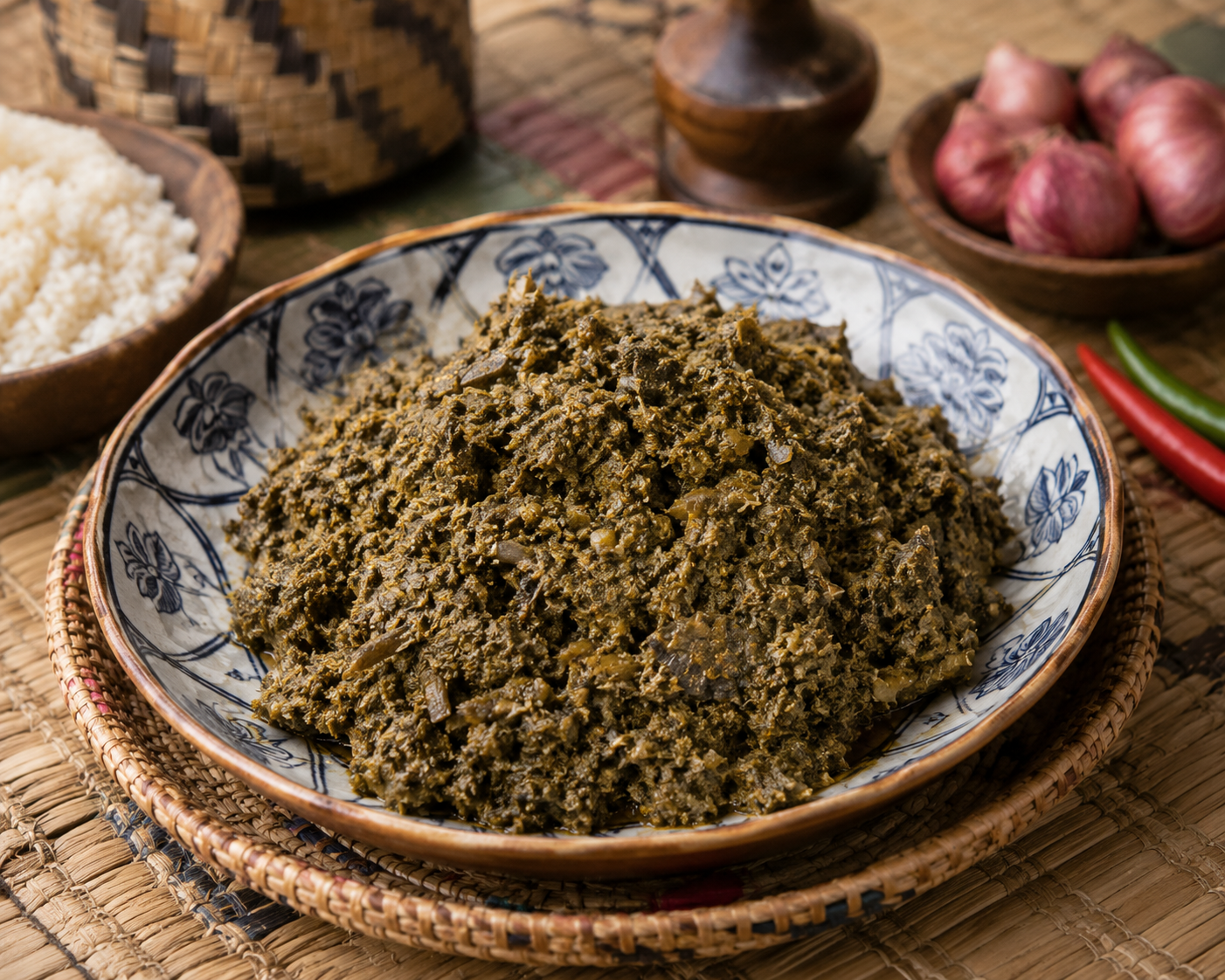
Ravitoto, a word of Malagasy origin literally meaning pounded cassava leaves, is the undisputed national dish and the most emblematic gastronomic jewel of the Great Island of Madagascar. Although geographically isolated from the African continent by the Mozambique Channel, Malagasy culture shares an intimate and sacred relationship with cassava with sub-Saharan African populations, introduced to the region during the seventeenth and eighteenth centuries through maritime trade routes. The Malagasy people, whose cultural and culinary origins harmoniously blend Austronesian, African, Arab, and European influences, have developed a unique approach to preparing this leafy vegetable, elevating ravitoto to the status of a symbol of Malagasy national identity, also known as Malagasy-ness.
Prepare this speciality
Choose a detailed recipe, adjust the portions and prepare your ingredients before starting. Our cooking tips and food safety advice complement the steps described in the recipes.
Explore further: Cooking tips · Food hygiene and safety advice.
History and uses
In the history of Madagascar, ravitoto has always held a central place during major social gatherings and customary rites. Under the Merina monarchy and to this day, this dish was prepared to mark solemn occasions such as famadihana, the traditional ritual of turning the dead, or during large family celebrations like weddings and births. Ravitoto perfectly embodies the notion of fihavanana, a fundamental Malagasy moral value based on solidarity, mutual aid, mutual respect, and indissoluble community ties. It is a dish that brings people together, a shared meal enjoyed surrounded by loved ones, reminding everyone of their unwavering attachment to the land of their ancestors, the tany malagasy. From the palace of the ancient kings of Antananarivo to the humble homes of the Imerina highlands, ravitoto transcends social barriers to establish itself as the supreme comfort food of Malagasy cuisine.
🥥 THE COMPOSITION AND ART OF TRADITIONAL PREPARATION
The creation of an exceptional traditional ravitoto is a meticulous culinary ritual that emphasizes patience, precision, and the balance of textures. The main ingredient of this dish consists of young, tender cassava leaves, selected for their freshness and light green color. These leaves must undergo rigorous preparation before being consumed: they are sorted to remove hard and fibrous stems, thoroughly washed under running water, then patiently pounded in a traditional wooden mortar, called lohao, using a pestle. This physical and rhythmic pounding breaks down the fibers and reduces the leaves to an extremely fine green paste, while preserving their color and aromatic freshness.
The cooking method for ravitoto is unique and differs significantly from that of cassava leaf stews in continental sub-Saharan Africa, which often feature palm oil or peanut paste. In Madagascar, the traditional and undisputed partner of ravitoto is pork, preferably fatty cuts like pork belly or shoulder, cut into generous pieces. The use of pork in this dish has its roots in the agricultural history of the central highlands, where pig farming is a major economic and culinary activity.
To prepare ravitoto sy henakisoa, meaning ravitoto with pork, the pork is first browned in a cast-iron pot until the fat renders and the pieces turn a nice golden color. Crushed garlic is then added, sometimes finely sliced onions, and in some regional recipes, small diced fresh tomatoes. The pounded cassava leaves are then introduced into the pot with a little hot water. The mixture simmers slowly, covered, for at least two to three hours over low heat. This prolonged cooking is necessary to neutralize any traces of acidity and toxic compounds naturally present in raw cassava, while allowing the leaves to absorb the flavorful fat from the meat.
In another equally popular variation, especially on the island's coasts where Creole and Indian influences are more pronounced, pork is replaced by fresh coconut milk. The cassava leaves then simmer in this sweet and rich coconut cream, garnished with dried or fresh fish, offering a royally creamy and particularly refined version.
🩺 NUTRITIONAL TREASURES AND DIETARY BENEFITS
Ravitoto is not only a first-rate culinary delight; it is also a dish of immense nutritional value for those who consume it. The pounded cassava leaves that form the base of this stew are extremely rich in high-quality plant proteins, containing a valuable amino acid profile that contributes to cell renewal and muscle mass maintenance. Furthermore, its high content of soluble and insoluble dietary fibers makes it an invaluable ally for intestinal transit, blood cholesterol regulation, and overall digestive health improvement.
In my books

Continue exploring the continent’s cuisines with Africa at the Table — 54 countries, 54 iconic dishes, by Alioune FALL. This book is in English.
Explore further
The richness of micronutrients in ravitoto is remarkable. It provides a significant amount of plant-based iron, highly assimilable by the body thanks to the joint presence of other nutrient-rich vegetables and condiments. The dish also contains calcium for strengthening bone structure, magnesium, zinc, and potassium. From a vitamin perspective, ravitoto is particularly generous in vitamin A, essential for night vision and skin protection, vitamin C, a powerful antioxidant that supports the immune system, and B vitamins that actively participate in daily energy production.
The traditional combination of cassava leaves with pork pieces or fresh coconut milk, while giving the dish a high caloric profile, provides the lipids necessary for optimal absorption of these precious fat-soluble vitamins. It is a complete, robust, and highly energizing dish, ideal for meeting the physical needs of manual laborers in the rice fields of the Malagasy highlands and supporting the harmonious growth of children in the household.
🌍 THE SOCIAL ROLE AND RITUALS OF CULINARY SHARING
In Madagascar, the tasting of ravitoto follows a well-defined social and cultural protocol that reflects the importance of hierarchy and respect for elders in traditional Malagasy society. This dish is almost systematically accompanied by plain steamed white rice, called vary, which constitutes the absolute basis of the Malagasy diet, to the point that the expression to have a meal literally means to eat rice, or homana vary, in the Malagasy language. The rice is arranged in a generous dome in the center of the plate, then topped with a ladle of creamy ravitoto and its tender pieces of meat.
Another inseparable element of ravitoto is rougail, a salad of finely chopped fresh tomatoes, grated fresh ginger, red onions, crushed fresh chili, and sometimes chives or green onions. This lively and spicy condiment brings a refreshing acidity that cuts through the richness of the stew and admirably balances the flavors in the mouth. The meal traditionally ends with the sharing of ranovola, also called rano ampango, a hot drink obtained by boiling water in the rice pot where a thin golden crust has formed at the bottom, offering a deliciously thirst-quenching and comforting grilled rice taste.
Sharing ravitoto with a stranger or a guest is the supreme expression of Malagasy hospitality. It is a silent way of showing respect, kindness, and opening one's home to sharing. For the vast Malagasy diaspora settled across the globe, particularly in France, Canada, or Reunion Island, preparing ravitoto is a strong and highly emotional cultural act. Recreating this dish in exile, by sourcing frozen cassava leaves from specialized stores, is a way to revive the scents of the homeland, to chase away the nostalgia of the distant island, and to transmit to children the love of an exceptional sensory heritage.
💫 SYNONYMS AND VARIATIONS OF THIS INDIAN OCEAN SPECIALTY
Ravitoto, though deeply rooted in the Malagasy language, shares many culinary similarities with other cassava leaf stews from the African continent, earning it several synonyms and regional designations:
Ravitoto sy henakisoa: The complete and traditional Malagasy name specifically referring to ravitoto prepared with pork. Ravitoto amin'ny voanio: A term referring to the delicious coastal variation of cassava leaves simmered in freshly pressed coconut milk. Pondu: The equivalent name used in the Democratic Republic of Congo for pounded cassava leaves, although its preparation differs with the traditional addition of palm oil and smoked fish. Saka-Saka: The universal name for pounded cassava leaves in the Republic of Congo, Gabon, and the Central African Republic, testifying to the culinary kinship of this forest preparation. Matapa: The national stew of neighboring Mozambique, similarly prepared with cassava leaves, coconut milk, peanuts, and seafood. Sombe: Name given to cooked cassava leaves in Burundi and Rwanda, sharing the same fine green vegetable texture. Kwem: Cameroonian variation of boiled and stewed cassava leaves, often paired with fresh peanut paste. Madaba: Local name for cassava leaves in some parts of the southern Indian Ocean islands. Cassava leaves stew: Descriptive English term used in international culinary literature to refer to this family of cassava leaf dishes. 🔑 KEYWORDS
Malagasy gastronomy Cassava leaves Pork meat Rice side dish Malagasy cultural heritage
In the kitchen : Ravitoto
Recipes from the site to put your knowledge into practice:
Discover these cuisines at a restaurant
Explore our restaurant and caterer directories. Choose your destination and check the establishment’s menu to confirm which dishes are offered and available.
Continue exploring
Enjoy discovering ingredients and African cuisines? Join our newsletter. The illustrated PDF 10 sauces africaines incontournables is in French and is offered after confirming a subscription to the French or bilingual edition.