Mchuzi
East Africa
Understanding : Mchuzi
🌍 HISTORY AND SIGNIFICANCE OF MCHUZI IN SWAHILI CULTURE
The term mchuzi, from the Swahili language, is one of the warmest and most evocative words in East African cuisine. It generally refers to a stew, a rich sauce, or a simmered broth. To fully understand the depth of this dish, one must delve into the history of the Swahili coast, a coastal strip stretching from southern Somalia to Mozambique, passing through Kenya and Tanzania, not forgetting the Zanzibar archipelago. For millennia, this region has been a crossroads of major maritime routes across the Indian Ocean. Arab, Persian, Indian, and later Portuguese merchants met local Bantu populations there, giving rise to a unique culture and a particularly mixed fusion cuisine.
Prepare this speciality
Choose a detailed recipe, adjust the portions and prepare your ingredients before starting. Our cooking tips and food safety advice complement the steps described in the recipes.
Explore further: Cooking tips · Food hygiene and safety advice.
History and uses
Mchuzi is the direct result of this cultural and historical blending. Unlike the very simple broths of inland Africa, mchuzi is characterized by the skillful use of spices from the East and Asia, combined with tropical products from African soil. This dish embodies the very concept of Swahili cuisine: a solid African base enriched by centuries of international exchange. Originally, mchuzi was prepared in clay pots over wood or charcoal fires. Slow cooking allowed the flavors of the spices to deeply infuse into the meat or fish, while creating a creamy sauce essential to accompany staple starches.
Over time, with internal migrations and the development of overland trade, mchuzi left the coast to conquer all of East Africa. It adapted to local ingredients available inland, such as beef, goat meat, or green bananas, while retaining its original identity. Today, whether in a modest rural home or at a lavish wedding banquet in Dar es Salaam, mchuzi remains the symbol of the ultimate comforting family meal, a cultural bridge between past and present.
🍲 VARIATIONS, ADAPTATIONS, AND SYNONYMS OF THE STEW
The versatility of mchuzi is such that there are almost as many mchuzi recipes as there are families in East Africa. The term itself varies according to the main ingredient chosen to compose the stew. This linguistic and culinary diversity is accompanied by several synonyms and descriptive names across regions.
Among the most common synonyms and variations of mchuzi are:
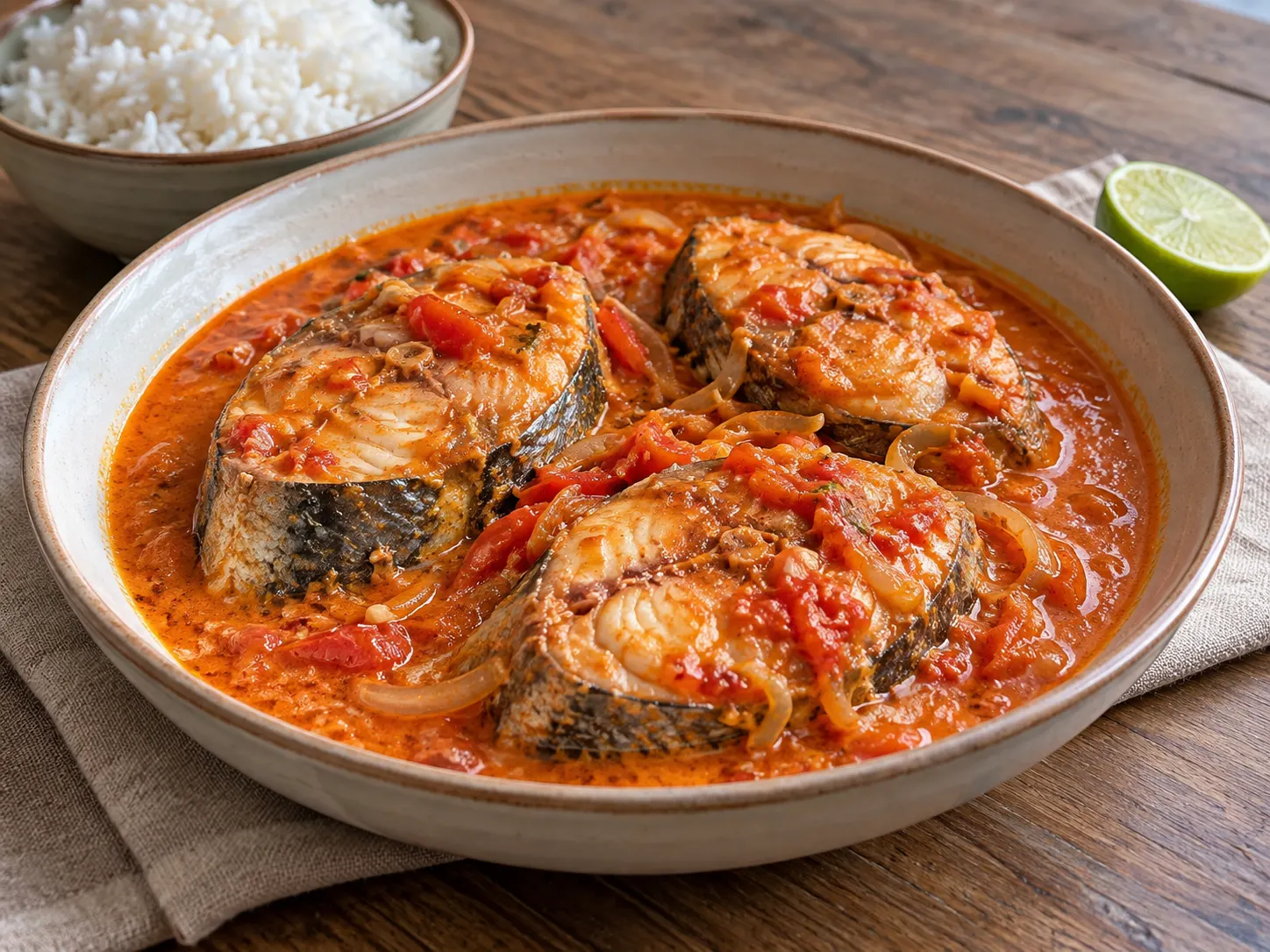
East African Curry: This is the most frequently used synonym by foreigners to describe mchuzi, due to its aromatic and visual resemblance to Indian curries, although African mchuzi is generally milder and less spicy. Kari: A linguistic adaptation of the word curry in Swahili, used in some coastal regions to specifically refer to the spicier mchuzi variants. Mchuzi wa Kuku: The traditional chicken stew, highly appreciated for Sunday meals and entertaining guests. Mchuzi wa Nyama: The meat version, prepared with beef or goat, often simmered for a long time until the meat becomes extremely tender. Mchuzi wa Samaki: The fish stew, typical of lake regions like Lake Victoria or the Indian Ocean islands. It is often enhanced by the addition of fresh coconut milk, then taking the name mchuzi wa nazi. Mchuzi wa Mboga: The vegetarian variant, made with seasonal vegetables, potatoes, and sometimes beans or chickpeas. This flexibility in naming shows how malleable the concept of mchuzi is. It is not a rigid formula, but a culinary framework that allows for accommodating available resources to create a tasty and nutritious meal.
🧂 ESSENTIAL INGREDIENTS AND THE MAGIC OF SPICES
The success of a good mchuzi relies on a careful selection of condiments and a balance of spices that give the stew its unique taste signature. The aromatic base of any mchuzi consists of the classic East African trio: red onion, fresh garlic, and ginger. These ingredients are chopped or crushed together to form a paste that is gently sautéed in vegetable oil to release their essential oils.
Ripe fresh tomatoes are another essential element. They are pureed or crushed to form the body of the sauce. It is the natural acidity of the tomatoes, softened by cooking, that gives mchuzi its characteristic texture and reddish-orange color. Green bell peppers, called hoho in Swahili, and fresh cilantro, known as dhania, are also added, bringing a herbaceous freshness at the end of cooking.
In my books

Continue exploring the continent’s cuisines with Africa at the Table — 54 countries, 54 iconic dishes, by Alioune FALL. This book is in English.
Explore further
But what transforms a simple tomato sauce into an authentic mchuzi is the use of Zanzibar spices. The traditional spice blend usually includes turmeric for golden color, cumin for earthy warmth, ground coriander, cinnamon, cloves, and cardamom. To simplify daily preparation, East African households very often use a product that has become legendary in the region: Royco Mchuzi Mix. This industrial blend of spices, binder, and flavor enhancers is found in almost all Kenyan and Tanzanian kitchens, to the point of becoming a shortcut synonymous with traditional flavor.
Finally, for coastal variants, coconut milk is a magical ingredient. A light coconut milk is first used to cook the ingredients, then a very thick and creamy coconut milk is added at the very end of cooking to give the mchuzi an incomparable creaminess and sweetness that deliciously contrasts with the strength of the spices.
🍳 THE ART OF PREPARATION AND SIMMERING TECHNIQUES
The preparation of mchuzi is an exercise in patience that highlights the art of slow simmering. The process begins with cooking the meat, if preparing mchuzi wa nyama. Pieces of beef or goat, often cut with the bone to enrich the broth, are first boiled in salted water with a little garlic and ginger until tender. This cooking broth is carefully reserved to moisten the sauce later.
In a large, deep pot, heat oil. Add the sliced onions and let them brown slowly until caramelized, which brings an essential sweet note to the sauce. Then add the garlic and ginger paste, followed by the dry spices. This step of toasting the spices in hot oil is crucial: it awakens the aromas and removes the raw taste of the powders.
Once the spices perfume the kitchen, incorporate the pre-cooked meat to brown it and infuse it with the aromatic flavors. Then add fresh tomatoes and a little tomato paste to intensify the color. When the tomatoes have melted and formed a thick paste, pour in the reserved meat broth or hot water. If you wish to add potatoes or carrots, this is the ideal time to incorporate them so they cook directly in the sauce and absorb all the flavors.
The pot is then covered and left to simmer over very low heat. It is during this slow cooking phase that the magic happens. The water gently evaporates, fats rise to the surface forming a thin shiny film, an unmistakable sign of a perfectly successful mchuzi, and the sauce thickens to become coating. Just before turning off the heat, sprinkle the dish with freshly chopped cilantro leaves to add a final touch of visual and gustatory vibrancy.
🌾 MCHUZI IN THE ART OF LIVING AND SHARING IN AFRICA
In the gastronomic landscape of the African continent, mchuzi holds a central place because it is the indispensable complement to the staple starches that structure daily diet. In East Africa, a dry meal is unthinkable. Whether it's ugali, this dense corn flour paste, wali, white rice flavored with jasmine or cardamom, chapatis, these flaky wheat flatbreads inherited from Indian influence, or matooke, steamed green bananas, every dish requires a rich sauce to moisten it and give it flavor. Mchuzi is this universal sauce.
But beyond its purely nutritional function, mchuzi is a vector of social connection and hospitality. In Africa, cooking is a collective act and eating is a moment of communion. Preparing mchuzi often involves spending several hours around the fire, chatting, exchanging news while the pot gently gurgles. It is a dish prepared in large quantities because one never knows who might join the table. Welcoming an unexpected visitor with a plate of rice topped with hot mchuzi is the purest symbol of African generosity.
Furthermore, mchuzi adapts to the cycles of life. During religious holidays, such as Eid al-Fitr on the Muslim coast or Christmas in Christian inland areas, mchuzi becomes richer, spicier, incorporating choice cuts of meat and more expensive ingredients to mark the exceptional nature of the day. Conversely, in everyday life, it can be humble and economical, highlighting vegetables from the family garden. This ability to navigate between the everyday and the exceptional makes mchuzi an essential pillar of East African art de vivre, a flavorful testament to the human and cultural richness of this magnificent part of the African continent.
🔑 KEYWORDS LIST
Mchuzi Swahili Coast Royco African Curry Zanzibar
In the kitchen : Mchuzi
Recipes from the site to put your knowledge into practice:
Discover these cuisines at a restaurant
Explore our restaurant and caterer directories. Choose your destination and check the establishment’s menu to confirm which dishes are offered and available.
Continue exploring
Enjoy discovering ingredients and African cuisines? Join our newsletter. The illustrated PDF 10 sauces africaines incontournables is in French and is offered after confirming a subscription to the French or bilingual edition.