Maharagwe
East Africa
Understanding : Maharagwe
🌱 HISTORY AND ROOTS OF MAHARAGWE IN EAST AFRICAN CULTURE
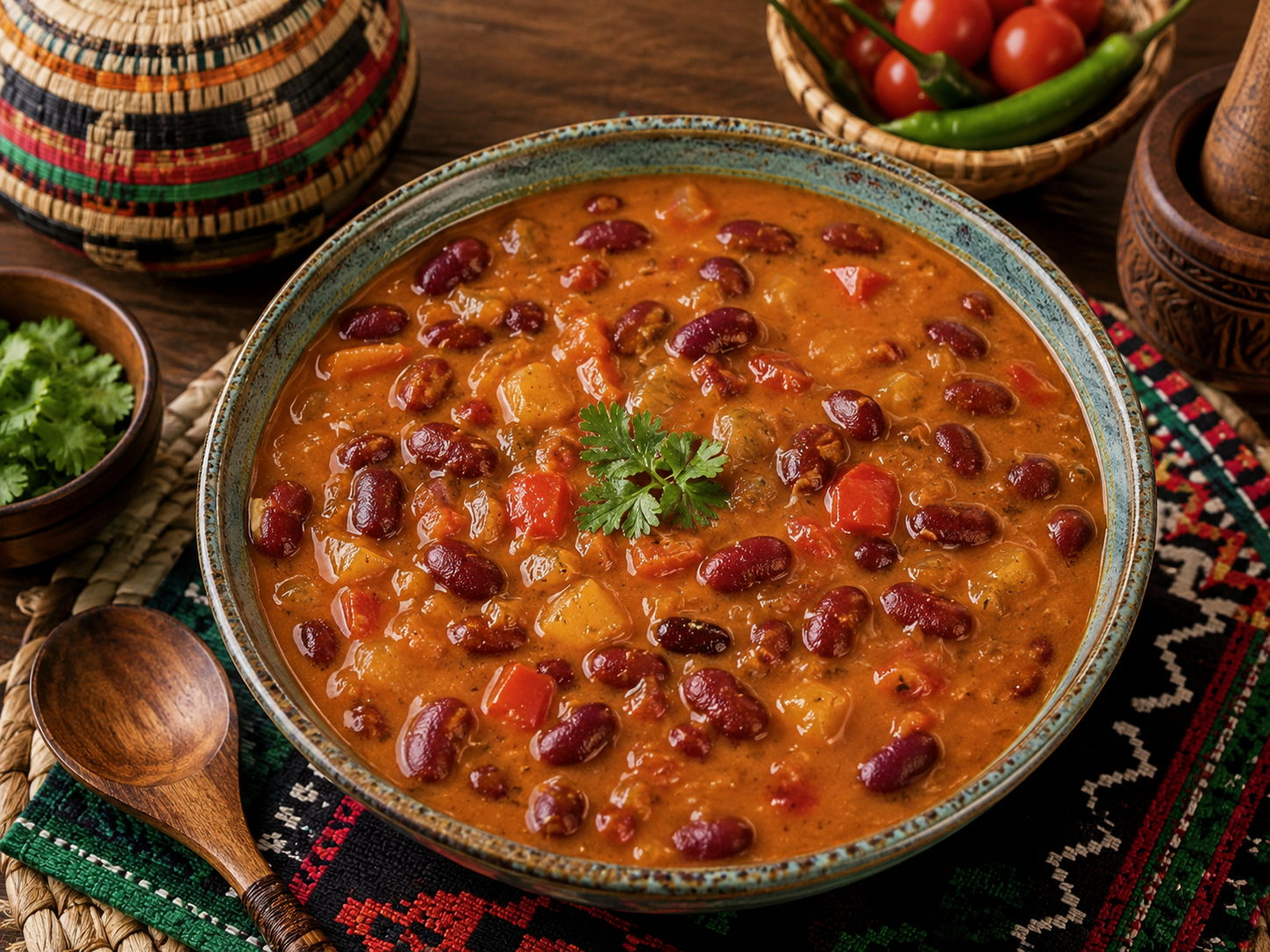
Maharagwe, which simply means beans in Swahili, is much more than a basic ingredient in East Africa. It is a true culinary monument, deeply rooted in the history, culture, and identity of the peoples of the Great Lakes region and the Indian Ocean coast. From Kenya to Tanzania, Uganda, Rwanda, Burundi, and the Zanzibar archipelago, this stewed bean dish instantly evokes the warmth of home, family generosity, and childhood memories.
The history of maharagwe is intimately linked to the development of Swahili culture, born from centuries of exchange between local Bantu populations and merchants from Arabia, Persia, and India. Although the common red bean originated in the Americas and was introduced to the African continent by Portuguese navigators around the sixteenth century, East African populations quickly adopted and integrated it into their agricultural and culinary systems. The plant adapted remarkably well to the fertile soils and varied climates of the highlands and coastal plains, becoming an essential food crop.
Prepare this speciality
Choose a detailed recipe, adjust the portions and prepare your ingredients before starting. Our cooking tips and food safety advice complement the steps described in the recipes.
Explore further: Cooking tips · Food hygiene and safety advice.
History and uses
Over the centuries, local communities developed unique methods to transform this simple legume into a dish of great aromatic complexity. In Swahili tradition, maharagwe evolved from a subsistence food to a gastronomic pillar. It is a food that transcends social and economic barriers. It can be found on the most modest tables in rural areas as well as at grand festive banquets or in urban restaurants. It embodies a philosophy of life where food must be both nourishing, comforting, and conducive to sharing.
🍲 ESSENTIAL INGREDIENTS AND REGIONAL VARIATIONS
The most iconic and beloved version of this dish is undoubtedly maharagwe ya nazi, which means beans cooked in a creamy coconut milk sauce. This preparation highlights the perfect encounter between land and sea, combining the dense texture of red beans with the velvety sweetness of freshly grated coconut, which grows in abundance on the East African coast.
The dish is known by different synonyms and descriptive names depending on the country, local languages, and regional adaptations:
Maharage: This is the most common spelling and pronunciation variant in Tanzania for the same bean dish. Maharage ya nazi: The complete Swahili name emphasizing the essential presence of coconut milk. Haricots au lait de coco: The most common and descriptive French translation used in gastronomic literature and tourist guides. Swahili coconut beans: The reference English synonym, very popular in international restaurants and cookbooks worldwide. Mchuzi wa maharagwe: A term specifically referring to bean stew or sauce when prepared without coconut milk, but with a rich tomato and spice base. To make authentic maharagwe ya nazi, the choice of ingredients is crucial. Red beans or pinto beans are generally preferred for their ability to soften while retaining their shape without completely mashing. The aromatic base consists of finely sliced red onions, crushed garlic, and fresh grated ginger. Crushed ripe tomatoes are added to provide acidity and a beautiful warm color, along with green bell peppers. The magical element remains coconut milk, often extracted in two stages according to the traditional method: a first light milk used for cooking the ingredients, and a second very thick and creamy milk added at the very end of cooking to give creaminess.
🍳 THE ART AND METHOD OF TRADITIONAL PREPARATION
Cooking maharagwe is a process that requires patience and meticulous adherence to steps to allow the flavors to fully develop. The day before preparation, dried beans are carefully hand-sorted to remove small impurities, then soaked in a large amount of cold water for at least twelve hours. This soaking rehydrates the beans, reduces cooking time, and makes them more digestible.
The next day, the beans are rinsed and boiled in a large cast-iron or clay pot until they are perfectly tender but not mashed. In a second pot, the aromatic base is prepared. A drizzle of vegetable oil is heated to sauté the onions. Once translucent, garlic, ginger, and spices are added. The choice of spices varies by family, but usually includes turmeric for its golden color, cumin, ground coriander, and a pinch of cardamom, a highly prized spice in coastal Swahili cuisine.
In my books

Continue exploring the continent’s cuisines with Africa at the Table — 54 countries, 54 iconic dishes, by Alioune FALL. This book is in English.
Explore further
Tomatoes and bell peppers are then incorporated and simmered until a thick sauce is obtained. At this point, the cooked and drained beans are added, along with the light coconut milk. The mixture is left to simmer over very low heat so that the beans absorb all the flavors of the sauce. The starch from the beans gradually binds with the coconut milk, creating a velvety broth. A few minutes before removing the dish from the heat, the thick coconut milk is poured in, and an entire green chili pepper may be added to flavor the dish without making it too spicy. It is finished by sprinkling with fresh coriander leaves.
🌾 THE UNIQUE PLACE OF MAHARAGWE IN AFRICAN CUISINE
In the panorama of African cuisine, maharagwe holds a special place due to its exceptional nutritional value and versatility. Beans are one of the most important sources of plant-based protein on the continent, particularly valuable in regions where meat is a luxury reserved for special occasions. Combined with a cereal or a staple starch, maharagwe offers a complete amino acid profile, making it a nutritional pillar for millions of people.
The way maharagwe is served perfectly illustrates this nutritional and cultural complementarity. In East Africa, it is the ideal partner for ugali, a dense white corn flour paste, or wali, fragrant white rice. Rice with coconut milk accompanied by maharagwe ya nazi is considered one of the most refined and comforting meals on the Swahili coast.
Another unique and surprising combination for external palates is the pairing of maharagwe with mandazi. Mandazi is an East African triangular doughnut, lightly sweetened and flavored with cardamom or coconut milk. Serving creamy, savory beans on the same plate as a sweet, warm doughnut is an extremely popular breakfast tradition in Kenya and Tanzania. This striking contrast between sweet and savory, creamy and soft, testifies to the boldness and richness of Swahili gastronomy, which knows how to blend influences to create moments of pure indulgence.
👥 THE SOCIAL ROLE AND EVOLUTION OF THIS CONTEMPORARY DISH
Beyond the plate, maharagwe fulfills a major social function. It is the communal dish par excellence. In schools, universities, military barracks, and large construction sites in East Africa, maharagwe is served almost daily due to its low cost and its ability to provide lasting satiety. It is a food that brings people together, evoking community life and solidarity.
In homes, the preparation of maharagwe is often an opportunity to gather around the fire. Sorting the beans, grating the coconut using a mbuzi, a traditional wooden tool with a serrated metal blade on which one sits, are shared tasks that promote the transmission of knowledge between generations. It is a moment of conviviality where people take the time to chat and strengthen family ties.
Today, maharagwe is experiencing a true renaissance driven by the global trend towards more plant-based and sustainable eating. Young East African chefs are reinterpreting this traditional recipe to present it in a new light in gourmet restaurants in Nairobi or Dar es Salaam. At the same time, maharagwe ya nazi is increasingly appealing to vegetarians and vegans worldwide, who discover in this traditional dish a healthy, flavorful, and naturally gluten-free and animal-product-free alternative. By adapting to contemporary nutritional demands while preserving its original soul, maharagwe proves that it is a timeless culinary treasure, capable of transcending eras and captivating gourmets worldwide.
🔑 LIST OF KEYWORDS
Maharagwe Coconut milk Swahili cuisine East Africa Red beans
In the kitchen : Maharagwe
Recipes from the site to put your knowledge into practice:
Discover these cuisines at a restaurant
Explore our restaurant and caterer directories. Choose your destination and check the establishment’s menu to confirm which dishes are offered and available.
Continue exploring
Enjoy discovering ingredients and African cuisines? Join our newsletter. The illustrated PDF 10 sauces africaines incontournables is in French and is offered after confirming a subscription to the French or bilingual edition.