Wali wa nazi
East Africa
Understanding : Wali wa nazi
🥥 HISTORY AND CULTURAL SIGNIFICANCE OF WALI WA NAZI
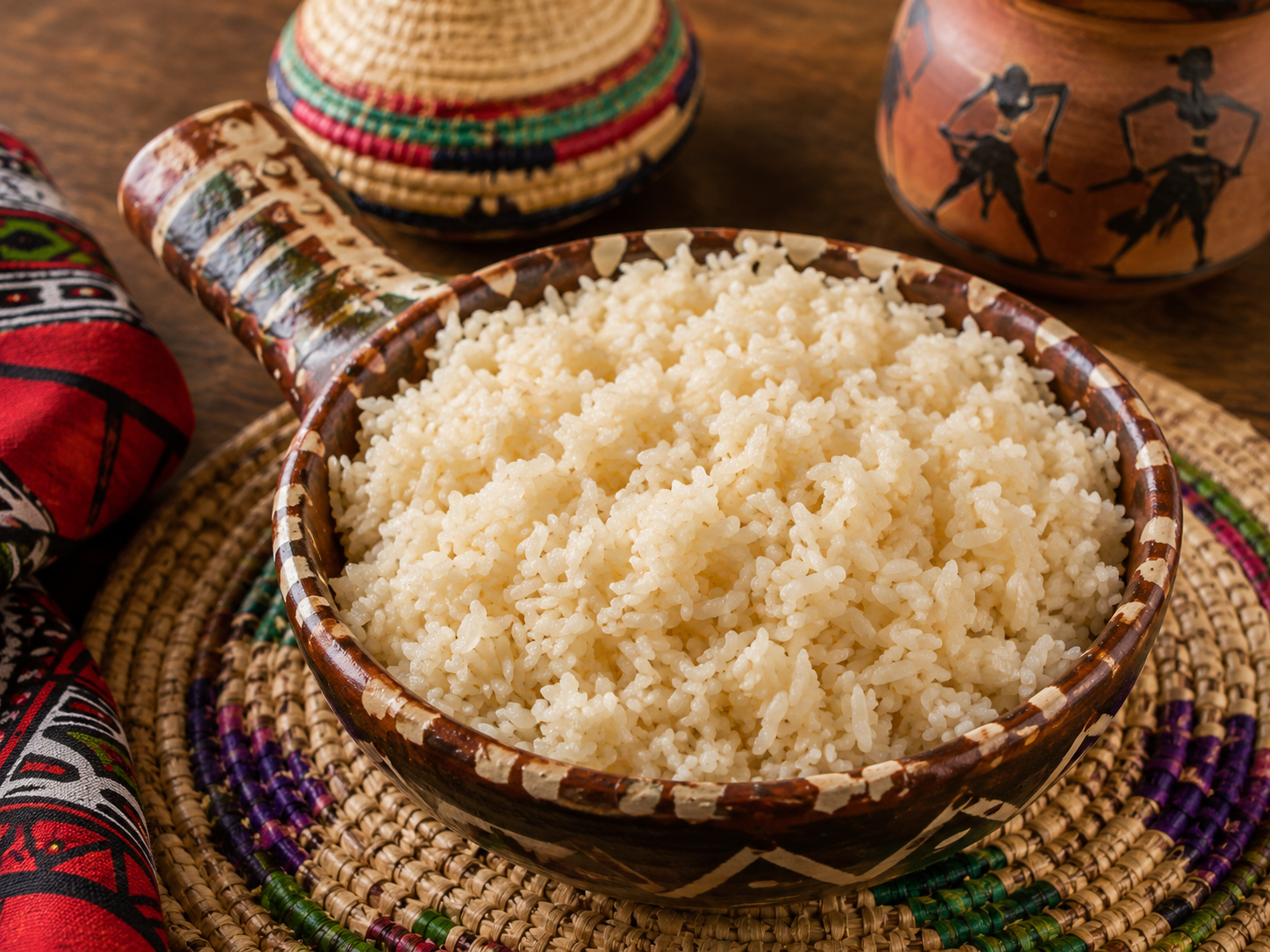
Wali wa nazi is one of the most fragrant and beloved jewels of Swahili coastal cuisine, a region of extraordinary historical richness stretching along the Indian Ocean, encompassing the coastal areas of Kenya, Tanzania, the Zanzibar archipelago, northern Mozambique, and the Comoros Islands. To understand the importance of this dish, one must first decode its name in Swahili, the lingua franca of East Africa. The word wali specifically refers to cooked rice, as opposed to mchele which describes raw rice, while nazi means coconut. Thus, wali wa nazi literally translates to coconut rice.
Prepare this speciality
Choose a detailed recipe, adjust the portions and prepare your ingredients before starting. Our cooking tips and food safety advice complement the steps described in the recipes.
Explore further: Cooking tips · Food hygiene and safety advice.
History and uses
The history of this dish is deeply intertwined with the waves of trade and cultural exchange that have shaped the Swahili coast for over two millennia. Thanks to monsoon winds, Arab, Persian, Indian, and Chinese sailors and merchants navigated to these African shores to trade spices, silk, and porcelain for gold, ivory, and agricultural products. These prolonged contacts gave rise to a unique fusion culture, the Swahili culture, of which gastronomy is one of the most flavorful expressions. Wali wa nazi perfectly embodies this fusion: it combines rice, originally introduced by Asian and Indian merchants, with coconut, a tropical fruit that grows in abundance along East Africa's white sandy beaches.
Initially, rice was considered a luxury product, reserved for the urban elites of the coast and for major festive occasions, while inland populations consumed millet, sorghum, or tubers. Cooking rice with fresh coconut milk was a way to enhance this precious ingredient to honor distinguished guests. Over the centuries, rice cultivation became more widespread, and wali wa nazi became a daily staple for coastal inhabitants, before spreading throughout the East African hinterland. Today, it symbolizes the coastal way of life, the generosity of the sea and land, and the legendary hospitality of the Swahili people.
🍚 ESSENTIAL INGREDIENTS AND SYNONYMS OF THIS SPECIALTY
The apparent simplicity of wali wa nazi conceals a rigorous selection of high-quality ingredients, whose freshness guarantees the dish's success. The rice chosen is generally a long-grain, naturally fragrant variety, such as basmati rice or jasmine rice. These varieties are appreciated for their ability to remain light and well-separated after cooking, preventing the dish from becoming compact or sticky.
The dish is known by various synonyms and descriptive names throughout the French and English-speaking world:
Riz au lait de coco: This is the most literal and common French translation, used in cookbooks and restaurant menus. Swahili coconut rice: The reference English name, which immediately places the dish in its East African cultural birthplace. Riz coco de Zanzibar: A geographical variant referring to the spice island, renowned for its particularly fragrant versions. Wali wa tui: An alternative Swahili expression that emphasizes tui, manually extracted coconut milk, rather than the whole fruit. Riz crémeux à la noix de coco: A descriptive term highlighting the creamy texture that fresh coconut milk gives to the rice grains. Besides rice and coconut, the traditional recipe calls for sea salt to enhance the flavors. In some coastal or festive variations, cooks add a touch of extra aroma by slipping a few whole cardamom pods, Zanzibar cloves, a piece of cinnamon bark, or even pandan leaves or fresh lemongrass into the pot. These spices should not overpower the dish, but rather create a subtle aromatic background that harmoniously dialogues with the natural sweetness of the coconut.
🍳 THE ART AND METHOD OF TRADITIONAL PREPARATION
The traditional preparation of wali wa nazi is a true domestic art that employs tools and techniques unchanged for generations. It all begins with the extraction of fresh coconut milk, a task traditionally assigned to the women or young people of the household. To do this, a mbuzi is used, a carved wooden tool equipped with a circular, serrated metal blade at one end. The cook sits on the mbuzi, holds a ripe half-coconut with both hands, and energetically rubs it against the blade to detach fine shavings of white, moist pulp.
These grated coconut shavings are then pressed in two stages to obtain two different types of milk, each having a specific role in cooking:
The first pressing is done without adding water, or with only a very small amount of warm water. By pressing the pulp firmly with a clean cloth or a traditional vegetable fiber filter, an extremely dense, rich, and creamy liquid is obtained, called tui la kwanza or first milk. This milk is carefully set aside.
In my books

Continue exploring the continent’s cuisines with Africa at the Table — 54 countries, 54 iconic dishes, by Alioune FALL. This book is in English.
Explore further
The second pressing involves adding a larger quantity of hot water to the already pressed pulp. By kneading it again, a much lighter and more fluid milk is extracted, called tui la pili or second milk.
Rice is first washed several times with plenty of water to remove excess surface starch, which ensures well-separated grains. In a deep pot, the light coconut milk is poured, and salt and optional spices are added. This liquid is brought to a boil before adding the drained rice. The rice cooks gently, uncovered, until it has absorbed most of the fluid.
It is at this crucial stage that the thick, creamy first coconut milk is poured over the rice. The heat is reduced to a minimum, the pot is tightly covered, and the rice is left to finish cooking by gentle steaming for about ten to fifteen minutes. This method allows each grain of rice to be enveloped in a thin film of coconut fat, giving it a melting texture and a brilliant sheen without the milk burning at the bottom of the pot.
🌾 THE UNIQUE PLACE OF WALI WA NAZI IN AFRICAN CUISINE
In the culinary landscape of the African continent, wali wa nazi occupies a singular place that distinguishes it from other rice preparations found in West or North Africa. While West Africa is world-famous for its jollof rice or 'riz gras' (fatty rice), spicy and colorful rice dishes cooked in a tomato and meat broth, East African Swahili cuisine favors sweeter, more fragrant, and creamier flavors, where the emphasis is on the aromatic expression of local ingredients.
Wali wa nazi is the symbol of this coastal identity. It testifies to the ingenuity of African populations in optimally using local resources. Coconut is not only used for its flavor; it also plays a primary nutritional role. In a region where access to animal fats was sometimes limited, coconut provided healthy fatty acids, essential for the daily energy intake of fishermen and sea workers.
Moreover, this dish demonstrates the ability of African cuisine to assimilate external influences to create totally original recipes. Coconut milk rice certainly exists in other tropical regions of the world, such as Southeast Asia or the Caribbean, but wali wa nazi is inseparable from Swahili culture due to its manual preparation methods and the way it is integrated into communal meals. It is the ambassador of this oceanic Africa, open to the world but deeply rooted in its terrestrial terroir.
👥 THE SOCIAL ROLE AND INSEPARABLE ACCOMPANIMENTS
In East Africa, eating wali wa nazi is a social act of sharing and celebration. Although it is now consumed on weekdays in many coastal families, it remains the essential dish for major community life events. During traditional Swahili weddings, Eid al-Fitr celebrations marking the end of Ramadan, or Sunday family meals, gigantic pots of wali wa nazi are prepared to feed dozens of guests. The rice is often presented on large circular metal trays called sinia, around which several diners sit to share the meal, traditionally using the fingers of their right hand.
Wali wa nazi is rarely eaten alone; its creamy sweetness is designed to balance savory, spicy, or tangy accompanying dishes. Among the most emblematic culinary pairings in the region are:
Mchuzi wa samaki: A stew of fresh fish caught in the morning, simmered in a tomato sauce with onions, garlic, and mild spices. The contrast between the spiciness of the fish stew and the sweetness of the coconut rice is absolutely divine.
Maharagwe ya nazi: A dish of red beans simmered in a creamy coconut milk sauce with spices. It is the ultimate everyday comfort food, adored by young and old alike.
Samaki wa kupaka: Charcoal-grilled fish then topped with a thick, rich sauce made from coconut milk, turmeric, garlic, and green chili.
Goat or beef stewed in mchuzi: Rich and thick sauces that soak into the rice to create a deeply flavorful experience.
Thanks to these varied accompaniments, wali wa nazi adapts to all budgets and occasions, transitioning from a simple weekday meal to the most elaborate festive banquet, while maintaining its promise of comfort and delight.
✨ CONCLUSION AND GASTRONOMIC INFLUENCE OF THIS TREASURE
In conclusion, wali wa nazi is much more than a simple side dish recipe; it is a culinary poem that tells, with every bite, the story of Indian Ocean sailors, Zanzibar's coconut plantations, and the sweet life of the African coast. Through its melting texture, delicate fragrance, and ability to harmonize with the most complex flavors, it has established itself as one of the indispensable pillars of East African gastronomy. As the world rediscovers the richness and diversity of African cuisines today, wali wa nazi shines as a perfect example of refinement, authenticity, and generosity, ready to conquer the tables of gourmets worldwide.
🔑 KEYWORD LIST
Wali wa nazi Coconut milk rice Swahili coast Zanzibar East African cuisine
In the kitchen : Wali wa nazi
Recipes from the site to put your knowledge into practice:
Discover these cuisines at a restaurant
Explore our restaurant and caterer directories. Choose your destination and check the establishment’s menu to confirm which dishes are offered and available.
Continue exploring
Enjoy discovering ingredients and African cuisines? Join our newsletter. The illustrated PDF 10 sauces africaines incontournables is in French and is offered after confirming a subscription to the French or bilingual edition.