Kuku paka
East Africa
Understanding : Kuku paka
🍗 HISTORY AND CULINARY FUSION OF KUKU PAKA
Kuku paka is one of the most extraordinary and flavorful expressions of the cultural melting pot that characterizes the Swahili coast of East Africa. This exceptional dish, originating from the coastal communities of Kenya, Tanzania, and the Zanzibar archipelago, tells a story of centuries of oceanic trade, cross-cultural influences, and harmonious coexistence between different cultures. To understand the genesis of this specialty, one must look back at the waves of migration and trade that connected the Indian subcontinent to the East African coast across the Indian Ocean.
Prepare this speciality
Choose a detailed recipe, adjust the portions and prepare your ingredients before starting. Our cooking tips and food safety advice complement the steps described in the recipes.
Explore further: Cooking tips · Food hygiene and safety advice.
History and uses
The Swahili language provides the first key to interpreting this masterpiece. The word kuku simply means chicken in this Bantu language spoken by millions of people. As for the term paka, its origin gives rise to several fascinating theories. In Swahili, the verb kupaka means to rub, spread, or coat, referring to the traditional method of thoroughly coating chicken pieces with this creamy coconut milk and spice sauce. At the same time, other linguists and food historians see an influence from Indian languages like Gujarati or Punjabi, where the word pak refers to cooking or a slow-cooked, creamy preparation.
This dual etymology perfectly reflects the hybrid nature of kuku paka. It is a dish born in the homes of the Indo-African community on the coast, where the preparation techniques of Indian curries, rich in ground spices and fresh herbs, fused with the abundant and local use of coconut, the undisputed queen of the East African tropical coasts. Kuku paka has thus become much more than a simple recipe: it is a symbol of a plural identity, a fraternal bridge built between Africa and South Asia, now proudly adopted by all communities in the region.
🥥 ESSENTIAL INGREDIENTS AND ITS SYNONYMS
The aromatic singularity of kuku paka lies in the perfect harmony between the strength of spices, the freshness of aromatics, and the enveloping sweetness of coconut milk. Unlike classic curries, which can be extremely spicy, kuku paka favors subtlety and balance, offering a palette of sweet, warm, and slightly tangy flavors.
This legendary dish is known by several synonyms and descriptive names depending on linguistic and geographical contexts:
Kuku wa kupaka: This is the most complete and traditional Swahili grammatical form, emphasizing that the chicken is coated or smeared with sauce. Chicken with coconut milk and Zanzibar spices: A very poetic French synonym that immediately places the dish in the imagination of the spice islands. Swahili coconut chicken curry: The most common English name, essential for identifying this specialty on international restaurant menus worldwide. Poulet paka: An affectionate abbreviation often used by African cuisine enthusiasts to refer to this preparation. Mchuzi wa kuku wa nazi: Although this term more generally refers to any chicken stew with coconut milk, it is often used as a synonym in inland regions where the subtle distinctions of coastal cuisine are less pronounced. To prepare an authentic kuku paka, the quality of the poultry is essential. Traditionally, kuku kienyeji, free-range local chicken, is preferred, whose firm and flavorful meat wonderfully withstands grilling and simmering. The sauce, meanwhile, requires a fresh condiment paste made of garlic, ginger, and green chilies. The warm character of the dish is provided by a mixture of dry spices dominated by turmeric for its vibrant golden-yellow color, accompanied by cumin, ground coriander, and sometimes a touch of garam masala. Ripe fresh tomatoes provide the necessary acidity to balance the lipid richness of fresh coconut milk, which forms the body of this velvety sauce.
🔥 THE TRADITIONAL PREPARATION METHOD AND THE SECRET OF THE GRILL
What fundamentally distinguishes kuku paka from most other chicken curries and stews around the world is a unique two-step cooking technique that combines direct fire cooking and slow simmering in sauce. This meticulous process is the jealously guarded secret of the best cooks in Mombasa, Dar es Salaam, and Stone Town.
The first step is to marinate the chicken pieces in a mixture of crushed garlic, grated ginger, fresh lime juice, salt, and a pinch of turmeric. This marinade deeply flavors the meat and tenderizes it. After a few hours of resting, comes the signature step: the chicken is grilled on a traditional charcoal barbecue, locally called miko. The goal is not to cook the chicken through during this phase, but rather to mark the skin and infuse it with that absolutely inimitable woody smoke flavor. This smoky and caramelized flavor is the gustatory signature of kuku paka, what makes it recognizable among a thousand.
In my books

Continue exploring the continent’s cuisines with Africa at the Table — 54 countries, 54 iconic dishes, by Alioune FALL. This book is in English.
Explore further
While the chicken acquires its beautiful grilled color, the sauce is prepared in a large pot. Finely sliced onions are sautéed in a little oil until tender and translucent. Then, the garlic, ginger, and green chili paste are added, followed by turmeric, cumin, and coriander. When the spices begin to release their enchanting aroma, crushed or pureed tomatoes are incorporated. This mixture is cooked until the water from the tomatoes has evaporated and a fragrant oil begins to separate from the sides of the pot.
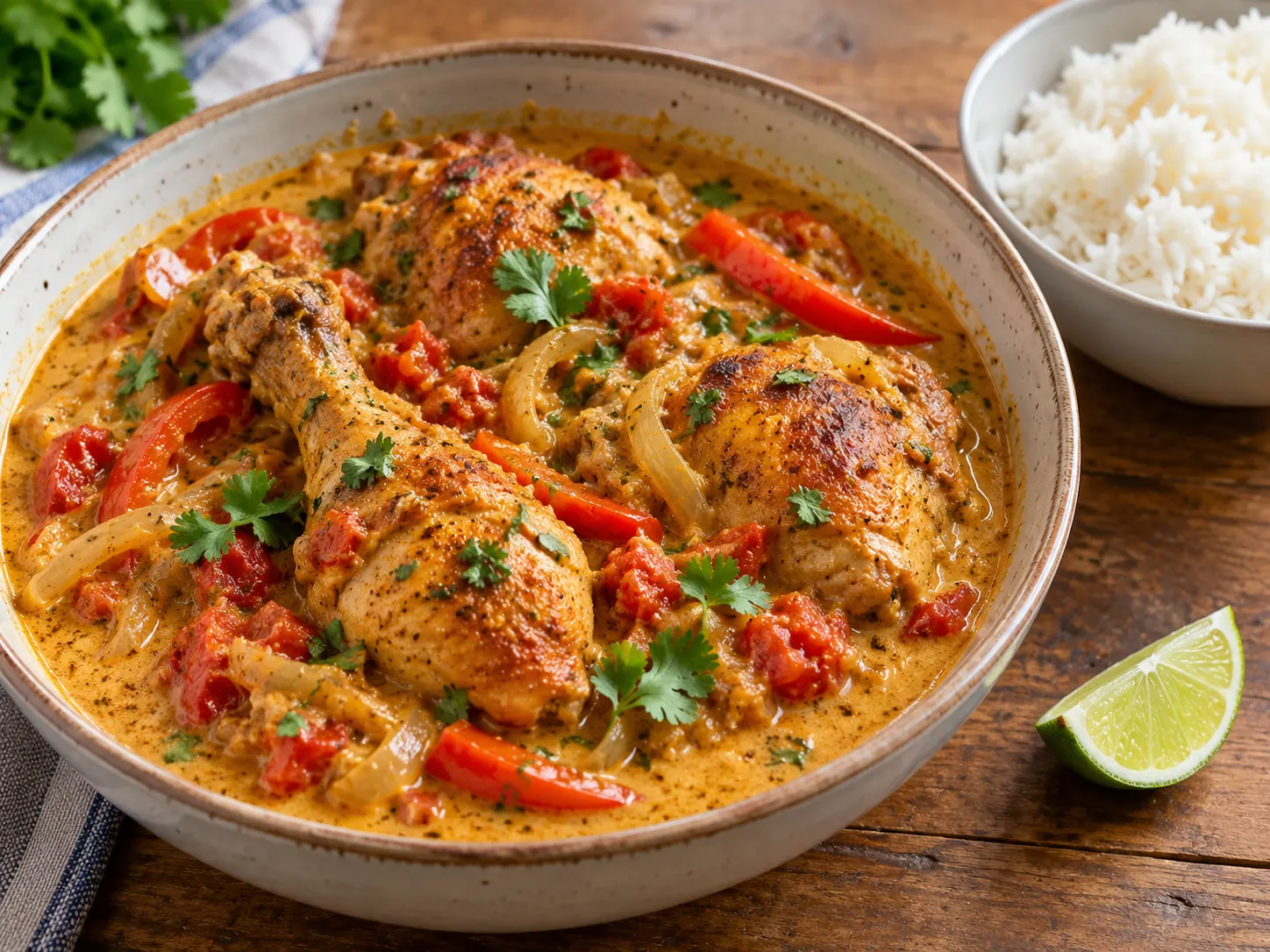
Then, fresh coconut milk, preferably the thick and creamy first extract, is poured in, stirring constantly to prevent it from curdling. The sauce is allowed to thicken gently over low heat. It is at this point that the grilled chicken pieces are plunged into the simmering sauce. The poultry finishes cooking through, soaking up the sauce, while its grilled juices and smoky flavor diffuse into the coconut milk, creating an exceptional gustatory alchemy. The dish is ready when the sauce has become creamy, coating, and a sparkling golden yellow.
🌍 THE UNIQUE PLACE OF KUKU PAKA IN AFRICAN AND WORLD CUISINE
Within the gastronomic heritage of the African continent, kuku paka holds a place of great nobility. Africa is an immense continent characterized by very distinct regional culinary traditions. While West Africa is renowned for its seed sauces, okra stews, and red palm oil preparations, East Africa stands out for a cuisine strongly influenced by the Indian Ocean, where coconut, rice, and oriental spices dictate the rhythm of meals.
Kuku paka is the jewel of this coastal cuisine. It brilliantly demonstrates that African gastronomy is not limited to simple or purely hearty dishes, but that it integrates complex preparation techniques and aromatic profiles of great refinement. This dish also testifies to the formidable capacity of African cultures to assimilate and reinterpret. By welcoming the spices and techniques brought by Indian merchants and workers, the people of the Swahili coast did not simply copy a foreign recipe; they reinvented it, adapted it to their terroir by integrating the unique taste of charcoal-grilled chicken and the freshness of their local coconut milk to create an entirely original dish.
Nowadays, kuku paka is a choice ambassador for spreading East African culture on the international stage. With the development of tourism in Zanzibar and on the Kenyan coasts, many travelers from all over the world have discovered this dish and fallen in love with it. East African diaspora chefs now offer it in major world capitals, attracting a clientele fond of exotic, sweet, and authentic flavors. It embodies a modern Africa, proud of its roots and open to the world.
🍽️ THE ART OF SERVING AND SWAHILI CONVIVIALITY
On the Swahili coast, kuku paka is much more than just food meant to nourish the body; it is a social and family ritual of great importance, synonymous with warm welcome, celebration, and sharing. In Swahili tradition, a meal is a sacred moment of human connection, and preparing kuku paka is a supreme mark of consideration for one's guests.
This festive dish is generally prepared for Sunday lunch, religious holidays like Eid al-Fitr, or traditional weddings that last several days. Kuku paka is traditionally served in large circular metal or painted ceramic dishes, placed in the center of the table or on woven floor mats around which guests sit communally.
To accompany this creamy and fragrant stew, several options are available to gourmets, each bringing a different textural dimension to the meal:
Wali wa nazi: This fragrant white rice cooked in coconut milk is the most traditional and harmonious accompaniment. The rice absorbs the yellow chicken sauce, creating an irresistible creamy harmony. Chapatis: These flat, flaky wheat flatbreads of Indian origin, lightly browned in a pan with ghee, are perfect for scooping up the creamy sauce with the fingers of the right hand, according to local custom. Sima or ugali: Although more rustic, this dense white corn paste is also used in families to accompany kuku paka daily. Kachumbari: This fresh and crunchy salad of red onions, tomatoes, coriander, and minced green chili, all drizzled with lime juice, is essential for bringing a touch of freshness and lightness that contrasts beautifully with the richness of the coconut sauce. Sharing kuku paka surrounded by loved ones, in the warmth of a coastal evening, is an unforgettable sensory and human experience, a total immersion in this Swahili way of life characterized by the well-known phrase: Hakuna Matata, everything is fine.
🔑 KEYWORDS LIST
Kuku paka Swahili coast Coconut milk Indo-African fusion Grilled chicken
In the kitchen : Kuku paka
Recipes from the site to put your knowledge into practice:
Discover these cuisines at a restaurant
Explore our restaurant and caterer directories. Choose your destination and check the establishment’s menu to confirm which dishes are offered and available.
Continue exploring
Enjoy discovering ingredients and African cuisines? Join our newsletter. The illustrated PDF 10 sauces africaines incontournables is in French and is offered after confirming a subscription to the French or bilingual edition.