Misir wat
Ethiopia
Understanding : Misir wat
🍲 HISTORY AND ROOTS OF THIS ETHIOPIAN LENTIL STEW
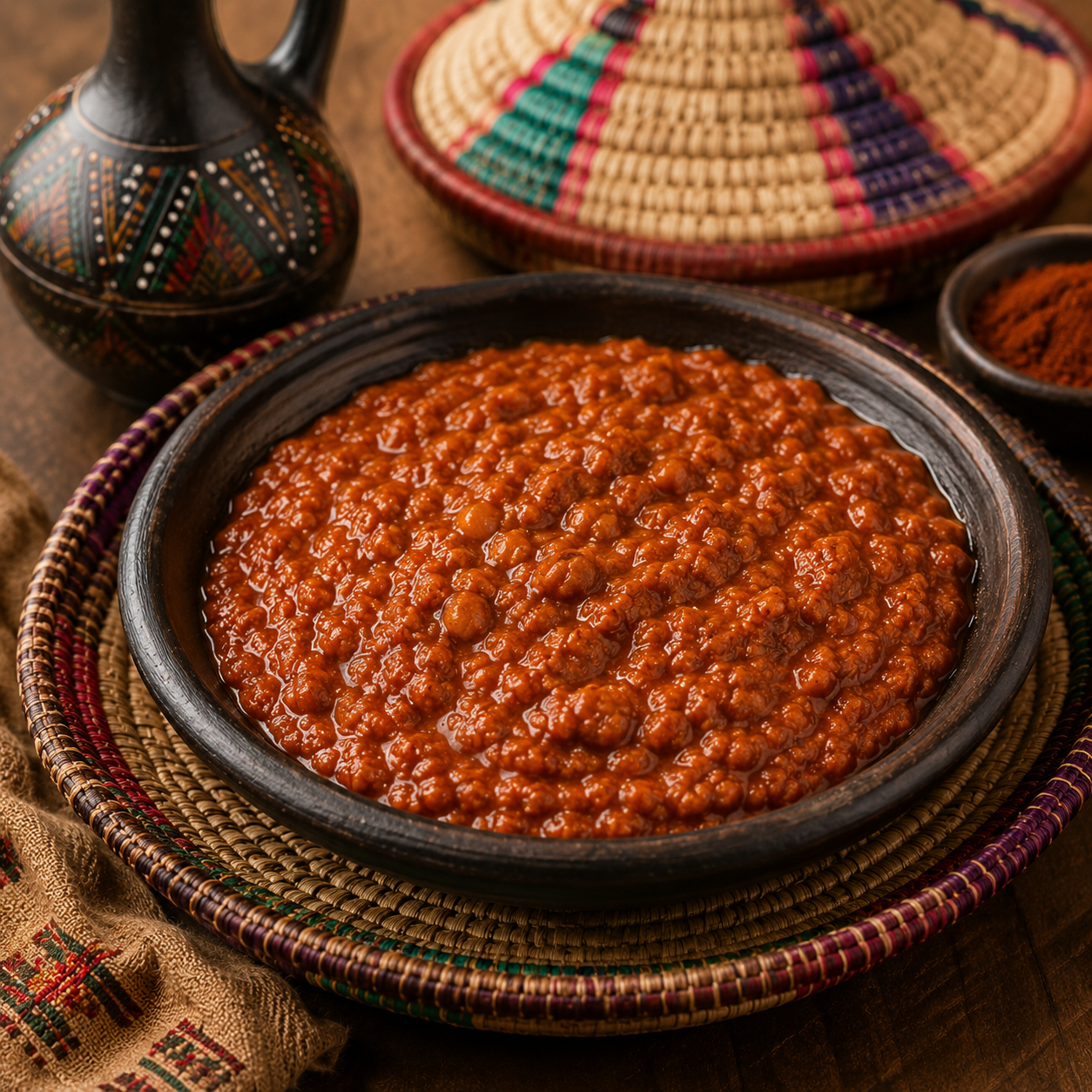
Misir wat, also spelled misir wot or yemisir wat, is one of the most iconic, comforting, and beloved dishes in the cuisine of Ethiopia, a country in the Horn of Africa renowned for its millennia-old culture and unique culinary traditions. In Amharic, Ethiopia's official language, the word misir specifically refers to lentils, while wat or wot describes a stew or a thick, simmered sauce. Thus, misir wat literally translates to lentil stew. This seemingly simple dish is, in reality, the fruit of ancestral wisdom and a remarkable mastery of the art of spices.
To understand the central place of misir wat in Ethiopian culture, one must closely examine the country's religious traditions. The Ethiopian Orthodox Tewahedo Church, to which a large part of the population adheres, prescribes more than two hundred and fifty fasting days a year, including fifty-five consecutive days for Lent before Easter. During these fasting periods, called tsom, all consumption of meat, fish, dairy products, and eggs is strictly prohibited. Ethiopians then adopt an entirely vegan diet.
Prepare this speciality
Choose a detailed recipe, adjust the portions and prepare your ingredients before starting. Our cooking tips and food safety advice complement the steps described in the recipes.
Explore further: Cooking tips · Food hygiene and safety advice.
History and uses
It is in this spiritual and dietary context that misir wat has become a pillar of daily nutrition. Red lentils, particularly nutritious, rich in plant-based protein, iron, and fiber, were the ideal source of energy to sustain the body during long days of fasting and prayer. Over the centuries, this recipe has been passed down from generation to generation, becoming not only a food of spiritual sustenance but also a national gastronomic pride shared by all Ethiopians, Christians and Muslims alike.
🌶️ ICONIC INGREDIENTS AND SYNONYMS OF THE DISH
The culinary magic of misir wat lies in the synergy of its basic ingredients, simple yet meticulously prepared to obtain a sauce of exceptional aromatic depth. It is this delicate alliance that transcends the natural, sometimes earthy, flavor of red lentils.
This legendary dish is known by several synonyms and descriptive names depending on linguistic and geographical contexts:
Yemisir wat: This is the complete and formal Amharic name, often used on traditional menus to refer to red lentil stew. Misir wot: A very common spelling variation in English-language publications and Ethiopian restaurants worldwide. Ethiopian coral lentil stew: The most descriptive French synonym, used to guide people discovering this specialty for the first time. Spicy Ethiopian lentil stew: The international reference name, ubiquitous in the global culinary blogosphere and vegetarian cookbooks. Spicy lentils Addis Ababa style: A poetic term sometimes used to evoke the urban charm of the Ethiopian capital where the dish is enjoyed on every street corner. The main ingredient of this stew is red lentils or coral lentils. These lentils have the advantage of cooking relatively quickly and partially disintegrating during simmering, which gives the stew its characteristic creamy and velvety texture.
The second pillar of the recipe is berbere, this complex and spicy Ethiopian spice blend. Composed of dried red chilies, garlic, ginger, coriander, cardamom, cloves, and fenugreek, berbere gives misir wat its flamboyant brick-red color and characteristic spiciness.
Finally, the fat used varies according to the religious calendar. During Orthodox fasting periods, neutral vegetable oil is used, making the dish entirely vegan. Outside of fasting periods, the dish is enriched by the addition of niter kibbeh, this traditional Ethiopian clarified butter slowly simmered with aromatic herbs and local spices, which brings a nutty note and magical creaminess to the stew.
🍳 THE ART AND METHOD OF TRADITIONAL PREPARATION
Making an authentic misir wat is a slow process that requires care and respect for the cooking steps. The secret to a successful stew lies in the prolonged cooking of its aromatic base, which softens the chili's intensity and develops sweet and complex flavors.
It all begins with a generous amount of finely chopped red onions. In Ethiopian tradition, onions are first dry-cooked in a deep cast-iron or earthenware pot, without any added oil or water. This dry-sweating method allows the onions to release their natural water and caramelize slowly over low heat for about thirty minutes, until they form an extremely tender and sweet purple paste.
Once this caramelized onion base is obtained, vegetable oil or niter kibbeh is added, followed by a generous amount of berbere spice. These ingredients are gently fried together for about fifteen minutes, stirring constantly and adding very small amounts of hot water to prevent the spices from burning. It is during this essential step that the aromas of the berbere fully develop and lose their initial bitterness. Crushed fresh garlic and ginger are then incorporated, along with a little tomato paste to enhance the dish's red color.
In my books

Continue exploring the continent’s cuisines with Africa at the Table — 54 countries, 54 iconic dishes, by Alioune FALL. This book is in English.
Explore further
The red lentils, previously sorted to remove impurities and carefully rinsed with cold water to remove excess starch, are then added to the pot. The lentils are thoroughly mixed with the aromatic sauce to absorb it, then hot water is poured in to cover. The preparation is left to simmer uncovered over low heat for about forty-five minutes to an hour. The lentils soften, absorb the spicy liquid, and begin to gently burst, naturally thickening the broth to form a dense, smooth, and creamy lentil purée. The dish is ready when the lentils are perfectly tender and the sauce exudes a woody and comforting aroma.
🌾 THE PLACE OF THIS VEGAN DISH IN AFRICAN CUISINE
Within the gastronomic landscape of the African continent, misir wat holds a truly unique and avant-garde position. Although Africa is often mistakenly perceived through the prism of its meat and fish dishes, many cultures on the continent have an extremely rich tradition of using legumes and cereals, which form the basis of daily nutrition. Misir wat is a worthy representative of this vegetarian and ecological Africa.
Ethiopian cuisine, with its unique method of caramelizing onions without fat and the use of highly complex spice blends like berbere, clearly distinguishes itself from other culinary traditions on the continent. While in West or Central Africa, lentils are relatively uncommon, replaced by beans or bambara groundnuts cooked in palm oil, the Horn of Africa has elevated the red lentil to the rank of a national gastronomic masterpiece thanks to misir wat.
Today, with the global rise of vegan, healthy, and environmentally friendly eating, misir wat is experiencing extraordinary popularity far beyond its original borders. It is celebrated by nutritionists worldwide for its exceptional dietary qualities, offering a high-quality plant-based protein intake, low in saturated fats, and naturally gluten-free when paired with teff. This dish brilliantly proves that traditional African cuisine holds all the keys to addressing contemporary food challenges, combining health, environmental ethics, and culinary pleasure.
👥 THE SOCIAL ROLE, CONVIVIALITY, AND ACCOMPANIMENTS OF THE ETHIOPIAN TABLE
In Ethiopia, a meal is an eminently collective and spiritual act, where individualism has no place. Misir wat is never served in isolation on a personal plate but is part of a unique sharing ritual. The dish is presented in the center of a large circular metal tray called gebeta, on which a large injera is laid out—this spongy, slightly sour flatbread made from fermented teff flour.
Misir wat is delicately placed on the injera, often alongside other vegetable stews, split peas, or spinach, forming a colorful and spectacular assortment called bayenetu, which means the fasting buffet. Guests sit together around the gebeta, each tearing off pieces of injera with their right hand to scoop up a portion of creamy misir wat and bring it to their mouth.
This mode of consumption promotes social cohesion, exchange, and fraternity. During the meal, guests often practice the tradition of gursha, which consists of preparing a mouthful of misir wat wrapped in injera and placing it directly into the mouth of a friend or family member. It is a gesture of great tenderness, a symbol of respect, affection, and peace.
Thanks to the Ethiopian diaspora, this table ritual has spread worldwide. Ethiopian restaurants in New York, Paris, London, or Brussels have become essential places of conviviality, where people of all cultures gather to share a gebeta, thus initiating themselves into this Ethiopian art of living where food is above all a tool for human connection and the celebration of community life.
✨ CONCLUSION AND RADIANCE OF THIS VEGETABLE IDEAL
In conclusion, misir wat is much more than a simple lentil recipe; it is a culinary poem that tells with each bite the historical richness of the Horn of Africa, the rigor of Ethiopia's spiritual traditions, and the intelligence of an earthy cuisine. With its flamboyant color, velvety texture, and subtle spiciness, it proves that the humblest ingredients can be sublimated by human passion to create exceptional dishes. As global gastronomy increasingly turns to sustainable plant-based alternatives, misir wat shines as a beacon of ancestral wisdom, inviting gourmets worldwide on an unforgettable sensory journey into the heart of African culinary heritage.
🔑 KEYWORDS LIST
Misir wat Red lentils Berbere Injera Ethiopian cuisine
In the kitchen : Misir wat
Recipes from the site to put your knowledge into practice:
Discover these cuisines at a restaurant
Explore our restaurant and caterer directories. Choose your destination and check the establishment’s menu to confirm which dishes are offered and available.
Continue exploring
Enjoy discovering ingredients and African cuisines? Join our newsletter. The illustrated PDF 10 sauces africaines incontournables is in French and is offered after confirming a subscription to the French or bilingual edition.