Kik alicha
Ethiopia
Understanding : Kik alicha
🥣 HISTORY AND ROOTS OF THIS ETHIOPIAN SPECIALTY
Kik alicha, sometimes spelled kik alich'a or yeqekil alicha, is a culinary preparation of remarkable mildness, originating from the highlands of Ethiopia, in the Horn of Africa. To understand the genesis of this dish, one must delve into the long Christian Orthodox Tewahedo tradition that has governed much of Ethiopian spiritual and societal life since the fourth century AD. This Church imposes an extremely rigorous fasting calendar on its followers, totaling more than two hundred and fifty days a year. During these sacred periods called tsom, believers abstain from consuming any animal products, including meat, fish, eggs, and dairy, turning exclusively to a plant-based diet.
Prepare this speciality
Choose a detailed recipe, adjust the portions and prepare your ingredients before starting. Our cooking tips and food safety advice complement the steps described in the recipes.
Explore further: Cooking tips · Food hygiene and safety advice.
History and uses
It is under the influence of these spiritual and dietary constraints that a vegan cuisine of unique refinement and ingenuity was born. Kik alicha is one of its most remarkable ambassadors. While other Ethiopian dishes rely on the strength and pungent heat of dried red chili called berbere, the alicha family of dishes favors a delicate, subtle, and fragrant approach. The word kik specifically refers to yellow split peas in Amharic, while the term alicha characterizes a mild stew, not spiced with red chili, but beautifully flavored with sweet spices and local herbs.
This yellow split pea stew is not just a meal of sustenance or penance. Over generations, it has become a true comfort food, appreciated for its creamy texture and soothing flavors. It is an integral part of Ethiopia's intangible heritage, a symbol of the local populations' ability to transform simple and economical ingredients into dishes of great taste and remarkable nutritional balance.
🥘 DETAILED DESCRIPTION, INGREDIENTS, AND SYNONYMS
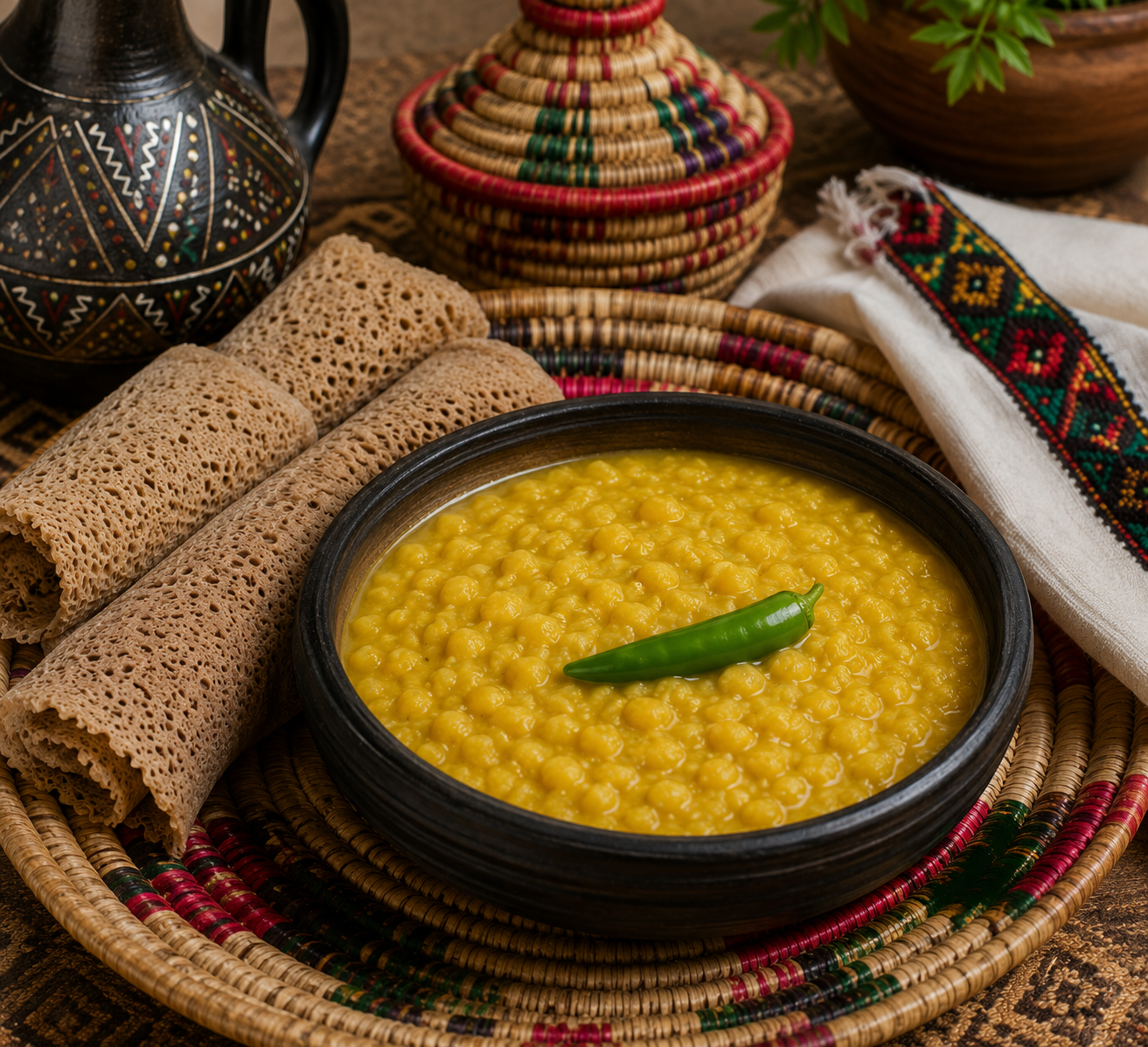
Kik alicha presents itself as a creamy stew, with a magnificent golden yellow color that brings an essential touch of light to the Ethiopian table. This legume dish has an incomparable creaminess, achieved through the prolonged cooking of the split peas, which soften and partially disintegrate, naturally binding the sauce without the need for added starch or flour.
This legendary dish is known by several synonyms and spelling variations throughout the culinary world:
Yekik alicha: This is the most complete Amharic name, combining the prefix ye, which indicates belonging, with kik and alicha. Kik alich'a: A very common alternative phonetic transcription found on menus in international Ethiopian and Eritrean restaurants. Yellow split pea stew Ethiopian style: A descriptive and elegant formula favored in French-speaking gastronomic guides. Mild Ethiopian yellow split pea stew: The reference English synonym, essential for identifying this specialty in international culinary literature. Yellow pea alicha: An affectionate shortcut used by connoisseurs of Horn of Africa cuisine to refer to this comforting preparation. The ingredients that make up kik alicha are simple, but their combination creates a harmony of sweet, herbaceous, and slightly earthy flavors. The central element is the yellow split pea, chosen for its richness in plant proteins, fiber, and complex carbohydrates.
The aromatic profile of the dish relies on the use of red or white onion, crushed fresh garlic, and grated ginger. But the magical ingredient that gives kik alicha its sunny color and signature flavor is turmeric, locally called erd. Turmeric not only brings its golden color but also its beneficial anti-inflammatory properties and a subtly woody note. During fasting periods, the stew is cooked with neutral vegetable oil, making it an entirely vegan recipe. Outside of fasting periods, some families enrich it with niter kibbeh, this Ethiopian clarified butter infused with spices like koseret and fenugreek, which brings a royal creaminess and depth of flavor.
🍳 TRADITIONAL PREPARATION AND COOKING TECHNIQUE
The creation of an excellent kik alicha is an exercise in patience that respects rigorous technical steps. It all begins with the preparation of the yellow split peas. They must be carefully hand-sorted to remove small harvest debris or stones, then washed several times with plenty of cold water to remove excess surface starch. Some cooks prefer to soak the split peas for a few hours to speed up cooking, while others boil them directly in initial salted water until tender, before incorporating them into the aromatic base.
The cooking of the aromatic base respects the traditional Ethiopian dry-sweating method, which consists of cooking a large quantity of finely chopped onions dry in a deep pot, usually cast iron or earthenware, without any added fat or water. The onions cook gently over low heat, releasing their own moisture, slowly caramelizing for about thirty minutes until they form a soft, translucent paste. This step is fundamental, as it is this caramelized onion base that will give the stew its full texture and sweet mildness.
In my books

Continue exploring the continent’s cuisines with Africa at the Table — 54 countries, 54 iconic dishes, by Alioune FALL. This book is in English.
Explore further
Vegetable oil or niter kibbeh is then added, followed by crushed garlic and grated fresh ginger. These ingredients are allowed to release their fragrance before incorporating the turmeric. Turmeric should be lightly toasted in the hot fat for a few minutes to release its aromas and color.
The previously cooked or soaked yellow split peas are then added, along with vegetable broth or hot water. The pot is covered, and the mixture is left to simmer over very low heat for forty-five minutes to an hour. During this slow simmering phase, the split peas absorb the flavors of garlic, ginger, and turmeric, while continuing to soften. The edges of the split peas dull and dissolve into the cooking liquid, creating a natural binding that transforms the broth into a smooth, creamy, and velvety sauce. Seasoning is adjusted with sea salt, and if desired, a whole green chili can be slipped into the pot a few minutes before the end of cooking to flavor the dish without adding pungency.
🌍 ITS UNIQUE PLACE IN AFRICAN AND HORN OF AFRICA CUISINE
Within the gastronomic landscape of the African continent, kik alicha occupies an extremely singular and inspiring place. Africa is a continent characterized by incredible culinary diversity, but many traditions share a love for legumes and grains. However, while West Africa is famous for its bean stews cooked in palm oil or its peanut butter-based sauces, and coastal East Africa relies on coconut, Ethiopian cuisine from the Horn of Africa stands out for its unique cooking techniques based on onion caramelization and the use of mild spices like turmeric.
Kik alicha is the perfect illustration of how Ethiopian cuisine knows how to reconcile the demands of health, environmental respect, and gustatory pleasure. It is a naturally healthy dish, rich in essential nutrients, low in saturated fats, and highly digestible thanks to the prolonged cooking of legumes. At a time when the whole world is rediscovering the benefits of a plant-based and sustainable diet for human and planetary health, kik alicha shines as a model of ancestral culinary wisdom.
Furthermore, kik alicha plays a fundamental balancing role on the Ethiopian table. In a culinary culture where dishes can be extremely hot and spicy due to the generous use of berbere chili, kik alicha brings a salvific note of mildness. It helps to soothe the heat of the spices on the palate, creating a delicious thermal and aromatic contrast with spicier dishes. It is this role as a flavor peacemaker that makes its presence indispensable on the Ethiopian platter, demonstrating great refinement in the art of designing a balanced meal.
👥 SOCIAL ROLE AND CONVIVIALITY OF THE ETHIOPIAN TABLE
In Ethiopia, a meal is a sacred act of sharing, brotherhood, and spiritual communion. One never eats alone or from individual plates. Kik alicha is served in the center of a large circular metal tray, called gebeta, which is covered with a large injera. Injera is this spongy, soft, and slightly sour flatbread made from fermented teff flour, which forms the basis of the Ethiopian diet.
Kik alicha is delicately arranged on the injera, often alongside other plant-based preparations such as misir wat, sautéed spinach, or cabbage and carrot stew, forming a magnificent and colorful assortment called bayenetu, which refers to the fasting buffet. Diners sit together around the gebeta and share the same dish using only the fingers of their right hand. A piece of injera is torn off, a portion of creamy kik alicha is delicately picked up, and brought to the mouth.
This unique way of sharing fosters discussion, mutual respect, and the strengthening of human bonds. It is also during these meals that the tradition of gursha is practiced, which consists of preparing a particularly tasty mouthful of kik alicha wrapped in injera and placing it directly into the mouth of a friend, relative, or guest. Giving a gursha is a gesture of great tenderness, a symbol of affection, friendship, and peace.
With emigration and the development of the Ethiopian diaspora, kik alicha has become a choice ambassador for introducing the mildness and richness of the Horn of Africa's culture. Ethiopian restaurants in major world capitals welcome a cosmopolitan clientele every day, attracted by this unique way of sharing food, proving that the table is the most beautiful space for encounter and harmony among the peoples of the Earth.
✨ CONCLUSION AND RADIANCE OF THIS VEGETABLE MILDNESS
In conclusion, kik alicha is much more than a simple split pea stew; it is a culinary poem that tells, with each bite, the historical richness, spiritual rigor, and art of living of Ethiopia. With its creamy texture, sparkling golden yellow color, and subtly fragrant flavors of turmeric, garlic, and ginger, it brilliantly proves that the simplest ingredients from the earth can be elevated to the rank of a gastronomic masterpiece through human know-how and passion. As global diets evolve towards more nature-friendly models, kik alicha stands out as a timeless source of inspiration, inviting gourmets worldwide to rediscover the pleasures of healthy, generous, and deeply unifying cuisine.
🔑 KEYWORD LIST
Kik alicha Yellow split peas Turmeric Injera Ethiopian cuisine
In the kitchen : Kik alicha
Recipes from the site to put your knowledge into practice:
Discover these cuisines at a restaurant
Explore our restaurant and caterer directories. Choose your destination and check the establishment’s menu to confirm which dishes are offered and available.
Continue exploring
Enjoy discovering ingredients and African cuisines? Join our newsletter. The illustrated PDF 10 sauces africaines incontournables is in French and is offered after confirming a subscription to the French or bilingual edition.