Shiro wat
Ethiopia
Understanding : Shiro wat
🍲 SHIRO WAT, AN EMBLEMATIC STEW FROM THE HORN OF AFRICA
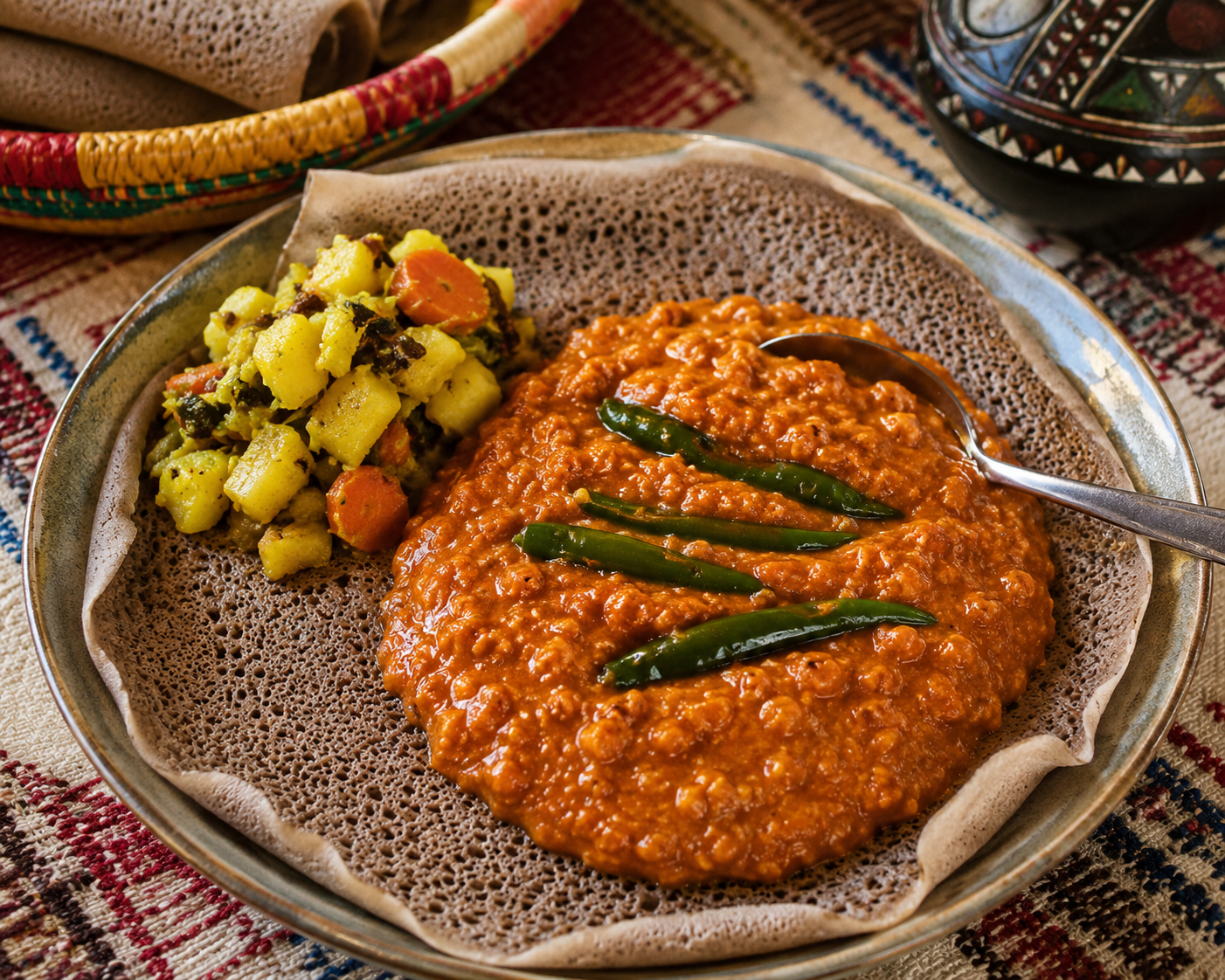
Shiro wat is one of the most representative dishes of Ethiopian and Eritrean cuisine. It is a thick, creamy, and fragrant stew, prepared mainly from chickpea flour or ground legumes, simmered with spices, garlic, onion, and sometimes niter kibbeh, a spiced clarified butter typical of the region. Its texture can vary depending on families and regions: some prefer it very smooth, almost creamy, while others like it denser, with a consistency similar to a spicy purée.
This dish holds an important place in daily meals as well as during shared moments. It is often served with injera, a large, slightly sour fermented flatbread made from teff, which serves as both a side dish and an utensil. Shiro wat is scooped up with pieces of injera, making the meal convivial and deeply rooted in African table traditions.
Prepare this speciality
Choose a detailed recipe, adjust the portions and prepare your ingredients before starting. Our cooking tips and food safety advice complement the steps described in the recipes.
Explore further: Cooking tips · Food hygiene and safety advice.
History and uses
🌍 A STRONG PRESENCE IN AFRICAN CUISINE
Shiro wat perfectly illustrates the richness of African cuisine, particularly that of East Africa. It shows how simple ingredients, such as chickpeas, lentils, onions, and spices, can give rise to a complex, nourishing, and deeply flavorful dish. In many African cultures, cooking relies on the art of transforming accessible products into generous, balanced meals suitable for community life. Shiro wat fully embodies this philosophy.
In African cuisine, stews hold a central place. Whether prepared with vegetables, meats, fish, peanuts, or legumes, they are often served in the center of the table and shared among family. Shiro wat belongs to this large family of African slow-cooked dishes, but it stands out for its characteristic use of the spice blend called berbere. This blend, generally composed of chili, paprika, ginger, garlic, coriander, cardamom, fenugreek, and other spices, gives the dish its reddish-orange color and deep aroma.
🔥 FLAVORS, AROMAS, AND TEXTURE
Shiro wat is appreciated for its taste, which is at once spicy, mild, warm, and comforting. Ground chickpeas provide a slightly nutty base, while slowly sautéed onions add sweetness. Berbere adds an aromatic warmth that can be more or less intense depending on the preparation. Garlic, ginger, and spiced butter enhance the depth of the dish.
Its texture is one of its great assets. When well-prepared, shiro wat becomes velvety, enveloping, and very satisfying. It doesn't need meat to be rich in flavor, making it an important dish during religious fasting periods in Ethiopia and Eritrea. During these times, it is often prepared without butter or animal products, using vegetable oil, to respect Orthodox dietary practices.
🥣 A DAILY DISH AND FOR SPECIAL OCCASIONS
Shiro wat is both an ordinary and symbolic dish. It can be prepared quickly for a family meal, but it can also be featured on large shared platters during celebrations, religious holidays, or gatherings. Its simplicity does not diminish its cultural value. On the contrary, it reminds us that the most important dishes in a cuisine are often those found regularly at home.
In my books

Continue exploring the continent’s cuisines with Africa at the Table — 54 countries, 54 iconic dishes, by Alioune FALL. This book is in English.
Explore further
In many families, the recipe for shiro wat is passed down orally. Each household may have its own version: spicier, milder, more liquid, thicker, with or without tomatoes, with more garlic or a more pronounced touch of ginger. This diversity shows that shiro wat is not just a fixed recipe, but a living tradition.
🌿 NUTRITIONAL RICHNESS
Shiro wat is also appreciated for its nutritional qualities. The chickpeas and other legumes used in its preparation are rich in plant proteins, fiber, minerals, and energy. Paired with injera, it constitutes a complete and satisfying meal. This combination is particularly important in cuisines where cereals and legumes form the basis of the diet.
In the African context, shiro wat represents an intelligent way to use local or easily storable resources. Chickpea flour keeps well, cooks quickly, and can feed several people with few ingredients. It is an economical dish, but also deeply flavorful, which explains its lasting popularity.
🍽️ A SYMBOL OF SHARING AND HOSPITALITY
Like many African dishes, shiro wat is understood not only by its taste but also by how it is served. The large injera platter garnished with different stews encourages sharing. Eating together from the same dish creates closeness and expresses hospitality. Offering shiro wat to a guest is to offer them a nourishing, warm, and identity-rich dish.
It also reflects a culinary philosophy in which food brings generations together. Children learn to recognize the aromas of berbere, the texture of injera, and the gesture of scooping the sauce with their hand. The dish thus becomes a link between family memory, culture, and daily life.
🔎 SYNONYMS AND SIMILAR NAMES
Shiro wat can also be called shiro wot, shiro, shiro stew, Ethiopian chickpea stew, or shiro sauce. Depending on the regions and languages, the spelling may vary, but the idea remains the same: a spicy stew made from legume flour, served mainly with injera.
🏷️ KEYWORDS
Shiro wat, Ethiopian cuisine, African cuisine, injera, spicy stew
In the kitchen : Shiro wat
Recipes from the site to put your knowledge into practice:
Discover these cuisines at a restaurant
Explore our restaurant and caterer directories. Choose your destination and check the establishment’s menu to confirm which dishes are offered and available.
Continue exploring
Enjoy discovering ingredients and African cuisines? Join our newsletter. The illustrated PDF 10 sauces africaines incontournables is in French and is offered after confirming a subscription to the French or bilingual edition.