Atakilt wat
Ethiopia, Eritrea
Understanding : Atakilt wat
🥬 ATAKILT WAT, AN EMBLEMATIC VEGETABLE DISH
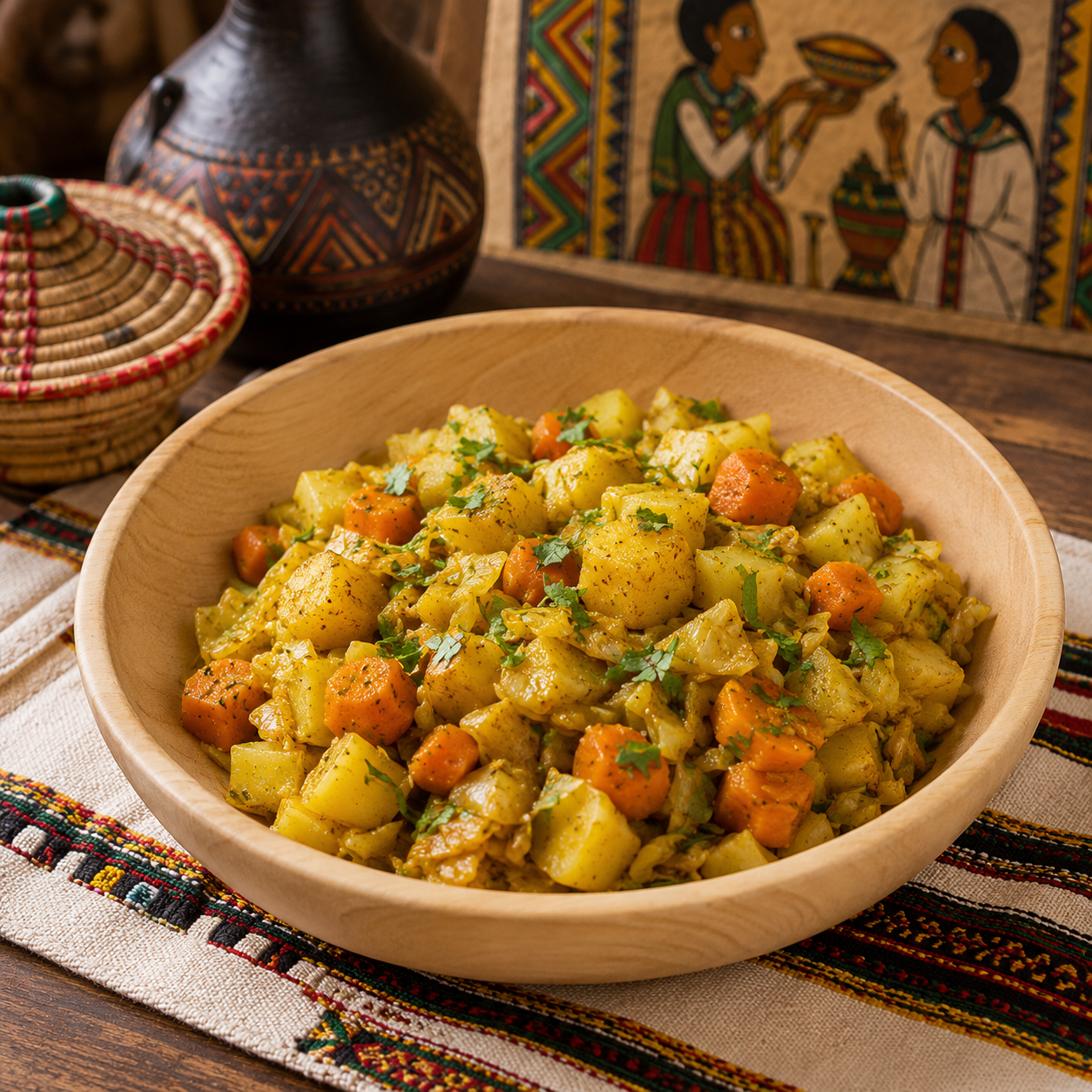
Atakilt wat is a traditional Ethiopian and Eritrean dish made from stewed vegetables, typically consisting of cabbage, potatoes, carrots, onions, garlic, ginger, and mild spices. Unlike other highly spiced stews from the Horn of Africa, such as doro wat or shiro wat, atakilt wat stands out for its mildness, simplicity, and delicately spiced aroma. It is often prepared with turmeric, which gives it its beautiful golden yellow color, as well as a little cumin, pepper, ginger, or cardamom, depending on family customs.
This dish is particularly appreciated because it transforms simple vegetables into a warm, nourishing, and flavorful preparation. The cabbage becomes tender, the potatoes absorb the spices, the carrots add a slight sweet note, and the onions provide a savory base for the stew. Together, they create a balanced dish, modest in appearance, but very rich in taste and cultural significance.
Prepare this speciality
Choose a detailed recipe, adjust the portions and prepare your ingredients before starting. Our cooking tips and food safety advice complement the steps described in the recipes.
Explore further: Cooking tips · Food hygiene and safety advice.
History and uses
🌍 ITS PLACE IN AFRICAN CUISINE
Atakilt wat holds an important place in African cuisine, especially in the culinary traditions of Ethiopia and Eritrea. It perfectly represents the African art of cooking vegetables with patience, intelligence, and depth. In many regions of Africa, stewed dishes are at the heart of the family meal. They allow several people to be fed with accessible ingredients, while creating complex flavors through spices, herbs, and cooking time.
In Ethiopian cuisine, atakilt wat is often served with injera, a large fermented flatbread made from teff. Injera serves as an accompaniment, a plate, and an eating utensil. The vegetable stew is placed on the flatbread, and then each person takes a bite with a piece of injera. This way of eating illustrates the importance of sharing in African cuisines. The meal is not just a time to eat, but also a space for conviviality, hospitality, and social connection.
Atakilt wat is also very present during religious fasting periods observed by many Ethiopian and Eritrean Orthodox Christians. During these periods, dishes without meat, eggs, and dairy products are preferred. Atakilt wat then becomes an essential dish, as it is naturally plant-based, nourishing, and satisfying. It shows that African vegetarian cuisine is not a cuisine of deprivation, but an inventive, colorful, and deeply flavorful cuisine.
🥕 A HARMONY OF VEGETABLES AND SPICES
The strength of atakilt wat lies in its balance. The vegetables are not simply boiled or randomly mixed. They are cooked gradually so that each ingredient retains its role. Onions form the aromatic base, garlic and ginger add depth, turmeric colors and flavors, while carrots, potatoes, and cabbage give the dish its generous texture.
Atakilt wat's taste is mild, slightly earthy, sometimes peppery, but rarely aggressive. It is an accessible dish, even for those not accustomed to very spicy foods. It can accompany stronger sauces or be enjoyed alone with bread, rice, or injera. On a large Ethiopian platter, it brings a vegetable and soothing note alongside more spiced preparations like misir wat, shiro wat, or berbere sauces.
This complementarity is important in African cuisine. Meals are often built around contrasts: sweetness and spiciness, acidity and richness, tender textures and soft flatbreads. Atakilt wat then plays a balancing role. It calms strong flavors, enriches the platter, and allows for varied bites.
In my books

Continue exploring the continent’s cuisines with Africa at the Table — 54 countries, 54 iconic dishes, by Alioune FALL. This book is in English.
Explore further
🍽️ A FAMILY DISH, SIMPLE AND GENEROUS
Atakilt wat is first and foremost a home-cooked dish. It doesn't require rare ingredients to be successful. Its richness comes instead from the way the vegetables are cut, seasoned, and stewed. In many families, the recipe changes slightly according to preferences: some add more potatoes, others more cabbage, some use green chili, others prefer a very mild version. It can also be prepared with niter kibbeh, a spiced clarified butter, when it is not intended for a fasting period.
This flexibility is part of its charm. Atakilt wat is not just a fixed recipe, but a living tradition. It adapts to the seasons, household means, and individual tastes. It can be served for lunch, dinner, at a festive meal, or as part of a daily vegetarian meal. Its simplicity makes it a popular dish, but its cultural depth also makes it a symbol of culinary identity.
🌿 IMPORTANT NUTRITIONAL VALUE
Atakilt wat is appreciated for its nutritional qualities. It contains vegetables rich in fiber, vitamins, and minerals. Carrots notably provide sweetness and nutrients, potatoes give energy, cabbage adds fiber and a tender texture. When accompanied by injera, the meal becomes more complete, as teff is a nutrient-rich and naturally gluten-free grain.
From an African perspective, this dish shows how a plant-based diet can be both economical, nourishing, and flavorful. It reminds us that African cuisines are not limited to grilled meats or very spicy dishes. They also have a great tradition of vegetarian dishes, stewed vegetables, grains, legumes, and fragrant sauces.
🤝 A SYMBOL OF SHARING AND HOSPITALITY
Like many African dishes, atakilt wat takes on its full meaning when shared. Served on a large platter with other preparations, it contributes to a collective experience. Everyone eats with their hand, takes a portion, tastes different sauces, and shares the same culinary space. This gesture creates closeness among diners.
In Ethiopian and Eritrean culture, offering a meal is a sign of welcome. Atakilt wat, with its warm color and comforting taste, expresses this hospitality with simplicity. It does not impress with luxury, but with generosity. It is a dish that brings people together, nourishes, and reminds us that African cuisine is deeply linked to family, community, and transmission.
🔎 SYNONYMS AND SIMILAR NAMES
Atakilt wat can also be called atkilt wot, atakilt wot, alicha atkilt, Ethiopian vegetable stew, Ethiopian cabbage curry, Ethiopian stewed vegetables, or cabbage, potato, and carrot stew. Names vary according to languages, transcriptions, and regions, but they generally refer to a mild, stewed, and fragrant vegetable dish.
🏷️ KEYWORDS
Atakilt wat, Ethiopian cuisine, African cuisine, vegetable stew, injera Send message
In the kitchen : Atakilt wat
Recipes from the site to put your knowledge into practice:
Discover these cuisines at a restaurant
Explore our restaurant and caterer directories. Choose your destination and check the establishment’s menu to confirm which dishes are offered and available.
Continue exploring
Enjoy discovering ingredients and African cuisines? Join our newsletter. The illustrated PDF 10 sauces africaines incontournables is in French and is offered after confirming a subscription to the French or bilingual edition.