Tibs
Ethiopia, Eritrea
Understanding : Tibs
🥩 TIBS, AN EMBLEMATIC DISH OF ETHIOPIAN CUISINE
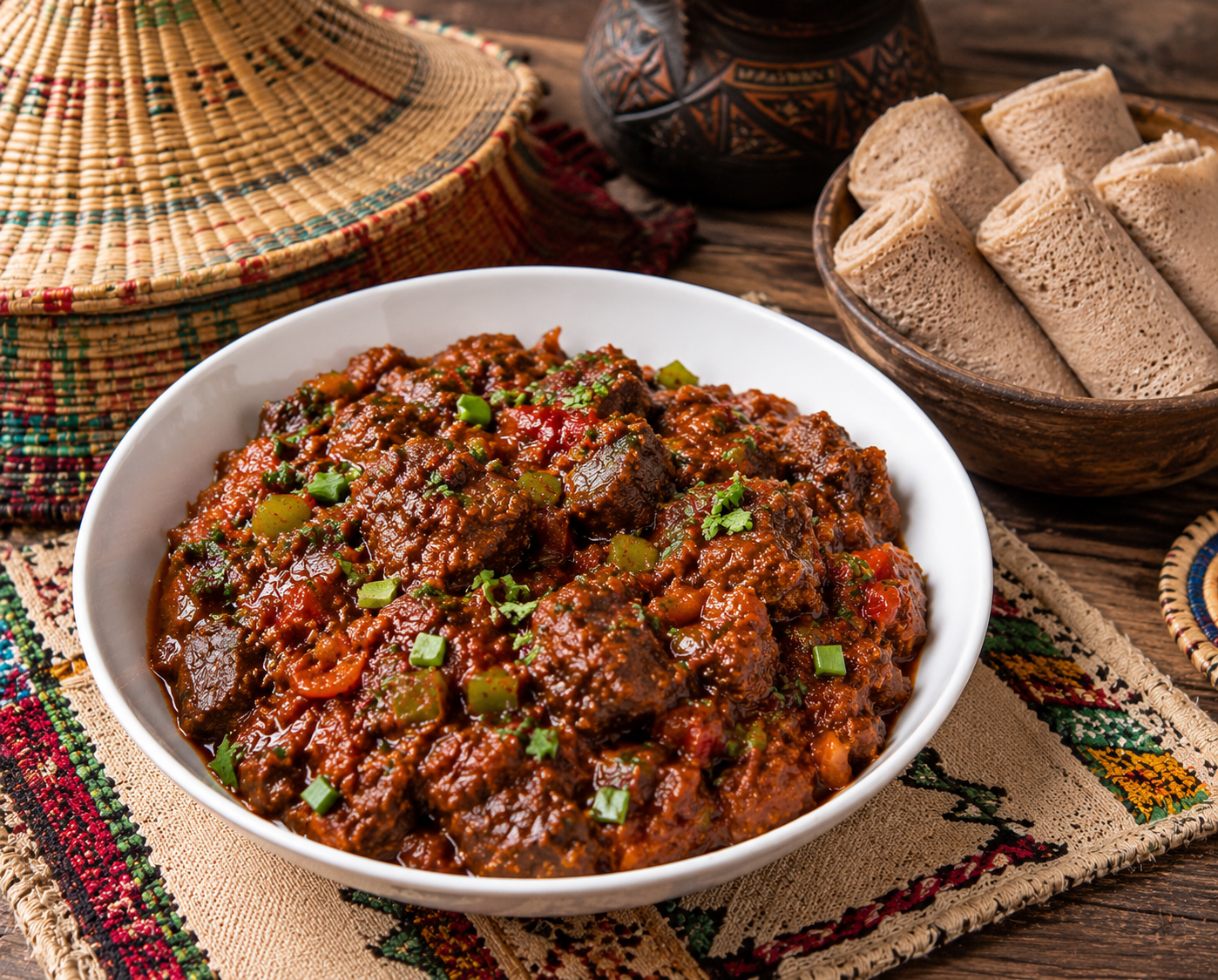
Tibs is one of the most popular dishes in Ethiopian and Eritrean cuisine. It generally refers to a preparation of meat cut into pieces, sautéed or pan-fried with onions, garlic, chili, spiced butter, herbs, and sometimes vegetables. Depending on the region, families, and occasions, tibs can be prepared with beef, lamb, mutton, goat, or even chicken. It can be very spicy, slightly seasoned, dry, juicy, grilled, or simmered with a short sauce.
This dish is distinguished by its intense aroma and quick cooking. The meat pieces are often seared over high heat to retain their tenderness while developing grilled flavors. Melted onions, garlic, ginger, green chili, and sometimes berbere give tibs its characteristic depth. Niter kibbeh, clarified butter flavored with spices, is often used to enrich the taste and provide a warm, round, and aromatic note.
Prepare this speciality
Choose a detailed recipe, adjust the portions and prepare your ingredients before starting. Our cooking tips and food safety advice complement the steps described in the recipes.
Explore further: Cooking tips · Food hygiene and safety advice.
History and uses
🌍 ITS PLACE IN AFRICAN CUISINE
Tibs holds an important place in African cuisine, particularly in the Horn of Africa. It represents the art of cooking meat with simplicity, generosity, and intensity. In many African traditions, meat dishes are associated with hospitality, celebrations, family meals, and moments of joy. Tibs fully aligns with this logic: it can be served during an ordinary meal, but it takes on a special dimension when shared with guests.
In Ethiopia and Eritrea, tibs is often served on injera, a large fermented flatbread made from teff. Injera absorbs the cooking juices, spices, and flavored butter, making each bite rich and balanced. As in many African cuisines, the dish is placed in the center of the table, and everyone serves themselves with a piece of injera. This way of eating reinforces conviviality and reminds us that African cuisine is deeply linked to sharing.
Tibs also demonstrates the diversity of African cuisines. Far from being limited to a single technique or flavor, it can be prepared in many ways. Some versions are very spicy, others milder. Some are served almost dry, with well-grilled meat, while others contain a flavorful sauce. This adaptability reflects the culinary richness of the continent, where recipes change according to regions, available products, and family preferences.
🔥 FLAVORS, SPICES, AND CHARACTER
The taste of tibs relies on the balance between meat, aromatics, and spices. The meat provides a rich and savory base. Onions add sweetness, garlic and ginger add depth, while green chili brings a fresh heat. Berbere, when used, gives a reddish color and a spicy depth. Niter kibbeh, with its notes of cardamom, fenugreek, cumin, or coriander, transforms a simple pan-fried meat into a deeply flavorful dish.
Tibs can be enjoyed in different ways. Shekla tibs, for example, is often served in a hot clay pot, which keeps the meat sizzling and accentuates its grilled aspect. Awaze tibs is accompanied or prepared with an awaze sauce made from berbere and tej or other aromatic liquids. Derek tibs is a drier version, where the meat is well seared, sometimes almost crispy on the outside. Each variation offers a different experience.
What makes tibs so popular is its ability to combine power and simplicity. It doesn't necessarily require a long list of ingredients, but it demands good mastery of heat, cooking time, and seasoning. Overcooked meat becomes dry, while well-seared meat remains tender, juicy, and flavorful.
In my books

Continue exploring the continent’s cuisines with Africa at the Table — 54 countries, 54 iconic dishes, by Alioune FALL. This book is in English.
Explore further
🍽️ A FESTIVE AND SHARING DISH
In Ethiopian and Eritrean culture, tibs is often linked to joyful moments. It can be prepared to welcome guests, celebrate a special occasion, or accompany a family gathering. Meat has long been considered a precious ingredient in many African societies, so dishes like tibs carry strong symbolic value. Serving tibs is offering a generous, flavorful, and respectful dish to the guest.
It is common to find tibs in Ethiopian restaurants, both in Africa and in diasporas around the world. For many people discovering Ethiopian cuisine, tibs is an accessible entry point. Its appearance as sautéed or grilled meat is familiar, but its spices, its accompaniment with injera, and its collective presentation give it a unique identity.
Tibs also contributes to the festive image of African cuisine. It evokes large shared dishes, the smells of spices, conversations around the table, and the warmth of hospitality. It is not just a recipe, but a way of experiencing the meal as a social moment.
🥘 A RECIPE WITH MULTIPLE VARIATIONS
Tibs does not exist in a single form. Depending on the family, it can be prepared with more or less chili, with tomatoes, bell peppers, rosemary, local thyme, spiced butter, or vegetable oil. Some cooks add lemon juice at the end to bring freshness. Others prefer a very rich version, with a lot of niter kibbeh and a concentrated sauce.
The meat used also changes the character of the dish. Beef gives a robust and popular tibs. Lamb or mutton bring a more pronounced flavor. Goat, very present in several African cuisines, gives a more rustic and flavorful version. This diversity allows tibs to adapt to tastes, budgets, and occasions.
Tibs can be accompanied by other preparations such as shiro wat, misir wat, atakilt wat, fresh salads, or pickled chilies. On a large platter, it provides the meaty and grilled dimension that contrasts with legume stews, simmered vegetables, and the acidity of injera.
🌿 CULTURAL AND IDENTITARY IMPORTANCE
Tibs is a symbol of the culinary identity of the Horn of Africa. It shows how a cuisine can be both simple in its ingredients and complex in its flavors. It also testifies to the importance of spices in African cuisines, not only to enhance dishes but to tell a story, a region, and a tradition.
Its popularity now extends beyond the borders of Ethiopia and Eritrea. In African restaurants worldwide, tibs has become a recognized dish, appreciated for its conviviality and intense taste. It helps to make known the richness of African cuisines, often too summarized to a few dishes when they are extremely varied.
🔎 SYNONYMS AND SIMILAR NAMES
Tibs can also be called tips, tebs, Ethiopian sautéed meat, Ethiopian beef stir-fry, Ethiopian lamb stir-fry, shekla tibs, awaze tibs, or derek tibs. These names vary depending on the transcription, the meat used, the cooking method, and the accompanying sauce.
🏷️ KEYWORDS
Tibs, Ethiopian cuisine, African cuisine, sautéed meat, injera
In the kitchen : Tibs
Recipes from the site to put your knowledge into practice:
Discover these cuisines at a restaurant
Explore our restaurant and caterer directories. Choose your destination and check the establishment’s menu to confirm which dishes are offered and available.
Continue exploring
Enjoy discovering ingredients and African cuisines? Join our newsletter. The illustrated PDF 10 sauces africaines incontournables is in French and is offered after confirming a subscription to the French or bilingual edition.