Molokhia
Egypt, Sudan, Tunisia
Understanding : Molokhia
🌿 MOLOKHIA, A GREEN DISH AT THE HEART OF AFRICAN TRADITIONS
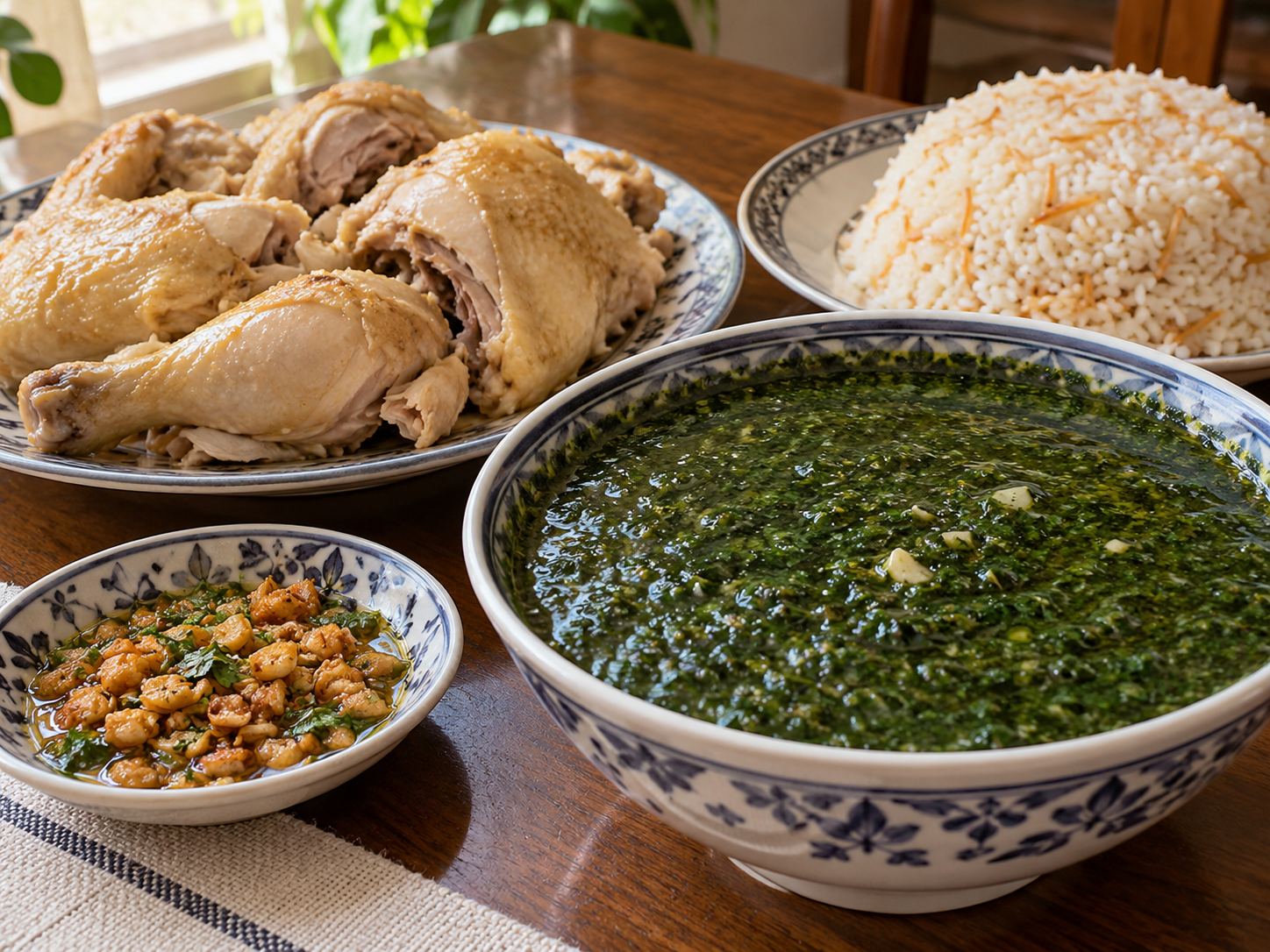
Molokhia is an iconic dish made from jute mallow leaves, a green plant highly prized in several cuisines of North Africa, the Middle East, and some regions of East Africa. It is best known in Egypt, Sudan, Tunisia, and other countries where it holds an important place in family meals. Depending on the region, molokhia can be prepared as a green soup, a thick sauce, a fragrant stew, or a simmered dish served with meat, poultry, dried fish, or simply rice and bread.
The uniqueness of molokhia lies first in its texture. Once chopped and cooked, the leaves yield a slightly viscous sauce, similar to what is found in some African dishes made with okra or mucilaginous leaves. This texture can be surprising at first, but it is part of its culinary identity. It allows the sauce to coat the rice, bread, or pieces of meat, creating a smooth, enveloping, and very comforting sensation.
Prepare this speciality
Choose a detailed recipe, adjust the portions and prepare your ingredients before starting. Our cooking tips and food safety advice complement the steps described in the recipes.
Explore further: Cooking tips · Food hygiene and safety advice.
History and uses
🌍 ITS PLACE IN AFRICAN CUISINE
Molokhia holds an important place in African cuisine, as it perfectly illustrates the continent's attachment to leafy dishes, simmered sauces, and family recipes passed down from generation to generation. In many African cultures, edible leaves are central to the diet. Cassava leaves, sweet potato leaves, sorrel, ndolé, okra leaves, African spinach, or jute mallow are transformed into nourishing sauces, often served with rice, couscous, grain paste, bread, or tubers.
In Egypt, molokhia is almost a national symbol. It is often associated with family meals, celebrations, childhood memories, and the precise gestures of home cooking. It is traditionally prepared with chicken, rabbit, beef, or duck broth, then a fragrant garlic and coriander preparation called ta’leya is added. This mixture of garlic sautéed in fat with ground coriander gives molokhia its deep and recognizable aroma.
In Tunisia, molokhia takes a very different form. It is often prepared with dried leaf powder, slowly simmered in oil and spices until a dark, almost black, very concentrated, and intensely fragrant sauce is obtained. This version requires time and patience. It shows how the same plant can give rise to very different dishes depending on African culinary traditions.
🥣 A UNIQUE TEXTURE AND DEEP FLAVOR
Molokhia is appreciated for its vegetal, slightly herbaceous, sometimes earthy, but always mild taste when well prepared. Fresh leaves give a green and delicate flavor, while dried or powdered leaves bring a more powerful, concentrated, and deeper taste. Spices, garlic, coriander, chili, bay leaf, or cumin can enrich the preparation depending on the country and family.
Its texture is one of its most important aspects. In African cuisines, sauces with body are highly valued because they mix well with side dishes. Molokhia pairs particularly well with white rice, flatbread, couscous, semolina, or grain dumplings. It can be light like a soup or dense like a festive sauce. This flexibility explains its popularity.
The taste of molokhia also depends on the broth used. With chicken, it becomes mild and family-friendly. With rabbit, it takes on a traditional note much appreciated in Egypt. With beef or lamb, it becomes richer and more nourishing. In some versions, it can be prepared without meat, making it a simple, economical, and tasty vegetarian dish.
🍲 A DISH OF MEMORY, FAMILY, AND TRANSMISSION
Molokhia is more than just a leafy dish. It is linked to family memory and the gestures of daily cooking. In many households, everyone has their own way of preparing it: some want it very liquid, others thicker; some use finely chopped fresh leaves, others prefer dried molokhia; some add a lot of garlic, others favor coriander or chili.
In my books

Continue exploring the continent’s cuisines with Africa at the Table — 54 countries, 54 iconic dishes, by Alioune FALL. This book is in English.
Explore further
This dish is often associated with Sunday meals, large gatherings, and times when one takes the time to cook. It represents a cuisine of patience and attention. The preparation may seem simple, but it requires a good balance: not overcooking the leaves to preserve their taste, properly dosing the garlic, making a good broth, achieving a pleasant texture, and harmonizing the side dishes.
In African cuisine, this dimension of transmission is essential. Dishes are not just written in recipe books; they live in the gestures of parents, grandparents, and cooks who adjust quantities by eye. Molokhia belongs to this family of recipes learned by watching, tasting, and repeating.
🌱 REMARKABLE NUTRITIONAL RICHNESS
Molokhia is also appreciated for its nutritional qualities. Jute mallow leaves are rich in fiber, vitamins, minerals, and beneficial plant compounds. They provide a feeling of satiety while remaining light. When combined with a protein source like chicken, beef, fish, or legumes, they become the basis of a complete meal.
In many African cuisines, leaves play an essential role in balancing the diet. They provide important nutrients to dishes made of cereals, starches, or meats. Molokhia perfectly fits this logic: it transforms a simple vegetable base into a nourishing, fragrant sauce suitable for many side dishes.
It is also interesting because it can be preserved in different forms. The leaves can be fresh, frozen, dried, or powdered. This preservation capacity is valuable in traditional cuisines, as it allows the dish to be prepared all year round, even when the plant is not freshly available.
🤝 A SYMBOL OF HOSPITALITY AND CONVIVIALITY
Like many African dishes, molokhia is a dish for sharing. It is often served in the center of the meal, with rice, bread, or stewed meat. Everyone serves themselves according to their appetite, mixes the sauce with the accompaniment, and enjoys its generous texture. It embodies warm, family-oriented, and welcoming cuisine.
In some households, serving molokhia to a guest is a mark of attention. The dish requires care, and its success shows the skill of the person cooking. Its presence at the table evokes generosity, respect for traditions, and the pleasure of feeding others.
Molokhia also reminds us that African cuisine is extremely diverse. It can be green and light in Egypt, dark and concentrated in Tunisia, flavored with chili in some regions, mild and simple in others. It crosses borders, languages, and habits while retaining its identity as a leafy dish deeply rooted in African food cultures.
🔎 SYNONYMS AND SIMILAR NAMES
Molokhia can also be called mloukhiya, mulukhiyah, molokhiyya, melokhia, mouloukhia, jute mallow, jute mallow soup, jute mallow sauce, molokhia stew, or Egyptian green sauce. The names vary according to countries, languages, and preparation methods, but they all refer to this leafy plant cooked in sauce or soup.
🏷️ KEYWORDS
Molokhia, African cuisine, Egyptian cuisine, jute mallow, leafy sauce Send message
In the kitchen : Molokhia
Recipes from the site to put your knowledge into practice:
Discover these cuisines at a restaurant
Explore our restaurant and caterer directories. Choose your destination and check the establishment’s menu to confirm which dishes are offered and available.
Continue exploring
Enjoy discovering ingredients and African cuisines? Join our newsletter. The illustrated PDF 10 sauces africaines incontournables is in French and is offered after confirming a subscription to the French or bilingual edition.