Fasolia
North Africa
Understanding : Fasolia
🫘 FASOLIA, A BEAN DISH AT THE HEART OF AFRICAN FAMILY KITCHENS
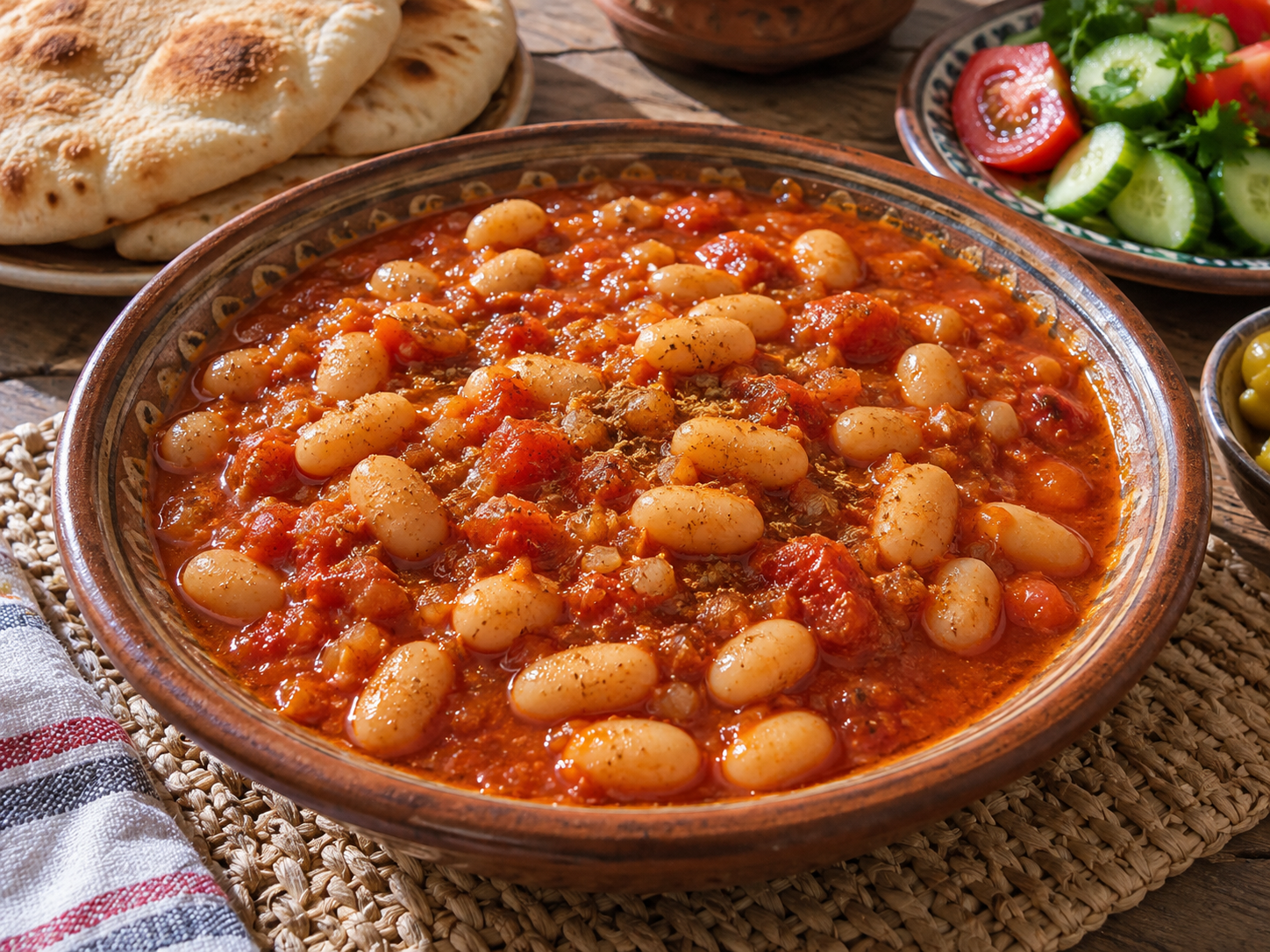
Fasolia is a traditional bean dish, typically simmered in a fragrant sauce with tomato, onion, garlic, spices, and sometimes meat. Its name comes from the Arabic word fasolia, which means beans. This dish is found in several countries in North Africa, East Africa, and the Middle East, with variations depending on regions, families, and culinary habits. In Africa, it is particularly present in Egypt, Sudan, Libya, Tunisia, Ethiopia, Eritrea, and in some cuisines influenced by Arab, Mediterranean, and Sahelian traditions.
Fasolia can be prepared with white beans, red beans, dried beans, or sometimes green beans, depending on the version. When made with white or red beans, it often takes the form of a thick, nourishing stew. The beans are slow-cooked until tender, then mixed with a rich sauce that allows them to absorb the flavors. Tomato provides acidity and color, onion adds sweetness, garlic enhances the aroma, while spices add warmth and depth.
Prepare this speciality
Choose a detailed recipe, adjust the portions and prepare your ingredients before starting. Our cooking tips and food safety advice complement the steps described in the recipes.
Explore further: Cooking tips · Food hygiene and safety advice.
History and uses
🌍 ITS PLACE IN AFRICAN CUISINE
Fasolia holds an important place in African cuisine because it represents a widespread type of dish on the continent: legume stew. In many African cultures, beans, lentils, chickpeas, and peas are essential to the daily diet. They are economical, nutritious, easy to store, and capable of feeding an entire family with few ingredients. Fasolia fully fits into this tradition of generous, simple, and deeply comforting cooking.
In North Africa, fasolia is often associated with stews served with bread, rice, or couscous. It can be prepared with lamb, beef, or simply without meat. In homes, it is appreciated for its ability to warm, satisfy, and bring people together. It is one of those dishes that are prepared in large quantities, shared at the table, and sometimes reheated the next day, when the flavors are even more developed.
In Egypt and Sudan, fasolia can be served with white rice, flatbread, or other simple side dishes. It is part of everyday family meals but can also appear at more elaborate meals. In some regions, it is seasoned with cumin, coriander, pepper, chili, or herbs. In others, a mild tomato sauce and slow cooking are preferred, allowing the beans to become melt-in-your-mouth tender.
🍅 A FRAGRANT SAUCE AND A COMFORTING TEXTURE
The success of fasolia relies on the balance between the tenderness of the beans and the richness of the sauce. The beans must be cooked enough to become soft, but without falling apart completely. The sauce, for its part, must be well-reduced, fragrant, and enveloping. It should coat the beans without being too liquid, while retaining enough juice to accompany bread, rice, or semolina.
The taste of fasolia largely depends on the spices used. Cumin brings a warm, earthy note, very present in several African cuisines. Coriander gives a lemony and aromatic touch. Paprika or chili add color and character. Garlic, often generously used, gives the dish its deep aroma. Some versions add bay leaf, ginger, black pepper, or even a local spice blend.
Fasolia can be mild or spicy. It can be light and vegetarian, or richer when it contains meat. With lamb, it becomes deeper and more festive. With beef, it takes on a robust character. Without meat, it remains very nutritious thanks to the vegetable proteins of the beans. This flexibility explains why it is so present in family kitchens.
🥘 AN EVERYDAY DISH, BUT ALSO FOR SHARING
Fasolia is first and foremost a home-cooked dish. It does not seek to impress with a complicated presentation, but with its taste, warmth, and generosity. It is often cooked in a large pot, slowly, with accessible ingredients. This way of cooking corresponds to a great African tradition: preparing dishes that feed several people, that are easily shared, and that create a moment of conviviality.
In my books

Continue exploring the continent’s cuisines with Africa at the Table — 54 countries, 54 iconic dishes, by Alioune FALL. This book is in English.
Explore further
In many African homes, bean dishes are associated with simplicity and food security. Dried beans keep for a long time and can be cooked in many ways. Fasolia thus makes it possible to transform a humble ingredient into a complete meal. It shows that African cuisine is not only based on rare or expensive products, but on the art of giving flavor to basic foods.
Served in the center of the table, fasolia invites sharing. Everyone can eat it with bread, rice, flatbread, couscous, or even tubers depending on the region. It adapts to local customs and family preferences. This ability to travel from one table to another, while maintaining its identity, makes it a deeply vibrant dish.
🌿 ESSENTIAL NUTRITIONAL VALUE
Fasolia is also important for its nutritional qualities. Beans are rich in vegetable proteins, fiber, complex carbohydrates, minerals, and energy. They provide a lasting feeling of satiety and constitute an excellent dietary base. When combined with rice, bread, or couscous, they form a complete and balanced meal.
In the African context, legumes play a major role. They complement cereals, sometimes replace meat, and allow for the preparation of nutritious dishes at a lower cost. Fasolia illustrates this culinary intelligence: it combines nutrition, economy, and gustatory pleasure. It can be suitable for vegetarian meals, simple family meals, or richer dishes when cooked with meat.
The vegetables and aromatics that accompany it enhance its appeal. Tomato provides vitamins and acidity, onion and garlic enrich the taste, spices stimulate the appetite and give the dish a regional identity. Each element plays a role, even when the recipe seems simple.
🔥 A RECIPE WITH NUMEROUS VARIATIONS
Fasolia does not have a single form. In North Africa, it can be red, flavored with tomato and spices, sometimes accompanied by meat. In some families, it is prepared with very tender white beans. In others, red beans are used to obtain a darker and denser sauce. The green bean version also exists, often simmered with tomato and served as a side dish or light main course.
In Ethiopia and Eritrea, similar preparations can be served with injera, the fermented teff flatbread. The beans can then be integrated into a large platter composed of several sauces, vegetables, and stews. In this context, fasolia joins the logic of the shared meal, where each preparation brings a different texture, color, and flavor.
This diversity shows that fasolia is more than just a bean dish. It is an adaptable culinary base, capable of reflecting the tastes of a region, the means of a household, and the traditions of a family.
🤝 A SYMBOL OF GENEROSITY AND HOSPITALITY
Like many African dishes, fasolia takes on its full meaning when shared. It represents warm, family-oriented, and welcoming cuisine. It recalls simple but abundant meals, pots simmering for a long time, the aromas of garlic and tomato, and the pleasure of eating together.
Its place in African cuisine is therefore both practical, cultural, and symbolic. It nourishes the body, brings guests together, and transmits culinary memory. It proves that the most modest dishes are often the most important, because they accompany daily life, childhood memories, and family traditions.
🔎 SYNONYMS AND SIMILAR NAMES
Fasolia can also be called fasoulia, fasolya, fasoolia, foulia, bean stew, tomato-braised beans, bean sauce, white beans in sauce, stewed red beans, or African bean stew. Names vary depending on countries, languages, and the types of beans used.
🏷️ KEYWORDS
Fasolia, African cuisine, stewed beans, bean stew, tomato sauce Send message
In the kitchen : Fasolia
Recipes from the site to put your knowledge into practice:
Discover these cuisines at a restaurant
Explore our restaurant and caterer directories. Choose your destination and check the establishment’s menu to confirm which dishes are offered and available.
Continue exploring
Enjoy discovering ingredients and African cuisines? Join our newsletter. The illustrated PDF 10 sauces africaines incontournables is in French and is offered after confirming a subscription to the French or bilingual edition.