Tajine zitoune
Algeria
Understanding : Tajine zitoune
🍲 TAJINE ZITOUNE, A REFINED DISH WITH OLIVES
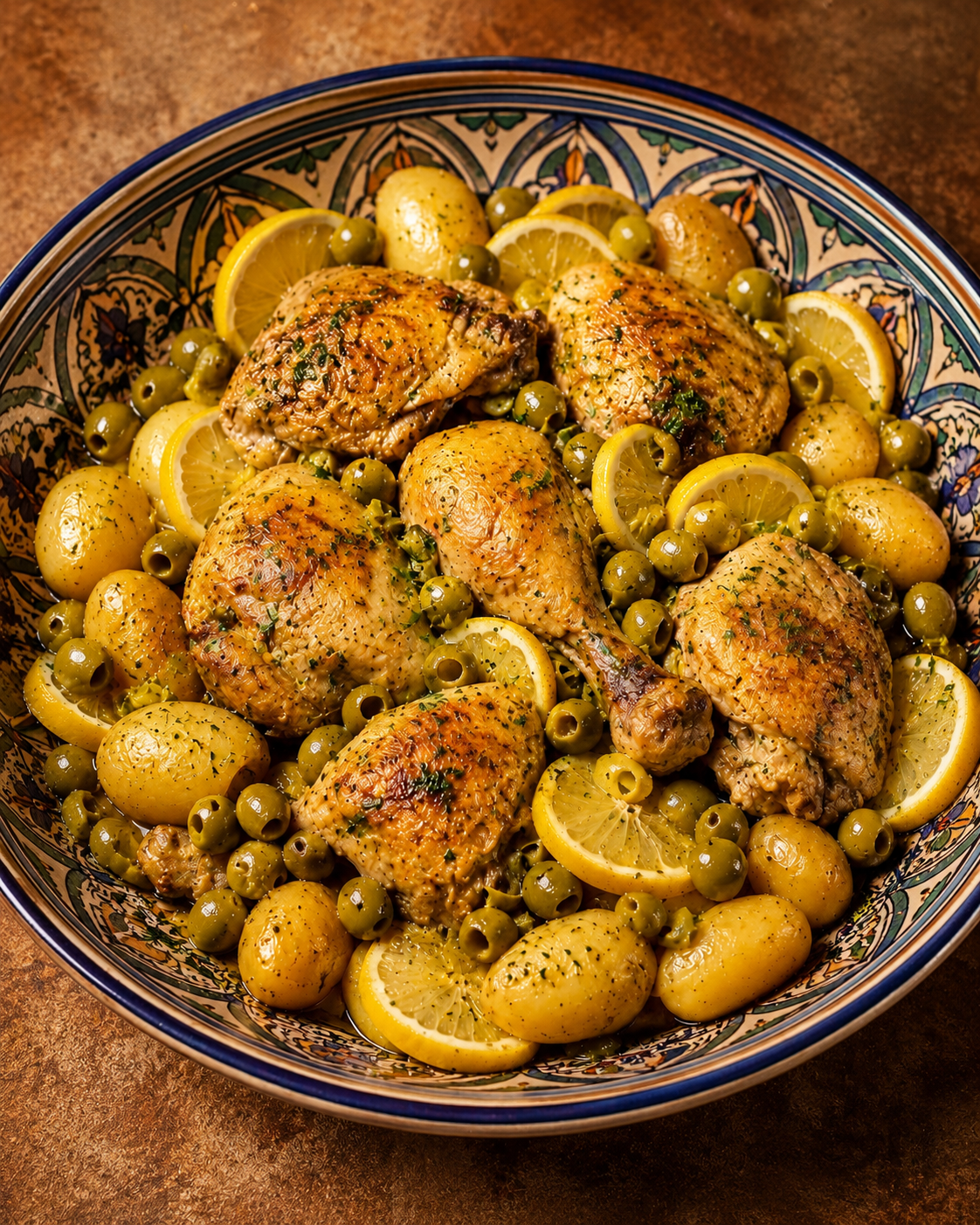
Tajine zitoune, or olive tagine, is one of the most beloved dishes in Maghrebi cuisine, particularly in Algeria. It is a slow-cooked dish made with meat, most often chicken, lamb, or veal, accompanied by green olives, carrots, onions, garlic, mild spices, and sometimes preserved lemon. Unlike some very sweet and savory tagines, tajine zitoune is distinguished by its delicately salty taste, its clear or lightly golden sauce, and its balanced aroma of olive, meat, and herbs.
Zitoune means olive in Maghrebi dialectal Arabic. The name of the dish therefore directly highlights the main ingredient that gives it its character. Olives, often blanched before cooking to remove excess salt or bitterness, bring a deep, slightly fruity, and very Mediterranean flavor. They pair perfectly with the tenderness of the meat and the sweetness of the carrots.
Prepare this speciality
Choose a detailed recipe, adjust the portions and prepare your ingredients before starting. Our cooking tips and food safety advice complement the steps described in the recipes.
Explore further: Cooking tips · Food hygiene and safety advice.
History and uses
🌍 ITS PLACE IN AFRICAN CUISINE
Tajine zitoune holds an important place in African cuisine, especially in the culinary traditions of North Africa. It demonstrates how diverse, refined, and connected to its environment African cuisine is. In the Maghreb, the olive tree is a symbolic and essential tree. It provides olive oil, table olives, and is part of an ancient food culture, marked by Berber, Arab, Mediterranean, and African influences.
In Algeria, tajine zitoune is often considered a family dish, but also a dish for entertaining. It can be served during Friday meals, during Ramadan, at festivals, weddings, or when hosting guests. Its elegant sauce, generous presentation, and accessible taste make it a dish appreciated by many generations.
In African cuisine, slow-cooked dishes hold a central place. Whether prepared with vegetables, meat, fish, legumes, or leaves, they create nourishing and convivial meals. Tajine zitoune belongs to this large family of African slow-cooked dishes, but it stands out for the finesse of its sauce and the use of olives, an emblematic ingredient of the northern regions of the continent.
🫒 A FLAVOR MARKED BY THE OLIVE
The strength of tajine zitoune comes from the balance between the olives and the other ingredients. Green olives bring character, but they should not excessively dominate the dish. This is why they are often rinsed or briefly boiled before being added to the sauce. This traditional gesture results in a softer and more harmonious flavor.
The sauce for tajine zitoune is generally flavored with onion, garlic, pepper, ginger, turmeric, sometimes saffron, parsley, or coriander. Depending on the family, a little cinnamon, preserved lemon, or lemon juice can be added to enhance the freshness. The result is a light but flavorful sauce that coats the meat and vegetables without being too heavy.
Carrots are very often present in this dish. They bring a sweet note that contrasts with the salty taste of the olives. Some versions add mushrooms, potatoes, or meatballs. This diversity shows that tajine zitoune is not a fixed recipe, but a living culinary base, adapted to the tastes, seasons, and habits of each household.
🍗 A TENDER AND GENEROUS MEAT DISH
Tajine zitoune is often prepared with chicken, as this meat absorbs the flavors of the sauce well and cooks relatively quickly. The chicken becomes tender, juicy, and delicately flavored by the spices. In more festive versions, lamb or veal can be used, which give a richer and deeper sauce.
Slow cooking is essential. It allows the ingredients to gradually blend and the meat to become meltingly tender. Like many African dishes, tajine zitoune relies on patience. It is not just about assembling ingredients, but about allowing time to create harmony. The sauce should reduce gently, the olives should release their aroma, and the meat should absorb all the flavors.
In my books

Continue exploring the continent’s cuisines with Africa at the Table — 54 countries, 54 iconic dishes, by Alioune FALL. This book is in English.
Explore further
This dish is generally served hot, with traditional bread, such as khobz, matlouh, or homemade bread. The bread is used to soak up the sauce, which is part of the pleasure of the meal. It can also be accompanied by rice or potatoes, depending on preference.
🍽️ A DISH OF FAMILY AND HOSPITALITY
In many Maghrebi households, tajine zitoune evokes meals carefully prepared for family or guests. It is appreciated because it is both simple and elegant. It does not necessarily require rare ingredients, but it gives an impression of generosity and refinement.
Serving a tajine zitoune means offering a warm, fragrant, and balanced dish. It is suitable for large gatherings, as it can be prepared in quantity and easily shared. Like many African dishes, it takes on its full meaning when placed in the center of the table. Everyone serves themselves, dips their bread in the sauce, tastes the olives, shares the meat, and participates in a convivial moment.
This dimension of sharing is fundamental in African cuisine. A meal is not just an individual act, but a social moment. Tajine zitoune reflects this philosophy: it brings people together, nourishes, and expresses care for others.
🌿 A RECIPE BETWEEN LAND, MEDITERRANEAN, AND AFRICA
Tajine zitoune also shows the deep connections between North Africa and the Mediterranean. Olives, olive oil, fresh herbs, mild spices, and preserved lemon recall a culinary landscape marked by the sun, orchards, and fragrant markets. Yet, this dish remains fully African through its roots in Maghrebi traditions, its way of slow-cooking food, and its role in communal meals.
It illustrates the richness of African cuisine, often too reduced to a few clichés. Africa has extremely varied cuisines: grain dishes, leaf sauces, grilled meats, meat stews, smoked fish, legume dishes, spicy recipes, mild dishes, and festive preparations. Tajine zitoune represents the North African part of this diversity, with a fragrant, subtle, and deeply family-oriented cuisine.
🥘 A RECIPE WITH NUMEROUS VARIATIONS
Each family may have its own way of preparing tajine zitoune. Some versions are very clear, almost white, with little turmeric. Others are yellower, thanks to saffron or turmeric. Some are slightly tangy with preserved lemon, while others remain milder. Meatballs, mushrooms, peas, or potatoes can be added.
In Algeria, there are also regional versions that vary according to cities and family traditions. In some households, the dish is enriched with a liaison of egg yolk and lemon at the end of cooking, which gives a more velvety sauce. In others, a simple, light, and fragrant sauce is preferred.
This adaptability is one of the great strengths of tajine zitoune. It can be daily or festive, economical or richer, simple or more elaborate. It always retains its identity thanks to the presence of olives and the balance of its sauce.
🔎 SYNONYMS AND SIMILAR NAMES
Tajine zitoune can also be called olive tagine, tajine zitoun, tadjine zitoune, chicken tagine with olives, Algerian chicken with olives, olive stew, Algerian olive tagine, or slow-cooked olive dish. The names vary according to countries, regions, languages, and transcription habits, but they generally refer to a fragrant slow-cooked dish where olives play a central role.
🏷️ KEYWORDS
Tajine zitoune, Algerian cuisine, African cuisine, olives, slow-cooked dish
In the kitchen : Tajine zitoune
Recipes from the site to put your knowledge into practice:
Discover these cuisines at a restaurant
Explore our restaurant and caterer directories. Choose your destination and check the establishment’s menu to confirm which dishes are offered and available.
Continue exploring
Enjoy discovering ingredients and African cuisines? Join our newsletter. The illustrated PDF 10 sauces africaines incontournables is in French and is offered after confirming a subscription to the French or bilingual edition.