Tajine hlou
Algeria
Understanding : Tajine hlou
🍯 TAJINE HLOU, AN EMBLEMATIC SWEET AND SAVORY DISH
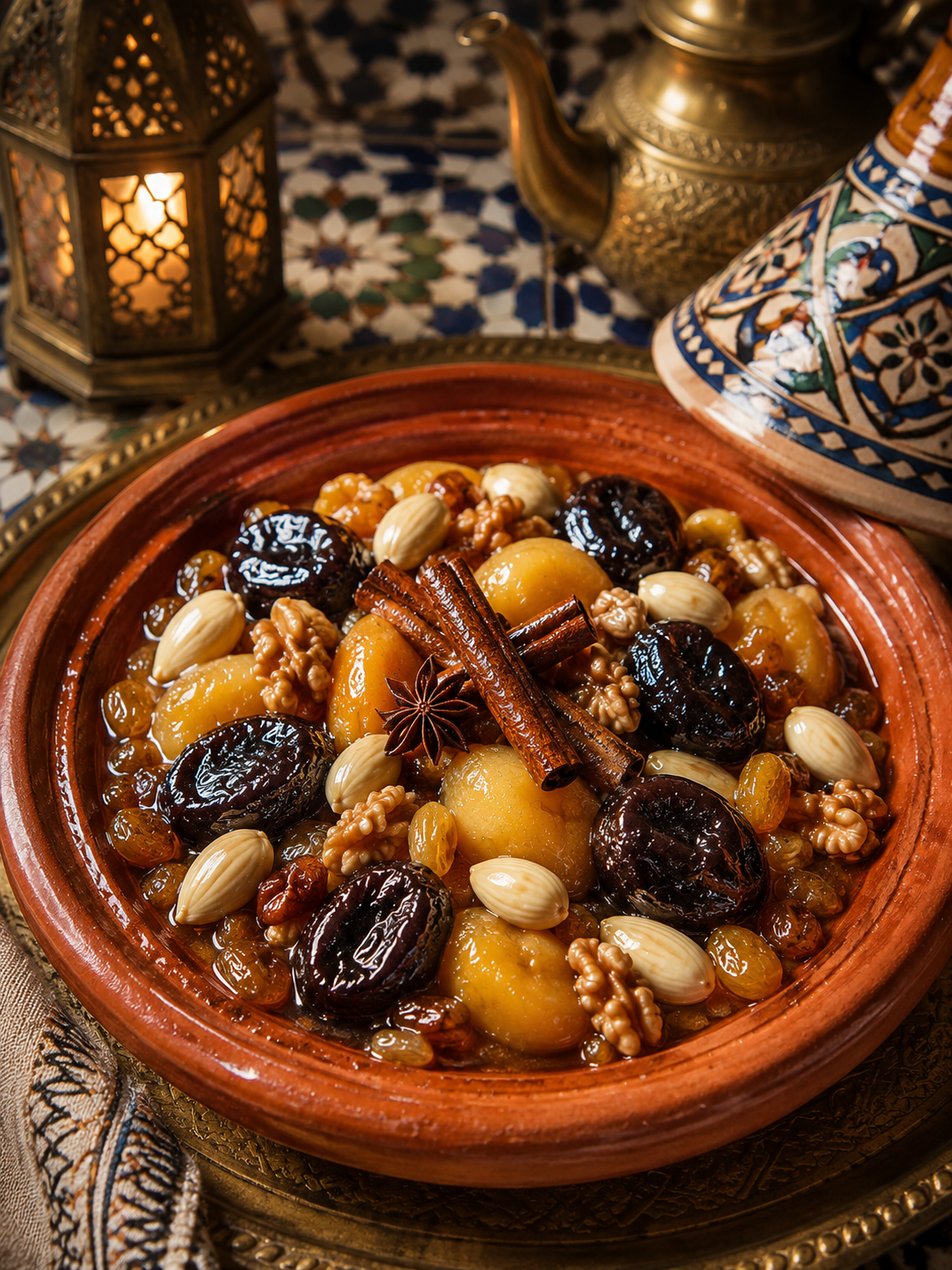
Tajine hlou is one of the most refined and symbolic dishes of Maghrebi cuisine, particularly in Algeria. Its name literally means sweet tagine, as the word hlou refers to sweetness. It is a stewed dish that typically combines meat, often lamb or chicken, with dried fruits such as prunes, apricots, raisins, or sometimes dates. The whole is flavored with cinnamon, orange blossom water, sugar or honey, and sometimes garnished with toasted almonds or sesame seeds.
This dish is distinguished by its balance between sweet and savory. The meat provides depth, the dried fruits give a natural sweetness, the spices warm the whole, and the sauce becomes shiny, fragrant, and slightly syrupy. Tajine hlou is not just a nourishing dish; it is also a festive dish, a dish of memory and family tradition.
Prepare this speciality
Choose a detailed recipe, adjust the portions and prepare your ingredients before starting. Our cooking tips and food safety advice complement the steps described in the recipes.
Explore further: Cooking tips · Food hygiene and safety advice.
History and uses
🌍 ITS PLACE IN AFRICAN CUISINE
Tajine hlou holds an important place in African cuisine, especially in North African culinary traditions. It represents an elegant facet of African gastronomy: that of ceremonial dishes, carefully prepared to honor guests, celebrate festivities, and mark important moments in family life.
In Algeria, it is particularly associated with the month of Ramadan. It is often served at the breaking of the fast or during evening family meals. Its sweetness is appreciated after a day of fasting, as it provides energy, comfort, and pleasure. In some families, tajine hlou is almost indispensable on the Ramadan table. It symbolizes abundance, blessing, and generosity.
In African cuisine more broadly, stewed dishes occupy a central place. They allow several ingredients to be brought together in the same pot, flavors to develop slowly, and an entire family to be nourished. Tajine hlou belongs to this great tradition, but it stands out for its festive character and its sweet and savory taste, more delicate than everyday stews.
🍑 A HARMONY BETWEEN DRIED FRUITS, SPICES, AND MEAT
The richness of tajine hlou comes from the combination of simple but precious ingredients. Prunes are the most commonly used dried fruits. They become tender during cooking and give the sauce a dark and shiny color. Dried apricots bring a tangy note, raisins add a light sweetness, and dates reinforce the generous side of the dish.
The meat, often lamb, brings a deep flavor that contrasts with the sweetness of the fruits. When properly stewed, it becomes tender and absorbs the aromas of cinnamon, orange blossom water, and syrup. Chicken can also be used for a lighter version, while some families prepare a meatless tajine hlou, only with dried fruits, especially during certain periods or according to preferences.
Spices play an essential role. Cinnamon is the most important, as it gives the dish its warmth and recognizable fragrance. Orange blossom water brings a very delicate floral note, often associated with desserts and festive dishes of the Maghreb. Sugar or honey is used to create a sweet sauce, but it must be well-dosed so as not to mask the taste of the fruits and meat.
🍽️ A DISH FOR CELEBRATIONS, RAMADAN, AND HOSPITALITY
Tajine hlou is rarely perceived as a simple ordinary dish. It is linked to special occasions. During Ramadan, it appears on many Algerian tables, sometimes served in small portions, as its richness requires moderation. It often accompanies other dishes such as chorba, boureks, homemade breads, salads, and traditional pastries.
In my books

Continue exploring the continent’s cuisines with Africa at the Table — 54 countries, 54 iconic dishes, by Alioune FALL. This book is in English.
Explore further
This dish is also served at weddings, religious holidays, family meals, and important invitations. Its presence at the table shows that time has been taken to prepare something special. In African cultures, hospitality often involves generous, stewed, and fragrant dishes. Tajine hlou perfectly embodies this idea: it welcomes, honors, and brings people together.
It is often presented with care. The dried fruits are arranged harmoniously, toasted almonds add crunch, and the shiny sauce gives the dish a festive appearance. This visual dimension is very important, because African cuisine is not limited to taste; it also touches on color, fragrance, gesture, and the beauty of sharing.
🌿 A RECIPE ROOTED IN MAGHREBI TRADITION
Tajine hlou demonstrates the historical depth of Maghrebi cuisine. The use of dried fruits, sweet spices, and orange blossom water recalls ancient exchanges between North Africa, the Mediterranean world, the Sahara, and the East. Caravans, markets, and family traditions have contributed to creating a rich cuisine, where preserved products such as dates, raisins, almonds, and spices play an important role.
In Algeria, each region and each family may have its own version. Some prepare the dish with a lot of sauce, others prefer a more concentrated texture. Some add apples or pears, others remain faithful to prunes and apricots. In some recipes, meat is present in small pieces; in others, it is almost secondary, allowing the dried fruits to dominate.
This diversity shows that tajine hlou is not a fixed recipe. It is a living tradition, passed down from generation to generation. Dosages are often done by eye, according to experience, family taste, and the occasion. Like many African dishes, it is transmitted as much by gestures as by words.
🥘 A FLAVOR THAT TELLS OF GENEROSITY
Tajine hlou is a dish of sweetness, but it is not simply sweet. Its success depends on balance. If it is too sweet, it becomes heavy; if it is not sweet enough, it loses its identity. A good tajine hlou must be fragrant, round, delicate, and harmonious. The sauce must coat the fruits and meat without being cloying.
This dish tells a vision of cuisine where generosity is not only in quantity, but in the attention paid to details. Plumping the prunes, toasting the almonds, flavoring the sauce, monitoring the cooking, balancing the cinnamon and orange blossom: every step counts. The result is a dish that evokes care, patience, and respect for traditions.
In African cuisine, this attention is fundamental. Festive dishes are often dishes that require time. They mark the difference between an everyday meal and an honored meal. Tajine hlou belongs to this category of recipes that transform a moment at the table into a family memory.
🔎 SYNONYMS AND CLOSE APPELLATIONS
Tajine hlou can also be called tajine lahlou, lham lahlou, sweet tajine, prune tajine, dried fruit tajine, Algerian prune meat, Maghrebi sweet and savory stew, or Ramadan sweet dish. The appellations vary according to regions, families, and transcription habits, but they generally refer to a mild, fragrant, and festive stewed dish.
🏷️ KEYWORDS
Tajine hlou, Algerian cuisine, African cuisine, dried fruits, Ramadan
In the kitchen : Tajine hlou
Recipes from the site to put your knowledge into practice:
Discover these cuisines at a restaurant
Explore our restaurant and caterer directories. Choose your destination and check the establishment’s menu to confirm which dishes are offered and available.
Continue exploring
Enjoy discovering ingredients and African cuisines? Join our newsletter. The illustrated PDF 10 sauces africaines incontournables is in French and is offered after confirming a subscription to the French or bilingual edition.