Zaalouk
Morocco, Maghreb
Understanding : Zaalouk
🍆 ZAALOUK, AN EMBLEMATIC COOKED SALAD FROM THE MAGHREB
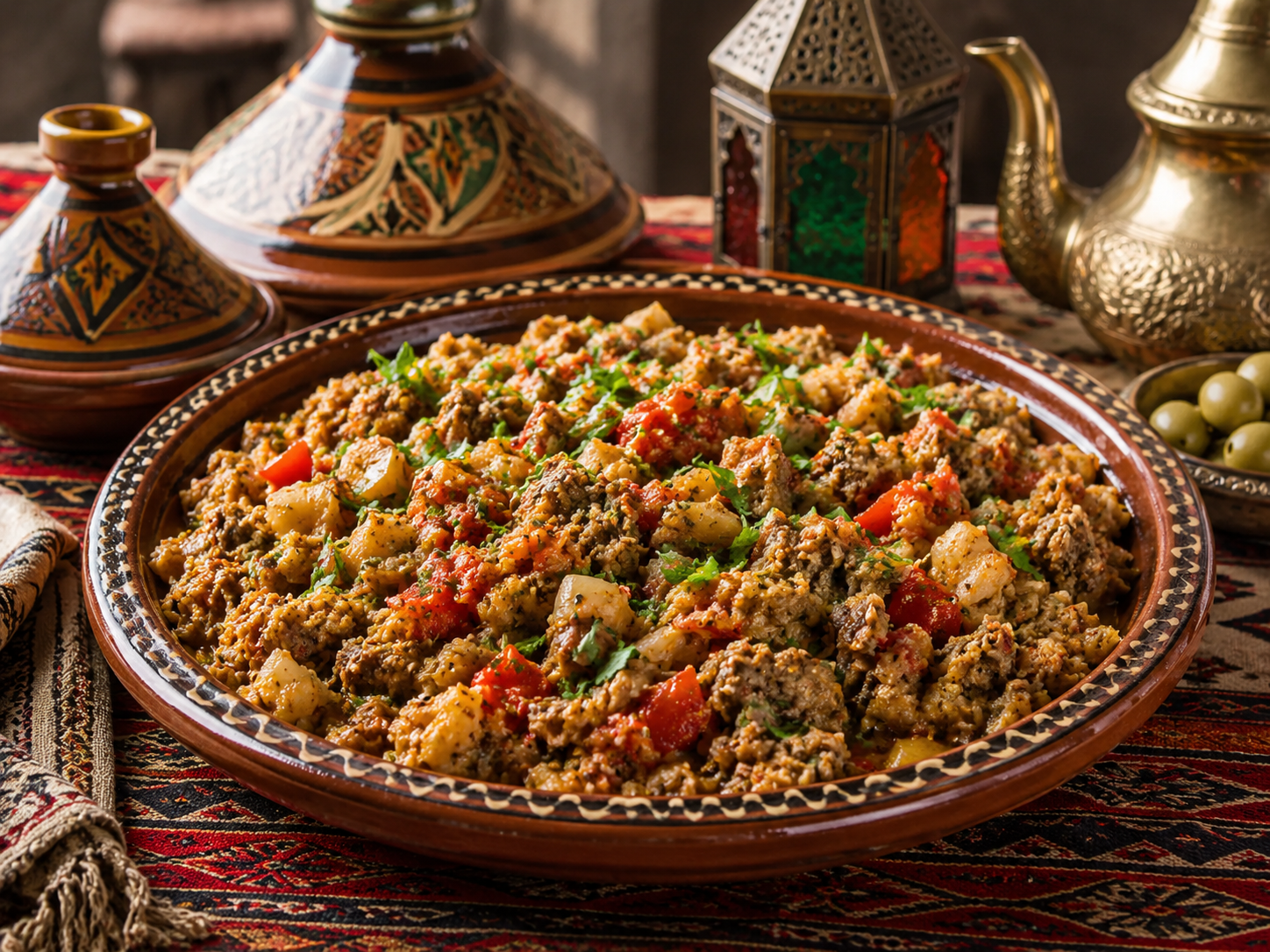
Zaalouk is a traditional Moroccan preparation made from eggplant and tomatoes, cooked with garlic, olive oil, paprika, cumin, salt, pepper, sometimes chili, lemon, and fresh herbs like cilantro or parsley. It is often presented as a cooked salad, but it can also be considered a kind of rustic purée, a vegetable dip, or a simmered side dish. Its texture varies by family: some prefer it very smooth, almost creamy, while others like to keep small pieces of eggplant and tomato for a more generous mouthfeel.
Zaalouk stands out for its balance of sweetness, acidity, smoky aroma, and spicy warmth. Eggplant provides a melting and slightly sweet flesh, tomato gives freshness and a hint of acidity, garlic enhances the dish's character, while cumin and paprika give it its Maghrebi identity. Olive oil binds everything together and brings a very recognizable Mediterranean roundness.
Prepare this speciality
Choose a detailed recipe, adjust the portions and prepare your ingredients before starting. Our cooking tips and food safety advice complement the steps described in the recipes.
Explore further: Cooking tips · Food hygiene and safety advice.
History and uses
🌍 ITS PLACE IN AFRICAN CUISINE
Zaalouk holds an important place in African cuisine, particularly in the culinary traditions of Morocco and the Maghreb. It shows that African cuisine is not limited to large meat dishes, stews, or grains, but also includes an immense richness of salads, simmered vegetables, condiments, and side dishes served in the center of the table.
In Moroccan cuisine, zaalouk is one of the small cooked salads often served as a starter or side dish. These salads can be prepared with carrots, bell peppers, zucchini, beets, potatoes, or eggplants. They are generally seasoned with spices, olive oil, garlic, and herbs. Zaalouk is one of the most popular because it combines two ingredients very present in Mediterranean and North African cuisine: eggplant and tomato.
Its place in African cuisine is also linked to the tradition of sharing. Like many dishes on the continent, zaalouk is often served in a communal dish, accompanied by Moroccan bread, khobz, batbout, or other homemade breads. Everyone takes a portion with a piece of bread. This simple gesture recalls the importance of conviviality in African meals, where food is often placed at the center and shared among guests.
🔥 A SMOKY, SPICY, AND MELTING FLAVOR
The taste of zaalouk largely depends on how the eggplants are prepared. They can be boiled, steamed, sautéed, or grilled. When grilled directly over fire or in the oven, they acquire a much-appreciated smoky note. This smoky flavor gives zaalouk a particular depth and brings it closer to other African and Mediterranean preparations based on roasted vegetables.
Tomato plays an essential role, as it provides a natural sauce in which the eggplant gradually melts. Garlic, often used generously, adds relief. Cumin brings an earthy warmth, paprika a red-orange color and a spicy sweetness. Chili, when added, gives a livelier version. Lemon or vinegar can be used at the end of cooking to awaken the dish and balance the richness of the olive oil.
The texture of zaalouk is one of its great attractions. It should be melting, but not necessarily liquid. The vegetables are cooked until the water evaporates and the flavors concentrate. The result is a dense, fragrant preparation that is easy to spread on bread. This texture makes it a very versatile dish, equally enjoyable hot, warm, or cold.
🍽️ A SIMPLE, FAMILY, AND GENEROUS DISH
Zaalouk is above all a homemade dish. It doesn't require rare ingredients, but it does demand attention. The vegetables must be cooked long enough for the flavors to meld, the spices adjusted, the sauce reduction monitored, and the right balance found between eggplant, tomato, garlic, and olive oil.
In my books

Continue exploring the continent’s cuisines with Africa at the Table — 54 countries, 54 iconic dishes, by Alioune FALL. This book is in English.
Explore further
In many Moroccan homes, zaalouk accompanies daily meals. It can be served with a tagine, grilled fish, kebabs, roasted chicken, couscous, or simply bread. It can also become a light dish on its own, especially when accompanied by other Moroccan salads. Its simplicity makes it accessible, but its deep taste gives it true culinary value.
Zaalouk is also appreciated during reception meals. On a Moroccan table, small cooked and raw salads are often arranged before the main dish. They whet the appetite, add color, and show the care taken in welcoming guests. In this context, zaalouk contributes to the hospitality, generosity, and elegance of the meal.
🌿 A VEGETARIAN AND NOURISHING RECIPE
Zaalouk is naturally vegetarian, which gives it a special place in African diets. It shows that meatless dishes can be rich, flavorful, and satisfying. Eggplant provides a fleshy texture, tomato gives freshness, olive oil provides energy, and spices create aromatic depth.
In African cuisines, vegetables are often intelligently transformed. They are not just served as a garnish but become dishes in their own right. Zaalouk illustrates this ability to turn a simple vegetable into a preparation full of character. It can be suitable for vegetarian meals, fasting periods, family tables, or festive menus.
Nutritionally, it provides fiber, vitamins, antioxidants, and interesting plant compounds. Eggplant is light and rich in fiber, tomato contains beneficial elements like lycopene, garlic is appreciated for its aromatic and traditional qualities, while olive oil contributes to the richness of the dish. Of course, the nutritional value depends on the amount of oil used, but in any case, zaalouk remains a tasty way to consume vegetables.
🫓 A SYMBOL OF SHARING AND HOSPITALITY
Zaalouk takes on its full meaning when shared. It is rarely consumed in isolation; it accompanies a meal, enriches a table, and invites people to eat together. Bread plays an essential role in this experience. Dipping a piece of bread into the zaalouk, collecting the fragrant sauce, tasting the sweetness of the eggplant and the acidity of the tomato are all part of the pleasure of the dish.
This way of eating reflects an important dimension of African cuisine: conviviality. In many cultures on the continent, meals are a moment of social connection. Dishes placed in the center of the table bring people together around the same food. Zaalouk, with its simplicity and generous character, fits perfectly into this tradition.
It also represents Moroccan cuisine at its warmest: well-prepared vegetables, balanced spices, olive oil, bread, and great attention to detail. It may seem modest, but it carries a true culinary identity.
🔎 SYNONYMS AND SIMILAR NAMES
Zaalouk can also be called zalouk, zaalouka, Moroccan eggplant salad, Moroccan eggplant caviar, tomato eggplant purée, Moroccan simmered eggplant, Moroccan eggplant dip, or cooked eggplant salad. The names vary according to regions, languages, and family habits, but they generally refer to a melting preparation based on eggplant, tomatoes, garlic, spices, and olive oil.
🏷️ KEYWORDS
Zaalouk, Moroccan cuisine, African cuisine, eggplant, cooked salad Send message
In the kitchen : Zaalouk
Recipes from the site to put your knowledge into practice:
Discover these cuisines at a restaurant
Explore our restaurant and caterer directories. Choose your destination and check the establishment’s menu to confirm which dishes are offered and available.
Continue exploring
Enjoy discovering ingredients and African cuisines? Join our newsletter. The illustrated PDF 10 sauces africaines incontournables is in French and is offered after confirming a subscription to the French or bilingual edition.