Bissara
Morocco, Egypt
Understanding : Bissara
🥣 BISSARA, A POPULAR AND NOURISHING SOUP
Bissara is a traditional dish well-known in Morocco, Algeria, and several regions of North Africa. It is generally served as a thick soup, a smooth puree, or a legume cream, most often prepared with dried split fava beans, sometimes with split peas. Simple, economical, and very nourishing, bissara is one of those popular dishes that hold a deep place in the culinary memory of African families.
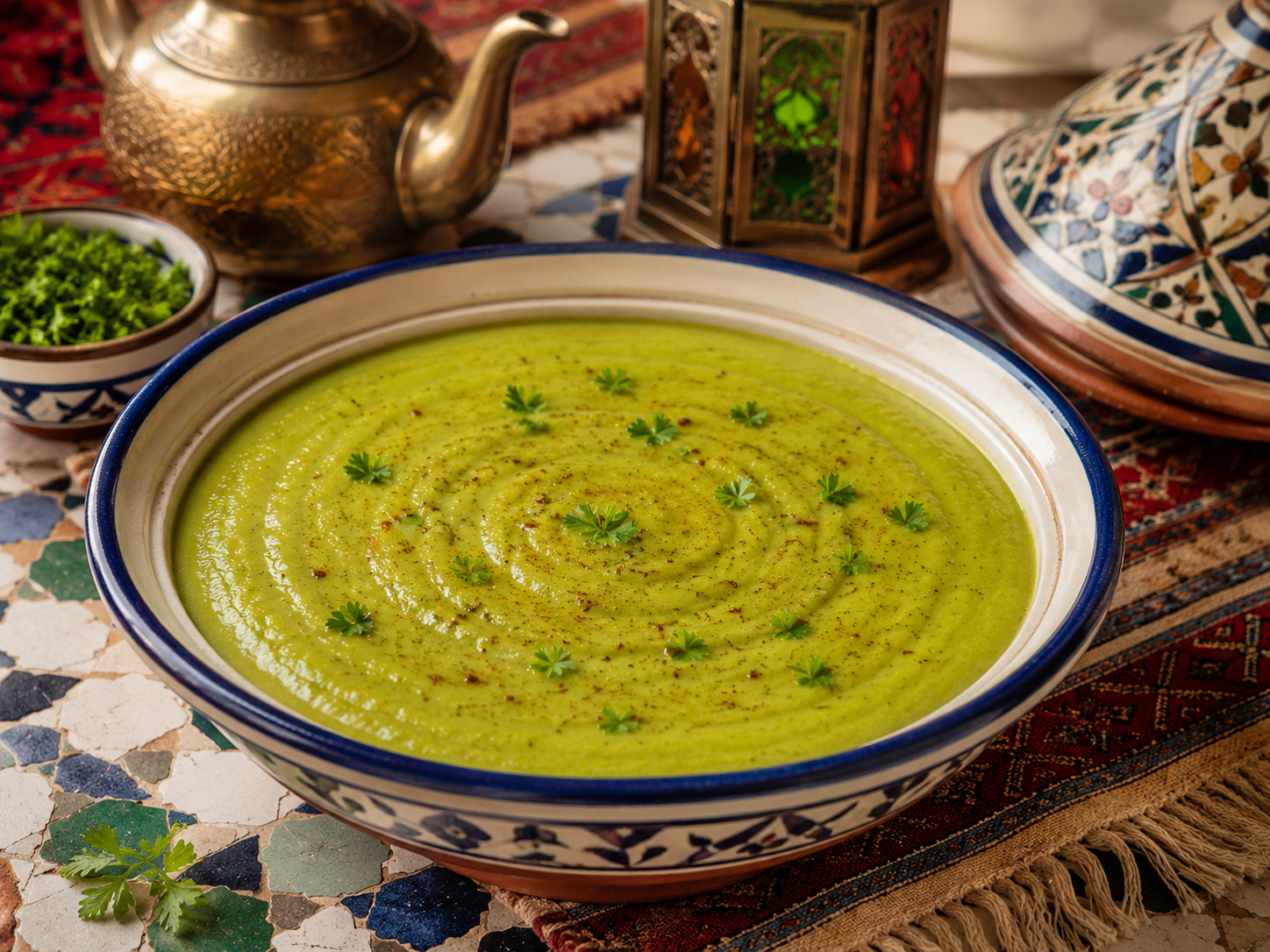
Its texture is one of its great distinguishing features. When well cooked, the fava beans become tender, almost velvety. They are then crushed or blended until a soft, dense, and comforting preparation is obtained. Bissara is often flavored with garlic, cumin, paprika, olive oil, salt, pepper, and sometimes a squeeze of lemon juice. When serving, a generous drizzle of olive oil, a pinch of cumin, and sometimes sweet or hot chili powder are usually added.
Prepare this speciality
Choose a detailed recipe, adjust the portions and prepare your ingredients before starting. Our cooking tips and food safety advice complement the steps described in the recipes.
Explore further: Cooking tips · Food hygiene and safety advice.
History and uses
🌍 ITS PLACE IN AFRICAN CUISINE
Bissara holds an important place in African cuisine, especially in the culinary traditions of the Maghreb. It represents a simple, accessible cuisine deeply connected to daily life. In many regions of Africa, legumes play an essential role in the diet. They allow for the preparation of nourishing, economical meals suitable for large families. Bissara fits perfectly into this logic.
In Morocco, it is often associated with cool mornings, popular breakfasts, and modest but generous meals. In some cities, it can be found in small traditional restaurants, served very hot with bread. It is particularly appreciated in winter, as it warms the body and provides lasting energy. In rural areas, it evokes a local cuisine, made with dried ingredients that are easy to store and available all year round.
In African cuisine, bissara also illustrates the importance of staple dishes. It does not rely on luxury, but on culinary intelligence: transforming dried fava beans into a fragrant, substantial, and flavorful dish. Like many Recettes Africaines, it shows that the richness of a dish does not always depend on the number of ingredients, but on know-how, cooking, and seasoning.
🫘 A LEGUME-BASED RECIPE
Bissara is generally based on dried fava beans. The fava beans are soaked, rinsed, then cooked for a long time with water, garlic, and sometimes a little oil. During cooking, they gradually break down and release their natural starch, which gives the soup its characteristic thickness. Some versions use split peas, which give a lighter color and a slightly different flavor.
Bissara's taste is mild, earthy, and deeply vegetal. The fava beans bring a rustic flavor, while garlic adds character. Cumin is essential, as it flavors the soup and traditionally aids in the digestion of legumes. Olive oil adds richness and a Mediterranean touch very present in North African cuisine.
Bissara can be more or less liquid depending on preference. Some prefer it as a soup to be eaten with a spoon, others as a thick puree to be eaten with bread. This flexibility is part of its identity. It adapts to tastes, seasons, and contexts.
🍞 A POPULAR, WARM, AND COMFORTING DISH
Bissara is often served very hot, accompanied by Moroccan bread, khobz, matlouh, or another traditional bread. The bread is used to scoop up the thick soup and enjoy the fragrant olive oil floating on the surface. This simple gesture is part of the pleasure of the dish.
In popular neighborhoods, bissara is sometimes considered a morning meal, especially when it's cold. It provides energy to start the day and satisfies for a long time. It can also be served for lunch or dinner, alone or accompanied by olives, chilies, raw onions, fried fish, or other small dishes.
Its economical nature gives it significant social value. Bissara is an accessible dish, but it is not poor in taste. On the contrary, it shows how a popular cuisine can be full of depth. It reminds us that the simplest dishes are often those most strongly attached to childhood memories, markets, family homes, and shared meals.
In my books

Continue exploring the continent’s cuisines with Africa at the Table — 54 countries, 54 iconic dishes, by Alioune FALL. This book is in English.
Explore further
🌿 NUTRITIONAL IMPORTANCE
Bissara is highly valued for its nutritional qualities. Fava beans and split peas are rich in plant proteins, fiber, complex carbohydrates, minerals, and energy. They provide a lasting feeling of satiety, making it a particularly useful dish in a daily diet.
In many African cuisines, legumes complement cereals and sometimes replace meat. They allow for the preparation of balanced meals without requiring expensive ingredients. Bissara perfectly illustrates this dietary intelligence. Combined with bread, it becomes a complete, simple, and nourishing meal.
Garlic, cumin, and olive oil also enhance its culinary appeal. Garlic provides fragrance, cumin brings warmth and character, and olive oil enriches the texture. This combination creates a dish that is both modest and powerful, capable of nourishing the body while comforting the spirit.
🔥 A CUISINE OF MEMORY AND TRANSMISSION
Bissara is a dish of transmission. In many families, one learns to prepare it without precisely measuring quantities. One observes the texture, adjusts the water, tastes for salt, and adds cumin at the right moment. Each household can have its own version: thicker, more fluid, more garlicky, spicier, milder, or more rustic.
This oral transmission is very present in African cuisines. Recipes live through gestures, habits, and memories. Bissara is one of those dishes that one recognizes by smell even before seeing them. The smell of cooked garlic, cumin, and olive oil is often enough to evoke a family table or a small traditional restaurant.
It is also linked to the seasons. In winter, it becomes a dish of warmth and protection against the cold. In some mountainous or rural regions, it is particularly appreciated for its ability to nourish simply and effectively. It shows the relationship between cuisine, climate, work, and daily life.
🤝 A SYMBOL OF SIMPLICITY AND SHARING
Like many African dishes, bissara takes on its full meaning when shared. It can be served in a large bowl, placed in the center of the table, with bread that everyone uses to serve themselves. This way of eating creates closeness among diners. It reminds us that African cuisine is often collective, generous, and warm.
Bissara does not seek to impress with complicated presentation. Its beauty lies in its simplicity: a soft color, a velvety texture, a drizzle of olive oil, a pinch of spices, and warm bread. It embodies a form of discreet but sincere hospitality. Offering bissara is offering a warm, nourishing dish prepared with care.
It also reminds us that African cuisine is extremely varied. Alongside grand festive dishes, refined tagines, couscous, meat stews, and spicy sauces, there is an immense tradition of soups, purees, porridges, and legume dishes. Bissara belongs to this essential family, one that nourishes daily life and accompanies generations.
🔎 SYNONYMS AND SIMILAR NAMES
Bissara can also be called Moroccan bissara, bessara, besarah, baysara, fava bean puree, fava bean soup, fava bean cream, split pea soup, split pea puree, Maghrebi legume soup, or Moroccan fava bean soup. The names vary according to countries, regions, and family habits, but they generally refer to a thick preparation based on fava beans or split peas, flavored with garlic, cumin, and olive oil.
🏷️ KEYWORDS
Bissara, Moroccan cuisine, African cuisine, fava beans, legume soup Send message
In the kitchen : Bissara
Recipes from the site to put your knowledge into practice:
Discover these cuisines at a restaurant
Explore our restaurant and caterer directories. Choose your destination and check the establishment’s menu to confirm which dishes are offered and available.
Continue exploring
Enjoy discovering ingredients and African cuisines? Join our newsletter. The illustrated PDF 10 sauces africaines incontournables is in French and is offered after confirming a subscription to the French or bilingual edition.