Loubia
Maghreb
Understanding : Loubia
🫘 LOUBIA, A BEAN DISH AT THE HEART OF AFRICAN TABLES
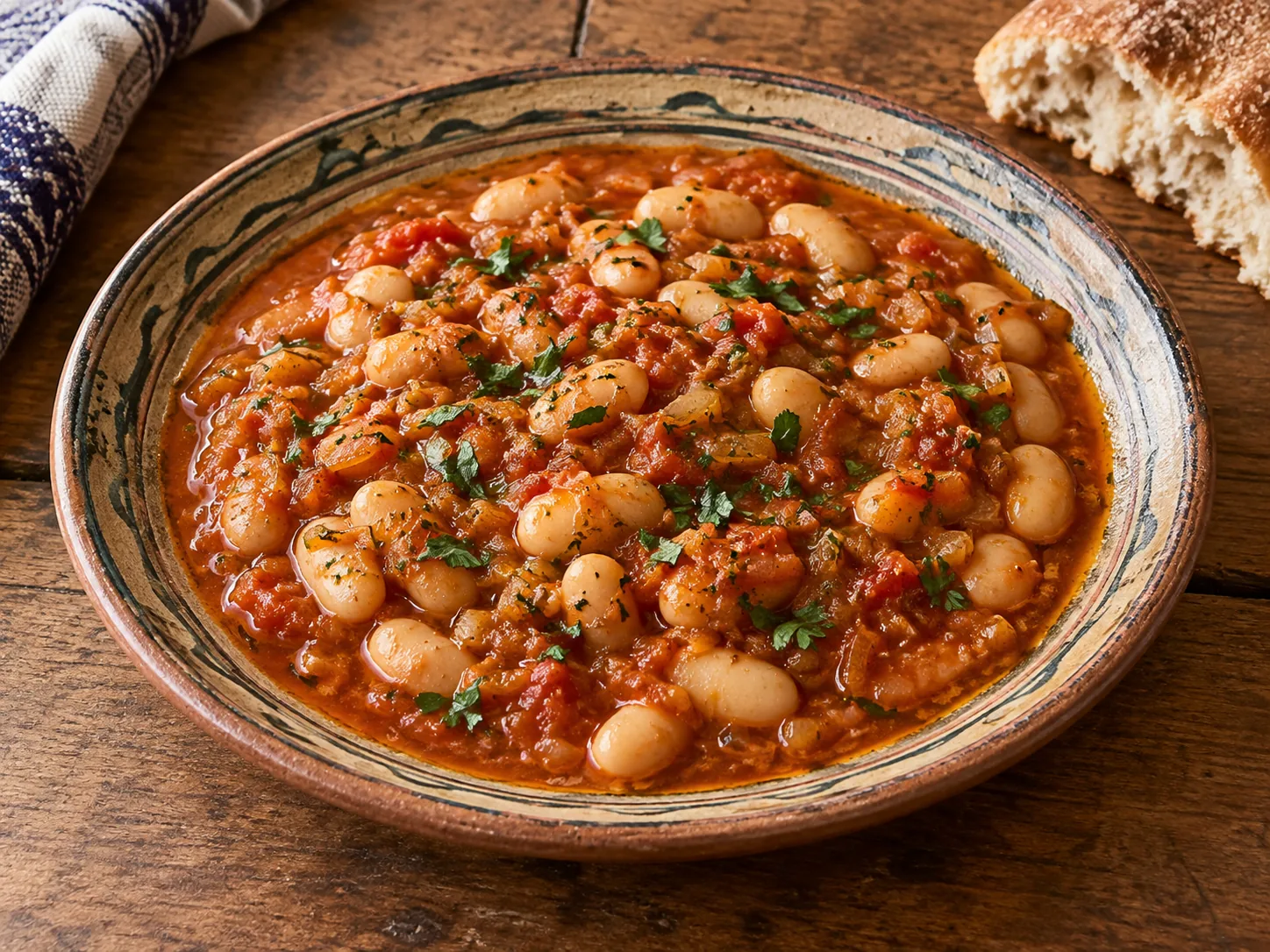
Loubia is a traditional dish made from white beans simmered in a fragrant sauce, typically prepared with tomato, onion, garlic, spices, olive oil, and sometimes meat. Very common in Maghrebi cuisines, particularly in Morocco, Algeria, and Tunisia, it is one of those popular dishes that warm, nourish, and bring people together. Its name comes from the Arabic word 'loubia,' which means beans. Depending on the region, the word can refer to the vegetable itself or the complete dish cooked in sauce.
Loubia is often considered a simple dish, but its simplicity hides a great culinary richness. White beans, once well cooked, become tender, melt-in-your-mouth, and capable of absorbing the flavors of the sauce. Tomato adds color and a slight acidity, onion provides sweetness, garlic enhances the taste, while spices create a deep warmth. Cumin, paprika, pepper, ginger, turmeric, chili, or coriander can be used in its preparation according to family traditions.
Prepare this speciality
Choose a detailed recipe, adjust the portions and prepare your ingredients before starting. Our cooking tips and food safety advice complement the steps described in the recipes.
Explore further: Cooking tips · Food hygiene and safety advice.
History and uses
🌍 ITS PLACE IN AFRICAN CUISINE
Loubia holds an important place in African cuisine because it represents one of the continent's major food staples: legumes. In many regions of Africa, beans, peas, lentils, fava beans, and chickpeas are essential to the daily diet. They are economical, nutritious, easy to store, and highly adaptable. Loubia fits perfectly into this tradition of generous dishes, prepared with accessible ingredients and capable of feeding an entire family.
In North Africa, loubia is an everyday dish, often served in winter or during cool days. It is appreciated for its comforting and filling nature. It is eaten with traditional bread, such as khobz, matlouh, or homemade bread, which is used to soak up the thick and fragrant sauce. It can also be served with rice, semolina, or other side dishes depending on local customs.
In African cuisine, simmered dishes play a central role. They allow flavors to concentrate, enhance basic products, and create a convivial meal. Loubia belongs to this large family of African stews where slow cooking transforms simple ingredients into a deep and flavorful dish. It reminds us that African cuisine does not only depend on luxurious products, but above all on know-how, cooking time, and the balance of seasonings.
🍅 A TOMATO-BASED, SPICY, AND COMFORTING SAUCE
The sauce of loubia is the element that gives the dish its character. It is often prepared with fresh grated tomatoes, tomato paste, or both. This red and generous base envelops the beans and allows them to become even more flavorful. Garlic is often used generously, as it gives the dish its deep aroma. Onion, meanwhile, brings a sweetness that balances the acidity of the tomato.
Cumin is one of the spices most associated with loubia. It brings a warm, slightly earthy note, very characteristic of Maghrebi cuisines. Paprika gives a beautiful color and a spicy sweetness. Chili can be added for a spicier version. Some families also use ras el hanout, bay leaf, fresh coriander, or parsley at the end of cooking.
The ideal texture of loubia depends on taste. Some prefer it with a rather liquid sauce, almost like a thick soup. Others like it well reduced, with a dense sauce that coats the beans. In all cases, the beans should be tender without being completely mashed. A good loubia should give an impression of warmth, sweetness, and depth.
🥘 A POPULAR, FAMILY, AND GENEROUS DISH
Loubia is above all a home-cooked dish. It evokes gently simmering pots, simple but abundant meals, family tables, and the smell of spices filling the kitchen. It can be prepared without meat, making it a nourishing vegetarian dish, or with meat for a richer version. Beef, lamb, veal, chicken, merguez sausages, or even pieces of dried meat can be added depending on the region.
In my books

Continue exploring the continent’s cuisines with Africa at the Table — 54 countries, 54 iconic dishes, by Alioune FALL. This book is in English.
Explore further
Its popularity also comes from its economic aspect. Dried beans keep for a long time, are relatively inexpensive, and allow for large quantities to be prepared. In many African households, this type of dish is valuable because it combines nutrition, taste, and accessibility. Loubia proves that a humble dish can have true culinary nobility when well prepared.
It is also linked to the seasons. During cold periods, it becomes a comforting dish. Served very hot with bread, it is lastingly satisfying and provides energy. In families, it can be prepared in large quantities, then reheated the next day. Like many simmered dishes, it often gains in flavor after resting, when the beans have absorbed more of the spices and sauce.
🌿 ESSENTIAL NUTRITIONAL RICHNESS
Loubia is very interesting from a nutritional perspective. White beans are rich in plant proteins, fiber, complex carbohydrates, minerals, and energy. They provide a lasting feeling of satiety and are an excellent alternative or complement to meat. Combined with bread, rice, or semolina, they form a complete and balanced meal.
In African cuisine, legumes play a fundamental role. They allow families to be nourished with solid, durable, and versatile foods. Loubia illustrates this food intelligence: it transforms a dry, simple, and modest ingredient into a warm, fragrant, and very satisfying dish.
Tomato, garlic, onion, and spices also add an important dimension. They not only serve to give taste but also to enrich the dish with aromas, color, and regional identity. Each household can adjust the recipe according to their preferences, which gives loubia great diversity.
🤝 A SYMBOL OF SHARING AND HOSPITALITY
Like many African dishes, loubia takes on its full meaning when shared. It is often served in a large dish or directly from the pot, with bread placed in the center of the table. Everyone can help themselves, dip their bread in the sauce, and enjoy the warmth of the dish. This way of eating creates closeness among guests and recalls the importance of communal meals in African cultures.
Loubia is not a prestigious dish in the luxurious sense of the term, but it possesses strong emotional value. It evokes home cooking, childhood meals, cold days, markets, spices, and gestures passed down from generation to generation. It shows that hospitality can be conveyed through a simple dish, prepared with care and served generously.
In popular Maghrebi restaurants, loubia is often among the accessible dishes, appreciated by workers, families, and lovers of traditional cuisine. It belongs to this daily cuisine that forms the real basis of nutrition, far from purely festive dishes.
🔎 SYNONYMS AND SIMILAR NAMES
Loubia can also be called loubiya, loubya, lubia, white beans in sauce, white bean stew, tomato-braised beans, Moroccan loubia, Algerian loubia, white bean sauce, or Maghrebi bean dish. The names vary according to countries, languages, and family customs, but they generally refer to a dish of beans simmered in a spicy and fragrant sauce.
🏷️ KEYWORDS
Loubia, African cuisine, Maghrebi cuisine, white beans, stewed dish
In the kitchen : Loubia
Recipes from the site to put your knowledge into practice:
Discover these cuisines at a restaurant
Explore our restaurant and caterer directories. Choose your destination and check the establishment’s menu to confirm which dishes are offered and available.
Continue exploring
Enjoy discovering ingredients and African cuisines? Join our newsletter. The illustrated PDF 10 sauces africaines incontournables is in French and is offered after confirming a subscription to the French or bilingual edition.