Kamounia
Tunisia, Algeria
Understanding : Kamounia
🍲 KAMOUNIA, A FRAGRANT CUMIN STEW
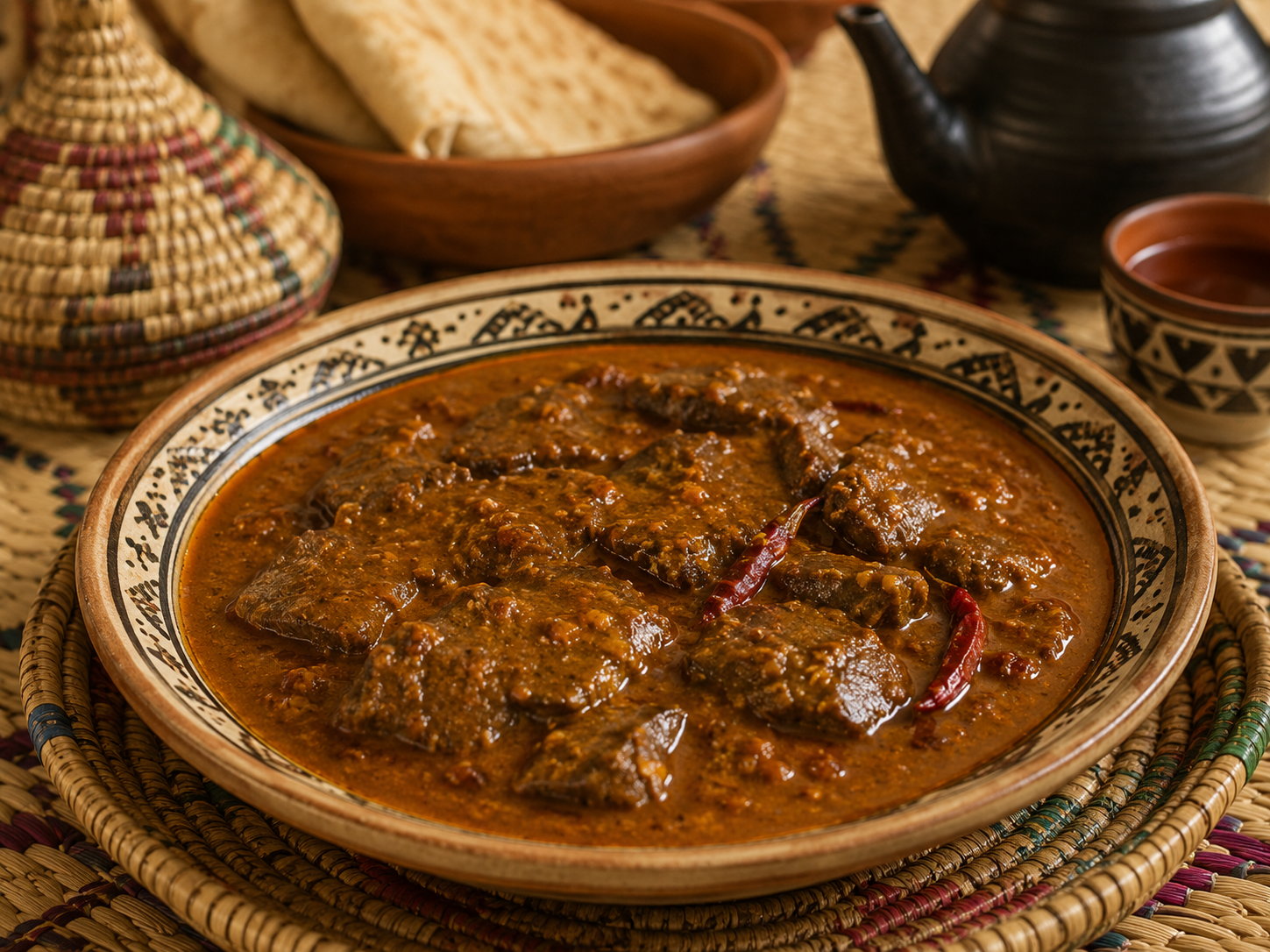
Kamounia is a traditional North African dish, particularly well-known in Tunisia, Algeria, and some neighboring regions of the Maghreb. Its name comes from the word "kamoun," which means cumin in Arabic. This spice is at the heart of the recipe and gives the dish its deep, warm, and recognizable identity. Kamounia is typically prepared with meat, often beef, lamb, or sometimes offal like liver or heart, simmered in a red sauce flavored with cumin, garlic, tomato, chili, and other spices.
This dish stands out for its intense flavor and concentrated sauce. Unlike some milder stews, kamounia has a strong personality. Cumin brings an earthy, warm, and slightly bitter note that pairs very well with the richness of the meat. Tomato adds color and acidity, garlic enhances the aroma, while chili adds a warmth typical of many Maghrebi cuisines.
Prepare this speciality
Choose a detailed recipe, adjust the portions and prepare your ingredients before starting. Our cooking tips and food safety advice complement the steps described in the recipes.
Explore further: Cooking tips · Food hygiene and safety advice.
History and uses
🌍 ITS PLACE IN AFRICAN CUISINE
Kamounia holds an important place in African cuisine, especially in the culinary traditions of the Maghreb. It represents a cuisine of character, based on spices, slow cooking, and the valorization of all parts of the animal. In several African countries, sauced dishes are central to meals. They bring together meat, vegetables, spices, and side dishes in a generous preparation, often served with bread, semolina, rice, or other nourishing bases.
In Tunisia, kamounia is particularly appreciated for its bold taste and powerful simplicity. It is one of those dishes that doesn't aim to be decorative but impresses with its aroma. It can be served at family meals, in popular restaurants, or on certain occasions when a rich and deeply traditional dish is desired.
In African cuisine more broadly, kamounia demonstrates the importance of spices as identity markers. Cumin, present in many cuisines across the continent, plays the main role here. It doesn't just season; it structures the dish. It gives the recipe its name, its aroma, and its soul. This central role of spice reminds us that African cuisines are built on precise aromatic balances, passed down from generation to generation.
🔥 A FLAVOR DOMINATED BY CUMIN
Cumin is the essential element of kamounia. Its aroma is warm, deep, slightly smoky, and very recognizable. In this dish, it is often used generously, sometimes added in several stages: one part during cooking to flavor the sauce, and another at the end to enhance the aroma. This method of use gives the dish a particular intensity.
Kamounia sauce is usually prepared with oil, garlic, tomato paste, red chili or harissa, paprika, pepper, and sometimes ground coriander. The meat is seared then slowly simmered until tender. The sauce must reduce sufficiently to become thick, glossy, and well-clinging to the pieces of meat.
The result is a powerful dish, often spicy, but balanced when well-prepared. Tomato softens the strength of cumin, garlic adds depth, and meat gives body to the whole. Kamounia can be very spicy or more moderate depending on the family. In Tunisia, where spicy dishes are highly appreciated, it is often prepared with a good dose of chili or harissa.
🥩 A DISH OF MEAT, OFFAL, AND EXPERTISE
Kamounia can be prepared with different meats. Beef is common, as it handles slow cooking well and yields a rich sauce. Lamb brings a more distinct and festive flavor. Offal, such as liver or heart, is also strongly associated with certain traditional versions. Their pronounced taste pairs particularly well with cumin.
This use of offal is important in African cuisine. It reflects a tradition of respecting the product, where nothing is wasted. In many cultures across the continent, offal is not considered secondary. On the contrary, it is valued in well-seasoned dishes, often highly appreciated for their intensity. Kamounia illustrates this culinary intelligence: thanks to spices and cooking, powerful cuts become a flavorful and sought-after dish.
In my books

Continue exploring the continent’s cuisines with Africa at the Table — 54 countries, 54 iconic dishes, by Alioune FALL. This book is in English.
Explore further
The success of kamounia largely depends on cooking time. The meat must become tender without completely falling apart. The sauce must be concentrated but not dry. Cumin must be present without making the dish too bitter. This balance requires experience, as the recipe relies less on the complexity of ingredients than on mastering heat, dosage, and reduction.
🍞 A POPULAR AND CONVIVIAL DISH
Kamounia is often served with bread, especially homemade bread, khobz, or other traditional Maghrebi breads. The bread allows one to soak up the thick, fragrant sauce, which is part of the pleasure of the dish. It can also be accompanied by rice, pasta, semolina, or potatoes depending on local customs.
It is a dish eaten hot, often placed in the center of the table. Like many African dishes, it invites sharing. The pot, the sauce, the bread, and the gestures around the meal create a family atmosphere. Kamounia is not a discreet dish: it perfumes the kitchen, whets the appetite, and announces a generous meal.
In popular restaurants, it can be served as a daily special, appreciated by those seeking authentic, spicy, and nourishing cuisine. It belongs to that category of recipes that express the taste of everyday life, but also the depth of culinary traditions.
🌿 A RECIPE WITH REGIONAL VARIATIONS
Kamounia varies by country, city, and family. In Tunisia, it is often red, spicy, and very fragrant with cumin. In Algeria, similar versions are also found, sometimes milder or adapted to local customs. Some recipes use more tomato, others favor a shorter sauce. Some add chickpeas, potatoes, or fresh herbs at the end of cooking.
Variations also depend on the type of meat. A liver kamounia will have a stronger taste and quicker cooking time. A beef kamounia will require more time and yield a deeper sauce. A lamb version will be more fragrant and often more festive.
This diversity shows that kamounia is not a fixed recipe. It is a living culinary base, adapted to household tastes, available means, and occasions. Like many African dishes, it is often transmitted orally. One learns to prepare it by observing, tasting, and adjusting the spices.
🤝 A SYMBOL OF STRENGTH, SHARING, AND IDENTITY
Kamounia symbolizes a strong, direct, and generous African cuisine. It reminds us that the most striking dishes are not always the most complicated. A few well-chosen ingredients, a dominant spice, controlled cooking, and a simple accompaniment are enough to create a deeply memorable dish.
It also expresses the importance of sharing. Served with bread or a simple accompaniment, it gathers guests around a fragrant sauce and tender meat. It evokes family meals, popular tables, kitchens where the smell of cumin and garlic announces a warm dish.
In African cuisine, kamounia thus holds a special place: that of a spicy stew, rooted in the Maghreb, but representative of culinary values present across the continent. It values spices, respects ingredients, nourishes generously, and transmits family memory. It proves that African cuisine is diverse, expressive, and full of character.
🔎 SYNONYMS AND SIMILAR NAMES
Kamounia can also be called kamouniya, Tunisian kamounia, Algerian kamounia, cumin stew, meat with cumin, cumin sauce, spicy Maghrebi stew, Tunisian cumin dish, or slow-cooked meat with cumin. The names vary according to regions, languages, and family habits, but they generally refer to a stew heavily flavored with cumin.
🏷️ KEYWORDS
Kamounia, Tunisian cuisine, African cuisine, cumin, spicy stew Send message
In the kitchen : Kamounia
Recipes from the site to put your knowledge into practice:
Discover these cuisines at a restaurant
Explore our restaurant and caterer directories. Choose your destination and check the establishment’s menu to confirm which dishes are offered and available.
Continue exploring
Enjoy discovering ingredients and African cuisines? Join our newsletter. The illustrated PDF 10 sauces africaines incontournables is in French and is offered after confirming a subscription to the French or bilingual edition.