Bredie
South Africa
Understanding : Bredie
🍲 BREDIE, A FAMILY STEW AT THE HEART OF SOUTHERN AFRICA
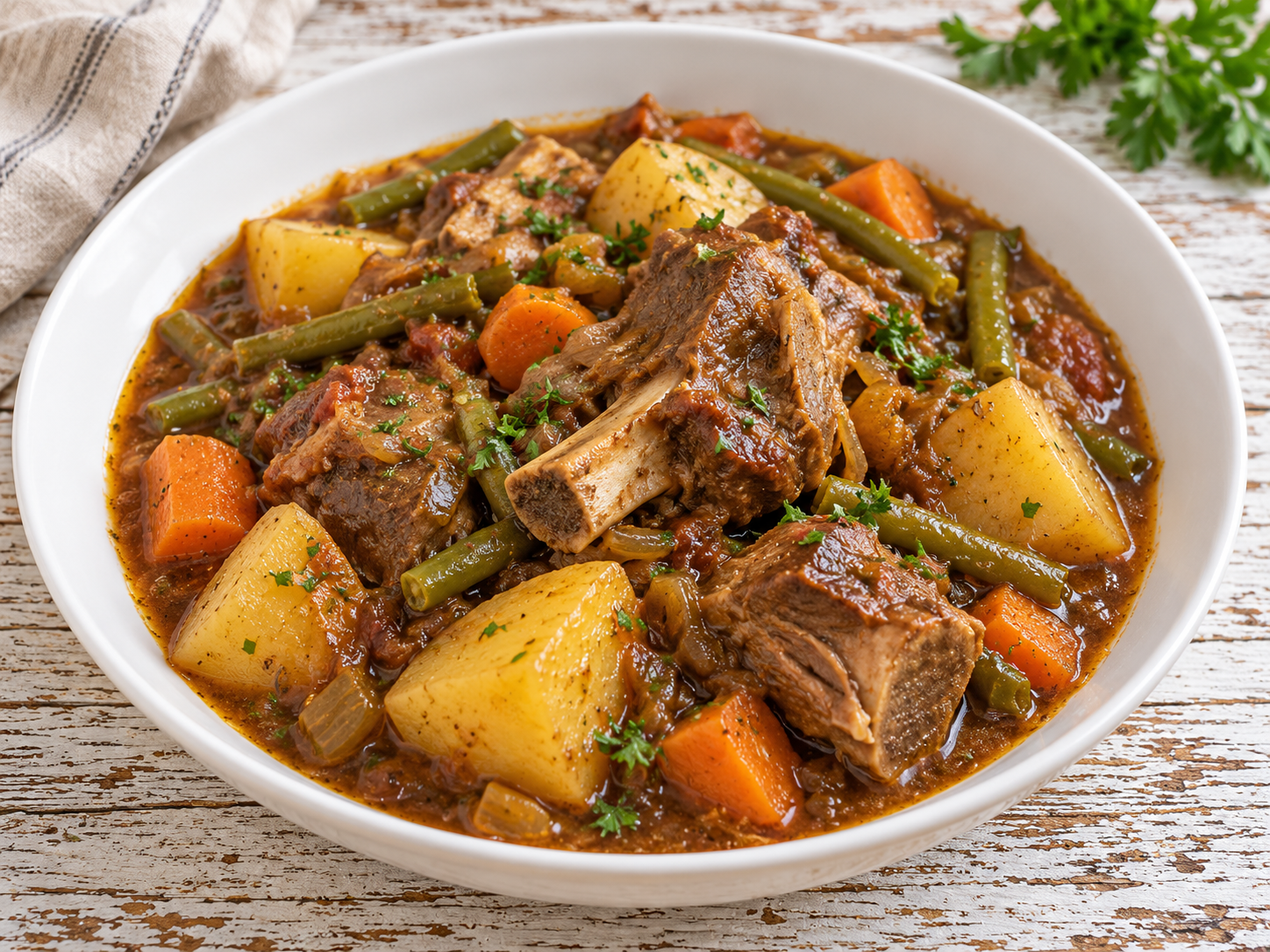
Bredie is a traditional South African stew, deeply associated with Cape Malay and Afrikaner cuisine, and the family traditions of the Cape. It is a slow-cooked dish, typically prepared with meat, most often lamb or mutton, accompanied by vegetables, onions, garlic, mild spices, and sometimes fresh herbs. The word bredie refers to a family of stews rather than a single precise recipe. It can be prepared with tomatoes, cabbage, green beans, potatoes, spinach, pumpkin, or other vegetables depending on the season and family habits.
The most well-known bredie is undoubtedly tomato bredie. In this version, the meat simmers slowly with tomatoes, onions, potatoes, pepper, salt, sometimes chili, sugar, and spices like cinnamon, cloves, nutmeg, or ginger. The result is a generous, fragrant, slightly tangy, mild, and very comforting dish. The sauce thickens, the meat becomes tender, and the vegetables absorb the flavors of the broth.
Prepare this speciality
Choose a detailed recipe, adjust the portions and prepare your ingredients before starting. Our cooking tips and food safety advice complement the steps described in the recipes.
Explore further: Cooking tips · Food hygiene and safety advice.
History and uses
🌍 ITS PLACE IN AFRICAN CUISINE
Bredie holds an important place in African cuisine, as it represents the culinary richness of Southern Africa, and more specifically, South Africa. It shows that African cuisine is not limited to dishes from West Africa, the Maghreb, or the Horn of Africa, but also includes mixed traditions from the Cape, marked by African, Malay, Dutch, Indian, and European influences.
In South African cuisine, bredie is a home-cooked dish, a dish of patience and transmission. It is often prepared in a large pot, slowly, until the meat becomes tender and the sauce is well concentrated. Like many African dishes, it is based on the idea of sharing. It feeds several people, is served hot, accompanies family meals, and often evokes childhood memories.
Bredie belongs to the large family of African stews. On the continent, slow-cooked dishes are essential: they allow for the use of sometimes tough cuts of meat, the blending of vegetables and spices, and the creation of nourishing meals with accessible ingredients. Bredie is part of this tradition, while having its own identity linked to the Cape and its mixed culinary history.
🥩 TENDER MEAT AND SLOW COOKING
The success of bredie relies on slow cooking. The meat, often lamb or mutton, must simmer long enough to become tender. Bone-in pieces are particularly appreciated, as they add more flavor to the sauce. During cooking, the meat juices blend with the vegetables, onions, and spices to create a deep and flavorful sauce.
Bredie is not a rushed dish. It requires time, attention, and a certain mastery of heat. The sauce must reduce gently, without burning. Potatoes, when used, naturally thicken the dish. Tomatoes provide an acidity that balances the richness of the meat. Spices, meanwhile, give a gentle warmth without necessarily making the dish spicy.
This patience is characteristic of many African cuisines. Slow cooking transforms simple ingredients into a rich and memorable dish. It also gives the meal an emotional dimension: the aroma of bredie simmering for a long time in the kitchen announces a moment of comfort and conviviality.
🍅 RICH AND FAMILY VARIATIONS
Bredie exists in several versions. Tomato bredie is the most famous, but there is also cabbage bredie, prepared with cabbage, green bean bredie, or versions with spinach, pumpkin, lentils, or potatoes. Each version highlights a different vegetable and gives the dish a particular personality.
Tomato bredie is red, slightly tangy, and very fragrant. Cabbage bredie is milder, more rustic, and very nourishing. Green bean bredie offers a fresher vegetable note. These variations show that bredie is an adaptable recipe, linked to seasons, available produce, and household preferences.
In some families, a touch of sugar is added to soften the acidity of the tomato. Others prefer to enhance the spices with chili, pepper, or mild curry. Some Cape Malay versions use more fragrant spices, inherited from influences from Southeast Asia and the Indian Ocean. This diversity makes bredie a living dish, capable of telling the complex history of South Africa.
In my books

Continue exploring the continent’s cuisines with Africa at the Table — 54 countries, 54 iconic dishes, by Alioune FALL. This book is in English.
Explore further
🌿 A DISH OF CULINARY FUSION
Bredie is particularly interesting because it testifies to the culinary fusion of the Cape. Cape Malay cuisine, born from encounters between African populations, slaves from Asia, European colonists, and local communities, has developed very fragrant dishes where spices play an essential role. Bredie carries this memory in its way of combining meat, vegetables, mild spices, and slow cooking.
It is not always heavily spiced, but it is aromatic. Cinnamon, cloves, ginger, or nutmeg can appear in some recipes. These spices give a warm depth to the dish and recall the ancient trade routes that connected Southern Africa to the Indian Ocean.
In African cuisine, this ability to integrate external influences while maintaining a local identity is very important. Bredie is not an imitation of a European or Asian stew; it is a South African dish in its own right, shaped by the country's history, its produce, its families, and its table traditions.
🍚 ACCOMPANIMENTS AND SERVING SUGGESTIONS
Bredie is generally served with white rice, which perfectly absorbs the sauce. It can also be accompanied by bread, potatoes, pap (a widely consumed corn porridge in Southern Africa), or other starches depending on habits. Rice balances the richness of the stew and allows for full enjoyment of the sauce.
Served hot, bredie is a complete dish. It provides protein from the meat, fiber and vitamins from the vegetables, and energy from its accompaniments. It is particularly suitable for family meals, cool days, and times when a nourishing and comforting dish is desired.
Like many African dishes, it is easily shared. A large pot of bredie can feed an entire table. It can also be prepared in advance, as its flavors often develop even further after resting. Reheated the next day, it sometimes becomes more flavorful, as the meat and vegetables have had time to absorb the sauce.
🤝 A SYMBOL OF FAMILY AND HOSPITALITY
Bredie symbolizes family, warm, and generous cuisine. It is not a luxury dish, but it holds great emotional value. It recalls meals prepared slowly, recipes passed down by parents and grandparents, the smells of stew in the house, and large tables where everyone receives a well-filled plate.
In African cuisine, hospitality often involves slow-cooked dishes. Offering a bredie is offering a dish that required time and attention. It is a way of saying that the guest is welcomed with care. The abundant sauce, tender meat, and melting vegetables express a simple but profound generosity.
Bredie also shows that African cuisine is extremely diverse. It can be spicy, mild, vegetarian, meaty, festive, or everyday. It can come from the desert, coasts, mountains, savannas, or port cities. Bredie represents the culinary voice of Southern Africa: a cuisine of the pot, of blending, of patience, and of memory.
🔎 SYNONYMS AND SIMILAR NAMES
Bredie can also be called tomato bredie, South African stew, Cape Malay stew, lamb bredie, mutton bredie, cabbage bredie, green bean bredie, meat and vegetable stew, or slow-cooked African stew. The names vary according to the vegetables used, regions, families, and culinary influences, but they generally refer to a slow-cooked South African dish made with meat, vegetables, and spices.
🏷️ KEYWORDS
Bredie, South African cuisine, African cuisine, slow-cooked stew, tomato bredie Send message
In the kitchen : Bredie
Recipes from the site to put your knowledge into practice:
Discover these cuisines at a restaurant
Explore our restaurant and caterer directories. Choose your destination and check the establishment’s menu to confirm which dishes are offered and available.
Continue exploring
Enjoy discovering ingredients and African cuisines? Join our newsletter. The illustrated PDF 10 sauces africaines incontournables is in French and is offered after confirming a subscription to the French or bilingual edition.