Morogo
Southern Africa
Understanding : Morogo
🌿 MOROGO, A VEGETABLE TREASURE FROM SOUTHERN AFRICA
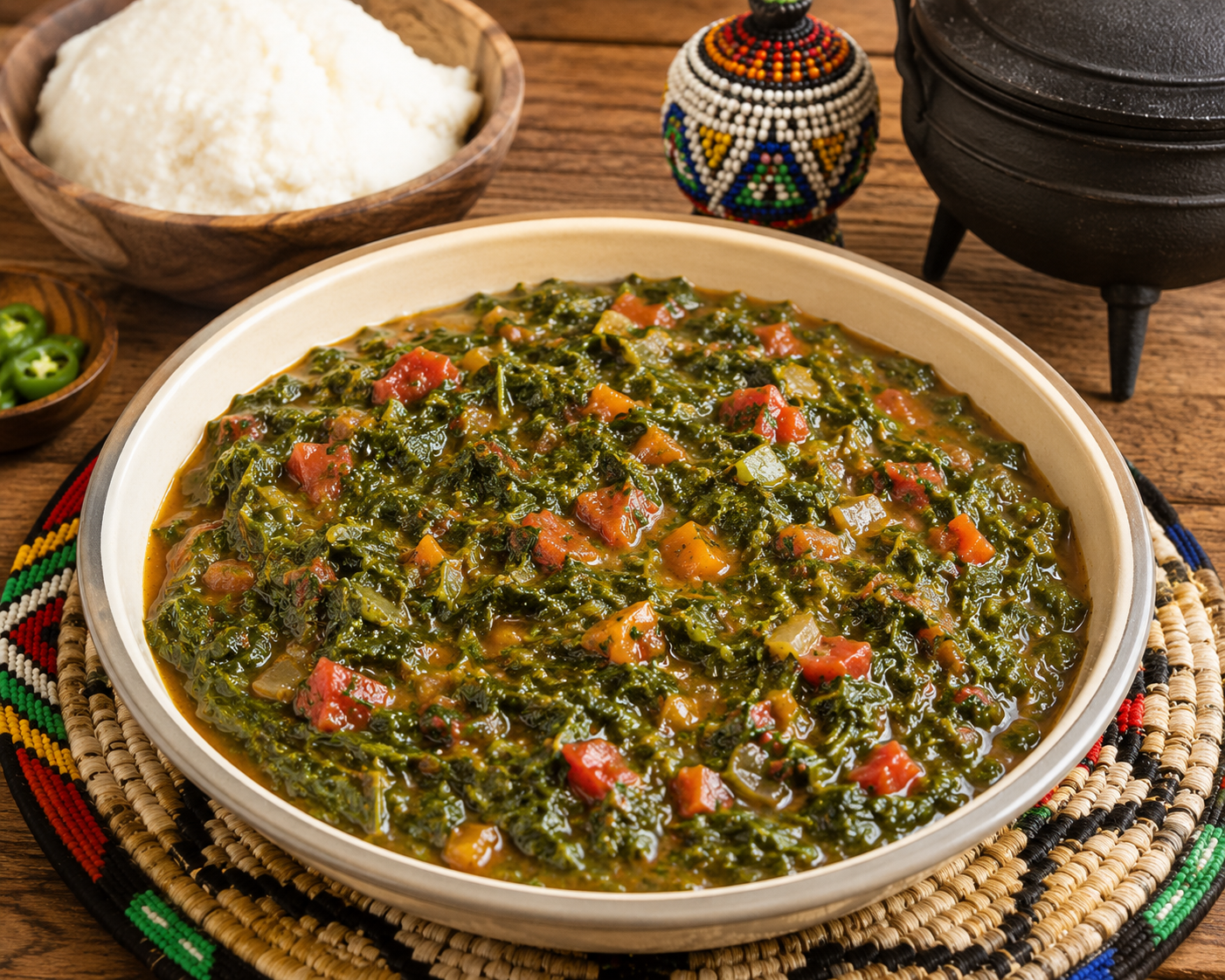
Morogo is a traditional Southern African dish made from edible green leaves, often wild or semi-cultivated. It is particularly associated with South Africa, Lesotho, Botswana, Zimbabwe, and other neighboring regions where leafy greens play an important role in daily diets. The word morogo can refer to both the leaves used and the cooked dish. Depending on the region, it can be prepared with amaranth, jute mallow, pumpkin, cowpea, wild mustard, African spinach, or other local plant leaves.
Morogo is usually cooked simply with onion, tomato, a little oil, salt, and sometimes chili, garlic, or peanuts. In some versions, the leaves are only boiled and then seasoned, while in others, they are sautéed in a short, flavorful sauce. Its texture can be tender, slightly fibrous, or melting, depending on the leaves used. Its taste is vegetal, sometimes mild, sometimes slightly bitter, but always deeply connected to the land and the seasons.
Prepare this speciality
Choose a detailed recipe, adjust the portions and prepare your ingredients before starting. Our cooking tips and food safety advice complement the steps described in the recipes.
Explore further: Cooking tips · Food hygiene and safety advice.
History and uses
🌍 ITS PLACE IN AFRICAN CUISINE
Morogo holds an essential place in African cuisine, representing the importance of leafy greens in the continent's food traditions. In many parts of Africa, edible leaves are as important as cereals, tubers, or legumes. They complement meals, provide valuable nutrients, and allow for dietary variety with locally available products.
In Southern Africa, morogo often accompanies pap, a thick corn porridge widely consumed in the region. Pap provides energy and a filling base, while morogo brings vegetal flavor, fiber, vitamins, and minerals. Together, they form a simple, economical, and nutritious meal. This association is reminiscent of other African combinations: leaf sauce and fufu in Central Africa, rice and green sauce in West Africa, injera and vegetable stews in the Horn of Africa.
Morogo also shows that African cuisine is not limited to meat dishes or festive recipes. It relies heavily on everyday dishes, often modest but essential. These dishes nourish families, tell stories of the seasons, and transmit ancient knowledge about edible plants.
🥬 A CUISINE OF LEAVES, TERROIR, AND SEASON
The richness of morogo comes from the diversity of leaves used. Some grow naturally after the rains, others are cultivated near homes or in fields. Families know how to recognize edible plants, choose the tenderest young leaves, avoid those that are too tough or too bitter, and then cook them appropriately.
This knowledge of leaves is a true culinary heritage. It connects cuisine to the environment, agriculture, and the memory of communities. In rural areas, morogo can be picked directly from fields or natural spaces. In cities, it is sold in markets, sometimes fresh, sometimes already sorted and washed.
The taste of morogo largely depends on the chosen plant. Amaranth gives a tender texture and a mild flavor. Some wild leaves are more bitter and require longer cooking or prior rinsing. Pumpkin leaves can be more velvety. Cowpea leaves are appreciated for their vegetal taste and nutritional value. This diversity makes morogo a family of dishes rather than a single recipe.
🔥 A SIMPLE PREPARATION FULL OF CHARACTER
The preparation of morogo is often simple, but it requires care. The leaves must be thoroughly cleaned, as they may contain sand or dust. They are then chopped or left whole, depending on custom. They are cooked in water, steamed, or directly in a pan with a little oil.
The most common version involves sautéing onions, then adding the leaves, tomato, salt, and sometimes chili. The leaves reduce significantly during cooking and release their water. The dish then becomes concentrated, fragrant, and slightly glossy. Some families add butter, oil, cream, sour milk, or peanut paste to enrich the texture. Others prefer a very simple, almost plain version, to preserve the taste of the leaves.
In my books

Continue exploring the continent’s cuisines with Africa at the Table — 54 countries, 54 iconic dishes, by Alioune FALL. This book is in English.
Explore further
Morogo can be mild or spicy. It can be served as a side dish or as a vegetarian main course. In some versions, dried meat, fish, beans, or peanuts are added to make it more complete. This adaptability explains its lasting presence in family kitchens.
🌽 AN ESSENTIAL ACCOMPANIMENT TO PAP
Morogo is often inseparable from pap, also called mieliepap in South Africa. Pap is a thick, neutral, and filling corn porridge. It serves as the base of the meal, while morogo provides the sauce, moisture, and flavor. The contrast between the sweetness of the corn and the vegetal taste of the leaves is highly appreciated.
In many households, a meal consisting of pap and morogo can be considered simple, yet complete. It can accompany grilled meat, chicken, fish, beans, or be eaten alone. This simplicity is part of its strength. Morogo shows how a local vegetable can transform a cereal base into a vibrant and balanced meal.
This association is also social and cultural. It evokes family cooking, country meals, markets, gardens, rainy seasons, and gestures passed down by elders. Morogo is not just a side dish: it is a link to the land and to the eating habits of several Southern African peoples.
🌱 IMPORTANT NUTRITIONAL VALUE
Morogo is highly valued for its nutritional qualities. Green leaves are generally rich in fiber, vitamins, minerals, and antioxidants. They can provide iron, calcium, magnesium, vitamin A, vitamin C, and other important elements depending on the plants used. In diets where cereals play a large role, these leaves play an essential role in balancing nutrition.
Morogo is also valuable because it can be accessible. In some regions, wild or local leaves are inexpensive and grow easily. They allow families to be nourished with fresh and nutritious food. This dimension is fundamental in African cuisine: intelligently using available resources to create nourishing, tasty meals adapted to the climate.
When combined with pap, beans, peanuts, or an animal protein source, morogo contributes to a more complete meal. It proves that African vegetable dishes are far from secondary. On the contrary, they are at the heart of traditional dietary balance.
🤝 A SYMBOL OF MEMORY, SHARING, AND IDENTITY
Morogo is deeply linked to family memory. Many people associate this dish with meals prepared by mothers, grandmothers, or elders. The knowledge of leaves, how to wash them, cook them, and season them is often transmitted orally. One learns by observing, picking, tasting, and repeating gestures.
Like many African dishes, morogo takes on its full meaning when shared. It can be served in a large dish, accompanied by pap, and eaten with family. It evokes simplicity, solidarity, and attachment to local products. Even when prepared in the city with cultivated spinach, it retains this image of a dish rooted in traditions.
Its place in African cuisine is therefore very strong. It represents the cuisine of leaves, the wisdom of the seasons, the importance of local plants, and the ability of families to create nourishing dishes with modest ingredients. Morogo reminds us that African culinary richness is found as much in grand festive dishes as in the daily preparations that have nourished communities for generations.
🔎 SYNONYMS AND SIMILAR NAMES
Morogo can also be called imifino, wild spinach, African wild spinach, African leafy greens, amaranth leaves, marogo, moroho, thepe, delele depending on the regions and languages. The names vary according to countries, peoples, and the plants used, but they generally refer to edible green leaves cooked as a side dish or vegetarian meal.
🏷️ KEYWORDS
Morogo, African cuisine, South African cuisine, leafy greens, pap Send message
In the kitchen : Morogo
Recipes from the site to put your knowledge into practice:
Discover these cuisines at a restaurant
Explore our restaurant and caterer directories. Choose your destination and check the establishment’s menu to confirm which dishes are offered and available.
Continue exploring
Enjoy discovering ingredients and African cuisines? Join our newsletter. The illustrated PDF 10 sauces africaines incontournables is in French and is offered after confirming a subscription to the French or bilingual edition.