Kapenta
Zambia, Zimbabwe
Understanding : Kapenta
🐟 KAPENTA: ORIGIN AND IDENTITY
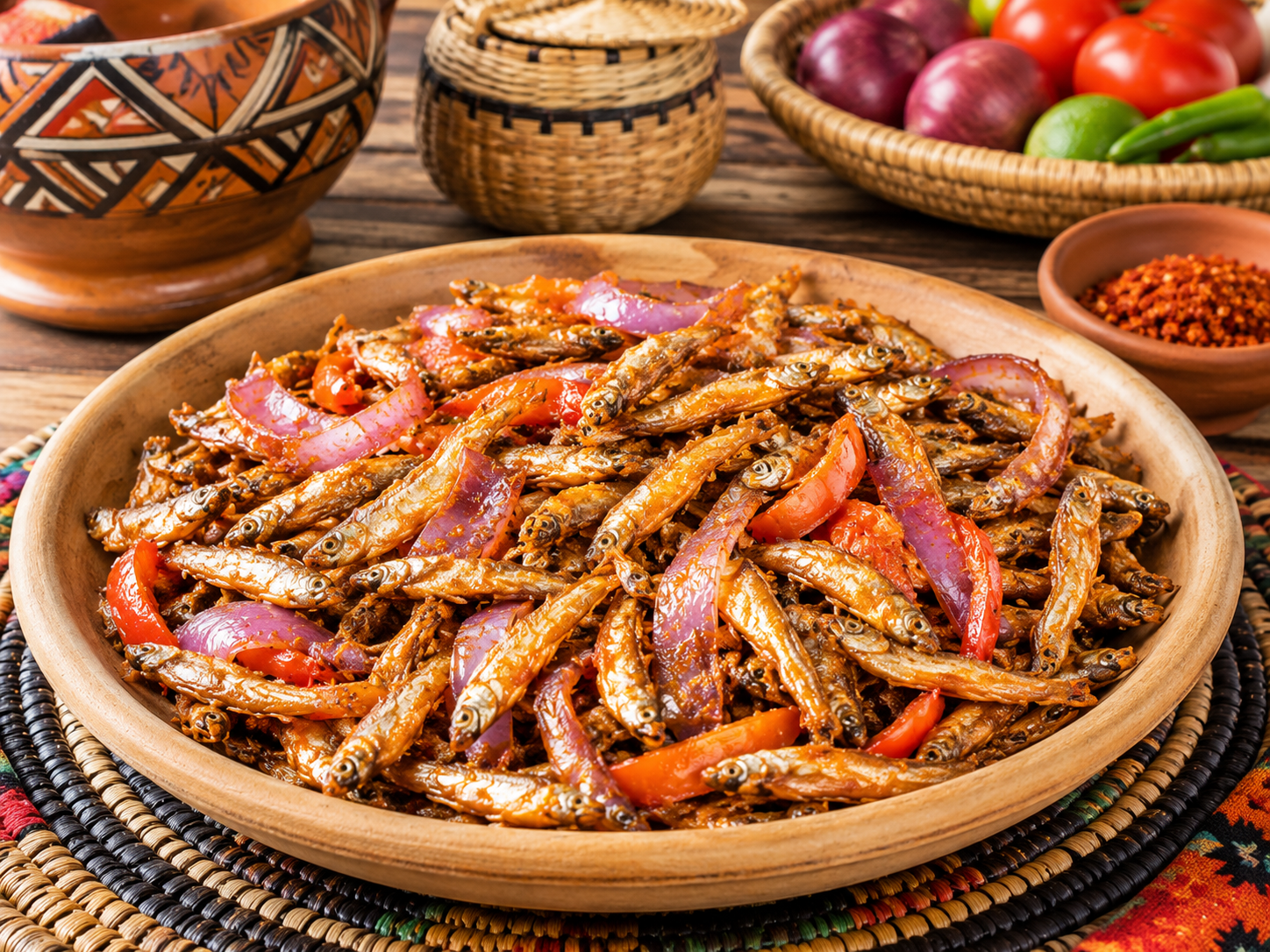
Kapenta refers to small freshwater fish, generally similar to sardines, widely consumed in Southern Africa and some regions of Central Africa. They are primarily associated with the waters of Lake Tanganyika, Lake Kariba, and other large lake basins on the continent. These tiny, silvery, elongated fish are often caught in large quantities, then sun-dried for long-term preservation. Their modest size contrasts with their significant nutritional, economic, and cultural importance.
Kapenta is particularly well-known in Zambia, Zimbabwe, the Democratic Republic of Congo, Malawi, and Tanzania. Depending on the region, it can be sold fresh, dried, smoked, or lightly salted. Its dried form is the most common, as it allows for easy transportation of the fish to markets far from fishing areas. In many African families, it represents an accessible, practical, and flavorful source of protein.
Prepare this speciality
Choose a detailed recipe, adjust the portions and prepare your ingredients before starting. Our cooking tips and food safety advice complement the steps described in the recipes.
Explore further: Cooking tips · Food hygiene and safety advice.
History and uses
🍲 FLAVOR, TEXTURE, AND PREPARATION
Kapenta has an intense, marine or lacustrine flavor, despite its freshwater origin. When dried, its taste becomes more concentrated, sometimes slightly salty, with powerful notes that quickly infuse sauces. Its texture varies depending on the preparation: crispy when fried, tender when simmered in a tomato sauce, or firmer when rehydrated before cooking.
Before cooking, it is often sorted to remove impurities, then quickly rinsed. Some cooks briefly soak it in hot water to reduce excess salt or soften its taste. Afterward, it can be fried with onion, tomato, garlic, chili, and sometimes leafy greens. In several family kitchens, it is prepared with groundnuts, palm oil, okra, or cassava leaves, according to local traditions.
Kapenta frequently accompanies nshima, sadza, ugali, fufu, or other corn, cassava, or sorghum-based pastes. These neutral starches balance its pronounced flavor and make it a complete meal.
🌍 PLACE IN AFRICAN CUISINE
The place of kapenta in African cuisine is major, as it perfectly illustrates the culinary intelligence of communities living around lakes and rivers. In Africa, cuisine often relies on valuing local resources, natural food preservation, and family sharing. Kapenta addresses these three dimensions.
Firstly, it is deeply linked to African aquatic ecosystems. Fishermen often catch it at night using lights that attract schools of fish. This fishing supports many families, from fishermen to market vendors, as well as those involved in drying, transportation, and distribution.
Secondly, kapenta is a symbol of popular cuisine. It is not reserved for grand ceremonies or luxurious meals, but it holds an essential place in daily life. It nourishes modest households, complements grain-based meals, and provides valuable nutritional richness. In some regions, it is considered a survival food during difficult times, as it keeps for a long time and remains available even when meat is too expensive.
In my books

Continue exploring the continent’s cuisines with Africa at the Table — 54 countries, 54 iconic dishes, by Alioune FALL. This book is in English.
Explore further
Finally, it plays a strong cultural role. Its smell when frying in oil, its association with simmered tomatoes and onions, or its presence on market stalls evoke childhood meals, village kitchens, and habits passed down from generation to generation.
🥗 NUTRITIONAL VALUE
Kapenta is valued for its richness in protein, calcium, phosphorus, iron, and essential fatty acids. As it is often consumed whole, with the bones, it provides more minerals than some larger fish from which bones are removed. This characteristic makes it an important food for children, the elderly, and families seeking an affordable nutritional source.
It also contains micronutrients useful for proper body function. In areas where access to meat, milk, or imported products is limited, kapenta helps diversify the diet. It helps combat certain deficiencies, especially when meals are primarily composed of starches.
However, when it is very salty or poorly preserved, it should be consumed in moderation and properly prepared. Good rinsing, clean drying, and storage away from humidity improve its quality.
🔥 SOCIAL AND ECONOMIC DIMENSION
Kapenta is not just food: it is also an economic activity. In several African countries, it supports entire communities. Fishermen, traders, restaurateurs, and street vendors depend on its availability. In markets, it is often sold in small piles, in sachets, or by weight, allowing each household to buy according to their means.
In cities, kapenta connects modern consumers to rural traditions. Even as eating habits change, it remains present in family kitchens because it is quick to prepare, economical, and very flavorful. In African restaurants, it can appear as a traditional dish, served with a corn paste, vegetables, and a spicy sauce.
Its trade also shows the importance of women in the African food economy. In many markets, they are the ones who sell, process, season, and pass on the best ways to cook it.
🍛 SYNONYMS AND APPELLATIONS
Kapenta can be referred to by several names depending on the country and language. It is sometimes called small dried fish, lake sardines, silverfish, dagaa, ndakala, or matemba. These terms do not always refer to exactly the same species, but they often convey the same culinary idea: small dried fish, rich in flavor, used to season African dishes.
✅ KEYWORDS
Kapenta Dried fish African cuisine Lake Tanganyika Traditional proteins Send message
In the kitchen : Kapenta
Recipes from the site to put your knowledge into practice:
Discover these cuisines at a restaurant
Explore our restaurant and caterer directories. Choose your destination and check the establishment’s menu to confirm which dishes are offered and available.
Continue exploring
Enjoy discovering ingredients and African cuisines? Join our newsletter. The illustrated PDF 10 sauces africaines incontournables is in French and is offered after confirming a subscription to the French or bilingual edition.