Awaze
Ethiopia, Eritrea
Understanding : Awaze
🌶️ AWAZE, A SPICY PASTE AT THE HEART OF AFRICAN FLAVORS
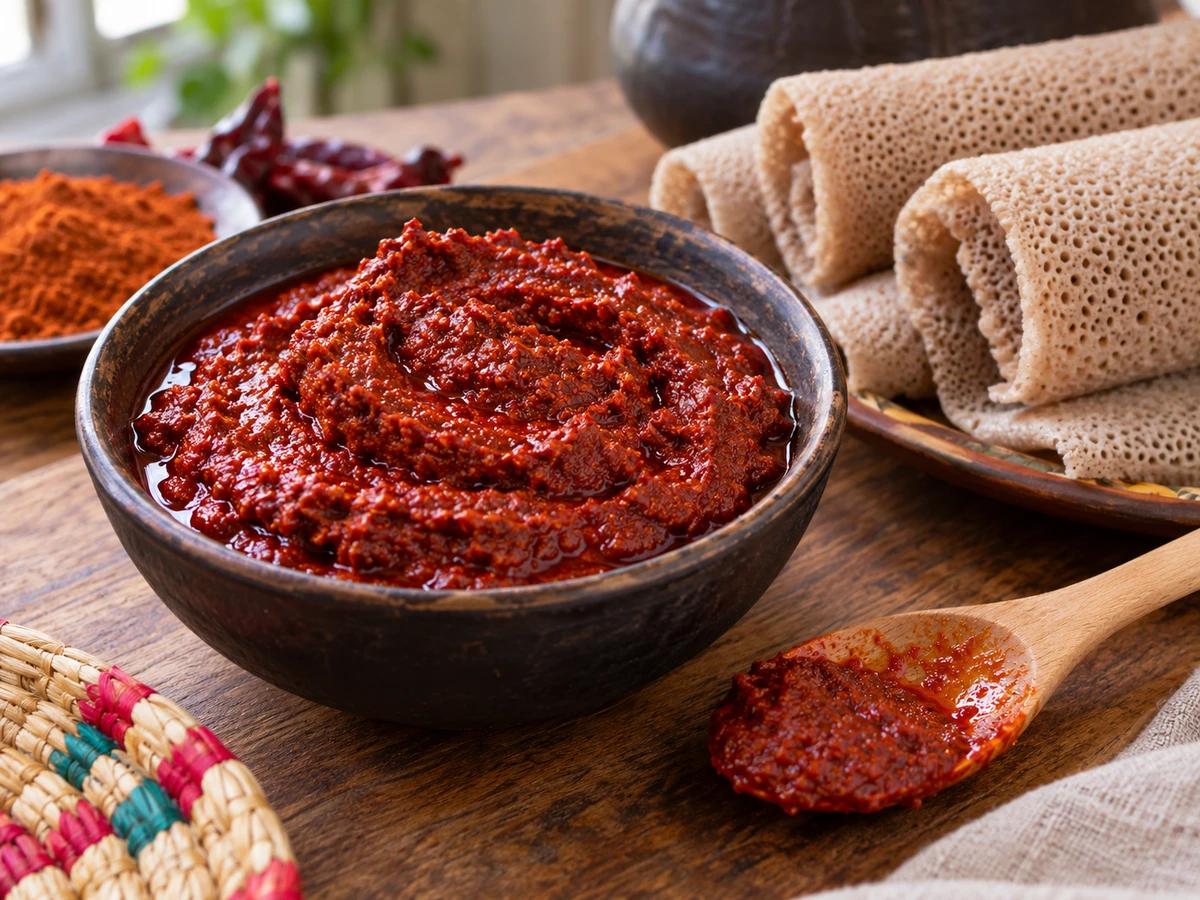
Awaze is a spicy sauce or paste emblematic of Ethiopian and Eritrean cuisine, two major culinary traditions of the Horn of Africa. It is distinguished by its deep red color, intense aroma, and a flavor that is simultaneously pungent, warm, tangy, and slightly earthy. Awaze is not just a condiment added at the end of a dish: it is a preparation that expresses an African way of building taste, combining spices, fermentation, the heat of chili, and conviviality around a shared meal.
Where to find it
Look for the exact food-grade form required by the recipe at markets and specialist shops. Check the product name, ingredients, condition and storage instructions.
Explore further: Cooking tips · Food hygiene and safety advice.
History and uses
At its base, awaze is generally prepared with berbere, a well-known spice blend in Ethiopia and Eritrea. Berbere often contains dried chili, paprika, garlic, ginger, coriander, fenugreek, cardamom, cloves, sometimes cinnamon, or other spices depending on the family. This blend is then thinned with a liquid, which can be water, oil, local wine, tej (a traditional fermented honey drink), or sometimes vinegar. Depending on the desired texture, awaze can become a thick paste, almost like a spice purée, or a more fluid sauce intended to accompany food.
🔥 ORIGINS AND CULINARY IDENTITY OF AWAZE
Awaze is deeply linked to the eating habits of the Horn of Africa, where spices play a central role. In this region, cuisine is not only defined by main ingredients like cereals, legumes, or meats, but also by the aromatic blends that give dishes their character. Awaze belongs to this family of preparations that transform a simple meal into a rich taste experience.
It very often accompanies injera, a large, soft, slightly tangy flatbread made from teff, an ancient grain very important in Ethiopia. Injera serves as a plate, bread, and utensil all at once: sauces, stews, and vegetables are placed on it, then a piece is torn off to scoop up the food. Awaze then enhances the taste, adds heat, and creates a contrast with the mild acidity of the injera.
In households, each family may have its own version of awaze. Some prefer it very spicy, others more aromatic than fiery. Some add more garlic or ginger, while others focus on the depth of the berbere. This diversity shows that awaze is not a fixed recipe, but a living preparation, transmitted, adapted, and personalized.
🍽️ TRADITIONAL USES AND GOURMET PAIRINGS
Awaze is often served with grilled meats, especially tibs, an Ethiopian dish consisting of sautéed or grilled pieces of meat with onions, spices, and sometimes spiced clarified butter called niter kibbeh. With tibs, awaze acts as a flavor enhancer: it highlights the smoky or browned character of the meat, adds spice, and gives aromatic depth to the dish.
It can also be used with kitfo, a preparation of finely minced raw beef, seasoned with spiced butter and mitmita, another spicy blend. In this context, awaze brings an additional dimension, more moist and enveloping. It can also accompany chicken, fish, eggs, cooked vegetables, lentils, or chickpeas.
In contemporary cooking, awaze can be used as a marinade for meats, skewers, fish, or even roasted vegetables. Its richness in spices allows for deeply flavoring foods before cooking. Mixed with a little oil, lemon, or vinegar, it becomes an ideal base for basting grilled foods. It can also be incorporated into a tomato sauce, soup, stew, or spicy vinaigrette.
In my books

Continue exploring the continent’s cuisines with Africa at the Table — 54 countries, 54 iconic dishes, by Alioune FALL. This book is in English.
Explore further
🌍 ITS PLACE IN AFRICAN CUISINE
Awaze holds an important place in African cuisine because it represents several essential elements of the continent's culinary traditions: the use of spices, the power of condiments, the conviviality of the meal, and the ability to create powerful flavors with simple preparations. In many African cuisines, sauces and condiments are not secondary. They structure the meal, give identity to dishes, and reflect the history of the people.
In West Africa, for example, there are spicy sauces made from fresh chili, onion, tomato, or ginger. In North Africa, spicy pastes like harissa play a comparable role. In Central Africa, chili purées often accompany grilled meats, fish, and cassava dishes. Awaze is part of this large African family of spicy condiments, but it retains its own personality thanks to berbere and the traditions of the Horn of Africa.
Its place is also cultural. It evokes shared meals, large injera platters, hand gestures, hospitality, and the pleasure of eating together. In Ethiopian and Eritrean cuisine, dishes are often arranged in the center, and everyone serves themselves with pieces of injera. Awaze reinforces this collective dimension: it is there to be shared, portioned according to preferences, enjoyed in small touches or generously.
🧄 FLAVOR, TEXTURE, AND AROMATIC PROFILE
The taste of awaze is complex. The chili provides heat, but this heat is not necessarily brutal. It is enveloped by the deep notes of berbere: garlic brings power, ginger gives a pungent freshness, fenugreek can offer a slight bitterness, while warm spices create an almost smoky impression. If awaze is prepared with tej or a fermented liquid, it takes on a tangy and slightly sweet note that balances the spiciness.
The texture depends on the preparation. Thick, it adheres well to pieces of meat or injera. More liquid, it becomes a dipping sauce. In both cases, it must remain intense. A small amount is often enough to transform a bite. It is precisely this concentration that makes it interesting: awaze does not need to be used in large quantities to make a dish stand out.
🥘 MODERN IMPORTANCE AND DIASPORA
Today, awaze extends beyond the borders of Ethiopia and Eritrea. Thanks to African restaurants, diaspora communities, and growing interest in world cuisines, it is becoming increasingly known. It is found in family kitchens, specialized restaurants, but also in more creative uses: awaze-spiced burgers, sauces for fries, barbecue marinades, vegetarian bowls, spicy hummus, or grilled vegetables.
This adaptation shows the vitality of African cuisine. Awaze remains true to its roots while finding its place in modern meals. It proves that African condiments can interact with other cuisines without losing their identity. Its aromatic richness makes it a valuable ingredient for those looking to cook with more depth, warmth, and authenticity.
🌿 SYNONYMS AND SIMILAR TERMS
Awaze can be related to several terms or preparations depending on the context: awaze sauce, awaze paste, Ethiopian spicy condiment, berbere sauce, berbere paste, Eritrean chili sauce, African spicy marinade. These expressions are not always perfect synonyms, but they describe uses or forms similar to awaze.
🔑 KEYWORDS
Awaze, berbere, Ethiopian cuisine, spicy sauce, African cuisine.
In the kitchen : Awaze
Recipes from the site to put your knowledge into practice:
Discover these cuisines at a restaurant
Explore our restaurant and caterer directories. Choose your destination and check the establishment’s menu to confirm which dishes are offered and available.
Continue exploring
Enjoy discovering ingredients and African cuisines? Join our newsletter. The illustrated PDF 10 sauces africaines incontournables is in French and is offered after confirming a subscription to the French or bilingual edition.