Mekelesha
Ethiopia
Understanding : Mekelesha
🌿 MEKELESHA, THE FINAL FRAGRANCE OF ETHIOPIAN DISHES
Mekelesha is a traditional spice blend that is very important in Ethiopian cuisine and, more broadly, in the culinary traditions of the Horn of Africa. Less known internationally than berbere, it nevertheless holds an essential place in building the flavor of slow-cooked dishes, especially wots, those thick and fragrant stews served with injera. Mekelesha is generally not used as a primary cooking base, but rather as a finishing spice. It often intervenes at the end of preparation to give the dish its deep, warm, complex, and elegant aroma.
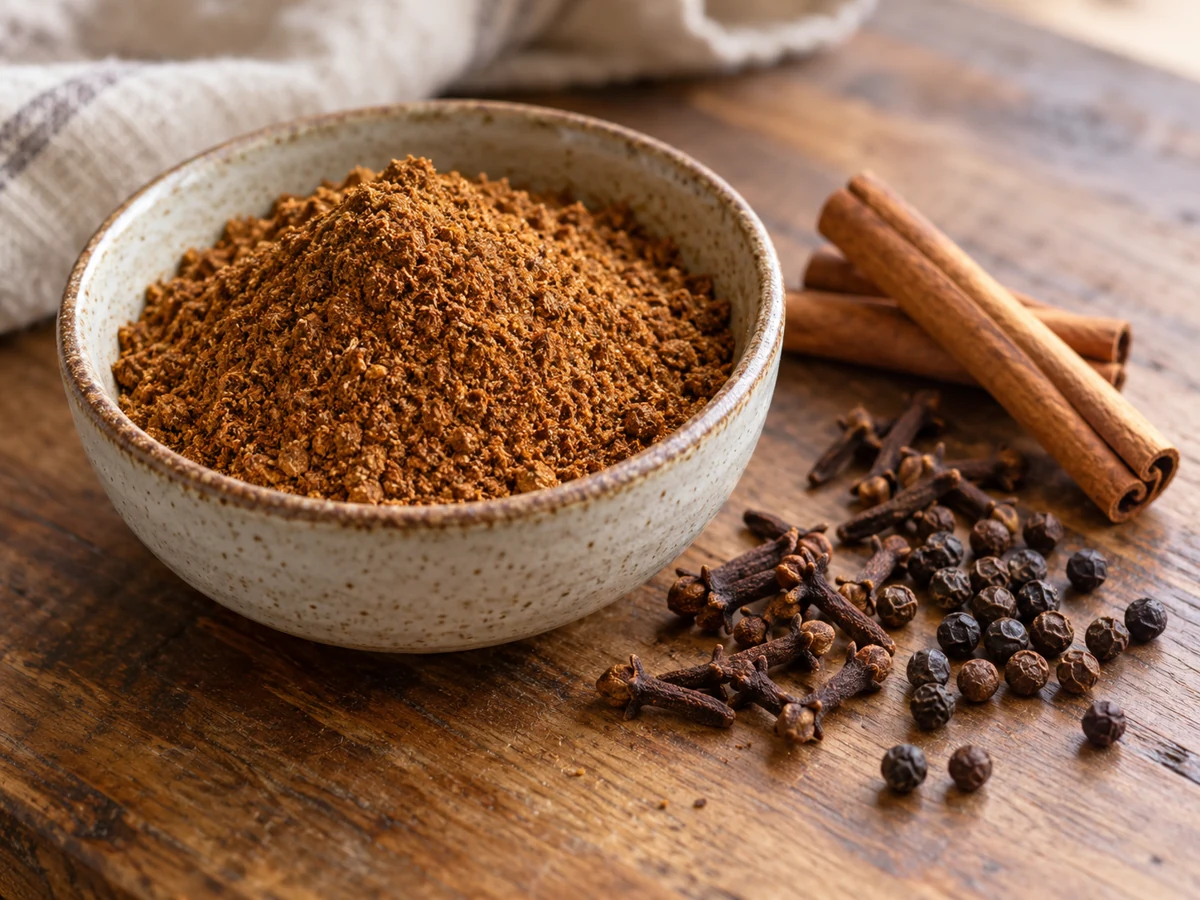
Its role is subtle but decisive. Where berbere brings red color, spiciness, and power, mekelesha rounds out, perfumes, and balances. It gives a refined aromatic signature to dishes, with warm, woody, slightly sweet, sometimes floral or peppery notes depending on the spices used. It can contain cardamom, cinnamon, cloves, long pepper, cumin, nutmeg, ginger, coriander, or other spices depending on families and regions.
Where to find it
Look for the exact food-grade form required by the recipe at markets and specialist shops. Check the product name, ingredients, condition and storage instructions.
Explore further: Cooking tips · Food hygiene and safety advice.
History and uses
🍲 A FINISHING SPICE WITH AN ESSENTIAL ROLE
Mekelesha is distinguished by when it is used. In many Ethiopian recipes, it is added at the end of cooking, when the dish has already simmered for a long time and the main flavors are well developed. This use helps preserve the delicate aromas of the spices. If the blend were added too early, some fragrant notes might weaken under the effect of prolonged cooking.
This finishing function gives it importance comparable to a final culinary touch. Like a finishing touch, it awakens the dish, intensifies its aroma, and gives it extra depth. In a doro wat, a famous Ethiopian chicken stew with hard-boiled eggs, mekelesha can bring that aromatic warmth that lingers in the mouth after the spiciness of the berbere. In a siga wat, a spicy beef stew, it gives a rounder and nobler sensation. In lentil, chickpea, or vegetable dishes, it can transform a simple preparation into a rich and memorable dish.
Mekelesha thus shows that African cuisine is not only based on abundance or intensity, but also on precision. Its use requires understanding the right moment, the right quantity, and the balance between spices.
🌍 ITS PLACE IN AFRICAN CUISINE
The place of mekelesha in African cuisine is important because it represents a very ancient tradition of spice mastery. In Africa, spices are not only used to enhance dishes. They tell stories of territories, trade routes, climates, family practices, and cultural transmissions. In the Horn of Africa, the use of spice blends is particularly developed, and mekelesha is a beautiful example of this.
Ethiopia has a very strong culinary identity, based on preparations like injera, berbere, niter kibbeh, and the various wots. Mekelesha fits into this universe as an element of refinement. It does not necessarily dominate the dish, but it complements it. It embodies a very African idea of cuisine: taste is born from the superposition of flavors, cooking time, transmitted gestures, and the balance between strength and sweetness.
In other African regions, this logic of aromatic blends is also found. In North Africa, ras el hanout plays a comparable role in certain slow-cooked dishes. In West Africa, blends of pepper, ginger, chili, seeds, or aromatics give their identity to sauces and grilled dishes. In Central Africa, local condiments accompany cassava, fish, or meat dishes. Mekelesha therefore belongs to this large African family of spice blends that give soul to recipes.
🔥 COMPOSITION AND AROMATIC PROFILE
The composition of mekelesha varies according to households, regions, and personal preferences. There is no single definitive recipe. However, it is often composed of warm and fragrant spices. Cardamom can bring an almost lemony freshness. Cinnamon gives a woody sweetness. Cloves offer a warm and slightly medicinal power. Long pepper or black pepper add a pungent heat but different from chili. Nutmeg brings a deep roundness. Cumin and coriander provide a more earthy and warm base.
In my books

Continue exploring the continent’s cuisines with Africa at the Table — 54 countries, 54 iconic dishes, by Alioune FALL. This book is in English.
Explore further
This combination creates a complex blend, more aromatic than burning. Unlike berbere, mekelesha is not necessarily very spicy. Its interest lies mainly in its fragrance. It acts as a bridge between the ingredients of the dish: meat, slow-cooked onions, spiced butter, legumes, garlic, ginger, and chili. It harmonizes the whole and gives an impression of depth.
Mekelesha is often used in small quantities, as its fragrance can be intense. A pinch or a small spoon is sometimes enough to transform an entire dish. This aromatic concentration explains why it is considered precious in family cooking.
🍛 LINK WITH TRADITIONAL DISHES
Mekelesha is mainly associated with Ethiopian slow-cooked dishes. Doro wat, the quintessential festive dish, is one of the most well-known examples. This chicken stew, prepared with a lot of onions, berbere, niter kibbeh, and hard-boiled eggs, takes on an even more fragrant dimension with the addition of mekelesha at the end of cooking.
It is also used in beef, lamb, or goat stews. In these dishes, it accompanies the richness of the meat and the density of the sauce. It can also be included in vegetarian recipes, especially dishes with red lentils, split peas, fava beans, or vegetables. Ethiopian cuisine has a strong vegetarian tradition, particularly linked to periods of religious fasting, and spice blends like mekelesha help give a lot of character to meatless dishes.
With injera, mekelesha takes on its full meaning. Injera, slightly sour, absorbs sauces and carries the aromas. When a stew is flavored with mekelesha, each bite reveals several layers of taste: the gentle acidity of the flatbread, the warmth of the sauce, the depth of the spices, and the richness of the ingredients.
🧄 A FAMILY AND CULTURAL TRADITION
Like many African spice blends, mekelesha is linked to family transmission. Proportions can be kept as household knowledge. A mother, grandmother, or experienced person can adjust the blend according to their intuition, palate, and household habits. This dimension makes mekelesha alive. It is not just a product, but a culinary memory.
In the Ethiopian and Eritrean diaspora, mekelesha retains strong emotional value. It allows one to rediscover the smell of family dishes, shared meals, and special occasions. Even far from the country of origin, a few well-blended spices can recreate an atmosphere, a memory, and an identity.
Today, it also interests African cuisine enthusiasts who wish to better understand the richness of the continent's culinary traditions. It shows that African cuisine is not limited to spicy or hearty dishes, but also possesses great aromatic finesse.
🌶️ SYNONYMS AND SIMILAR TERMS
Mekelesha can be referred to or associated with several expressions: Ethiopian spice blend, Ethiopian finishing spice, aromatic blend for wat, mekelesha seasoning, finishing spices for stew, fragrant blend from the Horn of Africa. These terms are not always perfect synonyms, but they help understand its use and culinary function.
🔑 KEYWORDS
Mekelesha, Ethiopian cuisine, African spices, wat, injera.
In the kitchen : Mekelesha
Recipes from the site to put your knowledge into practice:
Discover these cuisines at a restaurant
Explore our restaurant and caterer directories. Choose your destination and check the establishment’s menu to confirm which dishes are offered and available.
Continue exploring
Enjoy discovering ingredients and African cuisines? Join our newsletter. The illustrated PDF 10 sauces africaines incontournables is in French and is offered after confirming a subscription to the French or bilingual edition.